Transform & Preserve
Curd Drying
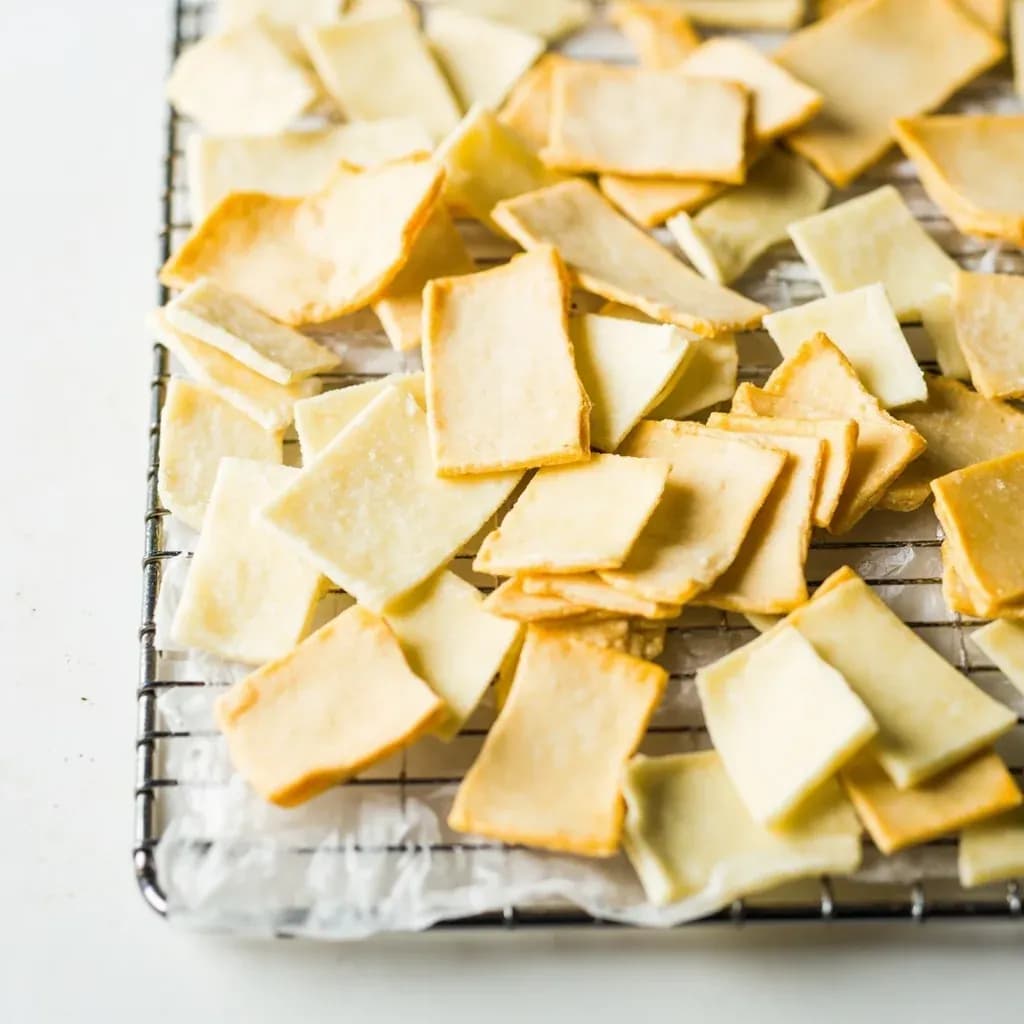
Drying dairy curds in the sun or air to make hard, shelf-stable foods like Mongolian aaruul.
Curd drying spreads strained dairy curds in the sun or open air until they harden into a dense, shelf-stable food. It is the traditional way to make Mongolian aaruul, preserving milk's nutrition for the long, dairy-scarce winter. Removing moisture concentrates protein and prevents spoilage without refrigeration. The curds may be pressed into shapes and dried for days to weeks.
Curd drying is the practice of pressing and sun- or air-drying acid-set dairy curds until their moisture drops low enough to suppress spoilage, yielding a shelf-stable food that keeps for months or years without refrigeration. It is the foundational cheese-making logic of pastoral and nomadic cultures across Central Asia, Mongolia, Tibet, the wider Himalayas, and parts of Eastern Europe and the Balkans: no aging rooms, no wax, no refrigeration — just sun, wind, and patient turning. The mechanism is straightforward. Lactic fermentation drops the pH, the curd is squeezed until very little whey remains, and what is left is mostly protein and fat that spoilage microbes cannot easily work on. Once the piece dries to roughly 10–15% moisture, it becomes a portable, calorie-dense food that survives heat, cold, and travel.
The character of the finished curd depends on three choices the maker makes early: the milk (cow, yak, goat, sheep, mare, or camel each lend a different fat and protein profile), the shaping (balls, discs, strips, or blocks determine how fast the piece dries through), and how far drying is pushed. Stop early and you get a chewy, tangy snack; push further and you get a rock-hard curd that softens on the teeth or shaves into soups. Modern cooks outside the steppe adapt the method with a dehydrator or a low oven, but the underlying sequence — sour, cut, drain, press, salt, shape, dry, condition, store — is unchanged from how a Mongolian herder or a Kyrgyz grandmother has done it for generations.
- Difficulty
- Medium
Types & varieties
Mongolian sun-dried curd, often formed into discs, loops, or rectangular blocks; eaten as a snack or ground into powder for suutei tsai (Mongolian milk tea).
Broader Mongolian categories of dried curds in different shapes and hardness levels, sometimes lightly smoked.
Central Asian dried sour-milk balls popular in Kazakhstan, Kyrgyzstan, Afghanistan, and Xinjiang; usually salted and rolled in herbs or flour.
Tibetan and Himalayan hard curd made chiefly from yak milk; the soft variety is chewed like candy, the hard variety is nearly stone-like and is chewed or grated into stews.
Mongolian thicker, fattier curd dried with added cream or butter for richer flavor.
Eastern European and Balkan dried curd preparations related to brined cheeses, often smoked and air-aged.
Wider technique of pressing and air-drying fresh curds (e.g., early stages of kefalotyri, pecorino, sardo) that begins with the same curd-drying logic.
How to do it
- 1
Choose and prepare the milk
Use fresh, full-fat milk (cow, yak, goat, sheep, or a mix). For a traditional sour-milk curd, let raw or boiled milk sit in a warm, clean vessel until it naturally sours and thickens. For a faster set, warm milk to about 30–35 °C (86–95 °F) and add a small amount of rennet, a splash of buttermilk with lemon juice, or vinegar until the milk breaks into curds and whey.
- 2
Cut and cook out the curds
Cut the curd mass into small cubes (roughly 1–2 cm) with a long knife to help expel whey. Gently warm to around 40 °C (104 °F) for 10–20 minutes, stirring very gently; this firms the curds and improves final texture. Do not boil, which toughens the curd and traps moisture inside.
- 3
Drain the whey
Line a colander with a clean cheesecloth or a thin cotton cloth and ladle in the curds. Tie the cloth into a bundle and hang it over a pot, or leave it in the colander in a cool place, until the whey stops dripping briskly (usually 2–6 hours, sometimes overnight in a refrigerator).
- 4
Press the curds
Transfer the drained curd to a cheesecloth-lined mold or a small colander. Weight it with a plate and a kettle of water (or use a small cheese press) for several hours, or overnight, until the curd holds its shape and feels firm, not spongy. The more moisture you press out now, the faster and safer the drying stage.
- 5
Salt and shape
Crumble or grate the pressed curd and toss with 1–2% salt by weight. Shape by hand into balls (qurt style, 3–5 cm), discs (aaruul style, 1–2 cm thick), strips, or small rectangular blocks. For Mongolian-style aaruul, press the curd into a wooden frame or oiled tray to a uniform thickness so it dries evenly.
- 6
Begin drying in sun and air
Place the shaped pieces on clean wooden boards, raised mesh racks, or cloth stretched over a frame, in direct sun and a light breeze. Cover with a single layer of cheesecloth to keep insects off. Bring trays inside at night if dew forms, since surface moisture reverses drying and encourages mold.
- 7
Turn and monitor
Flip the pieces once or twice a day. Expect the surface to pale and form a dry skin within 24 hours. After 2–3 days, small pieces feel leathery; large blocks should be checked for any soft, dark, or yeasty spots, which signal that drying is too slow and airflow or temperature must be increased.
- 8
Finish drying to target hardness
Continue drying for 3–7 days for chewy snack-style curds, or 1–4 weeks for hard, storage-grade curds like chhurpi. Properly hard curds should snap rather than bend and should feel noticeably lighter. If a piece bends easily or feels cool and clammy, return it to the rack for more drying.
- 9
Condition and store
Rest the finished curds on a clean dry cloth at room temperature for a day to equalize moisture, then store in an airtight tin, glass jar, or breathable cotton bag kept in a cool, dark, dry place. Hard chhurpi and well-dried aaruul keep for months to years; softer curds are best used within a few weeks.
Why Pressing Matters More Than You Think
Most failures in home curd drying trace back to one step: insufficient pressing before the piece ever sees the sun. The acid-set curd that comes out of the colander is a spongy lattice holding far more water than it looks, and that water is food for the molds and yeasts that will appear within a day or two if drying is slow. The more whey you drive out with weight, the less work the sun has to do, and the smaller the window for spoilage. A weighted colander, a cheese press, or even a plate loaded with a kettle of water pressed overnight will reliably turn a wet, fragile curd into a firm slab that can survive several days on a rack without turning dark or sour.
- A press that yields overnight curds is more forgiving than a quick 2-hour press followed by long drying.
- Pressing too hard or drying too aggressively can yield a dense, rubbery block; salting at 1–2% helps keep the final texture pliable.
- If pressing is impractical, hang the curd in a clean cloth bundle for 8–12 hours as a minimum substitute.
Adapting the Technique Outside the Steppe
Sun and dry breeze are not always available, but the method translates cleanly to a kitchen. A food dehydrator set to 50–60 °C (120–140 °F) with the fan running will dry aaruul-style discs in roughly 18–30 hours. A low oven with the door propped open with a wooden spoon works in a similar range. In humid climates, a small fan aimed across the drying rack is often the difference between a successful batch and one that molds.
- Dehydrator trays should be lined with parchment or food-safe mesh so soft curds don't sag through.
- Indoor drying rooms benefit from a dehumidifier running alongside the fan.
- Smokehouse drying over a cool fire combines drying with a light smoke, as in some Brynza-style and Mongolian khuruud.
Common uses
Tips & pitfalls
- Drain curds thoroughly before drying: any trapped whey will ferment, sour unevenly, and invite mold in the early days.
- Press the curds (a cheese press or a weighted colander) to drive out as much moisture as possible; drier curds finish drying faster and more safely.
- Salt lightly (1–2% of curd weight) to slow spoilage microbes and to bring out a savory, cheesy flavor.
- Cover drying curds with fine cheesecloth or mesh to keep flies, dust, and birds off while still letting air circulate.
- Airflow matters more than heat: a breezy 25 °C day dries curds faster than a still 35 °C day.
- Turn or flip pieces once or twice a day so all sides dry evenly and don't develop a wet, dark underside.
- In humid climates, use a dehydrator, a low oven (around 50 °C / 120 °F with the door ajar), or a smokehouse rather than relying on sun.
- Stop drying while the curd is still slightly pliable for chewy snack-style curds; push further for grindable or rock-hard storage curds.
- Common mistake: drying too thick a layer at once. Thin slabs, small balls, or strips dry in days; thick blocks can mold in the middle.
- Common mistake: skipping the day of conditioning before sealing. Surface moisture trapped in a closed jar will recondense and start mold within a week.
Good to know
- Category
- Dairy preservation technique
- Primary products
- Aaruul, qurt (kurut), chhurpi, khuruud, eezgii
- Origin
- Pastoral and nomadic traditions across Central Asia, Mongolia, Tibet, the Himalayas, and parts of Eastern Europe and the Balkans
- Milk types used
- Cow, yak, goat, sheep, mare, camel, and sometimes reindeer milk
- Target moisture
- Roughly 10–15% for hard, fully shelf-stable curds
- Drying temperature
- Sun drying at 25–35 °C (77–95 °F); indoor or dehydrator drying at 40–60 °C (105–140 °F)
- Drying time
- Soft varieties 2–4 days in sun; hard chhurpi-style curds 1–6 weeks
- Yield
- Roughly 1 kg of dried curd per 6–10 L of whole milk, depending on fat content and final dryness
- Shelf life
- Several months to multiple years when fully dried and stored dry
Also called
Curd Drying (Aaruul) · Aaruul
Related

Confit
Cook slowly submerged in fat for silky tenderness and keeping

Cure
Draw out moisture with salt and time to preserve and concentrate

Pickle
Steep in acidic brine for bright, tangy, crunchy preservation

Ferment
Let friendly microbes transform food into tangy, complex flavor

Marinate
Soak in a seasoned mix to flavor and tenderize before cooking

Brine
Soak in salt water so meat stays juicy and seasoned throughout

Dehydrate
Slowly dry out moisture to concentrate flavor and extend shelf life

Cold-Smoke
Perfume cured food with smoke without cooking it through