Prep & Assembly
Demolding
Releasing a set or baked item cleanly from its mold, ring, or pan.
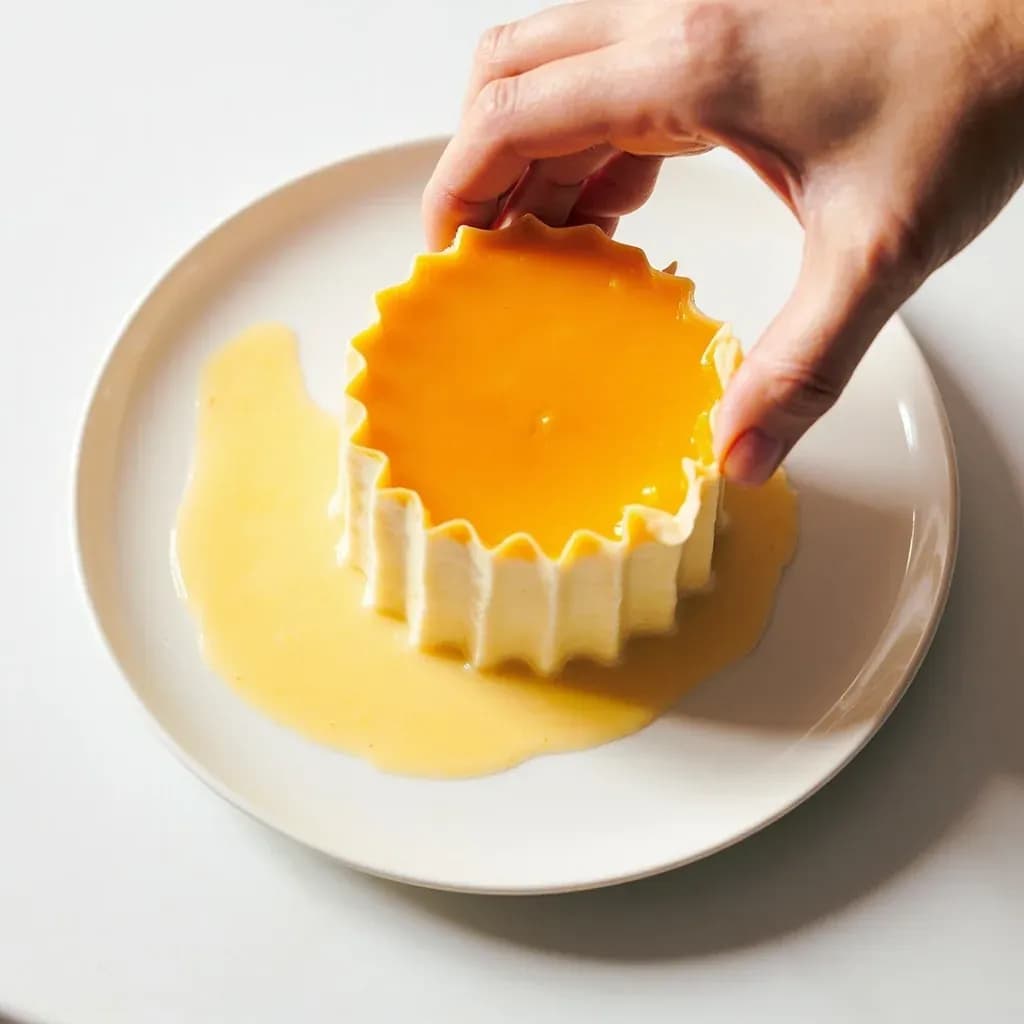
Demolding is the act of removing a cake, terrine, jelly, chocolate, or cheese from the mold it set in without cracking or distorting it. Techniques vary by item: a brief warm-water dip loosens gelatin, a gentle flex frees silicone, and a thin knife runs around a metal ring. Timing matters because demolding too early can collapse a delicate set while waiting too long can make it stick.
The unmold is the moment a pastry, terrine, or frozen dessert finally takes its true shape — turning a génoise out of a buttered tin, lifting a panna cotta from a dariole, or popping a row of chocolate bonbons from a polycarbonate tray. Whether the surface you worked to make smooth stays smooth or tears apart is decided in these few seconds. The technique matters because almost every set cream, mousse, baked cake, and confection spends its most fragile moment inside a rigid wall, and the transition from mold to plate is when structure, temperature, and gravity all collide.
The right approach is dictated by two variables: the temperature of the item (warm from the oven, chilled in the refrigerator, or frozen solid) and the material of the mold (buttered metal, non-stick tin, flexible silicone, acetate-lined ring, or pre-formed chocolate shell). A warm cake needs a brief in-pan rest so the crumb shrinks from the wall before the flip; a frozen mousse needs a 10–15 minute thaw on the counter so the very surface softens enough to release. Get either wrong and you get a torn side, a slumped dessert, or a cracked glaze. The pastry chef's rule of thumb is unforgiving: if you have to fight the mold, the item isn't ready — return it to the fridge or freezer and try again rather than pry.
- Difficulty
- Medium
Types & varieties
Item released shortly after baking while still warm; typical for sponge, génoise, and timbales — a 5–10 minute rest lets the structure firm before flipping.
Item set in the refrigerator until firm; used for panna cotta, bavarois, terrines, and cheesecakes — usually unmolded onto a chilled plate.
Item frozen solid before unmolding, then served cold or thawed; standard for entremets, ice-cream cakes, and semifreddo because frozen mousse holds its shape during release.
Flexible silicone is peeled back or pushed from below; minimal warming needed, risk of surface tearing if the item is too frozen.
Mold is flipped onto a rack or plate and the pan lifted; standard for layer cakes and loaf-pan pâtés.
Tapping or banging the inverted mold (bundt, kugelhopf) to dislodge a baked item; works only with thorough greasing and flouring.
Tempered chocolate shell is filled, capped, then inverted and tapped; the shell drops out cleanly when properly crystallized.
How to do it
- 1
Prepare the mold in advance
Coat with butter and flour for baked goods, line with acetate for chilled mousses and bavarois, brush or spray with release agent for jellies and aspics, or pre-shell with tempered chocolate for bonbons. The release begins here, not at the unmolding step.
- 2
Fill and set to the correct firmness
Bake, chill, or freeze the item until it is structurally stable on its own: a finger pressed to the surface leaves no imprint for creams and mousses; a cake springs back; chocolate shells release with a sharp tap. Under-set items slump, over-frozen ones crack.
- 3
Loosen the seal around the edge
For metal molds, run a thin hot knife or palette knife around the wall. For ring molds on a solid base, slide a bench scraper between the ring and the base. For silicone, gently pull the mold wall away from the item all the way around.
- 4
Apply gentle heat to the outside if needed
Wrap the outside of the mold in a warm (not wet) towel for 5–10 seconds, or briefly pass the bottom of the mold over a gas flame. The goal is to expand the air just enough to release — overheated metal will melt glazes and chocolate coatings.
- 5
Invert or push out
Place the serving plate or rack over the mold, hold them together firmly, and flip in one confident motion. For flexible silicone and ring molds, push from the base upward; for bonbons, invert and tap the mold sharply on the counter so the shells drop into your hand.
- 6
Remove the mold and finish
Lift the mold straight up — do not tilt, or you will tear the side. Peel off acetate and parchment, position the item on the plate, and wipe the rim clean. Glaze, sauce, or decorate only after the surface is fully released and any condensation has evaporated.
How temperature dictates the method
Each demold variant exists because set items behave differently at different temperatures. A warm cake is structurally set but still pliable — pull it too soon and it crumbles; wait too long and trapped steam softens the crumb at the base. A chilled cream (panna cotta, bavarois) is set by gelatin or starch; it needs to be cold enough to hold its shape, but the surface must be warmed just enough to break the seal against the mold. A frozen mousse is rigid and forgiving in the cold, but brittle — it needs a brief surface thaw so the glaze doesn't crack when it leaves the wall. Match your method to the item's actual temperature, not to habit.
- Hot (baked) — rest 5–10 minutes, invert, lift pan, cool fully on a rack.
- Chilled (refrigerated) — warm mold exterior briefly, invert onto a chilled plate.
- Frozen — thaw the surface 10–15 minutes at room temperature, push from the base, finish on a chilled plate.
Mold prep is half the work
The cleanest unmolds are won long before the flip. Butter-and-flour is the classic coating for metal cake tins; a light film of vegetable oil and a dusting of cocoa (not flour) works for chocolate génoise. Acetate collars around a ring mold give a glass-smooth side on bavarois and entremets with almost no skill. Polycarbonate bonbon molds need only a clean, polished surface and properly tempered chocolate; no spray required. Silicone needs no coating at all, though a light brushing of cocoa butter or oil gives a shinier finish on bonbon-style applications.
- Buttered and floured metal — for cakes, financiers, kugelhopf.
- Acetate-lined ring — for chilled mousses, bavarois, and entremets.
- Tempered chocolate shell — for bonbons and frozen entremets with a chocolate coat.
- Non-stick silicone — for marshmallows, petits fours, and individual mousse shapes.
Common uses
Tips & pitfalls
- Always prep the mold first: butter and flour, parchment, acetate collar, or chocolate shell — never try to 'demold your way out' of a poorly prepped mold.
- Wait until the item is fully set — under-set creams slump, under-chilled mousses collapse, under-frozen ice cream crumbles at the edges.
- For frozen items, give them 10–15 minutes on the counter (or 30–60 seconds in a warm spot) so the very surface softens and releases cleanly without thawing the interior.
- Run a thin, hot, dry knife or palette knife around the edge — wipe and re-heat between passes — to break the seal between item and mold wall.
- Briefly warm the outside of metal molds with a hot (not soaking) towel or briefly over a gas flame; the thin air gap is often all that's needed.
- Press (don't pull) silicone molds from the bottom and peel the mold back rather than pulling the item out — it preserves the surface glaze.
- For tall layered entremets, freeze solid, brush the outside of the mold with a damp warm cloth, then push up from the base.
- Demold onto a chilled plate (for cold items) or a wire rack (for baked goods) — never onto a hot surface.
- If the item sticks, don't pry — return it to the fridge or freezer, then try again with a warmer mold exterior.
- Reserve the trimmings: torn mousse or broken cake becomes parfait base, cake pops, or crumble.
Good to know
- Technique family
- Finishing and plating — releasing a set item from its mold without damage
- Critical variable
- Temperature of the item relative to the mold (hot, chilled, or frozen)
- Skill level
- Beginner for silicone and buttered tins; intermediate for entremets, charlottes, and bonbons
- Active time
- A few seconds to about a minute per piece, plus any exterior warming
- Key equipment
- Thin palette knife or off-set spatula, acetate strips, release spray or butter, warm towel, ring molds
- Mold prep
- Grease and flour, parchment liner, acetate collar, tempered chocolate shell, or non-stick silicone — all reduce sticking
- Common items demolded
- Cakes, panna cotta, bavarois, terrines, pâtés en croûte, ice-cream cakes, semifreddo, entremets, bonbons, jellies, cheesecakes, timbales, marshmallows
- Most common failure
- Cracking or tearing from demolding while the item is still slightly frozen or under-set
- Industry shorthand
- Pastry chefs say 'unmold' (démouler); 'demold' is the broader English-cooking term
- Modern aid
- Compressed air or a brief blast of inert cooking spray can break the vacuum between a set cream and the mold wall without heat
Also called
Unmolding · Turning Out
Dishes that rely on it
Related

Whisk
Beat ingredients smooth and aerated with a looping wire motion

Sift
Pass dry ingredients through mesh to aerate and remove lumps

Strain
Pour through mesh to separate solids from liquid for a smooth result

Filter
Pass liquid through fine material to clarify out the smallest particles

Rice
Press cooked potatoes through small holes for fluffy, lump-free texture

Mash
Crush soft cooked food into a rustic, creamy purée

Grind
Crush food into a coarse to fine texture, from spices to meat

Grate
Shred food into fine bits against a sharp-toothed surface