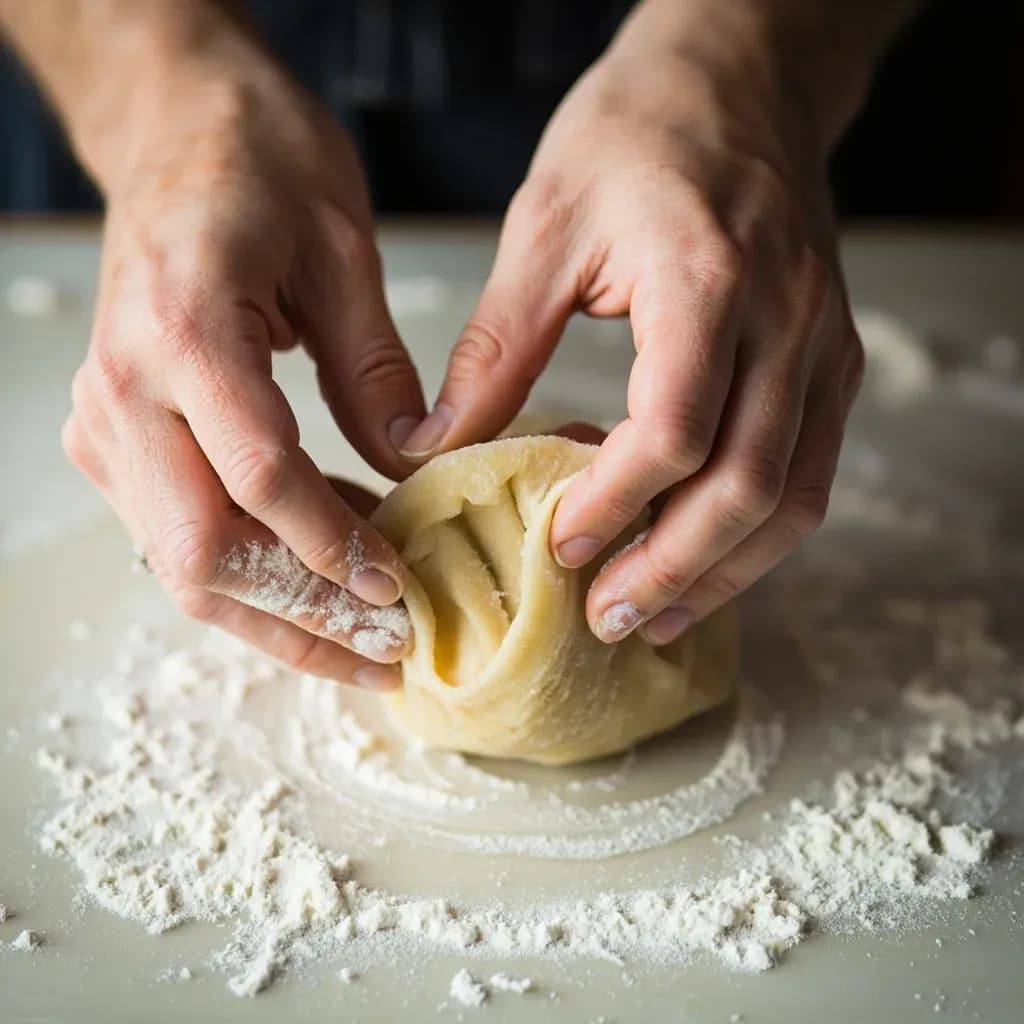
Prep & Assembly
Dumpling Folding & Pleating
Pleating and sealing dough wrappers around filling to shape dumplings like manti, mandu, and dim sum.
Dumpling folding encloses a spoonful of filling in a thin dough wrapper, then crimps or pleats the edges to seal it into shapes ranging from half-moons to purses and flowers. The pleats are both decorative and functional, locking out air and keeping the filling inside during steaming, boiling, or frying. Each tradition has its signature fold, from the gathered tops of manti to the rope-twist closure of culurgiones and the pinched ridges of dim sum.
Folding and pleating dumplings is the act of pulling a thin disc of dough around a mound of filling and pinching it shut so the package contains its juices, holds its shape during cooking, and, often, looks the part. Across cuisines — Chinese jiaozi, Japanese gyoza, Korean mandu, Uyghur and Turkish manti, Indian modak, Polish pierogi — the gesture is recognizably the same: a wrapper is moistened on one edge, folded over the filling, and the seam is either pressed flat or gathered into folds. The technique is the single skill that ties the dumpling family together, and the regional differences are largely a matter of how many pleats you take, how deep, and in which direction.
The behavior of the dough governs everything. A wheat-flour wrapper around 1–2 mm thick is forgiving when slightly damp but cracks the moment its edge dries; a wheat-starch wrapper used for crystal dumplings is more delicate and tears if overworked. The filling matters too — cold, just-set filling is far easier to wrap than a loose, room-temperature mixture, and any air sealed inside expands in steam and bursts the dumpling open. Most leaking dumplings trace back to one of three causes: an overstuffed wrapper, a trapped air pocket, or a dry edge that never sealed properly. The pleats themselves do real structural work: they create a thickened seam that holds shape during boiling, steaming, and pan-frying, and in soup dumplings the spiral of pleats is what traps broth inside as the aspic melts.
Learn the half-moon first. The finger choreography of the classic crescent — center pinch, fold a small pleat toward you, press it against the opposite edge, repeat — is the foundation for almost every other shape. The open-top siu mai and the spiral-pleated xiao long bao pouch are the same motion repeated in different numbers and around different axes. A cook who can fold a tidy jiaozi can, with practice, fold anything in the dumpling family.
- Difficulty
- Hard
Types & varieties
The classic crescent; 6–12 pleats pinched along the top seam, all facing one direction.
A half-moon with the two ends folded toward the center to mimic a gold ingot; a Lunar New Year shape.
Pleats gathered around the filling but left open on top; traditionally crowned with crab roe or a pea.
Soup dumpling with 18+ thin pleats spiraling upward and twisted shut at a topknot.
Filling gathered in the center, edges pleated up and tied off with a chive or scallion strip.
Small filled squares or rounds pinched into triangles or little pyramids, sometimes joined edge-to-edge into strings.
Mandu variant with multiple pleats fanned out to resemble rose petals.
Half-moon sealed by fork or finger crimp rather than pleating; the no-pleat reference point.
Maharashtrian sweet dumpling with finely pinched rice-flour pleats converging at the top.
Translucent wheat-starch wrapper pleated 7–10 times so the pink shrimp shows through.
How to do it
- 1
Set up the station
Arrange wrappers under a barely damp towel, put a small bowl of water within reach, line a tray with parchment and a light dusting of flour or cornstarch, and have filling chilled and ready.
- 2
Position the wrapper and filling
Lay a wrapper flat in your non-dominant palm or on the work surface. Spoon roughly 1 tablespoon of filling slightly off-center, leaving a clean 1 cm border on the seam side.
- 3
Moisten one edge
Dip a fingertip in water and trace it along half the wrapper's rim — the half that will lie flat opposite the pleats. Avoid soaking the entire edge; a soggy rim tears when folded.
- 4
Make the center seal
Fold the wrapper in half over the filling. Pinch the very center of the seam firmly; this is the anchor point for the rest of the pleats.
- 5
Pleat toward the center
Hold the center pinch with one hand. With the other, fold a small 3–4 mm pleat of dough from the near edge toward the center, then press it against the opposite flat edge. Repeat, working from the center outward.
- 6
Repeat on the opposite side
Mirror the pleats on the other half of the seam so the dumpling has an even crescent of folds, all facing the same direction.
- 7
Press out air and finish the seam
Gently squeeze the dumpling along the top to flatten and expel any trapped air. Run a fingertip along the seam once more to fully close the ends.
- 8
Stand upright on the tray
Place the dumpling seam-up on the prepared tray. Avoid letting dumplings touch each other until they go into the pot.
- 9
Adapt for spiral-pleated soup dumplings
For xiao long bao: rest the wrapper across the fingers of one hand, add a filling containing chilled, set aspic, then rotate the dumpling while making 18+ tiny pleats that spiral upward. Twist the gathered point shut and pinch off any excess dough.
- 10
Cook immediately or hold
Folded dumplings cook best within 30 minutes. If holding longer, refrigerate uncovered on the tray — covered dumplings sweat and stick — and cook straight from the fridge.
Reading the wrapper
Before you make a single fold, test the wrapper. A wheat wrapper that bends without cracking and holds a soft fingerprint is ready; one that springs back or splits at the edge is too dry and needs 20–30 seconds of steam over simmering water, or to be swapped out. A wheat-starch crystal wrapper should feel tacky and slightly cool — if it feels papery, the moisture has gone and the pleats will tear. A glutinous rice wrapper is the most forgiving: it stretches, sticks to itself, and holds a tight seam with just water. Match your expectations to the dough, not the other way around.
When the pleats won't hold
Three problems account for most failed dumplings. Diagnose before you fold another dozen so the same mistake doesn't repeat across the tray.
- Open or split seam — the edge dried before you sealed, or you used too little water. Mist the seam with water or a thin cornstarch slurry and re-pinch firmly.
- Dumpling bursts in the pot — trapped air, overfilling, or both. Press along the top of each finished dumpling to flatten the seam and squeeze out pockets before it goes in.
- Pleats look uneven or lopsided — your anchor slipped, or the filling shifted mid-fold. Re-center the filling off-center toward you, re-pinch the center point, and work in small, regular 3–4 mm folds.
Common uses
Tips & pitfalls
- Keep a stack of unused wrappers under a barely damp towel; the edges crack the moment they dry and will split when folded.
- Wet only half the rim of a round wrapper — water on the whole edge makes the dough soggy and tears when pleated.
- Spoon the filling slightly off-center toward you so the pleated side faces outward; this gives you a longer, easier seam to work with.
- Press out trapped air as you seal. Air pockets expand in steam and burst the dumpling open.
- Do a 'pleat test' with a single wrapper before committing the whole batch — flour hydration, humidity, and wrapper thickness all change the feel.
- Chill the filling for 15–20 minutes before folding. Cold, slightly firm filling is far easier to wrap than room-temperature mush.
- Don't overfill. A wrapper that bulges past its seam is a wrapper that will open in the pot.
- For xiao long bao, twist the topknot clockwise with a slight upward pull; a flat, twisted seal is the traditional look.
Good to know
- Skill level
- Beginner (simple half-moon) to advanced (xiao long bao with 18+ pleats)
- Typical wrapper diameter
- 8–10 cm for jiaozi; 7–9 cm for gyoza; 10–12 cm for Central Asian manti
- Wrapper thickness
- Roughly 1–2 mm for wheat dumplings; thinner, near-translucent for har gow and other crystal skins
- Filling ratio
- About 1 tablespoon per 8–9 cm wrapper; never more than the wrapper can fold around without straining
- Common pleat count
- 6–12 for jiaozi; 12–18 for siu mai; 18+ (traditionally 18) for xiao long bao; 3–5 deep pleats for Uyghur manti
- Sealing liquid
- Plain water for most doughs; a cornstarch slurry or egg white for extra hold on delicate skins
- Oldest documented dumpling
- Jiaozi attributed to physician Zhang Zhongjing, Eastern Han dynasty, c. 150 CE
- Cooking methods that follow folding
- Boiled (shuijiao), steamed (zhengjiao), pan-fried (guotie), deep-fried (guoba jiao), or served in soup (xiao long bao, manti)
Also called
Pleating Dumplings · Wrapping Dumplings · Mandu Folding · Dim Sum Pleating · Pierogi Pinching
Related

Whisk
Beat ingredients smooth and aerated with a looping wire motion

Sift
Pass dry ingredients through mesh to aerate and remove lumps

Strain
Pour through mesh to separate solids from liquid for a smooth result

Filter
Pass liquid through fine material to clarify out the smallest particles

Rice
Press cooked potatoes through small holes for fluffy, lump-free texture

Mash
Crush soft cooked food into a rustic, creamy purée

Grind
Crush food into a coarse to fine texture, from spices to meat

Grate
Shred food into fine bits against a sharp-toothed surface