Heat & Fire
Flambéing
Igniting added alcohol in a hot pan to burn it off and add caramelized flavor.
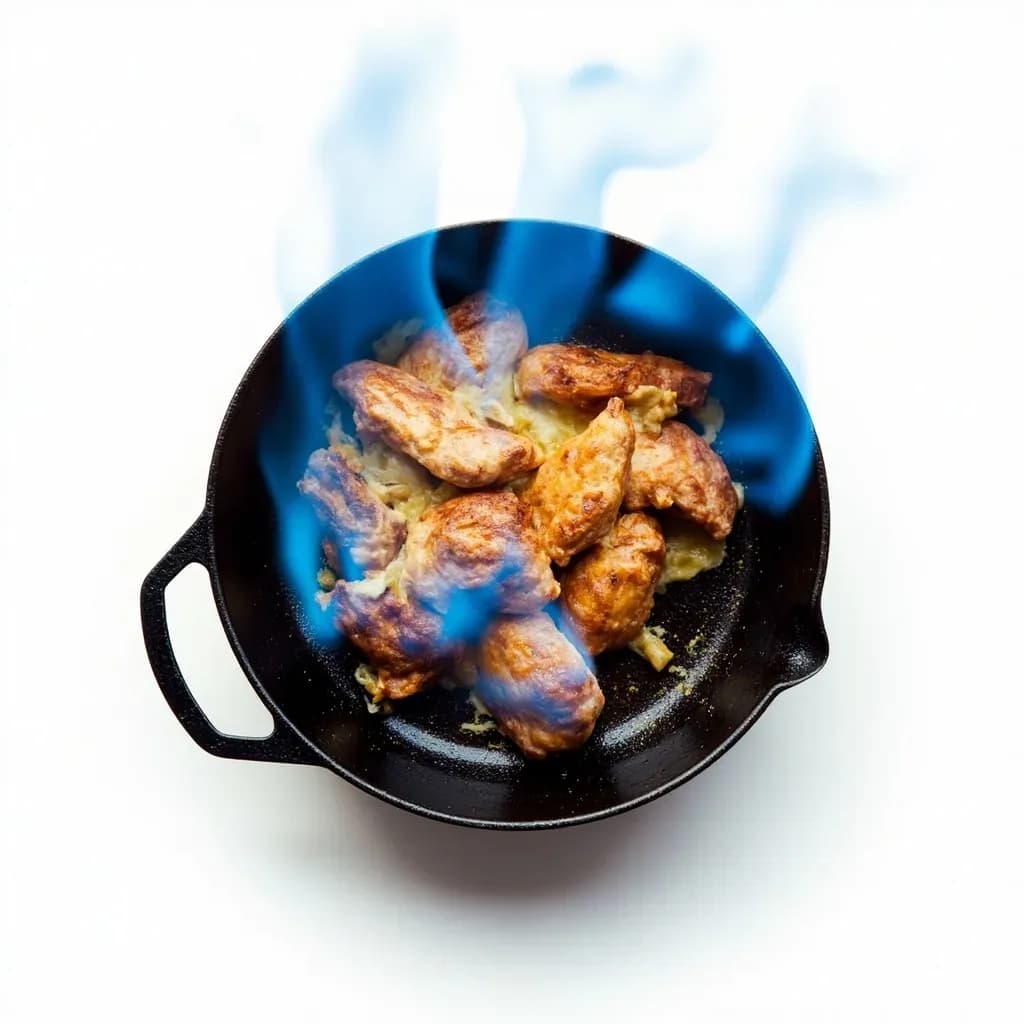
Flambéing adds a spirit or liqueur to a hot pan and ignites it, sending up a brief burst of flame that burns off most of the raw alcohol while caramelizing sugars and deepening flavor. It finishes dishes like crêpes Suzette, bananas Foster, and steak au poivre, often tableside for drama. The pan should be off direct heat when lit and stood back from, as the flame can flare suddenly.
Flambéing is the brief, controlled ignition of alcohol in a hot pan to burn off raw spirit and concentrate the dish beneath it. The visible fire is a signature, not the point — it signals that volatile alcohol vapors are escaping while pan sugars and fond pick up a touch of toast. What the cook is really after is a cleaner, slightly caramelized finish: the harsh alcoholic bite evaporates, and the sauce or fruit gains a rounder, more complex character that simmering alone cannot replicate.
The technique has carried a theatrical reputation since mid-20th-century fine dining turned it into tableside theater, but it remains genuinely useful in a working kitchen. A quick flambé deepens pan sauces for steak, duck, and shellfish, glazes fruit in classic desserts, and adds a warm, fruity note in well under a minute. Done correctly, it is a finishing step any home cook can manage; done carelessly — with cold spirit, a nonstick pan, or an open flame under the pour — it is one of the more dangerous things you can do at the stove.
- Difficulty
- Medium
Types & varieties
Performed in front of guests as a theatrical finish; the classic format for crêpes Suzette, bananas Foster, cherries Jubilee, and steak Diane.
Done quietly on the line, usually to deepen a pan sauce for steak, lobster, or stroganoff without any of the spectacle.
The workhorse choice for steak, mushrooms, and rich desserts; high-proof, fast-burning, and adds warm, fruity depth.
Standard for bananas Foster, Christmas pudding, and tropical fruit dishes; dark rum contributes molasses and toffee notes.
Cherry brandy used with stone fruit — especially cherries Jubilee and Black Forest-style desserts.
Grand Marnier, Cointreau, Calvados, and similar; lower ABV means they are often combined with a higher-proof spirit to ensure ignition.
How to do it
- 1
Build the base
Cook the main components — meat, fruit, vegetables, or a pan sauce — in a wide metal skillet with butter, oil, or a reduced liquid until everything is hot and the fond on the pan is well-developed. The pan should be very hot but not smoking aggressively.
- 2
Warm the spirit
Measure 30–90 ml (1–3 oz) of a high-proof spirit — cognac, brandy, dark rum, kirsch, or a high-proof liqueur. Warm it briefly in a small saucepan or 10–15 seconds in the microwave; warm alcohol vaporizes faster and ignites far more reliably than cold.
- 3
Pull the pan off the heat
Remove the skillet from the burner completely. This is the single most important safety step: pouring alcohol over an open gas flame or red-hot element can cause a flare-up or send flame across the stovetop.
- 4
Add the alcohol
Pour the warm spirit into the hot pan in a steady stream along the edge so it meets the hottest metal. It will hiss and produce a thick cloud of vapor within 2–3 seconds.
- 5
Ignite
Tilt the pan toward the gas flame to catch the vapor, or touch a long-stemmed lighter to the vapors above the surface. Stand back from the burst of flame and keep your face and clothing clear.
- 6
Let it burn and shake the pan
Allow the flame to consume the alcohol on its own. Gently rock or swirl the skillet so vapor pockets form and burn evenly. The flame will die down as the alcohol is exhausted — usually within 15–45 seconds.
- 7
Confirm and finish
When the flames are gone, lean in and sniff. If you still smell raw alcohol, return the pan to medium heat and reduce for another 30–60 seconds. Only then add cream, stock, butter, or final garnishes and bring the dish to its serving point.
Choosing the right spirit
The spirit you pour is also a seasoning, so its flavor matters as much as its flammability. As a rule of thumb, anything 40% ABV (80 proof) or higher will light readily; below that, ignition becomes unreliable and the technique stops earning its keep. Brandy and cognac are the classic all-rounders for savory dishes and desserts alike — round, fruity, and forgiving. Dark rum brings molasses and vanilla that suit bananas Foster and tropical fruit. Kirsch, with its dry, bitter-cherry character, is the right call for stone fruit and chocolate-leaning desserts. Orange liqueurs like Grand Marnier and Cointreau are popular but sit closer to 40% ABV, so many cooks add a small splash of high-proof brandy to guarantee a clean flame. Cooking wine, sherry, and sake are generally too low in alcohol to flambé on their own.
What the flame actually does
The fire you see is ethanol vapor burning off as it leaves the pan. The autoignition temperature of ethanol is around 363 °C (685 °F), well below the temperature of a gas burner, which is why a brief, blue-orange flame lasts only until the alcohol is exhausted. In those 15–60 seconds, three things are happening: the raw, sharp ethanol note is driven off, the water fraction boils away, and the sugars already clinging to the pan in the fond get a final pass of heat, deepening their caramelization. The ethanol flame itself is relatively cool, so it contributes less additional browning than people assume — the visible lift in flavor mostly comes from the evaporation of harsh alcohol and a finishing gloss on what is already in the pan. The result is a sauce that smells cleaner, tastes slightly toasted, and carries a faint echo of whatever spirit you used — never a boozy one.
Common uses
Tips & pitfalls
- Warm the spirit in a small saucepan or briefly in the microwave — cold alcohol produces less vapor on contact and can pool in the pan rather than flash off cleanly.
- Always pull the pan off the burner before pouring; reignite after. Never pour alcohol over an active flame or glowing electric element.
- Pour along the side of the pan so the spirit hits the hottest metal and flashes to vapor in seconds rather than sloshing across the food.
- Use a long-stemmed lighter or extended match. A cigarette lighter held close to a flaming pan is a burn waiting to happen.
- Measure the spirit — 30–90 ml (1–3 oz) is usually plenty. More alcohol means a longer flame and more raw flavor to drive off.
- Let the flame die on its own. Blowing it out can send a fireball toward you and leaves harsh, uncooked alcohol in the dish.
- If you can still smell raw alcohol after the flame goes out, the job isn't done — keep cooking for another 30–60 seconds to finish the evaporation.
- Never flambé in a nonstick pan. The intense, alcohol-fueled flame can damage the coating and create smoke; use stainless steel, cast iron, or carbon steel.
Good to know
- Category
- Dry-heat finishing technique
- Also called
- Flambé (French), flaming
- Flame duration
- Typically 15–60 seconds until alcohol is exhausted
- Minimum alcohol strength
- Roughly 40% ABV (80 proof); weaker spirits may fail to ignite reliably
- Pan
- Wide, shallow metal skillet or sauté pan — never nonstick
- Core effect
- Burns off raw alcohol; lightly caramelizes sugars and fond
- Origin of term
- French 'flambé' — to flame or singe
- Safety
- Never extinguish with water; smother with a metal lid or use a Class K / B-C extinguisher
Also called
Flambé · Flamber
Dishes that rely on it
Related

Sear
Blast the surface hot for a deep-browned, savory crust

Sauté
Cook quickly in a little fat over lively heat, tossing as you go

Stir-Fry
Toss bite-sized pieces over roaring heat for fast, smoky cooking

Pan-Fry
Crisp food in a shallow layer of hot fat, turning once or twice

Deep-Fry
Submerge in hot oil for an all-over crackling crust

Roast
Cook uncovered in dry oven heat for browned edges and tender centers

Bake
Cook with steady, surrounding oven heat — the soul of bread and pastry

Broil
Hit food from directly above with fierce overhead heat