Heat & Fire
Flatbread Baking on a Saj
Baking thin flatbread on a domed convex metal griddle (saj) over fire for fast, even cooking.
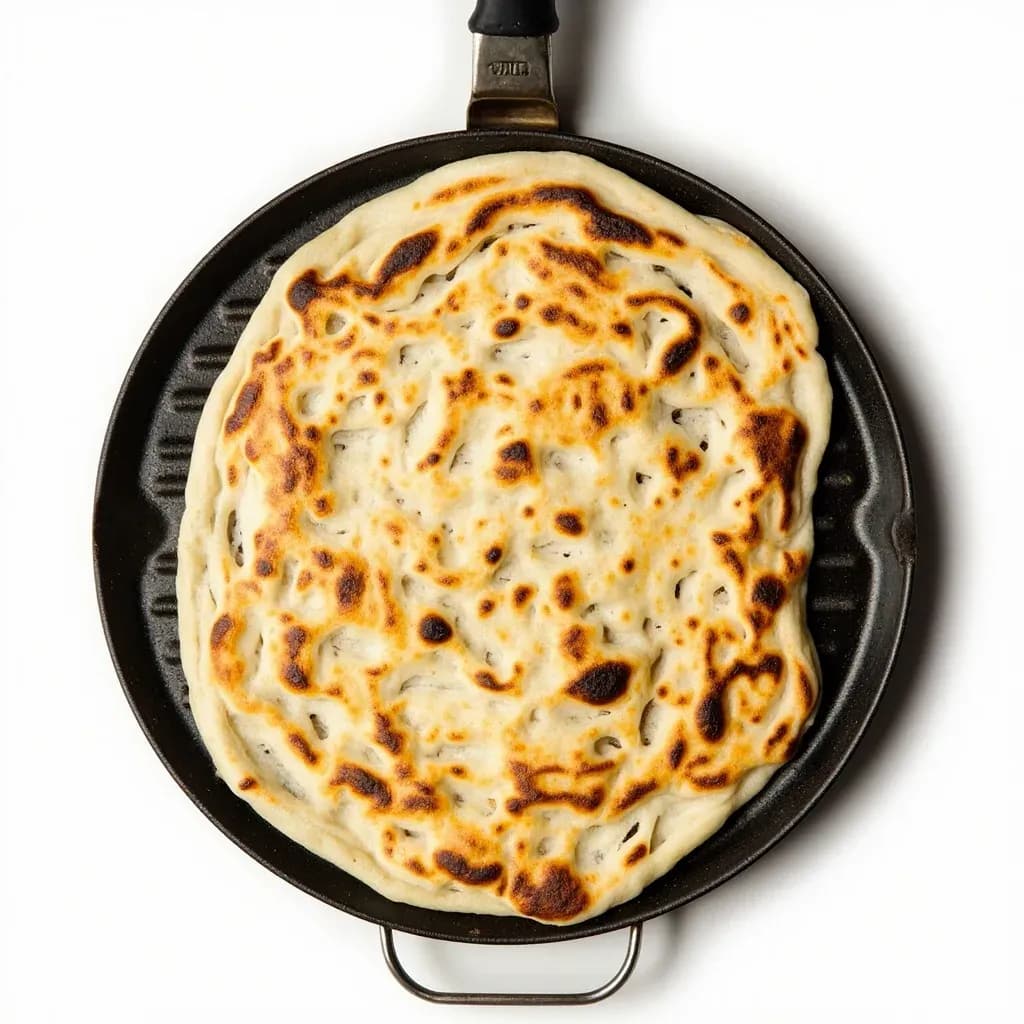
Saj baking cooks thin Levantine flatbreads like markook on a large domed convex metal griddle heated over fire or gas. The dough is stretched paper-thin, often over a cushion, then draped onto the hot dome where it bakes in seconds. The shape lets heat radiate evenly and produces a supple, slightly charred bread used for wraps and manakish.
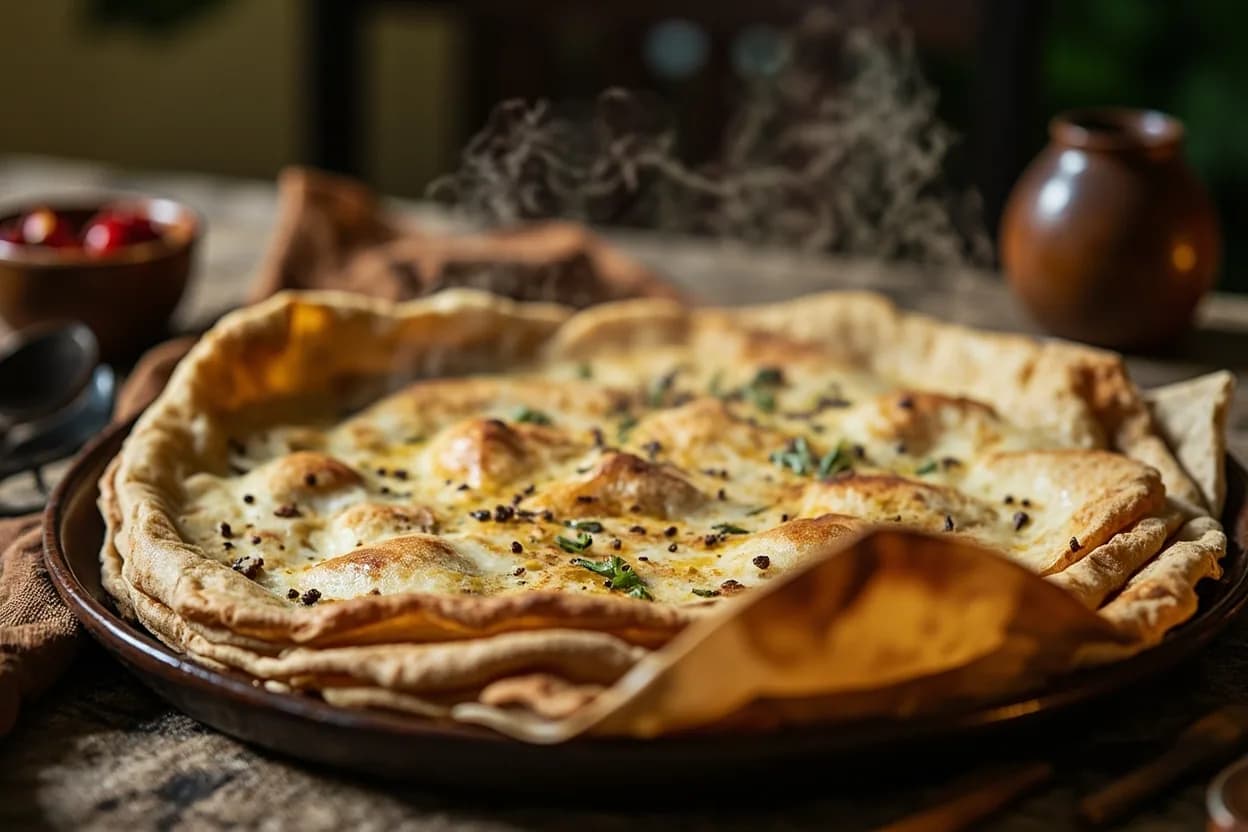
Baking flatbread on a saj is one of the fastest bread techniques in any cuisine: a sheet of lean, well-hydrated dough is stretched paper-thin, draped onto a domed metal griddle, and cooked in under a minute over open fire. The saj — a convex, wok-shaped steel or cast-iron plate — is the workhorse of Levantine, Anatolian, and Mesopotamian bakeries, where it produces the soft, pliable, bubble-spotted breads that wrap kebabs, anchor mezze tables, and dry into shelf-stable rolls sold by the kilo. The dome shape is what makes the technique distinctive: the convex surface supports stretched dough so it does not sag into a cool, thick center, and the bread sets in seconds rather than minutes.
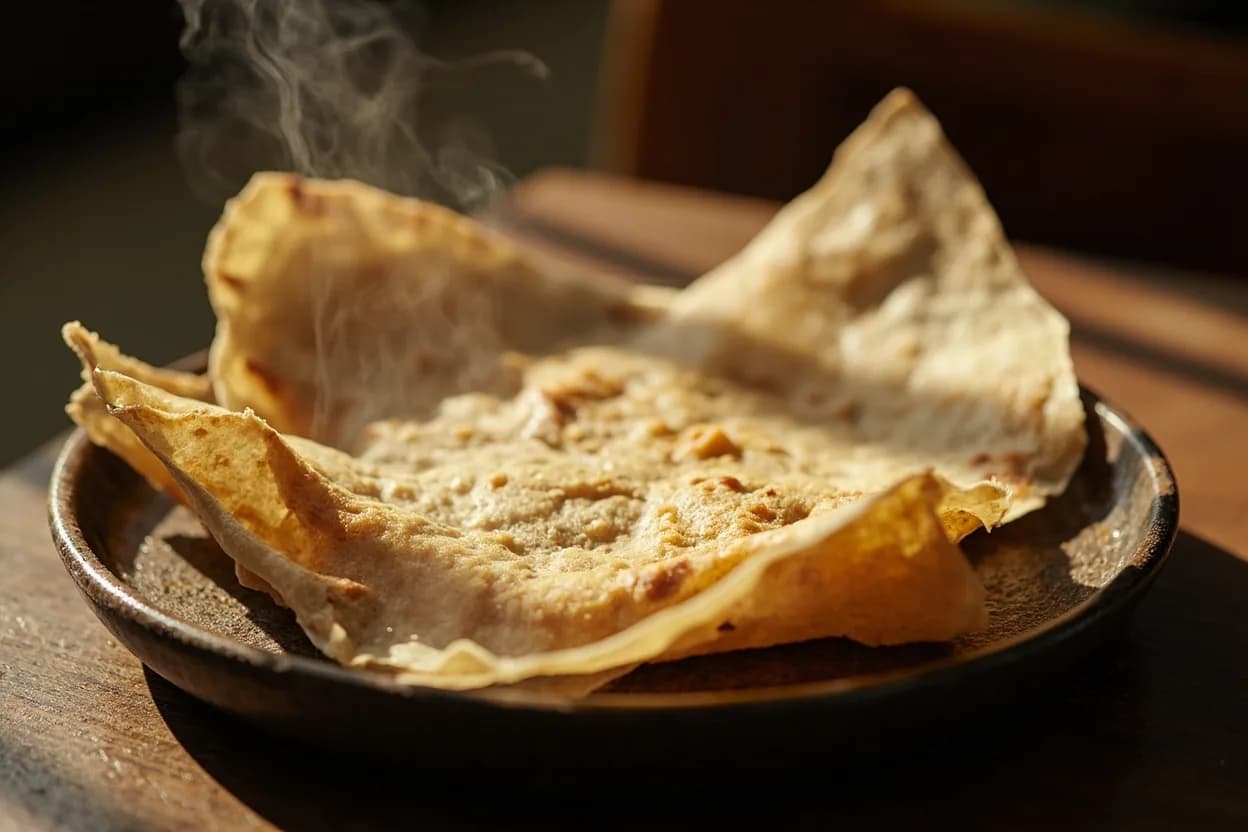
The method rewards confident hand-stretching, precise timing, and the ability to work a hot griddle in a hot room, but it is less temperamental than its speed suggests. Hydration sits in the moderate range, the bread typically cooks on one side only, and the finished loaves are stacked between cloths where residual steam keeps them supple for hours. A practiced baker turns out 200–400 breads an hour on a large commercial saj, which is why the technique has survived every modernization of Middle Eastern bakeries: nothing else matches its combination of throughput, crust character, and the soft, foldable texture that defines a fresh markook or lavash.
- Difficulty
- Hard
Types & varieties
Armenian/Caucasus; thin, large oval up to 60–90 cm, flexible when fresh, dries brittle for long storage
Turkish; thin round sheets, often layered for börek, cooked briefly on one side
Levantine — Lebanon, Syria, Jordan, Palestine; extremely thin, almost translucent, cooked ~25 seconds, often dried in rolls
Iraqi; paper-thin, large diameter, torn and folded to eat
Wider, pocket-forming round bread common across the Levant, traditionally baked in a taboon clay oven and also finished on a saj
Egyptian; thicker pocket bread, a common everyday street-vendor bread that can be baked on a saj
Levantine oval or round flatbread named for the tannour clay oven where it is traditionally baked; smaller versions are also cooked on a saj
Layered Iraqi/Persian flatbread sometimes finished on a saj
Iranian whole-wheat flatbread, traditionally baked on a bed of hot pebbles; smaller home versions finish on a saj
How to do it
- 1
Mix and rest the dough
Combine flour, water, salt, and a small amount of oil or active starter to a 55–70% hydration dough. Knead 8–10 minutes until smooth, cover, and rest at least 30 minutes (up to 2 hours) — the gluten must relax or the dough will fight you when you try to stretch it thin.
- 2
Heat the saj
Build a steady fire under the saj (wood, gas, or charcoal) and bring it to a uniform, high heat. Test by flicking water on the surface: it should bead and evaporate in under a second. A hovering hand should feel searing after 3–4 seconds.
- 3
Portion and pre-shape
Divide rested dough into balls roughly 50–150 g depending on the bread size — small markook about 50 g, a large lavash up to 150 g. Keep the balls covered with a damp cloth so they do not skin over while you work.
- 4
Stretch the dough thin
On a surface dusted with rice flour or fine semolina, roll each ball out, then stretch by hand or over a padded cushion to translucency for markook. Work from the center outward, letting gravity help, and aim for even thickness — a thick center will not cook through in the time the edges take to color.
- 5
Lay the dough on the saj
Lift the stretched disc by the edges and lay it gently onto the hot dome in one fluid wrist motion. Do not press it down — trapped steam will create uneven pale spots. Within 10–15 seconds large bubbles should rise across the surface.
- 6
Watch and remove
Cook 20–90 seconds total — markook/shrak about 25 seconds, yufka 45–60 seconds, lavash up to 90 seconds — until light golden-brown spots appear on the underside and the top of the bread is dry to the touch. Lift with long tongs or a thin metal peel; flip only briefly (5–10 seconds) if you want color on both sides.
- 7
Stack and keep pliable
Immediately place each finished bread between clean cotton cloths and stack. The trapped steam keeps them soft and flexible for folding, wrapping, or layering into börek. Let them cool only partially before bagging or freezing.
- 8
Maintain the saj
Once the saj has cooled, brush off flour and char with a dry stiff brush. Rub occasionally with a thin film of oil on a warm (not hot) surface to maintain the patina. Never soak or use detergent — water will rust the metal and strip the seasoning.
The saj as equipment
A saj is not just a flat griddle — the convexity is what defines both the cookware and the breads that come off it. A flat griddle lets a thin, wet disc of dough sag into its own center, producing a thick, underdone middle surrounded by crisp edges; a saj's gentle dome physically supports the dough so it keeps an even thickness across its full diameter. Commercial saj are spun from heavy-gauge steel, which holds heat against a wood or gas fire and resists warping; home versions are typically cast iron or pressed aluminum in 30–45 cm diameters that sit over a gas burner. The domed surface also traps the steam released by the dough on first contact, which is what creates the characteristic large bubbles and lightly charred leopard spots on the underside.
- Heavy-gauge steel holds heat best and seasons with use, much like a carbon steel wok.
- Cast-iron home saj retain heat longest but are slower to bring up to temperature.
- A diffuser ring on a domestic gas burner is the single most useful accessory — it spreads the flame and prevents the center from scorching.
- Never wash a saj with soap or submerge it; the seasoning (and the iron or steel underneath) will rust. Brush clean when cool, oil lightly when warm.
Adapting the technique at home
You do not need a traditional saj to get close to the result. A heavy upside-down cast-iron wok or a convex steel wok lid balanced over a gas burner mimics the dome well enough for markook, yufka, and small lavash. A heavy crepe pan or a flat cast-iron griddle works for thicker saj breads like baladi and khubz taboon, though you will lose some of the even, blistered underside. The biggest adjustments to make at home are heat management (use a diffuser, and preheat longer than you think you need to) and batch size (cook two or three breads at a time rather than one, since the griddle will lose heat between batches).
- Dough hydration can run 5% higher at home — the slightly wetter dough is more forgiving when stretched by hand without a cushion.
- Stretching over the back of a floured mixing bowl or an overturned plate approximates the traditional padded saj cushion.
- If the dough keeps springing back, rest it 15 minutes longer; tight gluten is the most common reason saj dough tears.
Common uses
Tips & pitfalls
- Heat the saj until a flick of water skitters and evaporates in under a second; if it pools and steams, the surface is not hot enough and the bread will dry out before it colors.
- For true markook or shrak, stretch the dough thin enough that you can almost see the saj's surface through it. Lavash and yufka can be slightly thicker; village-style breads run 3–5 mm and cook fine, just with a chewier texture.
- Rest the dough 30–60 minutes after mixing so the gluten relaxes; skipping this is the single most common reason saj dough tears during stretching.
- Dust with rice flour or fine semolina rather than wheat flour when rolling — wheat flour burns on the hot metal and leaves a bitter taste.
- Drape the stretched dough onto the dry saj with a quick wrist flick; pressing it down traps steam and causes uneven pale patches.
- Most saj breads cook on ONE side only and bubble on top; flip for just 5–10 seconds only if the second side needs a touch of color.
- Stack finished breads between clean cotton cloths immediately — the trapped steam is what keeps them pliable for hours.
- Clean the saj only when cool, with a dry brush or scraper; soap, soaking, or running water will rust iron and steel and strip the seasoning.
Good to know
- Equipment
- Saj (also sac, sāj, sadj, sajjeh) — convex domed griddle shaped like an inverted shallow wok
- Material
- Heavy-gauge sheet steel is standard for commercial models; cast iron and aluminum appear in home and lighter commercial versions
- Surface temperature
- Roughly 200–300 °C / 400–550 °F at the working surface
- Cook time per bread
- 20–90 seconds (markook/shrak under 30 s; yufka 45–60 s; lavash up to 90 s)
- Dough hydration
- Typically 55–70%, very lean — flour, water, salt, sometimes a little oil or starter
- Origin region
- Levant, Eastern Anatolia, Caucasus, and Mesopotamia
- Throughput
- An experienced vendor produces 200–400 breads per hour on a 60–100 cm commercial saj
- Skill level
- Moderate — fast-paced but learnable; the real hurdles are hand-stretching and heat timing
Also called
saj baking · markook baking
Dishes that rely on it
Related

Sear
Blast the surface hot for a deep-browned, savory crust

Sauté
Cook quickly in a little fat over lively heat, tossing as you go

Stir-Fry
Toss bite-sized pieces over roaring heat for fast, smoky cooking

Pan-Fry
Crisp food in a shallow layer of hot fat, turning once or twice

Deep-Fry
Submerge in hot oil for an all-over crackling crust

Roast
Cook uncovered in dry oven heat for browned edges and tender centers

Bake
Cook with steady, surrounding oven heat — the soul of bread and pastry

Broil
Hit food from directly above with fierce overhead heat