Prep & Assembly
Making a Flax Egg
Mixing ground flax with water into a gel that binds like egg in vegan baking.
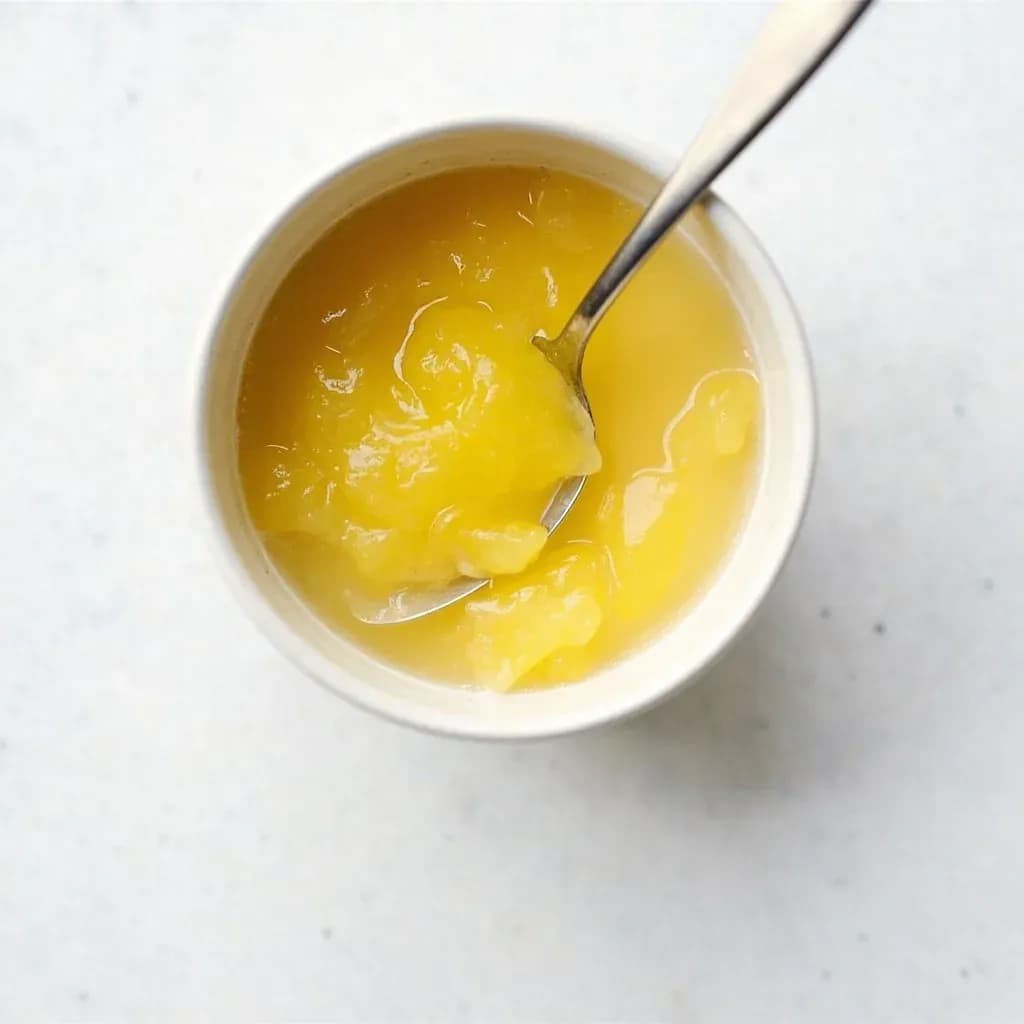
A flax egg combines one tablespoon of ground flaxseed with about three tablespoons of water, left to sit until it thickens into a viscous, egg-like gel. It works as a binder in pancakes, muffins, and cookies, replacing eggs in vegan and egg-free baking. It adds binding and moisture but not the leavening or structure that whipped eggs provide.
A flax egg is the vegan baker's workhorse binder: ground flaxseed whisked with water and left to hydrate into a viscous gel that mimics the way an egg holds a batter together. The magic is in the seed's hull, which is rich in soluble fiber called mucilage; once the seed is cracked open and soaked, that mucilage swells and thickens the water into a loose, spoon-coating pudding. In structure, that gel does what the proteins in egg white do in a basic batter — it traps moisture, slows staling, and gives crumb enough cohesion to hold its shape after baking.
It is important to understand what a flax egg is not. It is not a leavener, an emulsifier, or a foam. An egg does many things in baking — binding, leavening, emulsifying fat, adding color, enriching with yolk fat — and a flax egg replaces only the first of those. Cakes, cookies, pancakes, and loaves that rely on the binding and tenderizing effect of egg are excellent candidates; anything that depends on whipped air (meringues, génoise, angel food, soufflés) or on egg yolk as an emulsifier for large amounts of fat (mayonnaise, hollandaise, aioli, certain custards) is not. Used appropriately, the flax egg is a near-invisible substitute; used outside its lane, it produces flat, gummy, or greasy results that have given the technique a mixed reputation it does not deserve.
The technique is also a useful lesson in working with whole-food ingredients. Flaxseed must be ground to release the mucilage, and that meal is perishable — its oils oxidize quickly once milled — so the small habit of grinding fresh each time you bake is what separates reliable results from disappointing ones. Master that, and you have a pantry-stable, cholesterol-free binder that costs pennies per use.
- Difficulty
- Easy
Types & varieties
1 tablespoon ground brown flaxseed whisked with 3 tablespoons water — the everyday default for most vegan bakes.
Same ratio, but made with golden (yellow) flaxseed; produces a milder flavor and less visible flecking in pale batters and frostings.
1 tablespoon ground flax to 2 tablespoons water; a thicker binder suited to dense energy bars, no-bake bites, and some cookie doughs that need extra hold.
1 tablespoon ground flax to 4 tablespoons water; a thinner mix for recipes with already generous moisture, where only light binding is needed.
Mixed with warm (not boiling) water; the heat speeds hydration and brings the gel in within 3–5 minutes.
How to do it
- 1
Grind the flaxseed
For each 'egg' you need, measure 1 tablespoon of whole flaxseed into a clean coffee or spice grinder and pulse for 10–20 seconds, until the meal looks like coarse cornmeal with no whole seeds remaining. If you are using pre-ground flax, skip this step and simply measure 1 tablespoon per egg.
- 2
Combine with water
Whisk each tablespoon of ground flax with 3 tablespoons of cool or room-temperature water in its own small bowl. Stir briskly with a fork or small whisk for about 15 seconds, breaking up any clumps and making sure the meal is fully saturated. The mixture will look thin and slightly sandy at this point — that is normal.
- 3
Let it rest
Set the bowl aside for 5–15 minutes. The mixture should thicken into a viscous, spoon-coating gel with a texture like thin raw egg white or a loose pudding. If it still looks watery after 10 minutes, give it another stir and wait a few minutes more. To speed the process, use warm (not hot) water; the gel will form in roughly 3–5 minutes.
- 4
Use immediately
Whisk once more to loosen the gel, then fold it into the recipe at the point the egg would normally be added. Use it right away — the gel begins to thin and lose binding strength after 30–60 minutes at room temperature.
- 5
Scale up properly
When a recipe calls for more than one egg, prepare each flax egg in its own small bowl rather than combining them into one larger batch. Individual portions hydrate and gel at the same rate, which gives a more consistent result than a single large mixture, which tends to gel unevenly with a thicker skin on top and watery liquid below.
How the gel works
Flaxseed's binding power comes from a layer of cells in the seed coat that is unusually rich in soluble, gel-forming fiber. That fiber, often called mucilage, is the same family of compounds that makes chia pudding set and that gives okra its characteristic slipperiness. When the seed is ground, the cell walls are broken and the mucilage is exposed to water; it absorbs many times its own weight and the mixture thickens. The result is not identical to raw egg — it lacks protein structure and cannot trap air — but in a batter it behaves the way egg white does at rest: it holds moisture in the crumb and gives the finished bake enough internal cohesion to slice and hold together. Heat sets the gel further during baking, which is why a flax-egg-bound loaf slices cleanly once cool and crumbles less than a comparable egg-bound loaf while still warm.
Storage and shelf life
Storage of a flax egg is short, but storage of the raw material is the real story. The hydrated gel begins to thin and can sour within a few hours at room temperature, so it is best mixed right before baking. Whole flaxseed, by contrast, is a long-keeping pantry item because the oil is protected inside the seed coat. Once you crack that coat, the oil is exposed to oxygen and begins to go rancid. Treat ground flaxseed the way you treat any other milled seed or nut: airtight, refrigerated, and used within a few weeks — or frozen for several months. A small dedicated coffee grinder kept just for seeds is the most reliable way to ensure potency at the moment of baking.
- Whole flaxseed: 6–12 months in a cool, dark pantry in a sealed container.
- Ground flaxseed: 2–4 weeks refrigerated, several months frozen in an airtight bag.
- Hydrated flax gel: use within 30–60 minutes at room temperature; it thins and can sour with longer standing.
When not to substitute
The flax egg has clear limits, and recognizing them is what separates confident vegan bakers from frustrated ones. Anything that needs an egg to trap air — meringues, pavlovas, angel food cake, génoise, soufflés — will not work; a flax gel cannot be whipped to foam. Custards and curds that depend on egg yolk proteins to thicken and set will not set with flax. Mayonnaise, hollandaise, and aioli depend on egg yolk as an emulsifier for large amounts of oil, and the flax gel breaks under that much fat. Finally, very long, very wet bakes (some dense fruitcakes, for instance) can sometimes thin the gel past its useful range, leaving the crumb slack. In each of these cases, the answer is to reach for a different substitute — aquafaba for foams, a starch-thickened slurry for custards, or simply a recipe formulated for egg-free baking rather than a straight 1:1 swap.
Common uses
Tips & pitfalls
- Grind the flax fresh for each batch if you can — pre-ground meal oxidizes within weeks, and stale meal is the most common reason a flax egg fails to set or tastes paint-like.
- Whisk briskly with a fork or small whisk for at least 15 seconds; a lazy stir leaves dry pockets of meal that never hydrate and show up as gritty streaks in the finished bake.
- Wait the full rest — 5 minutes at minimum, ideally 10. A flax egg folded in before it has gelled acts more like watery flour than like a binder, and the bake suffers.
- If the gel smells fishy, crayon-like, or like paint, the meal is rancid; throw it out and start with fresh seeds. This is a flavor signal, not a nuance to be ignored.
- Make each egg in its own small bowl, even when scaling up. A single large batch tends to gel unevenly, with a thick skin on top and watery sediment below.
- In recipes calling for 2 or more eggs where you want a lighter, cakier crumb, add roughly 1/4 teaspoon baking powder per flax egg to compensate for the lost lift.
- Reduce another liquid in the recipe by 1–2 tablespoons per flax egg, since the 3 tablespoons of water is already contributing to the batter's hydration.
- Use golden flax for vanilla cakes, sugar cookies, buttercream-style frostings, and anything pale — the brown flecks of regular flax can read as dirt in a white crumb.
Good to know
- Standard ratio
- 1 tablespoon ground flaxseed to 3 tablespoons water equals one large egg's worth of binder.
- Rest time
- 5–15 minutes at room temperature, until the mixture reaches a thin-pudding viscosity.
- Replaces
- One large egg's binding function only — not leavening, whipping, or emulsification.
- Best in
- Dense, moist baked goods: muffins, quick breads, cookies, pancakes, brownies, waffles, and bars.
- Avoid in
- Meringues, génoise, angel food cake, custards, mayonnaise, and any recipe that depends on whipped egg for lift.
- Key component
- Mucilage, a soluble fiber in the seed hull, which hydrates into the binding gel.
- Whole vs. ground
- Whole seeds will not gel within a useful timeframe; they must be cracked in a grinder or mortar.
- Storage of the seed
- Whole seeds keep 6–12 months in a cool pantry; ground flax keeps 2–4 weeks refrigerated, longer frozen.
Also called
Flax Egg · Flaxseed Egg
Related

Whisk
Beat ingredients smooth and aerated with a looping wire motion

Sift
Pass dry ingredients through mesh to aerate and remove lumps

Strain
Pour through mesh to separate solids from liquid for a smooth result

Filter
Pass liquid through fine material to clarify out the smallest particles

Rice
Press cooked potatoes through small holes for fluffy, lump-free texture

Mash
Crush soft cooked food into a rustic, creamy purée

Grind
Crush food into a coarse to fine texture, from spices to meat

Grate
Shred food into fine bits against a sharp-toothed surface