Transform & Preserve
Forcemeat Emulsification
Working ground meat, fat, and liquid into a bound, springy paste for sausages and dumplings.
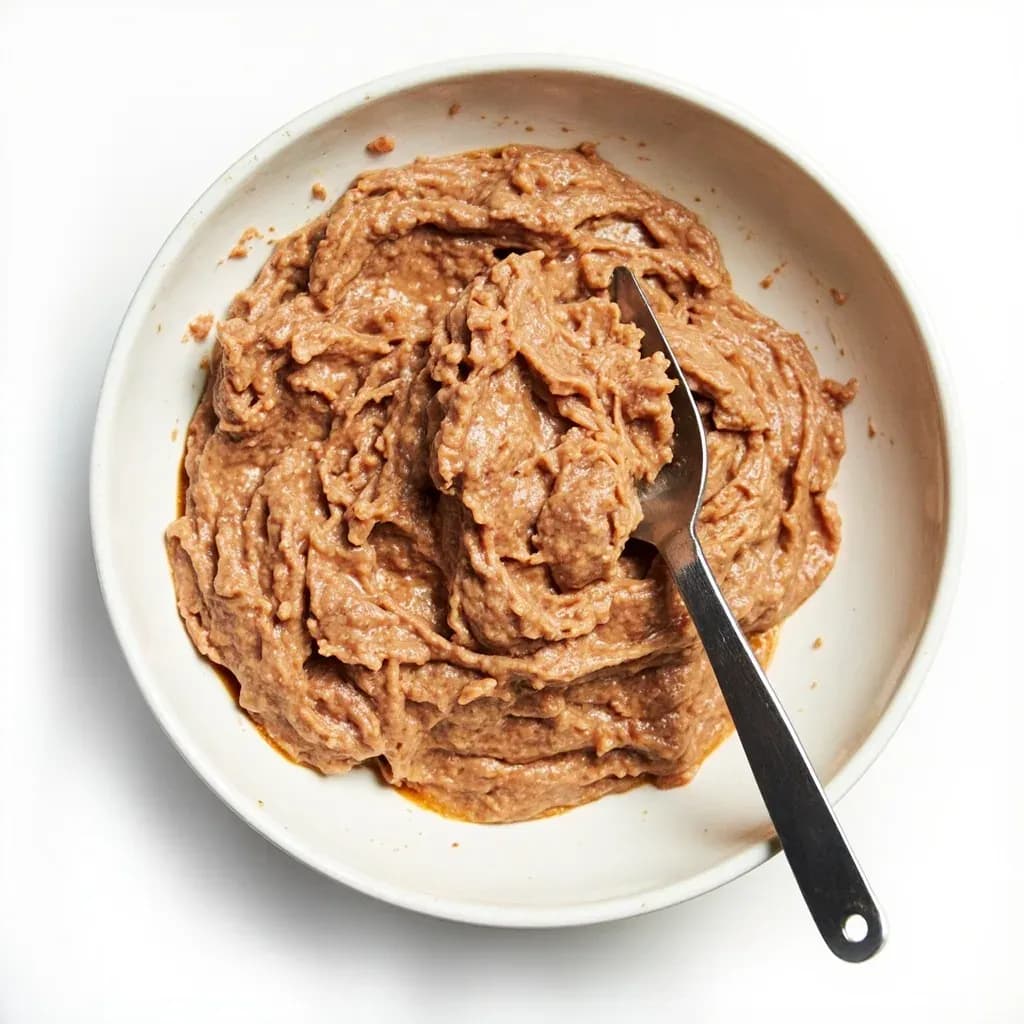
Forcemeat emulsification blends ground meat with fat and liquid until proteins bind into a smooth, cohesive paste. Keeping everything very cold is critical so the fat stays suspended rather than breaking out and turning greasy. It underlies sausages, terrines, and beaten dumpling and meatball fillings that hold together when cooked. Over-mixing or warmth causes the emulsion to split and the texture to crumble.
Forcemeat emulsification is the technique of working ground meat, fat, and liquid into a stable, cold suspension in which solid fat particles are held apart by a web of extracted meat proteins. The binder is myosin, a salt-soluble muscle protein that uncoils and forms long elastic filaments when meat is salted and mechanically agitated; those filaments are what trap fat droplets and water and keep them from merging back into pools of grease. It is built on the same underlying principle as a mayonnaise — a fat-in-water emulsion stabilized by protein — only using myosin from muscle rather than the proteins and lecithin of egg yolk, and kept at refrigerator temperature throughout. Once you understand that you are deliberately extracting and stretching myosin, not simply mixing ingredients, the rest of the technique falls into place.
It is the unifying skill behind most charcuterie and a surprising amount of fine-dining cookery: boudin blanc, frankfurters, pâté de campagne, sole mousseline, chicken quenelles, and stuffed galantines are all variations on the same emulsion, varied by grind size, fat ratio, and the liquid used. A coarse country-style forcemeat and a silky emulsified hot-dog batter share the same myosin network; only the fineness of the grind and the proportion of water and ice change. Mastering the emulsion means you can move freely between rustic pâtés and delicate quenelles without learning a new method each time.
In practice, two variables control almost everything: temperature and salt timing. Everything — meat, fat, liquid, bowl, grinder, paddle — must stay at or below 4 °C / 40 °F, because warm fat melts before the protein network can lock it in place and the emulsion breaks. Salt added before grinding extracts myosin far more efficiently than salt stirred in at the end, which is why commercial sausage makers salt their meat the night before. Get those two handles right and the rest of the technique is patient, incremental work.
- Difficulty
- Hard
Types & varieties
Lean meat, pork back fat, and liquid only — no liver, no panada. Tight, bouncy texture; the classical choice for galantines and ballottines.
Coarser grind, includes pork liver and often a bread or rice panada. Rustic and robust; the backbone of pâté de campagne and many regional sausages.
Panada plus liver, sometimes pre-cooked elements; the 'gratin' refers to a browned crumb crust, not cheese. Looser texture, deeper flavor.
Very fine purée pushed through a tamis; bound with egg whites and heavy cream rather than added pork fat. Light, airy, quenelle-style — classic with sole, salmon, shrimp, and poultry.
Industrial-grade fine emulsion for hot dogs, frankfurters, bologna, mortadella, and boudin blanc; often fortified with non-fat dry milk or soy protein as a secondary emulsifier.
Essentially a mousseline portioned and poached; relies on egg white plus cream for lift and binding rather than added pork fat.
How to do it
- 1
Chill every component
Cut meat and fat into 1–2 cm cubes and freeze on a tray for 20–30 minutes until firm but not rock-solid. Chill grinder parts, mixing bowl, paddle, and any liquid (ice water, cream, stock) on ice as well. Working cold is non-negotiable; warm fat will not emulsify.
- 2
Salt the meat
Toss the cubed meat with 1.5–2% salt by weight along with any cure (sodium nitrite), sugar, and dry spices. Rest 30 minutes in the fridge, or up to overnight. This dissolves myosin and dramatically shortens the mechanical work needed to build a bind.
- 3
First grind
Pass the chilled meat and fat through the appropriate plate into a chilled bowl — the medium plate (4.5–6 mm) for most forcemeats, the coarse plate (8–10 mm) for country-style, or the fine plate (3 mm) for emulsified sausages. For a mousseline, finish in a food processor to a paste.
- 4
Build the protein network
Transfer the grind to a chilled stand-mixer bowl fitted with the paddle and mix on low for 1–2 minutes, scraping down once. The mass should turn tacky and start to pull cleanly from the sides — that is the myosin network forming.
- 5
Add liquid in stages
With the machine running, add liquid in 3–4 additions: crushed ice or ice water first, then stock, then cream or eggs. Wait until each addition is fully absorbed and the surface looks homogeneous before adding the next. Total liquid should be 10–20% of meat weight.
- 6
Fold in panada and liver (if using)
For country-style or gratin forcemeats, fold in a cooled panada (bread soaked in milk, cooked rice, or a thick béchamel) and/or puréed pork liver by hand at this point. Gentle folding preserves the emulsion you just built.
- 7
Test the bind
Pinch a tablespoon of the mix, pat it flat against your palm, and turn your hand over. The patty should stay put. Or cook a small spoonful in a hot dry pan — it should sizzle gently, turn pale, and release only clear fat, never liquid pools.
- 8
Adjust if needed
Too loose: chill 10–15 minutes and work again on low. Too tight or bouncy: stream in a little more cold liquid. Greasy with separated fat: chill harder and rework; the components were not cold enough to begin with.
- 9
Use or store
Stuff into casings, pack into terrines, pipe into quenelle shapes, or portion for poaching. Forcemeat keeps 1–2 days refrigerated or 2–3 months frozen; do not refreeze once thawed.
The Science: Why Myosin, Not Egg, Does the Binding
Most cooks reach for egg as the default emulsifier, but in a forcemeat the work is done by myosin already inside the meat. Myosin is one of the main contractile proteins in muscle; in life it slides past itself to make the muscle contract, and in the kitchen it does something equally useful — when salt dissolves its hold on neighbouring proteins and mechanical action stretches it out, myosin forms long, sticky filaments that physically wrap around fat droplets and trap water in a gel. That mechanical network is why a properly emulsified hot dog can be 30% fat and still slice cleanly with no grease puddle on the board.
Two consequences follow. First, the meat itself must be the emulsifier, which is why very lean meats (chicken breast, venison backstrap) bind poorly and need added fat and protein support; rich meats (pork shoulder, veal breast) bind almost on their own. Second, the network must be built cold and built in stages — fat that melts before it is captured simply leaks out, and water added faster than myosin can absorb it forms a soup that will weep on cooking.
- Myosin extraction is driven by salt concentration, time, and mechanical work — in that order.
- Overworking past the sticky stage denatures the network and produces a bouncy, then dense and grainy, forcemeat.
- A small addition of egg white (1–2% of weight) reinforces a borderline emulsion without changing flavor.
Equipment and Grind Sizes
The right tool depends on the variant you are making, and the differences matter more than they look on paper. A meat grinder with interchangeable plates is the workhorse for most forcemeats: the coarse plate (8–10 mm) for country-style, the medium plate (4.5–6 mm) for straight forcemeats and most sausages, and the fine plate (3 mm) for emulsified sausages that need a paste-like texture. A food processor can substitute for the fine plate but generates heat quickly and is unforgiving if overworked. A stand mixer with a paddle (not the whisk) is ideal for the protein-development stage; a large chilled mortar and pestle works for small batches and gives the most control. Push the final purée through a tamis (drum sieve) for a mousseline.
- Chill the grinder head, auger, blade, and plates in the freezer for 20–30 minutes before use.
- Run the grinder into a bowl set in a larger bowl of ice to keep the meat cold on contact.
- Mousselines require a tamis or fine-mesh drum sieve — a food processor alone leaves the texture too loose.
Common uses
Tips & pitfalls
- Chill everything — meat, fat, liquid, bowl, grinder, paddle, even the work surface — for 30 minutes minimum before starting. Heat melts the fat before the protein network can lock it in.
- Salt the meat before grinding, ideally 30 minutes to overnight. Pre-salted meat binds with far less mechanical work and gives a noticeably better texture.
- Add liquid in 3–4 additions and let each one fully absorb before adding the next. Crushed ice is the safest first addition because it chills the mix as it melts.
- Stop the moment the mix pulls away from the bowl cleanly and holds a ribbon. Overworked forcemeat goes bouncy and then turns dense and grainy after cooking — there is no saving it from that point.
- Use pork back fat or unrendered leaf fat for the cleanest emulsion. Hard, fully rendered lard and very soft duck or chicken skin fat are harder to stabilize and often need adjusted ratios.
- A tablespoon of egg white will rescue a borderline emulsion; the albumin adds binding power without altering flavor.
- Test before committing — pinch a small amount and invert your hand, or fry a teaspoon in a dry pan. If fat pools immediately, the emulsion is broken and needs to be rebuilt cold.
- Never add warm ingredients to the mix. Eggs, cream, and stock should be at fridge temperature and held over ice during use; even ten degrees too warm can break a finished emulsion.
Good to know
- French term
- Farce (forcemeat = prepared stuffing or filling)
- Key binding protein
- Myosin, a salt-soluble muscle protein extracted by salt and mechanical work
- Lean-to-fat ratio
- Roughly 3:1 to 4:1 (25–33% fat by weight) for most forcemeats
- Working temperature
- Keep all components and equipment at or below 4 °C / 40 °F
- Salt level
- 1.5–2% of total weight, added before grinding to extract myosin
- Liquid content
- 10–20% of total weight, added in 3–4 stages
- Bind test
- Pinch test (patty stays put when hand is inverted) or a pan-fried spoonful that releases clear fat, never pools
- Difficulty
- Intermediate to advanced — temperature control and patience are the real skills
Also called
Sausage Emulsification · Filling Paste Mixing (Beating)
Related

Confit
Cook slowly submerged in fat for silky tenderness and keeping

Cure
Draw out moisture with salt and time to preserve and concentrate

Pickle
Steep in acidic brine for bright, tangy, crunchy preservation

Ferment
Let friendly microbes transform food into tangy, complex flavor

Marinate
Soak in a seasoned mix to flavor and tenderize before cooking

Brine
Soak in salt water so meat stays juicy and seasoned throughout

Dehydrate
Slowly dry out moisture to concentrate flavor and extend shelf life

Cold-Smoke
Perfume cured food with smoke without cooking it through