Prep & Assembly
Pâté en Terrine
Packing seasoned forcemeat into a mold and baking it into a sliceable terrine.
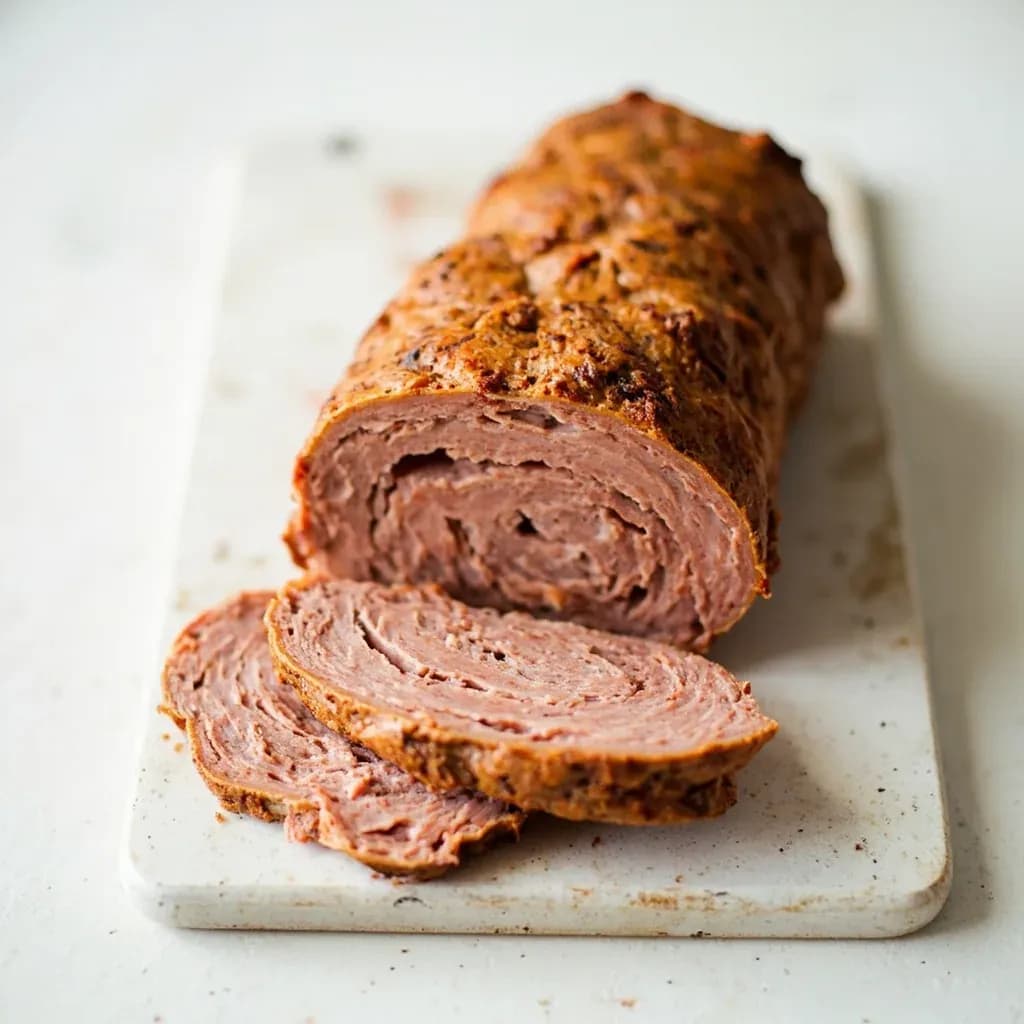
Pâté en terrine is the French method of layering a ground, seasoned meat farce, often with liver, fat, and bound with egg, into a lidded ceramic terrine mold and baking it gently in a water bath. The cooked terrine is weighted and chilled overnight so it sets firm enough to slice cleanly. Lining the mold with caul fat or bacon keeps the surface moist and adds richness.
Pâté en terrine is the foundational technique of French molded charcuterie: a seasoned forcemeat — typically a coarse mixture of pork, liver, herbs, and wine or brandy — packed into a straight-sided earthenware, enameled cast iron, or stainless mold, baked in a water bath, then weighted and chilled until it can be cut into clean, dense slices. The word 'terrine' itself comes from the vessel, *terre cuite* (fired clay), and the technique is as much about the architecture of the loaf as it is about the flavor of the meat: a well-made terrine should hold its shape when sliced, reveal a uniform cross-section of ingredients, and slice cleanly with a moist but never greasy interior.
The technique matters because it transforms humble cuts — pork shoulder, belly, liver, and fat — into something that keeps for a week, travels well, and improves dramatically with time. Resting under weight compresses the loaf, expels excess rendered fat, and marries the seasoning into the meat, while the gentle heat of a bain-marie cooks the proteins slowly enough that they set tender rather than curdle. The result is a preparation that sits at the heart of bistro and charcuterie counters: equally at home as a first course with cornichons, on a Sunday buffet, or layered onto toasted brioche.
What separates a good terrine from a great one is texture and timing. The forcemeat should be coarse enough to read on the fork but fine enough to hold together; the bake should be carried to 70°C (158°F) at the center; and the rest should be measured in days, not hours. Master those, and the technique becomes a reliable canvas for everything from country-style pâté de campagne to a refined foie gras terrine.
- Difficulty
- Hard
Types & varieties
The classic country-style terrine; coarse forcemeat of pork shoulder and pork belly with liver, garlic, herbs, and Cognac, often studded with pistachios and green peppercorns
Essentially synonymous with pâté de campagne; the term 'terrine' emphasizes the molded presentation
Whole or large pieces of foie gras seasoned lightly with Armagnac and salt, baked gently in a terrine mold until barely set
Chicken liver terrine; coarser in texture than a mousse, often finished with a clarified butter seal
Rabbit terrine, often built around rabbit loin with a forcemeat of rabbit trim, frequently partnered with prunes or pistachios
Game terrine made with venison, wild boar, or hare, robustly seasoned with juniper, thyme, and red wine
Duck or goose terrine, often built with confit leg meat and a center layer of foie gras or foie mousse
Rustic family-style terrine; coarse, generously seasoned, frequently wrapped in caul fat or bacon and baked in a loaf pan
Pork forcemeat layered with diced ham and pistachios, a classic Parisian bistro presentation
A fine, emulsified chicken mousseline baked in a terrine mold; silkier and more refined than country-style
How to do it
- 1
Prepare and marinate the meats
Cube 600 g pork shoulder and 200 g pork belly (or substitute back fat) into 1–2 cm pieces. Add 150 g chicken or pork liver, cubed. Toss with 18 g fine salt, 3 g freshly cracked black pepper, 1 tsp green peppercorns (lightly crushed), 3 garlic cloves (smashed), 2 sprigs thyme, 1 bay leaf, 60 ml Cognac or Armagnac, and 60 ml dry white wine. Cover and refrigerate 12–24 hours.
- 2
Grind and season the forcemeat
Pass the marinated mixture through the coarse die of a meat grinder into a bowl set over ice. Add 1 large egg, 30 g pistachios (optional), and a small pinch of grated nutmeg and quatre-épices. Mix gently by hand or pulse briefly in a food processor — the texture should be coarse and nubby, not emulsified. Taste a small cooked patty in a skillet and adjust salt and pepper.
- 3
Line the terrine mold
Lay thin strips of pork back fat or thinly sliced streaky bacon across the bottom and up the long sides of a 1.2–1.5 L terrine mold, letting them overhang by 3–4 cm so they can fold over the top. Press them into the corners so the mold is fully lined with no gaps. If using a stainless mold, brush lightly with rendered fat first to discourage sticking.
- 4
Pack the forcemeat
Transfer the forcemeat to the lined mold in three or four layers, pressing each layer firmly with the back of a spoon or your knuckles to eliminate air pockets. Tap the mold on the counter between layers to settle the mixture. The final layer should sit slightly proud — the loaf will shrink as it cooks.
- 5
Cover and bake in a bain-marie
Fold the overhanging fat or bacon over the top. Lay a sheet of parchment cut to fit, then place the lid on (or cover tightly with foil). Set the mold in a deep roasting pan and pour hot water to come halfway up the sides. Bake at 170°C (340°F) for 1 hour 15 minutes to 1 hour 45 minutes, until an instant-read thermometer inserted into the center reads 70°C (158°F) and the juices run clear when pierced.
- 6
Cool and weight
Lift the mold from the bain-marie, remove the lid and parchment, and let cool for 15–20 minutes until just barely warm. Place a sheet of plastic wrap directly on the surface, then weigh the terrine down with 1–2 kg of cans or a pâté press. Refrigerate under weight for at least 12 hours, preferably 24.
- 7
Seal and rest before slicing
Discard the weight and any liquid fat that has pooled. Pour 2–3 mm of melted clarified butter or warm reserved cooking fat over the surface; it will set into a protective cap. Cover and refrigerate a further 24–48 hours to let the flavor fully develop. Slice with a thin knife dipped in hot water and wiped dry between cuts.
Building the forcemeat
A terrine is only as good as its forcemeat, and the balance of meat, fat, and seasoning is non-negotiable. The classic ratio is roughly three parts lean pork (shoulder, loin, or a mix) to one part fat (pork belly, back fat, or both), with liver added at 10–20% of the total weight for depth, color, and binding. A whole egg or two per kilogram helps emulsify and hold the mixture together, while a small splash of brandy, Cognac, or white wine adds aromatic lift without weighing the texture down. The meats are traditionally diced and marinated overnight with the salt, alcohol, garlic, thyme, bay, and peppercorns before being passed through the coarse die of a grinder — this pre-salting seasons the meat deeply and firms up the proteins for a cleaner set.
- Aim for 25–35% fat by total weight; lean terrines dry out, over-fat terrines render out and collapse
- Dice the meat into 1–2 cm cubes before marinating so the salt and aromatics penetrate quickly
- Marinate 12–24 hours refrigerated; do not skip this step — it's the single biggest flavor-builder
- Reserve a small portion of the marinade (passed through a fine sieve) to adjust seasoning in the finished forcemeat before packing
- Over-processing in the food processor is the most common texture mistake: the mixture should be coarse, not paste-like
Resting, pressing, and slicing
The hours after baking are when a terrine truly becomes itself. Once the internal temperature reaches 70°C and the juices run clear, the mold is removed from the bain-marie and left to cool briefly while still slightly warm, then weighted with 1–2 kg of cans, a brick wrapped in foil, or a proper pâté press. This compression expels trapped air pockets, squeezes out excess rendered fat, and packs the loaf into a dense, uniform block that will hold its shape under the knife. Most recipes call for a minimum of 12 hours under weight, but 24–48 hours produces a noticeably tighter slice. After pressing, the surface is traditionally sealed with a thin pour of melted clarified butter, reserved cooking fat, or a layer of aspic, which sets into a protective cap and extends refrigerated life to a week. Always rest the finished terrine 24–72 hours total before serving; the flavor continues to meld and the texture firms further with time.
- Press while still slightly warm — the loaf is most cooperative before it fully sets
- Wipe excess rendered fat from the surface before sealing, then pour clarified butter to about 3 mm thick
- Use a thin, sharp knife dipped in hot water and wiped dry between cuts for bakery-clean slices
- If the terrine has been frozen, thaw slowly in the refrigerator for 24 hours before slicing
- A terrine pressed too lightly will crumble; one pressed too heavily will be dense and rubbery — aim for firm compression, not a vise
Common uses
Tips & pitfalls
- Test seasoning by cooking a small patty of the raw forcemeat in a hot skillet for 30 seconds — raw tasting is unreliable with such dense, alcohol-laden seasoning
- Let the mixed forcemeat rest 30 minutes in the bowl before packing; the salt fully dissolves and the proteins relax, yielding a more cohesive texture
- Chill the lined terrine mold in the freezer for 10 minutes before packing — the cold fat sets the lining in place and helps the loaf release cleanly after pressing
- Tap the filled mold firmly on the counter a few times before baking to release any trapped air pockets that would otherwise form voids in the slice
- Pull the terrine at 70°C (158°F) at the center; carryover heat brings it to roughly 74°C, the ideal endpoint for a moist, sliceable loaf
- Reserve the rendered fat that pools during pressing — it carries the terrine's aromatics and is excellent for frying eggs or roasting potatoes
- Serve at cool room temperature, not straight from the fridge; the fat needs 20–30 minutes to soften or the flavor reads muted and waxy
- If the top cracks during baking, don't worry — it will be hidden under the butter or aspic seal and won't affect the final texture or slice
Good to know
- Origin
- French charcuterie tradition; the word 'terrine' derives from 'terre' (fired clay), the cooking vessel
- Cooking method
- Baked in a bain-marie (water bath), usually covered, at 160–180°C (320–350°F) oven temperature
- Internal doneness
- Forcemeat should reach 68–74°C (155–165°F) at the center; pull at 70°C to allow for carryover
- Resting time
- 24–72 hours refrigerated after cooking, ideally weighted with 1–2 kg, to develop flavor and set texture
- Typical fat content
- Forcemeat usually 25–35% fat by weight for a tender, moist result
- Key equipment
- Terrine mold (earthenware, enameled cast iron, or stainless steel), bain-marie pan, pâté press or weights, food processor
- Storage
- Keeps 5–7 days refrigerated under a layer of clarified butter, pork fat, or bacon; freezes up to 2 months
- Related technique
- Same forcemeat principles as pâté en croûte, but molded and baked bare (or under bacon/aspic) rather than encased in pastry
Also called
Terrine · Country Pâté
Dishes that rely on it
Related

Whisk
Beat ingredients smooth and aerated with a looping wire motion

Sift
Pass dry ingredients through mesh to aerate and remove lumps

Strain
Pour through mesh to separate solids from liquid for a smooth result

Filter
Pass liquid through fine material to clarify out the smallest particles

Rice
Press cooked potatoes through small holes for fluffy, lump-free texture

Mash
Crush soft cooked food into a rustic, creamy purée

Grind
Crush food into a coarse to fine texture, from spices to meat

Grate
Shred food into fine bits against a sharp-toothed surface