Prep & Assembly
Forcemeat (Farce) Preparation
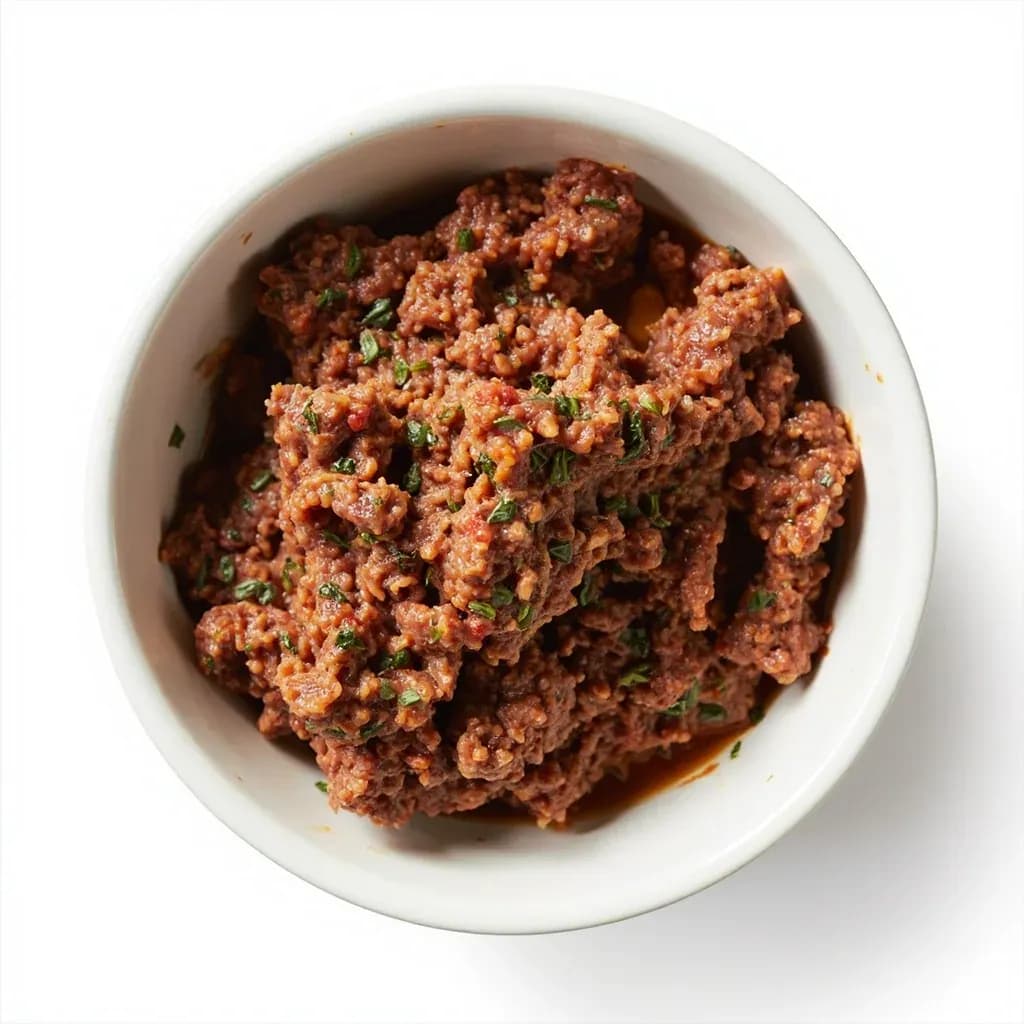
Grinding and emulsifying meat, fat, and seasonings into a smooth bound mixture for terrines and sausages.
Forcemeat preparation grinds meat and fat with seasonings, often binding them with eggs, panade, or a cure, into a cohesive mixture that holds together when cooked. It is the base for sausages, pâtés, terrines, quenelles, and stuffings, ranging from coarse country styles to silky emulsified mousselines. Keeping everything very cold is essential so the fat emulsifies smoothly rather than breaking.
Forcemeat — the French call it farce — is the foundational building block of an enormous range of charcuterie: terrines and pâtés, galantines and ballotines, fresh sausages, delicate quenelles, and emulsified links like frankfurters and boudin blanc. At its core it is a protein-bound matrix: lean meat, fat, seasoning, and a binder (egg, panada, or liver) ground and worked until the salt-soluble proteins coat every particle of fat and moisture, locking them into a stable emulsion. Once you understand forcemeat as an emulsion rather than a meat mixture, almost every rule of the technique — cold temperatures, precise ratios, the rest after salting, the fry test — becomes self-evident.
The discipline rewards cooks who treat it as serious kitchen work rather than a way to use up scraps. A well-made country-style forcemeat for pâté de campagne should taste of roast pork, herbs, and a whisper of liver, with a coarse, rustic bite; a properly made mousseline for quenelles should be so fine and pale it resembles a savory marshmallow, light enough to poach in broth and float when correctly shaped. Both emerge from the same logic: keep the fat cold, salt the meat in advance, and respect the style you are after rather than improvising mid-process.
- Difficulty
- Hard
Types & varieties
Meat, fat, and seasoning only; the cleanest flavor and texture. The starting point for basic sausages and simple pâtés.
Coarsely ground, typically pork and pork liver with garlic, shallots, thyme, and brandy or white wine. Hearty, rustic texture for terrines.
A portion of the meat (often veal or pork) is pan-seared or roasted before grinding, adding deep browned flavor. The foundation of pâté de campagne.
Stabilized with a cooked starch (béchamel, bread panada, or rice). Holds moisture during long oven cooking; common in galantines and ballotines.
Very fine, triple-ground and pushed through a tamis; bound with egg whites and heavy cream, then folded gently. Used for quenelles, fish mousses, and delicate terrines.
Pork-forward with pork liver, Madeira or port, and classic aromatics; defines many classic pâtés en croûte.
A wet, sticky forcemeat where salt-soluble proteins (myosin) are extracted to bind finely ground meat and water. The base for frankfurters, boudin blanc, and mortadella.
How to do it
- 1
Plan the ratio and components
Decide the style (straight, country, mousseline, emulsified). Weigh out lean meat, fat, binder (egg, panada, or liver), liquid, and seasonings according to the chosen style. Liver typically makes up 15–25% of the meat weight in country-style and Lyonnaise styles.
- 2
Chill aggressively
Cube the meat and fat into 1-inch pieces, spread on a sheet pan, and place in the freezer for 20–30 minutes until firm but not rock-solid. Chill grinder parts, bowls, and any equipment that will touch the mixture.
- 3
Prepare the panada (if using)
Make a thick béchamel, or soak bread in milk, or cook rice, then cool it completely. The panada must be cold before it meets the meat, or it will melt the fat on contact.
- 4
First grind
Pass the seasoned meat and fat through a medium die (4.5–6 mm) into a chilled bowl. For country-style, this may be the final grind. For finer styles, return the mixture to the cold for 10–15 minutes.
- 5
Second and third grind (finer styles)
Run the mixture through a finer die (3 mm), then once more. For mousseline, finish by pressing the forcemeat through a tamis or drum sieve with the back of a ladle to remove any remaining fiber.
- 6
Bind and emulsify
For mousselines, work in egg whites, salt, and spices in a chilled processor or over an ice bath, then gently fold in cream. For emulsified sausages, continue processing or mixing until the mass becomes sticky, glossy, and pulls away from the bowl.
- 7
Fry test and adjust
Cook a small patty in a hot pan. Taste for salt, pepper, and aromatics; adjust the batch. This is the only reliable moment to correct seasoning — once a terrine is packed, the flavor is locked in.
- 8
Use or shape immediately
Pack tightly into terrine molds (tapping to release air pockets), pipe into casings, stuff into poultry, or poach as quenelles. Once bound, the forcemeat should be cooked the same day for best texture.
The emulsion principle
A forcemeat is, before anything else, an emulsion. The lean meat supplies salt-soluble proteins (chiefly myosin); the salt draws them out; the fat supplies the dispersed phase. As long as the fat stays cold and the proteins stay available, every particle of fat ends up coated in a protein film and suspended in the moisture — a stable structure that survives cooking into a tender, sliceable terrine or a juicy sausage. The moment the fat warms into the 40s°F or higher, it begins to smear instead of cut cleanly through the grinder, the protein film cannot form properly, and the emulsion breaks: the result is a greasy, crumbly, sad-textured forcemeat. Almost every failure a cook encounters — a pâté that crumbles when sliced, a sausage that leaks fat in the pan, a mousseline that turns rubbery — traces back to temperature or to insufficient salt extraction time.
- Salt 15–30 minutes before the final grind so myosin has time to dissolve and coat the fat.
- Keep every surface cold: meat, fat, grinder parts, processor bowl, even the spatula.
- Aim for 20–30% fat by weight — too little produces a dry, crumbly result no matter how fine the grind.
Choosing a style
The variant you pick dictates nearly every choice that follows — the cut, the binder, the grind size, even the cooking method. Country-style forcemeats want shoulder and belly with a generous hand of liver and a coarse plate; mousselines want pale, lean flesh (veal, poultry, pike), a fine plate plus a tamis, and the gentlest possible fold of egg white and cream. Panada-bound styles exist specifically because the forcemeat will cook long and slow inside a galantine or ballotine, and the starch keeps the interior moist when pure protein would tighten. If you are unsure which style to use, work backward from the final dish: what texture do you want to bite through, and how long will it cook?
- Coarse, rustic terrine → country-style or gratin, coarse plate, liver-heavy.
- Sliceable pâté-en-croûte filling → Lyon-style or straight, medium grind, brandy or port.
- Light, poached dumpling → mousseline, triple-grind plus tamis, egg-white bound.
- Smooth emulsified sausage → fine grind, salt-extracted proteins, processed until glossy and tacky.
- Long-cooked stuffed roast → panada-bound, medium grind, generous internal moisture.
Common uses
Tips & pitfalls
- Keep everything aggressively cold: chill the meat, fat, grinder parts, and even the bowl of the food processor. Warm fat smears instead of cutting cleanly and can break the emulsion.
- Cut meat and fat into uniform 1-inch cubes and rest on a sheet pan in the freezer for 20–30 minutes before grinding; partially frozen pieces grind cleanly and smear less.
- Salt the meat 15–30 minutes before the final grind, then rest it in the cold. Salt dissolves muscle proteins (myosin), which is what gives emulsified forcemeats their sticky, binding quality.
- For country-style texture, use a coarse plate (8–10 mm); for pâté smoothness, run the mixture twice through a medium plate, then once through fine.
- Always do a small fry test before committing the batch: pinch off a teaspoon, flatten, and cook in a hot dry pan. Adjust salt, pepper, and aromatics now — once the terrine is packed, seasoning is locked in.
- Don't overwork mousselines. Once egg whites and cream are folded in, the goal is air incorporation without losing the delicate protein network; overmixing turns the texture rubbery.
- For emulsified sausages, the mixture should look glossy and tacky, almost like cake batter, before stuffing. If it looks greasy or grainy, the proteins have broken and it will not bind.
- Do not substitute lean meat for fat. Forcemeat without enough fat (typically 20–30% of total weight) tastes dry, crumbles, and never achieves the silky mouthfeel that defines good pâté.
Good to know
- Origin
- Classical French cuisine; 'farce' and 'forcemeat' descend from Old French 'farcier,' to stuff. Codified in the grande cuisine canon and central to charcuterie tradition.
- Core composition
- Lean meat, fat (usually pork fatback or pork shoulder), a seasoning/binder element, and a liquid; assembled cold and ground or sieved to a chosen texture.
- Standard ratio
- Roughly 3–4 parts lean to 1 part fat by weight for most forcemeats; panada-bound styles add about 1 part cooked starch binder per 3 parts meat.
- Function
- Acts as a protein-bound matrix — an emulsion of fat and moisture held inside a meat protein network — that can be molded, piped, stuffed, or shaped.
- Temperature before grinding
- Near freezing (32–34°F / 0–1°C). The fat must stay firm so it cuts cleanly rather than smears and breaks the emulsion.
- Binders
- Egg (whole, yolk, or white), panada (béchamel, rice, bread soaked in milk, or cooked potato), liver, or the salt-extracted meat proteins themselves.
- Fry test
- Cook a small patty in a hot pan to confirm seasoning, salt level, and final texture before committing the batch — the only reliable moment to correct seasoning.
- Storage
- Use within 24–48 hours refrigerated; freezes well for 1–2 months if vacuum-sealed.
Also called
Farce · Forcemeat
Dishes that rely on it
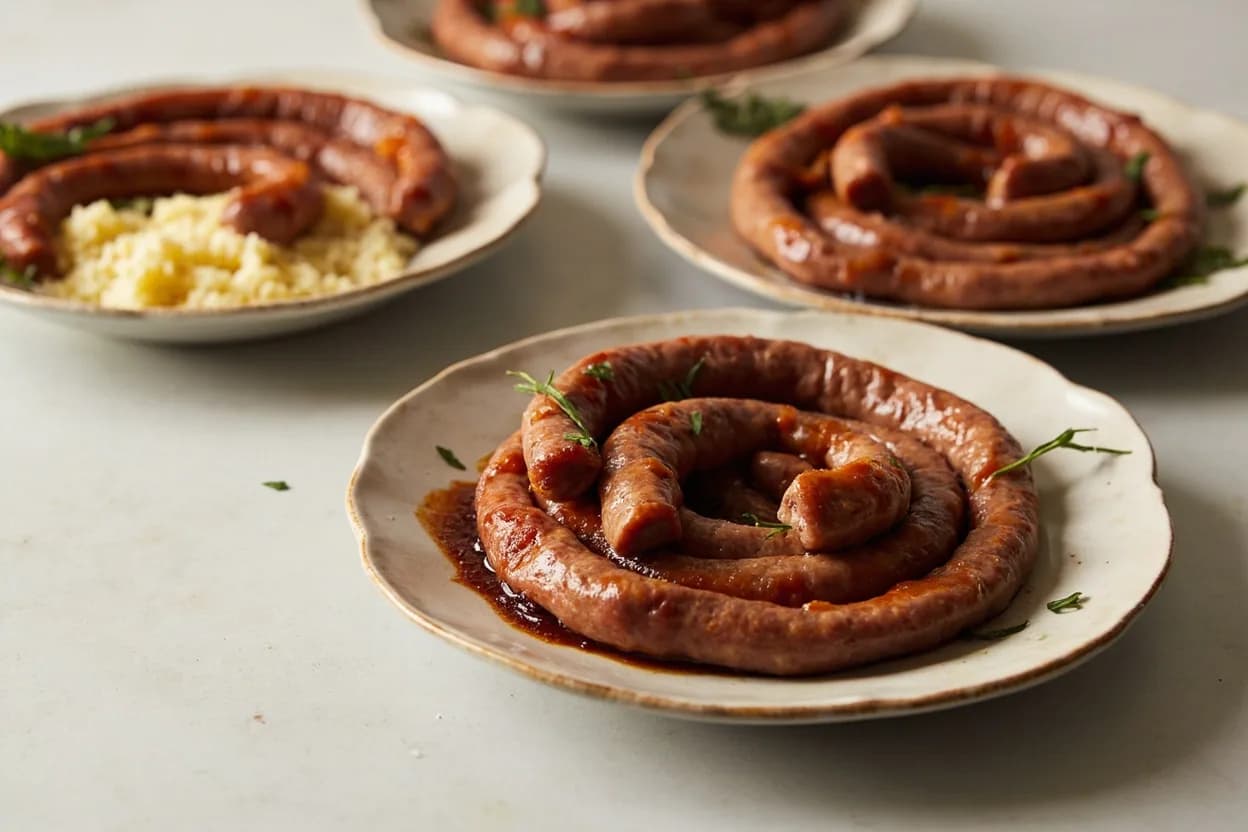
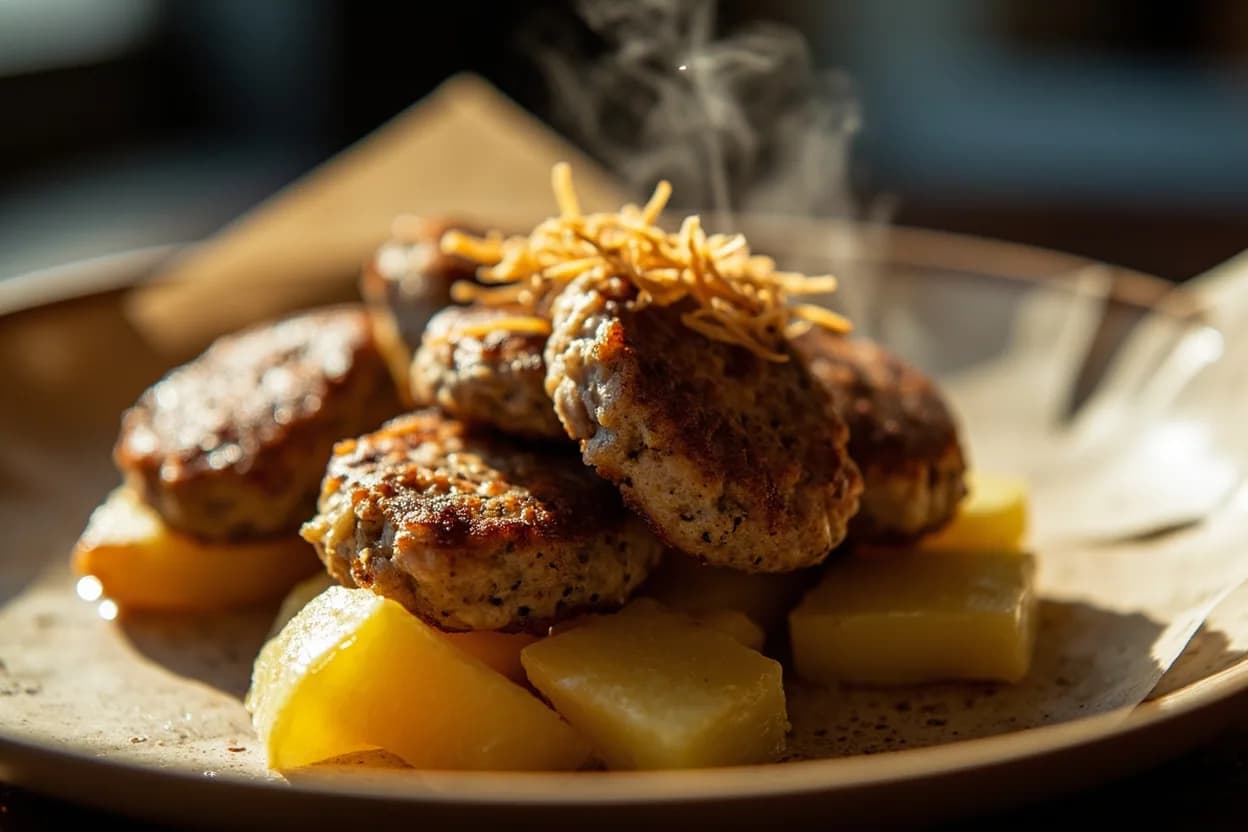
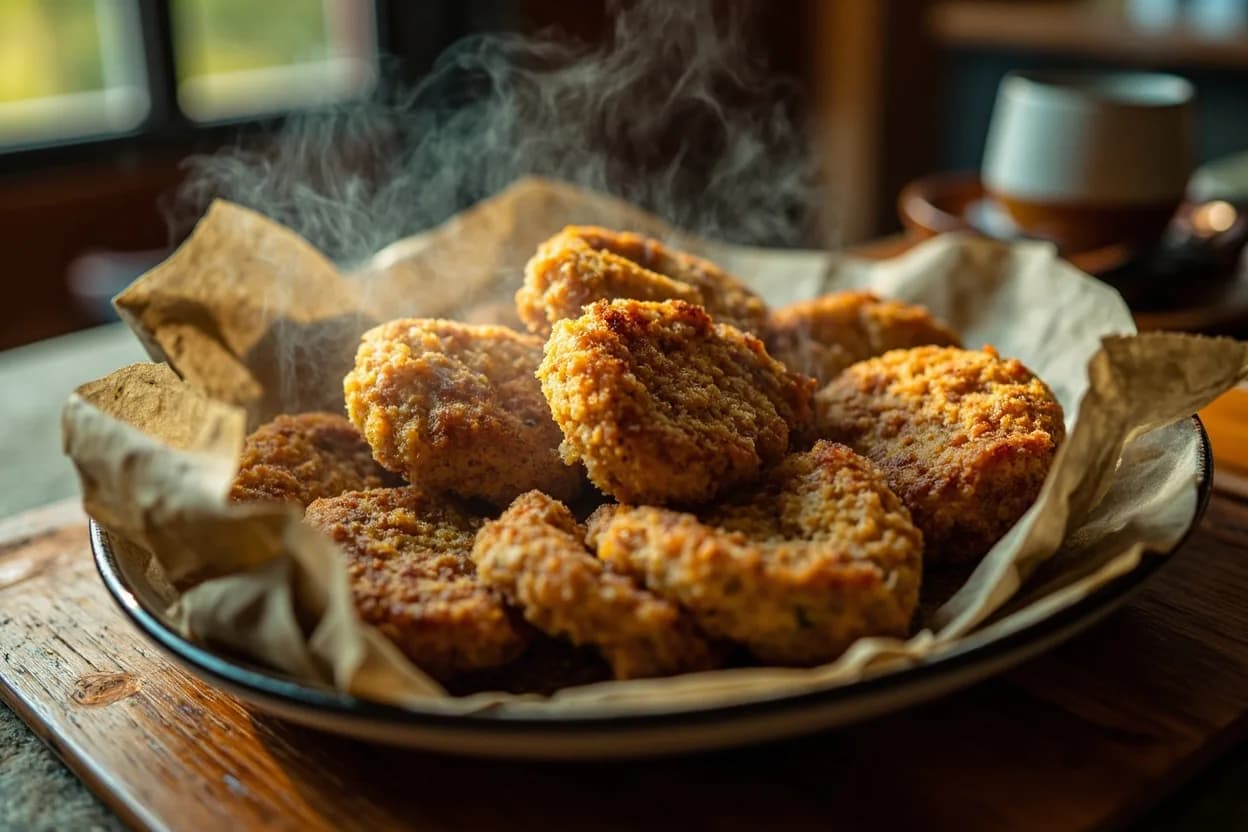
Related

Whisk
Beat ingredients smooth and aerated with a looping wire motion

Sift
Pass dry ingredients through mesh to aerate and remove lumps

Strain
Pour through mesh to separate solids from liquid for a smooth result

Filter
Pass liquid through fine material to clarify out the smallest particles

Rice
Press cooked potatoes through small holes for fluffy, lump-free texture

Mash
Crush soft cooked food into a rustic, creamy purée

Grind
Crush food into a coarse to fine texture, from spices to meat

Grate
Shred food into fine bits against a sharp-toothed surface