Heat & Fire
Frying the Mole Paste (Freír el Mole)
Frying ground mole paste in hot fat before adding broth, to bloom spices and deepen its flavor.
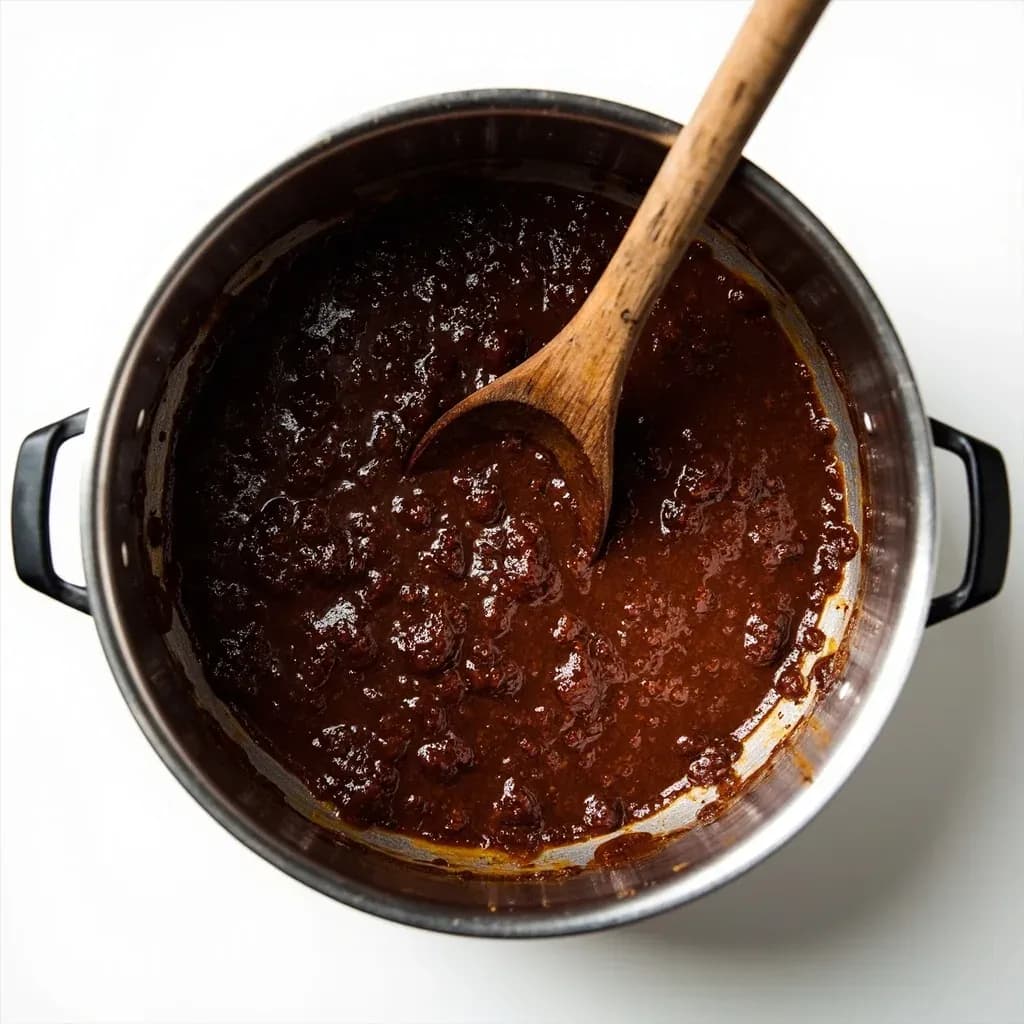
Freír el mole fries the thick ground mole paste in hot lard or oil before any liquid is added, sizzling and stirring it constantly so the chiles, spices and chocolate caramelize and meld. This blooming step removes raw flavors and builds the sauce's signature depth and gloss. Broth is then whisked in and the mole simmers to its final consistency.
Frying the mole paste — freír la pasta, sometimes called tostar la pasta in older cookbooks — is the controlled toasting of a ground mixture of dried chiles, seeds, nuts, spices, and aromatics in hot fat, performed before any liquid is added. It is the single most defining step in the making of a true Mexican mole, the moment that turns a bowl of raw, sandy powder into a unified, glossy, deeply flavored base. Without this fry, the sauce that follows is just chile soup; with it, the paste becomes something closer to a dark, perfumed roux that can carry the long simmer to come.
The technique is fundamentally about emulsification as much as flavor. As the paste cooks in lard or oil, the chile resins, seed oils, and nut fats melt and combine with the cooking fat, creating a stable, cohesive base that suspends evenly when broth is whisked in. At the same time, the dry heat drives off raw vegetal notes from the chiles, blooms the volatile oils in cumin, clove, cinnamon, and pepper, and browns the nuts and seeds until their sweetness deepens. The cook's job is to thread the needle between that transformation and burning — chiles and ground nuts scorch in seconds once they pass medium heat.
Mexican cooks judge the base almost entirely by ear and nose. A properly frying paste murmurs with a steady, oily bubble; goes silent and the heat is too low; pops sharply or smokes and the heat is too high. When the paste darkens two or three shades, releases a toasted-spice aroma, looks unified and glossy rather than grainy, and a flick of water sizzles and vanishes on contact, it is ready to be tempered with broth. Nearly every failure in mole cookery — bitterness, graininess, raw-chile harshness, a split sauce — can be traced back to this stage being rushed, underdone, or overheated.
- Difficulty
- Medium
Types & varieties
Frying a red chile-and-seed paste with raisins, sesame, and almonds until mahogany and glossy; the classic Puebla approach.
A longer fry, often with charred chiles and a higher fat-to-paste ratio; deepens the ebony color and rounds the bitterness of chilhuacle and mulato.
A shorter, gentler fry; the paste is delicate and the red hue should be preserved, not muddied by overcooking.
A light fry; amarillo paste uses fewer chiles and more herbs and seeds, so it scorches easily and benefits from lower heat.
Frying the chile-tomatillo-onion base until darkened and reduced to a thick paste before any broth is added; chichilo rewards patience.
Pumpkin-seed or pepita paste fried briefly to coax out nuttiness before being thinned with broth; the seeds must not brown past golden.
Most verdes are blended raw, but cooked versions fry the tomatillo-herb paste briefly to tame acidity and round the herbs.
Warming leftover paste in a little fresh lard to refresh its flavor before thinning with new broth — a common second-day technique.
How to do it
- 1
Choose and preheat the fat
Heat 3–4 tablespoons of lard (or neutral oil) in a heavy cazuela, Dutch oven, or thick olla over medium heat until shimmering but not smoking. The lard should look liquid and glossy, roughly 170–185°C / 340–365°F — well under lard's smoke point. If you are scaling up a large mole, add more fat incrementally as the paste absorbs it; the paste should always sit in a thin layer of oil, not in a dry mass.
- 2
Bloom any whole aromatics first (optional)
If your recipe includes whole spices (cumin seed, cloves, peppercorns, cinnamon stick), smashed garlic cloves, or a thick slice of onion, fry them briefly in the hot fat until fragrant and lightly colored, then remove with a slotted spoon or push them to the side. This lays a base layer of aroma that frying the paste alone cannot reach.
- 3
Add the mole paste in portions
Spoon the ground paste into the hot fat in 2–3 additions, stirring between each so it integrates rather than clumps. A stiff, freshly ground paste will seem too dry at first — keep stirring as the fat absorbs. If the paste seizes into a single dry lump, splash in a tablespoon of warm broth or water to loosen it before continuing.
- 4
Fry steadily, stirring almost constantly
Cook for 10–20 minutes over medium to medium-low heat, scraping the bottom and sides continuously with a wooden spatula, wooden spoon, or molinillo. Lower the heat at the first sign of aggressive sizzling or smoke; raise it gently if the paste sits inert and greasy. As the fry proceeds, the paste will loosen, darken 2–3 shades, and turn glossy as the chiles, seeds, and nuts toast in the fat.
- 5
Read the cues for doneness
Stop frying when the paste is noticeably darker, smells deeply toasted rather than raw or acrid, looks oily and unified rather than grainy, and a drop of water flicked onto the surface sizzles and vanishes immediately. A spoonful should fall from the spatula like a thick, dark roux. There is a narrow window here — err on the side of caution, because burnt paste cannot be rescued.
- 6
Temper with the first ladle of broth
Stand back and pour a small ladle of warm broth (or the agua donde se coció el pollo) directly into the center of the pot. The paste will sputter and steam violently. Whisk or stir vigorously to incorporate before the next addition, working off the heat for a moment if the pot is roaring.
- 7
Thin gradually and return to a simmer
Continue adding warm broth in small amounts, stirring between each, until you reach the consistency of a thick sauce. Then add the remaining broth, return the pot to a bare simmer, and skim surface fat with a spoon if a tighter, less oily sauce is desired.
- 8
Adjust and finish the mole
Simmer 20–45 minutes so the thinned paste mellows and any nuts or seeds soften fully. Taste for salt, sweetness (a little azúcar or chocolate in some moles), and chile heat, then proceed with the recipe's final additions — chocolate, hoja santa, toasted sesame, xoconostle, or whatever the specific mole calls for. Serve over poached chicken, turkey, or pork, or use as a braising liquid for enchiladas and tamales.
Reading the Fry: Sensory Cues That Tell You the Paste Is Ready
Because the window between bloomed and burnt is measured in moments, experienced cooks lean on the senses rather than the clock. The following cues, taken together, signal that the paste has gone far enough and is ready for broth.
- Color: the paste darkens two to three shades from its raw color and loses any chalky, dusty look.
- Surface: a thin, glossy sheen of oil appears across the surface; the paste looks unified, not separated into dry clumps floating in fat.
- Aroma: raw vegetal and dusty-chile notes give way to a deep, toasted-spice perfume; sharp or acrid smells mean the heat is too high.
- Sound: a steady, oily murmur of small bubbles; silence means too cool, sharp popping or hissing means too hot.
- The fry test: a single drop of water or broth flicked onto the surface sizzles, dances, and evaporates within a second or two.
- Consistency: a spoonful lifted from the pot falls back in a thick, slow ribbon — like a dark roux — rather than a sandy crumble.
Why Fat Choice Matters
Lard is not a nostalgic flourish in mole cookery. The rendered pork fat carries chile flavor in a way that neutral oil does not, and its mouthfeel leaves the finished sauce with a rounder body.
- Lard (manteca de cerdo) is the traditional choice and lends savory depth; it should be heated until liquid and shimmering, well below its smoke point.
- Neutral oil (grapeseed, sunflower, rice bran) is the modern substitute; the sauce will taste leaner and may need finishing with a little more toasted sesame or nut paste to compensate.
- Butter burns too quickly at mole-frying temperatures and is rarely used.
- Extra-virgin olive oil, with its grassy and bitter notes, tends to compete with the chiles and is best avoided in classic moles; a mild light olive oil can be used in a pinch but is not traditional.
Common uses
Tips & pitfalls
- Use lard, not oil, if you want the round, savory depth that defines a classic mole — rendered pork fat carries chile flavor in a way neutral oil cannot.
- Keep the heat at medium or medium-low; chiles and ground nuts burn in seconds above medium, and burnt paste will ruin the entire dish.
- Stir almost constantly with a wooden spatula or molinillo, scraping the bottom — the paste clings and scorches in patches if left alone for even a minute.
- Learn the 'fry test': a tiny flick of water or broth that sizzles and evaporates on contact means the paste is hot enough and properly bloomed.
- When the paste turns noticeably darker, glossy, and smells toasted rather than raw, stop — there is a narrow window between bloomed and burnt, and you cannot undo the latter.
- Add broth in small ladlefuls, not all at once; the first addition will spatter violently, so stand back and use a long-handled ladle.
- If the paste tightens or seizes when broth hits it, work it vigorously off the heat with a whisk before returning the pot to a low simmer; do not force it over direct flame or it will stick and burn.
- Toast whole spices (cumin, cloves, pepper, cinnamon) in the fat first, then remove or grind them into the paste — this layers aroma that frying the paste alone cannot produce.
- Do not fry on a screaming-hot burner; the chiles turn acrid and the nuts go grainy and bitter before you can intervene.
- A properly fried base will coat the back of a wooden spoon like a thick, dark, glossy roux before any liquid is added — that is the visual target.
Good to know
- Spanish name
- Freír el mole (also freír la pasta, tostar la pasta)
- Origin
- Mexican; central to the cookery of Puebla, Oaxaca, and surrounding regions
- Primary purpose
- Bloom spices, deepen color, and emulsify the paste with fat before adding liquid
- Traditional fat
- Pork lard (manteca de cerdo); neutral oil as a modern substitute
- Heat level
- Medium to medium-low — high enough to sizzle, low enough to avoid scorching
- Typical duration
- 10–20 minutes of active frying once the paste is fully added
- Key equipment
- Heavy cazuela de barro, Dutch oven, or thick olla; wooden spatula or molinillo
- Sensory cues
- Paste darkens, turns glossy and oily, smells deeply toasted, and sputters when flicked with water or broth
- Difficulty
- Moderate — constant attention and tight heat control are required
- Used in
- All cooked moles (rojos, negros, coloraditos, amarillos, chichilo, manchamantel, pipianes); not typical for raw salsas
Also called
mole-frying-paste · freír el mole
Related

Sear
Blast the surface hot for a deep-browned, savory crust

Sauté
Cook quickly in a little fat over lively heat, tossing as you go

Stir-Fry
Toss bite-sized pieces over roaring heat for fast, smoky cooking

Pan-Fry
Crisp food in a shallow layer of hot fat, turning once or twice

Deep-Fry
Submerge in hot oil for an all-over crackling crust

Roast
Cook uncovered in dry oven heat for browned edges and tender centers

Bake
Cook with steady, surrounding oven heat — the soul of bread and pastry

Broil
Hit food from directly above with fierce overhead heat