Heat & Fire
Frying Crispy Shallots
Slowly frying thin shallot or onion slices until golden and crisp for a fragrant garnish.
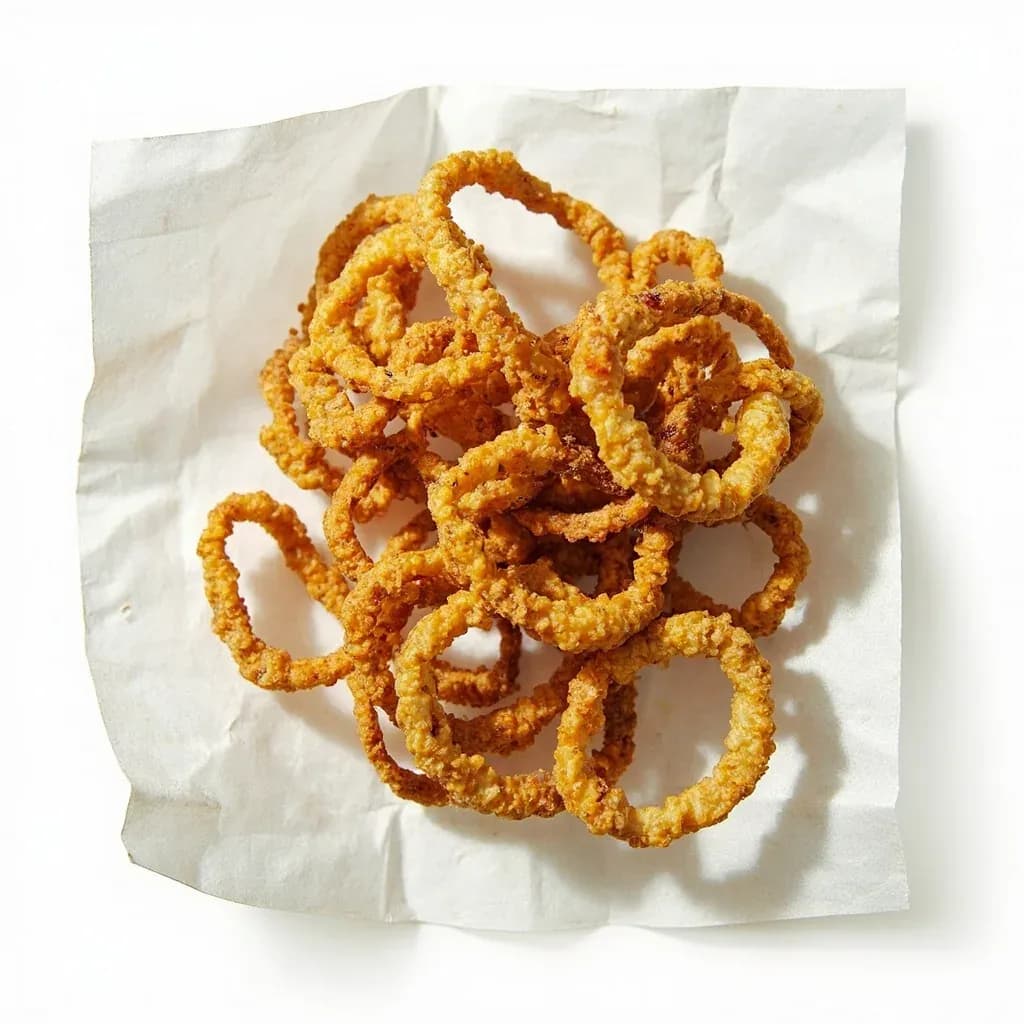
Frying crispy shallots cooks thinly sliced shallots or onions in oil over moderate heat until evenly golden and shatteringly crisp. Known as bawang goreng in Indonesia and beresta in South Asia, they top rice, noodles, and curries with sweet crunch. Drying the slices and frying slowly prevents burning and bitterness. Draining on paper and the residual oil itself both become prized flavorings.
Frying crispy shallots is the slow, low-temperature immersion-frying of thinly sliced shallots until they dehydrate, caramelize, and turn into a brittle, glassy garnish. It is less a deep-fry than a confit-by-immersion: the oil sits well below deep-frying heat (150–165 °C / 300–330 °F) so moisture can escape gently before the sugars scorch. The result is a pantry staple sold by weight in markets from Hanoi to Jakarta — bawang goreng in Indonesia, hành phi in Vietnam, hom daeng jiao in Thailand, the crispy shallots crowning Burmese mohinga.
The technique behaves like a controlled dehydration crossed with a slow toast. Slice too thick or fry too hot and the rings emerge greasy, bendy, and raw in the center; slice thin and patient and they shatter between the teeth with a clean, savory-sweet intensity that fresh shallot cannot match. Roughly 500 g of raw shallots yields only about 150 g of finished crisp, which is why a kilo of shallots disappears faster than expected once you start frying them by the batch.
Beyond the garnish itself, the shallot-scented oil left in the pan is a genuine ingredient in its own right in Indonesian and Burmese cooking — a finishing oil for noodles, fried rice, and vinaigrettes. Treat the technique as a two-for-one: weeks of brittle garnish from a single session of attentive frying, plus a jar of fragrant oil as the by-product.
- Difficulty
- Medium
Types & varieties
Very fine rings of small red shallots fried low in coconut or palm oil; sold in packets as a pantry staple
Slightly thicker slices, often fried in lard or pork fat for richer flavor; classic pho garnish
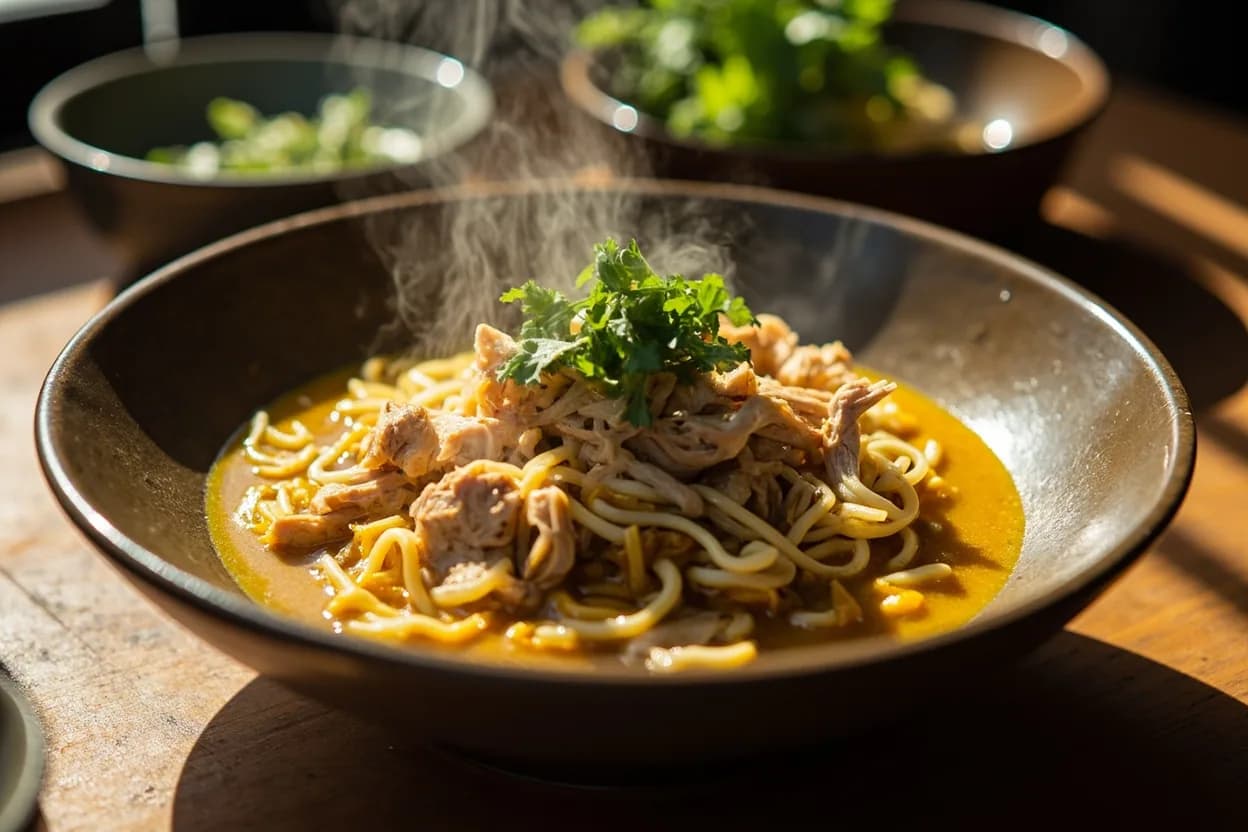
Tiny pink Asian shallots fried with a pinch of sugar toward the end for caramelization; topping for khao soi and congee
Often fried until deeply browned and combined with fried garlic; essential mohinga topping
Equal parts sliced shallot and smashed garlic cloves fried together; common in Thai and Burmese kitchens
Fry once at ~150 °C to cook through and dry, rest, then a short second fry at 180 °C to crisp — extra-stay-crisp results for storage
How to do it
- 1
Peel and slice thinly
Peel small Asian or standard shallots, halve lengthwise, and slice across the grain into 1–2 mm rings. A sharp knife is fine; a mandoline gives the most even, paper-thin cuts. Pat the slices thoroughly dry with a clean kitchen towel — surface moisture is the main cause of splattering and greasy results.
- 2
Heat oil in a heavy pan
Pour 2–3 cm of neutral oil (peanut, sunflower, canola, or rice bran) into a heavy saucepan or small wok. Heat to 150–165 °C / 300–330 °F. Test with one ring — it should sizzle gently and steadily, not explode or sit silent.
- 3
Add a small batch
Drop in a single loose layer of shallot slices (a handful at a time). They will bubble as moisture escapes. Stir gently with a wire skimmer or slotted spoon to keep them moving so they color evenly. Crowding steams instead of fries and yields limp rings.
- 4
Watch the color, not the clock
After 6–10 minutes the bubbling quiets and the slices turn translucent, then pale yellow, then honey-gold. Lower the heat slightly if they are coloring too fast. The window between golden and burnt is about 30–60 seconds — stay close.
- 5
Lift out at pale gold
When the slices are a light honey color and look still slightly underdone, lift them out with a skimmer and spread on a paper-towel–lined tray or wire rack. They will darken a shade more and crisp up from residual heat within a minute.
- 6
Salt and cool
While still hot and glossy with oil, sprinkle lightly with fine salt and toss. Let cool completely uncovered — covering traps steam and turns them chewy.
- 7
Repeat, store, and reserve the oil
Bring oil back to temperature between batches and fry the remaining shallots. Once fully cool, store in a loosely covered jar at room temperature up to 2–3 weeks. Strain the fragrant oil into a clean jar and reserve for dressings, fried rice, and noodle dishes.
Why low oil temperature matters
Shallots are about 80% water by weight. The point of the fry is to drive that water out before the surface sugars burn — and that window is narrow. At 180 °C, the temperature used for French-style onion fritters, the outside scorches and seals in moisture before the inside dries, leaving greasy, bendy rings. At 150–165 °C the bubbling is steady but never violent; it slows as the moisture leaves, and that slowdown is your signal that the slices are approaching the brittle stage. A heavy pan matters because it holds that temperature through the cold shock of each new batch, where a thin pan dips and recovers too slowly, leaving the rings unevenly colored.
- A heavy pan holds 150–165 °C through a cold batch; a thin pan dips and recovers too slowly
- The bubbling quiets as moisture leaves — that quiet is your cue to watch the color closely
- Splattering or explosive bubbling that persists beyond the first minute usually means the slices were not dried well enough before frying
The carryover trap (and the infused oil bonus)
Two things happen the moment you lift the shallots from the oil. First, they keep cooking from residual heat and darken a full shade within 15–30 seconds, so the color you pull at is not the color you end up with — pulling them a hair underdone is correct. Second, the oil in the pan is now a finished ingredient: amber, fragrant, and capable of carrying the shallot flavor into anything you dress with it. Strain it through a fine sieve into a jar; it keeps for months and is the secret behind a great bowl of fried rice or a punchy shallot vinaigrette.
- Pull at pale honey, not amber — carryover heat finishes the browning
- Never cover cooling crisps; trapped steam turns them chewy within an hour
- Reserve the infused oil: it is a finishing oil, not a frying oil, and it keeps for months at room temperature
Common uses
Tips & pitfalls
- Dry the sliced shallots thoroughly with a towel before frying — water splatters, drops oil temperature, and gives greasy, pale results.
- Fry in small batches as a loose single layer; crowding steams instead of fries and yields limp rings.
- Use a heavy pan with high sides; a thin pan recovers heat too slowly and the shallots brown unevenly.
- Salt immediately after draining while still hot so it sticks and seasons the brittle crisps.
- Pull the shallots when they look slightly underdone; carryover heat finishes them to gold, not brown — if you wait for amber, they will end up burnt.
- Save the infused shallot oil; it is a powerful finishing oil for noodles, vinaigrettes, and fried rice.
- If the oil is smoking or the shallots darken in under 2 minutes, it is too hot — remove from heat, let it cool, and retry.
- A pinch of rice flour or cornstarch tossed with the raw slices (then shaken off) can give an extra-crisp shell, especially in humid climates.
- Do not cover the finished crisps while cooling; trapped steam softens them.
Good to know
- Also known as
- Bawang goreng (Indonesia/Malaysia), hành phi (Vietnam), crispy fried shallots (Burma), hom daeng jiao (Thailand)
- Best shallot type
- Small Asian or Burma red shallots; French or Dutch shallots also work
- Slice thickness
- 1–2 mm rings, halved if bulbs are large; paper-thin is the goal
- Oil temperature
- 150–165 °C / 300–330 °F — low and slow, not deep-fry hot
- Frying time
- 8–15 minutes per batch, depending on moisture and load
- Best oil
- Neutral, high-smoke-point: peanut, sunflower, canola, rice bran, or vegetable oil
- Yield
- Roughly 1/3 to 1/4 of raw weight; 500 g shallots gives about 150 g crisp
- Color cue
- Pull at pale honey-gold; they keep darkening 15–30 seconds after leaving the oil
- Storage
- Airtight jar at room temperature 2–3 weeks; do not refrigerate (softens)
Also called
Frying Crispy Shallots (Bawang Goreng) · Fried Onion (Beresta)
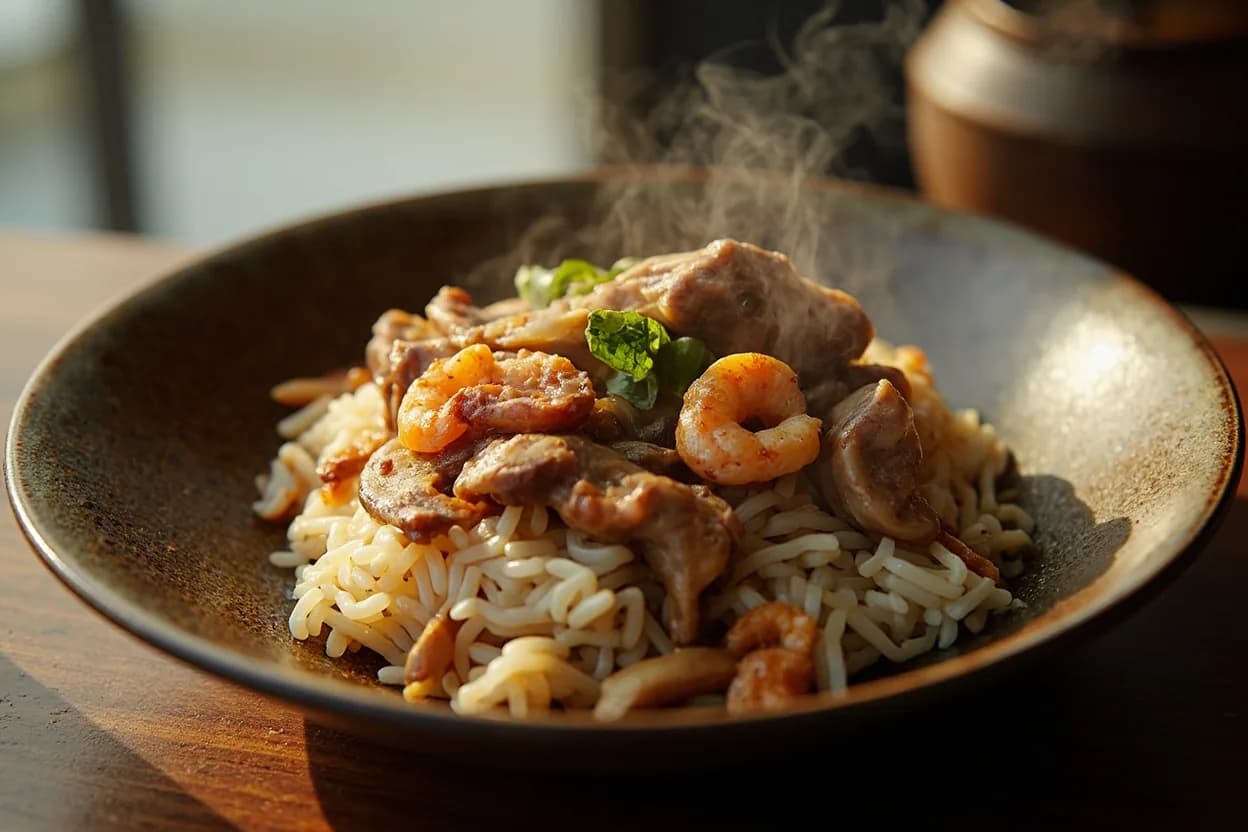
Dishes that rely on it
Related

Sear
Blast the surface hot for a deep-browned, savory crust

Sauté
Cook quickly in a little fat over lively heat, tossing as you go

Stir-Fry
Toss bite-sized pieces over roaring heat for fast, smoky cooking

Pan-Fry
Crisp food in a shallow layer of hot fat, turning once or twice

Deep-Fry
Submerge in hot oil for an all-over crackling crust

Roast
Cook uncovered in dry oven heat for browned edges and tender centers

Bake
Cook with steady, surrounding oven heat — the soul of bread and pastry

Broil
Hit food from directly above with fierce overhead heat