Prep & Assembly
Constant Stirring (Funche/Polenta)
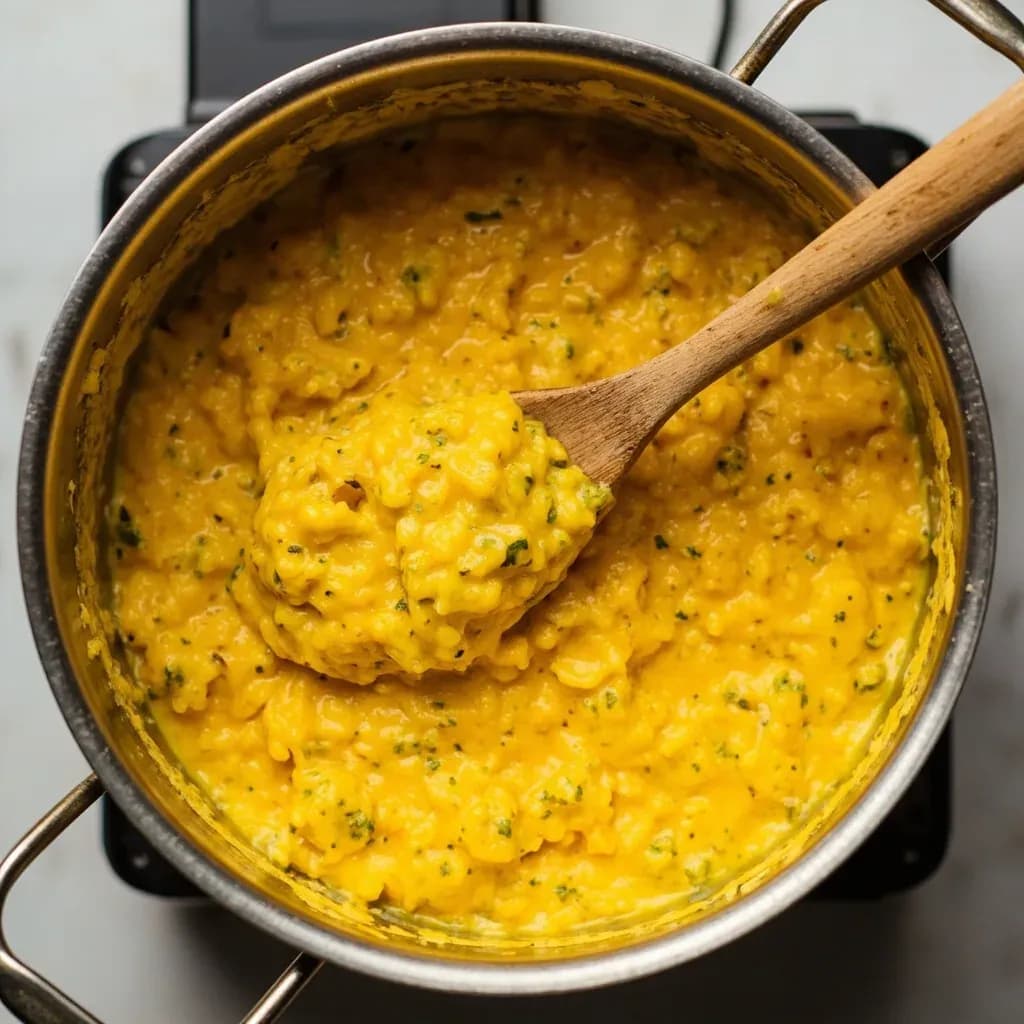
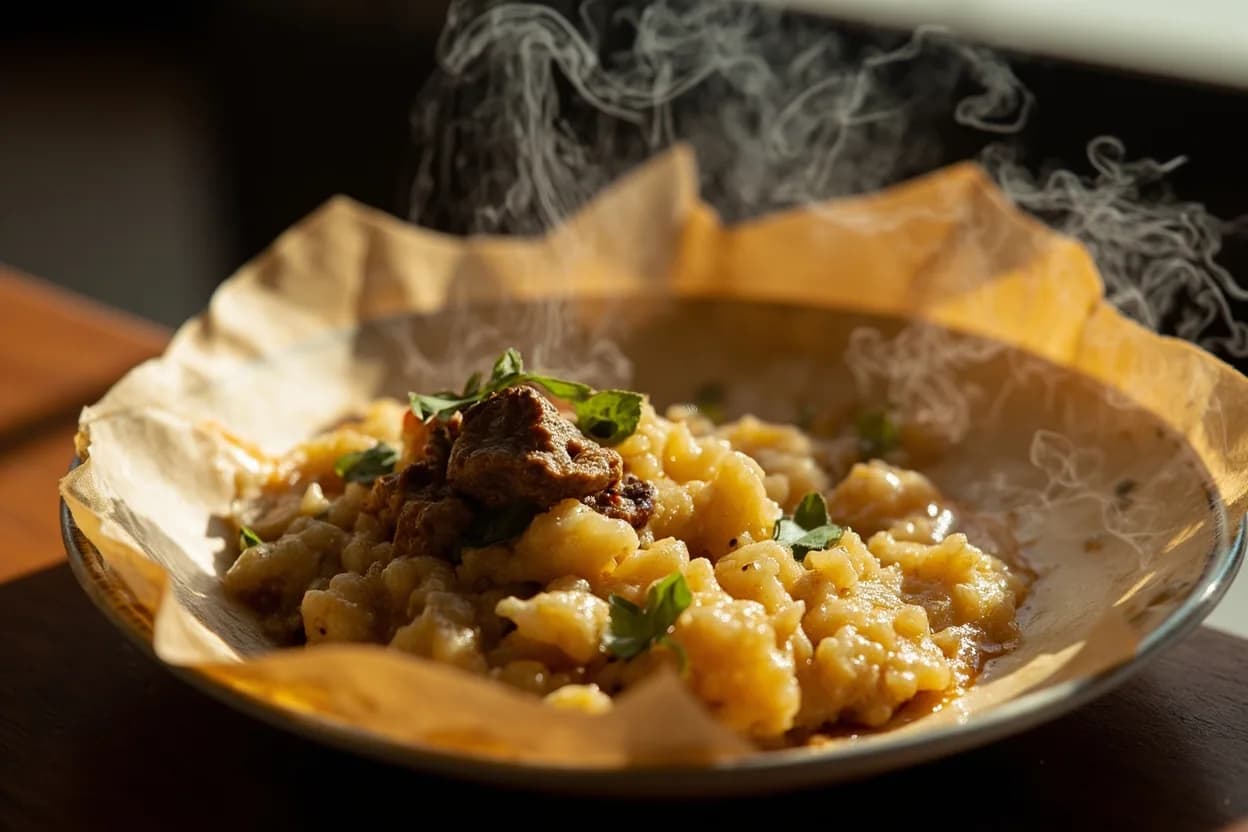
Stirring cornmeal porridge nonstop as it cooks to keep it lump-free and silky smooth.
Constant stirring is the technique of continuously agitating a cornmeal or grain porridge such as funche or polenta as it simmers. The steady motion prevents lumps and scorching while the starch hydrates and thickens into a creamy mass. It demands patience, since the porridge can take 30 to 45 minutes of near-continuous attention to reach the right velvety consistency.
Constant stirring is the sustained, deliberate agitation of cornmeal in liquid from the moment the meal is added until the porridge reaches its finished texture. The goal is to keep starch granules in suspension so they hydrate evenly, swell without clumping, and release amylose into the cooking liquid without scorching on the pot's surface. A single technique underwrites a family of dishes — Italian polenta, Curaçaoan funche, Romanian mamaliga, Balkan kačamak, and American cornmeal mush — that share the same physics despite very different tableside presentations.
The work is unglamorous and non-negotiable. A cornmeal pot left unstirred for even a minute develops a starchy crust on the bottom and lumps on top, neither of which any amount of later whisking fully rescues. Done right, the constant motion produces a porridge that is glossy, supple, and either pourable like thick cream (funche) or thick enough to mound on a spoon and pull cleanly from the sides of the pot (polenta). The skill ceiling is low, but the technique punishes inattention — hence the heavy pot, the long wooden spoon, and the bare simmer that together let you settle into a steady rhythm once you find it.
Mastering it comes down to three habits: bringing the liquid to a simmer before any cornmeal goes in, streaming the meal in slowly while whisking, and then committing to a flat-edged wooden spoon on a low flame for the long cook. The first lumps you ever cook are almost always the result of meal hitting cold liquid, and the first scorched crust is always at the spot where your spoon stopped reaching.
- Difficulty
- Medium
Types & varieties
Curaçaoan and broader Dutch Caribbean cornmeal porridge, traditionally simmered with milk or coconut milk and served at breakfast, often with aged cheese, butter, or sugar
Northern Italian cornmeal traditionally cooked 30–40 minutes in a copper paiolo with a bastone; served soft (polenta tenera) or allowed to set, then sliced and grilled (polenta grigliata)
Romanian cornmeal porridge using the same technique, traditionally served with cheese, sour cream, or stew
Balkan cornmeal porridge (Montenegro, Serbia, Bosnia) stirred vigorously and often enriched with kaymak
American preparation stirred to a smooth porridge, then poured into a loaf pan, chilled, sliced, and fried
Stone-ground (whole-grain) gives deeper flavor and a more rustic texture; degermed cornmeal yields a finer, more uniform cream but flatter taste
How to do it
- 1
Choose and measure
Use stone-ground yellow or white cornmeal for best flavor and texture. Measure 1 part cornmeal to 4–6 parts liquid — more liquid for a pourable porridge like funche, less for a thick polenta. Sift the meal to break up any dry clumps.
- 2
Heat and salt the liquid
Combine water, stock, milk, or coconut milk in a heavy-bottomed pot. Bring to a bare simmer over medium heat and season generously with salt — it should taste like well-seasoned cooking water. Cold liquid guarantees lumps.
- 3
Stream in the cornmeal
With the liquid at a low simmer, pour the cornmeal in a slow, steady stream while whisking constantly with one hand. The whisking keeps the granules from clumping on contact with hot liquid.
- 4
Switch to a wooden spoon
Once all the cornmeal is incorporated, switch from whisk to a long-handled wooden spoon with a flat edge — a bastone in the Italian tradition. This is the tool for the long cook; only a flat edge actually scrapes the pot bottom.
- 5
Stir constantly at a bare simmer
Drop the heat to the lowest setting that keeps the pot at a lazy bubble. Stir continuously in a figure-eight pattern, scraping the bottom and corners on every pass. Cook 20–45 minutes depending on grind; coarser meal needs the longer end.
- 6
Adjust consistency
The porridge will thicken steadily as starch hydrates. Loosen with additional hot liquid (water, stock, or milk) in small splashes as needed until you reach a smooth, glossy texture — pourable for funche, spoonable and moundable for polenta.
- 7
Finish and rest
Off the heat, beat in cold butter, grated cheese, or a swirl of cream. For polenta, cover and let rest 5 minutes so it sets to a soft, spoonable consistency. Serve immediately, or pour into a dampened tray to cool, set, and slice.
Choosing your cornmeal
The grind and milling method determine both flavor and how forgiving the technique is, and they are the single biggest variable after your stirring discipline.
- Stone-ground cornmeal retains the germ and bran; it tastes noticeably nuttier and yields a more rustic, looser texture, but it benefits from a longer cook of 30–45 minutes.
- Degermed supermarket cornmeal is finer and more uniform, hydrates faster, and gives a cleaner cream, though the flavor is flatter.
- Medium grind is the most versatile for both funche and polenta; very fine meal behaves almost like flour and sets quickly, while very coarse meal needs extra liquid and time to soften.
- Whichever you choose, sift the meal before adding it to the pot — dry clumps introduced at the start are the lumps that survive even good stirring.
Reading the finish
Doneness in a constantly stirred cornmeal pot is judged by sight and feel rather than time, because grinds and ratios vary widely.
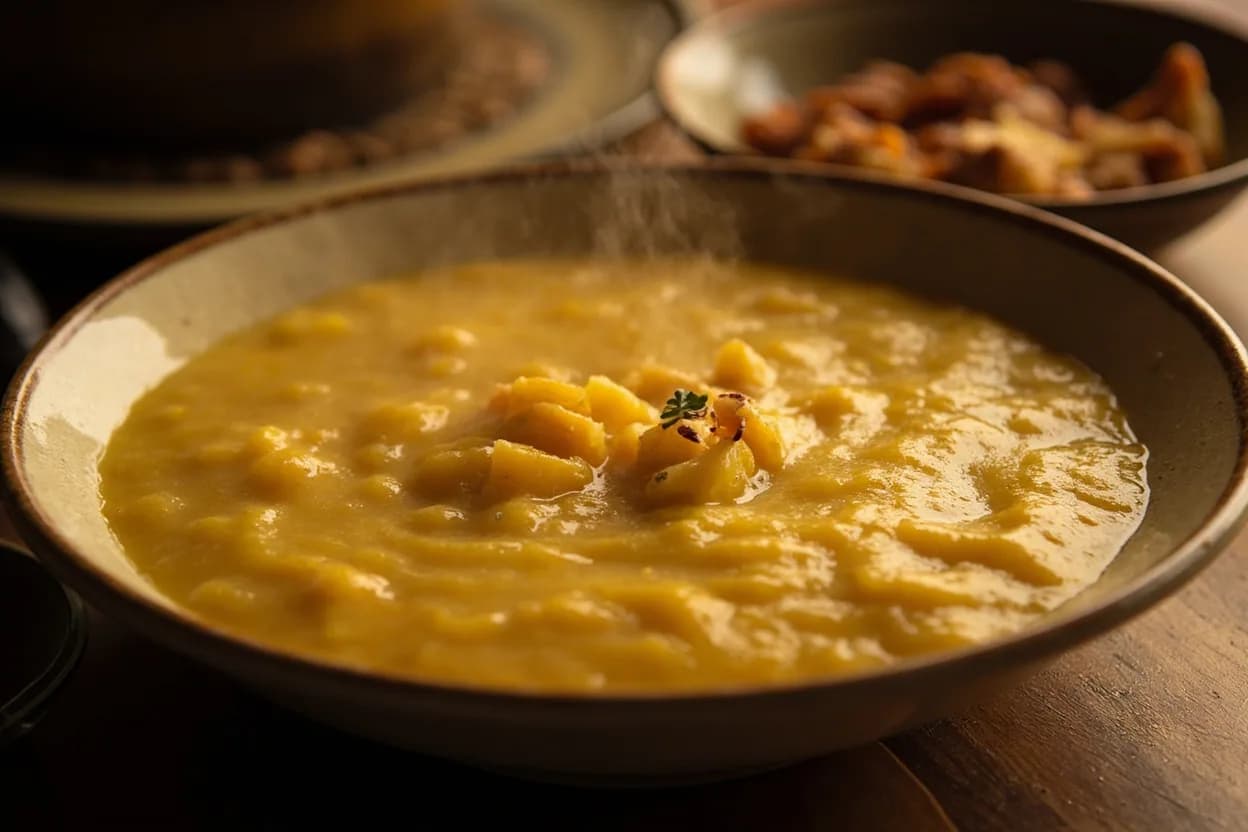
- Funche: the porridge should fall from the spoon in a slow, continuous ribbon and pool on the plate; it should not hold a mound.
- Polenta tenera: should mound softly on a spoon, pull cleanly from the sides of the pot on the spoon's back, and look glossy under the surface.
- Polenta for grilling: cook a few minutes past spoonable, then pour into a dampened tray to set; it should slice cleanly without crumbling.
- Under-cooked cornmeal tastes chalky and grainy no matter how smooth it looks; a final five-minute rest off the heat completes the gel.
Common uses
Tips & pitfalls
- Bring the liquid to a full simmer and salt it before any cornmeal goes in; cold liquid produces clumps that no amount of stirring fixes.
- Stream the cornmeal in slowly while whisking with one hand, then immediately switch to a flat-edged wooden spoon that can actually scrape the bottom and corners.
- Drop the heat to the lowest possible simmer; a rolling boil roughs up the starch granules and spatters hot porridge across the stove.
- Reach the edges and corners of the pot on every pass — the first place a crust forms is exactly where your spoon stops reaching.
- For deeper, nuttier flavor, dry-toast the cornmeal in the dry pot for 2–3 minutes over medium heat before adding any liquid.
- If lumps form despite your best efforts, switch to a flat whisk for a minute to break them up, then return to the wooden spoon.
- A bain-marie (the pot set over a pan of simmering water) prevents scorching during very long cooks and lets you stir less frantically.
- Cook until the porridge pulls cleanly away from the sides of the pot on the back of the spoon; underdone cornmeal tastes chalky and grainy no matter how smooth it looks.
Good to know
- Primary cuisines
- Italian (polenta) and Dutch Caribbean (funche, Curaçao), with parallels in Romanian mamaliga, Balkan kačamak, and American Southern cornmeal mush
- Core ratio
- 1 part cornmeal to 4–6 parts liquid by volume; more liquid for pourable porridge, less for thick polenta
- Active cooking time
- 20–45 minutes of continuous stirring once the meal is incorporated
- Heat level
- Bare simmer; a rolling boil scorches the starch and spatters
- Liquid temperature rule
- Liquid must be at a simmer before the cornmeal goes in; cold liquid almost guarantees lumps
- Key equipment
- Heavy-bottomed pot (traditionally a copper paiolo for polenta), long-handled wooden spoon with a flat edge, and optionally a flat whisk
- Why it works
- Agitation keeps starch granules suspended so they hydrate evenly and release amylose gradually, forming a smooth gel instead of clumps or a scorched crust
- Difficulty
- Low skill, high attention; forgiving technique that requires uninterrupted stirring
Also called
polenta-stirring · funche-stirring · Porridge Stirring
Dishes that rely on it
Related

Whisk
Beat ingredients smooth and aerated with a looping wire motion

Sift
Pass dry ingredients through mesh to aerate and remove lumps

Strain
Pour through mesh to separate solids from liquid for a smooth result

Filter
Pass liquid through fine material to clarify out the smallest particles

Rice
Press cooked potatoes through small holes for fluffy, lump-free texture

Mash
Crush soft cooked food into a rustic, creamy purée

Grind
Crush food into a coarse to fine texture, from spices to meat

Grate
Shred food into fine bits against a sharp-toothed surface