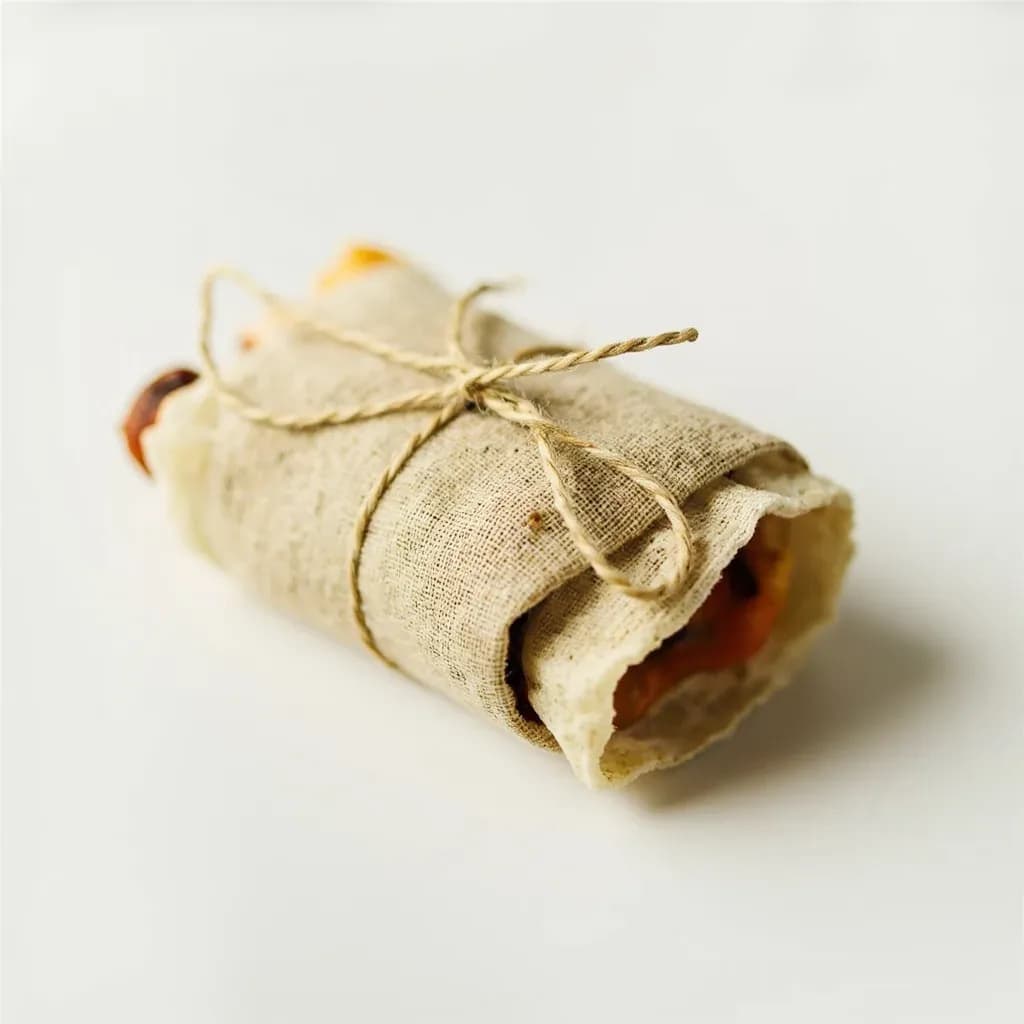
Prep & Assembly
Galantine & Ballotine Rolling
Boning and rolling poultry around a forcemeat into a cylinder for poaching or roasting.
Galantine and ballotine rolling is a classic charcuterie technique where deboned poultry or meat is spread flat, layered with a seasoned forcemeat, then rolled tightly and wrapped in cloth or skin. A galantine is poached and served cold in aspic, while a ballotine is roasted or braised and served hot. The even cylinder ensures uniform cooking and clean slices.
Galantine and ballotine rolling is the classical French technique of boning a bird whole — skin left intact like a flat envelope — then spreading it with a forcemeat and rolling it into a tight cylinder for cooking. The two names describe the same basic construction but finish differently: a galantine is poached gently in stock, pressed under weight, chilled, and traditionally glazed with clear aspic for cold service; a ballotine is seared and roasted (or braised) and served hot, usually with a pan sauce. Both rely on a single piece of unbroken skin to hold the roll together and to give the finished dish its clean, compact shape when sliced.
The technique matters for three reasons. First, presentation: a properly rolled and pressed galantine shows a perfect cross-section mosaic of forcemeat, studded garnish, and pale meat — it is the visual centerpiece of a classical cold buffet. Second, economy: every scrap of trim, including the reserved meat you cut away during boning, goes directly into the forcemeat, so a single bird produces a dish that serves many. Third, cooking behavior: the tight roll cooks evenly through gentle heat, the surrounding skin keeps the forcemeat moist, and the cylinder holds its shape under a weight so the final slice is dense and clean rather than ragged.
The defining variable is the boning. Everything else — the forcemeat, the tying, the poaching temperature, the pressing — is straightforward once you can take a bird apart while leaving the skin in one continuous piece. That is why classical training treats galantine work as a rite of passage: a cleanly boned chicken becomes a duck becomes a turkey without changing the underlying method.
- Difficulty
- Hard
Types & varieties
Classic poached chicken galantine stuffed with a fine pork-and-veal forcemeat, studded with pistachios and/or foie gras, pressed and glazed with clear aspic.
Turkey version, traditional for cold buffet tables at Christmas and grandes occasions in 19th- and 20th-century French service.
Hot preparation, roasted and served with a pan sauce or jus; the everyday, restaurant version of the technique.
Often made with boned duck leg and thigh meat stuffed back into the leg skin, braised or pan-roasted.
Stuffed pork loin or shoulder roll, tied and roasted; rustic counterpart to the poultry versions.
Same rolling principle applied to a boned chicken leg shaped like a small ham, often braised and pressed.
How to do it
- 1
Prepare and chill the bird
Remove the wing tips and neck; reserve with the carcass for stock. Pat the bird dry and chill in the freezer for 20–30 minutes until firm but not frozen solid — this firms the flesh for cleaner boning and a less tear-prone skin.
- 2
Bone through the back
Place the bird breast-down. Using a sharp boning knife, cut along both sides of the backbone from vent to neck. Work the blade flat against the rib cage, scraping meat outward as you go. Keep the bird skin-side down on the board so any slips pierce the side that will be tucked inside the roll.
- 3
Free the legs
Open the carcass flat like a book. Crack the back to expose the leg joints, then pop each thigh ball out of its socket by pushing inward. Cut through the surrounding sinew to release each leg, leaving the thigh skin continuous with the body skin.
- 4
Open and trim
Carefully separate the carcass from the meat, keeping the breast skin and leg skin in one unbroken piece. Remove the wishbone and any remaining cartilage. Trim large pieces of breast and thigh meat and reserve them to dice into the forcemeat.
- 5
Make the forcemeat
Grind the reserved bird meat with pork shoulder and a little veal (roughly 1:1:1) through a fine die. Season with salt, white pepper, and a touch of quatre-épices, bind with one egg per 500 g of meat, and fold in a panade of milk-soaked breadcrumbs for a lighter texture. Chill thoroughly.
- 6
Lay out and season the skin
Lay the boned bird flat, skin-down, on a sheet of cling film. Season the inside lightly with salt and rest 15 minutes — this seasons the meat and tightens the skin slightly for a neater roll. For a hot ballotine, spread the forcemeat directly. For a cold galantine, stud the forcemeat with pistachios, diced ham, and/or foie gras in a pattern so each slice shows the design.
- 7
Roll tightly
Using the cling film as an aid, roll the bird into a tight cylinder, tucking the leg skin ends inward as you go. Press firmly to eliminate air pockets — trapped air expands during cooking and distorts the shape.
- 8
Tie the roll
Tie at 2.5–4 cm intervals with butcher's twine, plus one lengthwise tie to hold the cylinder straight. For galantines, finish by wrapping tightly in several layers of cheesecloth and tying again to hold the cloth in place.
- 9
Poach or roast
For a galantine, lower the roll into barely-simmering stock (70–80°C / 160–175°F) and cook to 72°C / 162°F internal — about 1 to 1.5 hours for a chicken, longer for a turkey. For a ballotine, sear in a pan to color the exterior, then finish in a 180°C / 350°F oven to the same internal temperature.
- 10
Press and chill, or rest
Galantine: cool briefly in the cooking liquid, then weight under a tray and refrigerate overnight so the roll firms and holds its shape. Ballotine: tent with foil and rest 20–30 minutes before untying and slicing.
- 11
Finish and serve
Galantine: unwrap, peel the cheesecloth, and brush with several thin layers of warm clarified aspic to build a glassy glaze; decorate with tarragon sprigs or vegetable fleurs. Ballotine: remove twine, slice into thick rounds, and serve with a pan jus or a classic sauce such as suprême, Périgueux, or a Madeira reduction.
Galantine versus ballotine: what's actually different
The names get used loosely in modern kitchens, but the classical distinction is real and worth respecting because it changes how you cook the roll. A galantine is poached, pressed, chilled, and served cold. The gentle heat firms the forcemeat without driving off moisture, the overnight press flattens the cylinder into a dense and even shape, and the aspic glaze gives the surface its signature glassy sheen. A ballotine is seared and roasted (or braised) and served hot, the skin rendered and lightly crackled, the interior just set. The construction is identical — boned bird, layered forcemeat, tight cylinder — but the finishing heat and the service temperature are what set the two apart, and they should not be confused when reading older recipes.
The boning: where the technique lives or dies
Take the time to bone two or three chickens before attempting a centerpiece. The cuts themselves are simple — along both sides of the spine, then out around the rib cage and leg joints — but the skin tears easily, and once it tears the roll will not hold its shape. A cold bird (20 to 30 minutes in the freezer) is much more forgiving than one at room temperature. Keep the blade flat against bone with the edge angled slightly inward, and pop the thigh ball out of its socket by pushing rather than sawing. Patch any small tears with a scrap of skin from the neck flap before tying; a few well-placed patches will disappear once the roll is cooked and the skin has relaxed.
Forcemeat and presentation logic
A galantine forcemeat is built to be both flavor and decoration. The base is a fine-grind farce of pork, veal, and the meat you reserved from the boned bird, bound with egg and lightened with a panade of milk-soaked breadcrumbs. The decorative elements — pistachios, diced ham, tongue, foie gras, black truffles — are arranged in a deliberate pattern on the laid-out skin before rolling, so each slice reveals the design. For a ballotine, where the slice is a hot main course and the forcemeat is less of a visual event, the farce is usually coarser and more savory, often studded simply with herbs, garlic, and a layer of wilted spinach to add color and moisture.
Common uses
Tips & pitfalls
- Chill the bird for 20–30 minutes in the freezer before boning — firmer flesh separates from the bone more cleanly and the skin is far less likely to tear.
- Salt the skin interior lightly and let it rest 15 minutes before spreading the forcemeat; the salt seasons the meat and tightens the skin for a neater roll.
- Tie tightly enough to compress the roll, but not so tight the forcemeat bulges between strings — test one tie before completing the run.
- Common mistake: overcooking. Pull the roll at 70–72°C internal and let carryover finish it; overcooked forcemeat turns grainy and dry.
- Common mistake: skipping the rest. A 20–30 minute rest (or an overnight weighted press for a galantine) redistributes juices and lets the roll hold its shape when sliced.
- Common mistake: tearing the breast skin during boning. Patch any small holes with a scrap of skin from the neck flap before rolling — the patch will disappear once the skin relaxes in the heat.
- Press firmly as you roll to eliminate air pockets; trapped air expands during cooking and bulges or cracks the skin.
- For a glassy aspic finish on a galantine, brush warm clarified aspic in several thin layers after pressing and chilling rather than pouring one thick coat that will run and set cloudy.
Good to know
- Origin
- Classical French cuisine; both terms appear in 17th–18th century French cookbooks and were codified in Escoffier's Le Guide Culinaire (1903).
- Key distinction
- Galantine is poached, pressed, chilled, and glazed with aspic; ballotine is roasted or braised and served hot.
- Poaching liquid
- Around 70–80°C / 160–175°F — just below a simmer, so the roll cooks gently and stays tender.
- Internal doneness
- 72°C / 162°F at the center; carryover heat will finish the cook, so pull slightly under.
- Tying
- Butcher's twine at roughly 2.5–4 cm / 1–1.5 inch intervals, plus one lengthwise tie to keep the cylinder even.
- Yield
- A 1.2–1.8 kg / 2.5–4 lb bird yields about 6–8 first-course slices, or 4–6 main-course portions.
- Storage
- Galantines keep 3–4 days refrigerated, well-wrapped; ballotines 2–3 days; both freeze well before glazing or roasting for up to 2 months.
- Spelling note
- Ballotine — from French 'ballot' (small bundle). Common traps: 'balletotine' (extra letters) or 'balotine' (dropped letters).
Also called
Ballotine Rolling
Related

Whisk
Beat ingredients smooth and aerated with a looping wire motion

Sift
Pass dry ingredients through mesh to aerate and remove lumps

Strain
Pour through mesh to separate solids from liquid for a smooth result

Filter
Pass liquid through fine material to clarify out the smallest particles

Rice
Press cooked potatoes through small holes for fluffy, lump-free texture

Mash
Crush soft cooked food into a rustic, creamy purée

Grind
Crush food into a coarse to fine texture, from spices to meat

Grate
Shred food into fine bits against a sharp-toothed surface