Water & Steam
Game Stew Braising (Cinghiale in Umido)
Slow-braising marinated wild game like boar in wine and tomato until rich and tender.
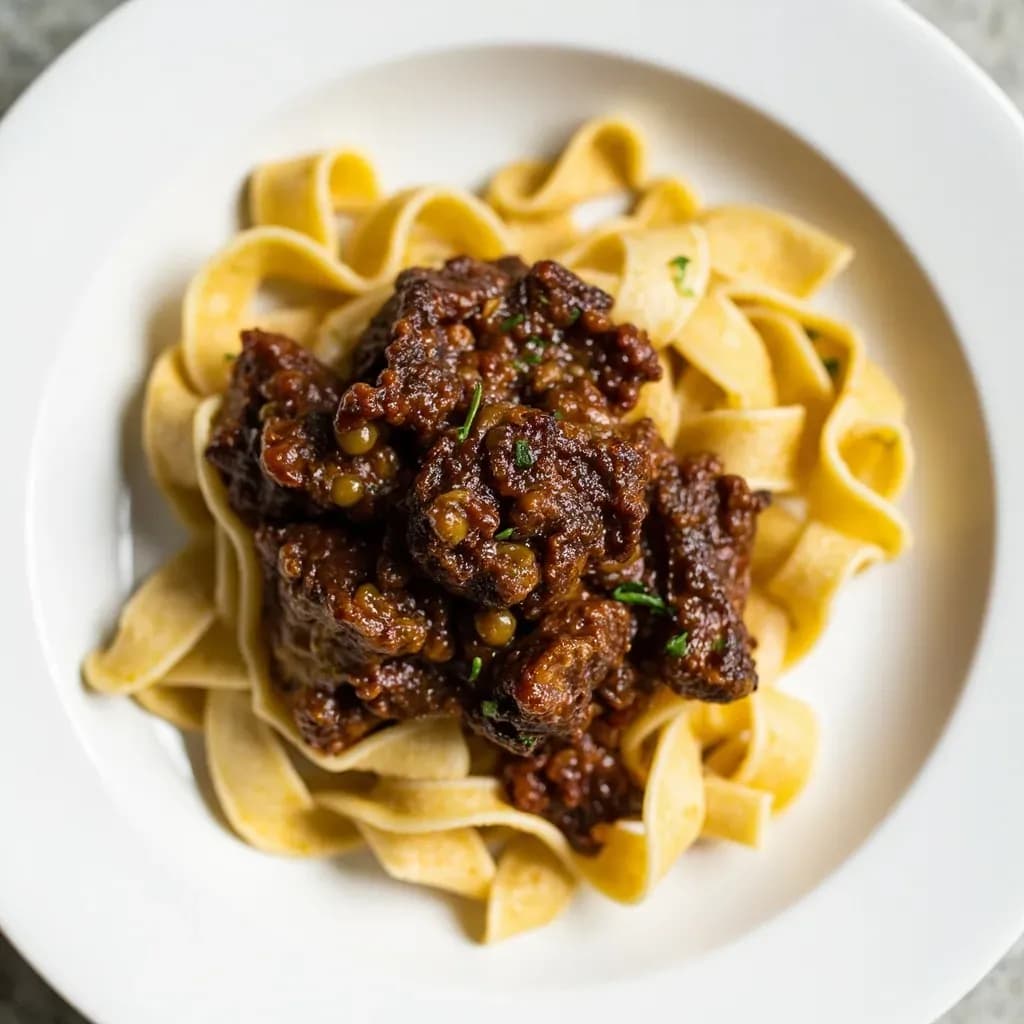
Game braising slow-cooks tough, lean wild meats such as boar (cinghiale), venison or hare in wine, aromatics and often tomato, frequently after a long marinade to tame strong flavors. The extended gentle simmer breaks down sinew and mellows gaminess into a deep, robust stew. It is a hallmark of Tuscan and rustic Italian cooking, classically served over pappardelle.
Cinghiale in umido — Tuscan braised wild boar — is the template for a thousand game stews across central and southern Italy, and a textbook case of how Mediterranean cooks turned a stubborn, lean, sometimes pungent ingredient into a silky, deeply flavored sauce. The method rests on three pillars: a long wine-and-aromatic marinade that tames the boar's feral flavor and begins to tenderize the muscle, a hard sear that builds the fond the sauce will depend on, and a low, covered braise in the same wine with tomato and stock until the connective tissue surrenders. What you finish with is less a soupy stew than a thick, glossy pot of meat and reduced sauce, the kind of dish that anchors a hunters' table or a Sunday lunch in late autumn.
The behavior of wild boar explains every step. The meat is lean, often gamy, and sometimes carries a faint iron-y or 'boggy' (selvatico) note from the animal's diet; long contact with wine, herbs, and aromatics rounds those edges and seasons the flesh from the inside. Lean protein tightens fast in heat, which is why a true bare simmer — never a boil — is non-negotiable, and why the dish is always rested before serving. The same leanness means the sauce has to do real work: a reduction of the braising liquid until it coats the back of a spoon becomes the soul of the plate, and most cooks will tell you the stew is better on the second day.
Wine choice is part of the recipe, not a side note. A dry, tannic Sangiovese — Chianti Classico is the classic — gives the sauce backbone and structure; weaker or sweeter wine produces a flat, jammy finish. Off the heat, a final splash of the same wine is considered worth opening a fresh bottle. From this Tuscan base, every region along the Apennines and across Sardinia puts its own stamp: more juniper here, olives and bitter chocolate there, pancetta and celery in Rome, myrtle berries in Sardinia. The bones of the method stay the same.
- Difficulty
- Medium
Types & varieties
Sweet-and-sour Tuscan style with red-wine vinegar, sugar, pine nuts, raisins, and a knob of bitter chocolate stirred in at the end
Coastal Tuscan style that adds olives and juniper, sometimes replacing part of the red wine with a splash of dry white
Roman variant built on celery, pancetta, and tomato, with less juniper and more herbs
Sardinian braise made with Cannonau wine and myrtle berries, with an even longer marinade
Same method, cubed; the name simply emphasizes the 'cut-up' (spezzato) preparation
How to do it
- 1
Trim and cube the boar
Cut the shoulder, shank, or neck into roughly 4–5 cm (1½–2 in) cubes, removing silver skin, sinew, and any shot or grit from the field. Uniform pieces finish at the same time; ragged pieces either disintegrate or stay tough.
- 2
Marinate in wine with aromatics
Combine the meat with a full bottle of dry red wine (Chianti or Sangiovese), a sliced onion, carrot, celery stalk, a few cloves of garlic, bay leaves, a sprig of rosemary, sage, a teaspoon of juniper berries, whole black pepper, and a strip of lemon peel. Cover and refrigerate 24–48 hours, stirring once or twice so all the meat spends time in the liquid.
- 3
Drain, dry, and reserve the liquid
Lift the meat out and pat it thoroughly dry with clean towels — surface moisture is the enemy of a good sear. Strain the marinade through a fine sieve and reserve both the liquid and the aromatics separately.
- 4
Sear the meat in batches
Heat a generous film of olive oil (often with a spoonful of lard or diced pancetta, since wild boar is very lean) in a heavy Dutch oven over medium-high heat. Brown the cubes in a single layer, undisturbed, 2–3 minutes per side, until deeply caramelized. Transfer to a plate and continue in batches; do not crowd the pot.
- 5
Build the soffritto
In the rendered fat, soften the reserved chopped onion, carrot, and celery with a pinch of salt until translucent and lightly golden, 8–10 minutes. Add the minced garlic and cook another minute until fragrant.
- 6
Deglaze and add tomato
Pour in the strained marinade to release the fond on the bottom of the pot, scraping with a wooden spoon. Stir in 2–3 tablespoons of tomato paste (or a small can of crushed San Marzano tomatoes) and simmer until the wine reduces by about a third and the raw alcohol smell disappears, 8–12 minutes.
- 7
Return the meat and braise
Nestle the boar back into the pot and add just enough liquid — wine, broth, or water — to come two-thirds up the sides of the meat. Bring to a bare simmer, cover, and cook on the stovetop or in a 150–160 °C / 300–325 °F oven for 2–2.5 hours, turning the meat once, until a knife slides through with no resistance.
- 8
Finish the sauce and adjust seasoning
Lift the meat out. If the sauce is thin, simmer uncovered to reduce to a glossy, nappe-like consistency that coats the back of a spoon; if too tight, loosen with a ladle of stock. Taste for salt and pepper, and sharpen with a small splash of red-wine vinegar to lift the lean game.
- 9
Rest and serve
Let the stew rest off the heat for 15–20 minutes so the juices settle back into the meat. Skim any surface fat, then serve over soft polenta, wide ribbon pasta like pappardelle, boiled potatoes, or thick toasted bread rubbed with garlic.
Why the marinade does two jobs
Most recipes treat marination as optional flavoring. With wild boar, it is structural. The acid and alcohol in the wine begin to break down the surface proteins and connective tissue of lean working muscles like the shoulder and shank — the very tissue that would otherwise tighten into a dry chew under heat. The wine's tannins, and the long bath in herbs, juniper, garlic, and citrus peel, also round out the feral, slightly iron-y note that some boar carry, the so-called selvatico or 'boggy' flavor that puts people off game altogether. A 12-hour soak helps; 24 hours is the practical minimum; 48 is what most Tuscan hunters' lodges will tell you to aim for. Cutting the marination short on real wild boar is the single most common reason a finished braise comes out tough and gamy rather than tender and aromatic — and the same principle is why, when you do substitute domestic pork shoulder, the marination should be shortened to 4–6 hours. The lean, mild pork has no feral note to tame, and its fat can turn greasy under a long acidic bath.
Common uses
Tips & pitfalls
- Marinate at least 24 hours, and ideally 48. Wild boar's lean muscle and feral, slightly boggy flavor need real time in acid and wine to mellow and begin to tenderize; a short marination is the single most common reason a finished braise turns out tough and gamy.
- Pat the meat completely dry before browning. Surface moisture steams instead of sears, and the fond — which carries the whole sauce — comes out thin and pale.
- Sear in small batches in a heavy pot. Crowding drops the surface temperature, the crust goes grey, and you lose the caramelized depth the braise depends on.
- Hold a true bare simmer. A boil tightens the proteins in lean game and produces dry, stringy meat. If you see breaking bubbles across the surface, pull the pot off the heat for a moment.
- Skim the surface during the first 30 minutes of braising. The grey foam that rises is coagulated protein and impurities; leaving it on gives the sauce a dull, slightly muddy finish.
- Toast juniper, peppercorns, and bay briefly in the rendered fat before adding liquid. A minute in hot fat releases their volatile oils; dropping them straight into wine wastes much of their aroma.
- Rest the meat off the heat, then reduce the cooking liquid to the consistency you want before recombining. If you boil the sauce down with the meat still in the pot, the lean muscle dries out.
- Add olives, capers, or a small piece of bitter chocolate only in the last 15 minutes. Long cooking flattens their character into the background.
- If substituting domestic pork shoulder for wild boar, cut the marination to 4–6 hours and add a small splash of red-wine vinegar to mimic game tartness; lean pork has no feral note to tame and turns greasy under a long acidic bath.
Good to know
- Italian name
- Cinghiale in Umido (chen-YAH-lay in oo-MEE-doh)
- Origin
- Tuscany and central Italy, with deep roots in Etruscan and Roman hunting cookery
- Technique family
- Braising — umido means 'in a moist, humid way'
- Difficulty
- Intermediate to advanced
- Primary protein
- Wild boar shoulder, shank, or neck, cut into 4–5 cm cubes
- Key liquid
- Dry, tannic red wine — classically Chianti Classico or Sangiovese
- Marinating time
- 24 to 48 hours, refrigerated
- Braising time
- 2 to 2.5 hours at a bare simmer, covered
- Best pot
- Heavy Dutch oven, or a traditional terracotta pignatta
- Yield
- About 1.5–1.8 kg cubed meat serves 6
- Served with
- Soft polenta, crostini, pappardelle, or boiled potatoes
- Resting
- 15–20 minutes off-heat to settle juices and firm the slices
- Make ahead
- Improves overnight; lift off solidified fat and reheat gently
Also called
cinghiale in umido · wild boar stew · game stew
Related

Boil
Cook in vigorously bubbling liquid at full rolling heat

Simmer
Hold liquid at a gentle shimmer for tender, unhurried cooking

Poach
Cook gently in barely-trembling liquid for silky, tender results

Steam
Cook in rising vapor to keep color, nutrients, and shape intact

Blanch
Plunge briefly in boiling water, then shock cold to lock color

Braise
Sear, then cook slow in a little liquid until fall-apart tender

Stew
Simmer bite-sized pieces fully submerged into a rich, unified pot

Sous-Vide
Seal and cook in precise warm water for edge-to-edge doneness