Transform & Preserve
Keeving
A slow cider technique that limits nutrients for a naturally sweet, low-alcohol result.
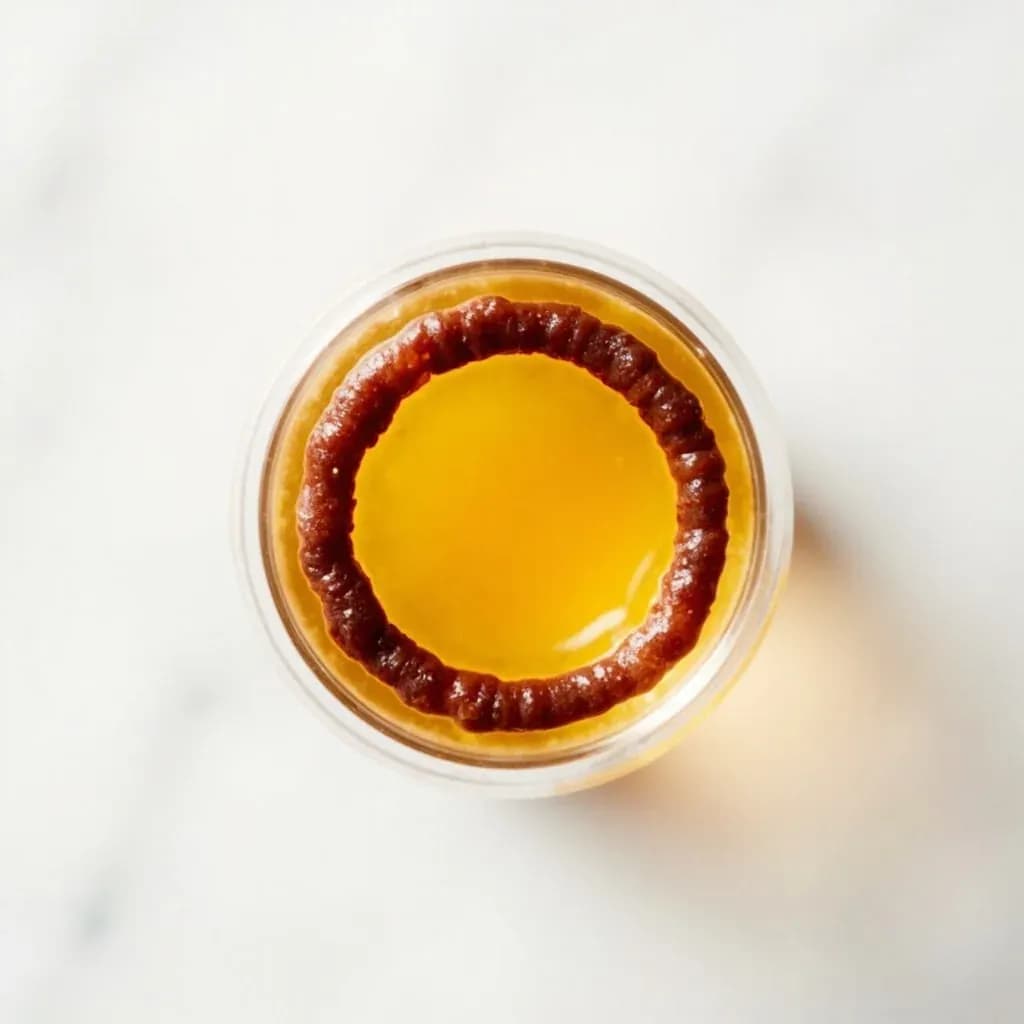
Keeving is a traditional cidermaking method where pectin and salts form a gel cap that traps nutrients and most yeast, starving fermentation so it stalls before all the sugar converts. The result is a naturally sweet, lightly sparkling, lower-alcohol cider without back-sweetening. It relies on low-nitrogen apples and patient, cool conditions.
Keeving is a centuries-old cidermaking technique from western England and northern France in which fresh apple juice is settled cold for several days so that a dense, chocolate-brown 'cap' of pectin, protein, and trapped nitrogen rises to the surface. The cidermaker then racks off only the clear juice from the middle of the vessel, leaving the nutrient-laden cap floating above and the heavy sediment below. Because the middle juice has been stripped of most of its amino acids and B-vitamins, any yeast present slowly starves before it can convert the natural sugars to alcohol. The result is a cider that finishes naturally sweet at just 2–4% ABV, with the full tannin and aromatic character of bittersweet and bittersharp cider apples intact.
What makes keeving distinctive is that it achieves sweetness without arrested fermentation, back-sugaring, or pasteurization — the yeast simply runs out of food. This is why keeved ciders have a depth and a tannic grip that artificially sweetened ciders rarely match: the sugar sits in balance with acid and tannin because all three were present from the start. It is also why the method demands so much from the fruit. Dessert apples will not keeve; only tannin-rich, high-acid cider varieties grown to full ripeness carry enough pectin and protein to form a solid cap.
Keeving is a teaching example of how nutrient limitation, rather than temperature alone, controls fermentation. For cooks and cidermakers it is both a heritage technique and a practical route to a year-round table cider in the British and Norman farmhouse tradition — complex, food-friendly, and low enough in alcohol to drink throughout a meal.
- Difficulty
- Hard
Types & varieties
The English baseline: bittersweet apples such as Dabinett, Yarlington Mill, and Kingston Black, cool settling, slow ferment in wood or glass, finished still or lightly sparkling.
French tradition built on local bittersharps like Marie Ménard, Petit Jaune, and Kermerrien; often bottled with a touch of residual CO2 for a soft petillance.
Cidermakers sometimes keeve one apple alone — Kingston Black or Foxwhelp, for example — to showcase that variety's tannin-acid balance in isolation.
A measured dose of commercial pectic enzyme is added to encourage reliable cap formation, especially when orchard fruit is low in natural pectin.
Juice is partially frozen to concentrate sugars and reduce nutrient availability. Produces a sweet cider, but lacks the floating pectin-protein cap that defines real keeving.
How to do it
- 1
Select and mill the fruit
Use fully ripe bittersweet and bittersharp cider apples — a typical blend is 60–80% bittersweet with 20–40% bittersharp. Wash, then mill to a coarse pomace, finer than a grape crush but not pureed.
- 2
Press immediately
Press within hours of milling. Long skin contact extracts excessive tannin and starts enzymatic browning before the keeve can begin.
- 3
Optionally add pectinase
Traditional makers rely on natural pectin; modern makers may add a small dose of commercial pectic enzyme to encourage reliable cap formation when fruit is marginal. Mix gently without heavy aeration.
- 4
Settle the juice cold
Transfer juice to a closed, food-grade vessel and hold at 4–10 °C for 24–96 hours. A brown cap of pectin, protein, and trapped nitrogen will rise to the surface. Do not stir.
- 5
Rack the middle fraction
Once the cap is firm and chocolate-brown, gently draw the middle juice through a racking valve or siphon, leaving the cap floating above and the heavy sediment below. Discard the top ~10–15% (the cap) and bottom ~10% (lees).
- 6
Pitch a slow, low-N-demanding yeast (optional)
Many traditional keevers allow ambient/wild yeast to ferment. If culturing, choose a strain known for low nitrogen demand and pitch at cool cellar temperature — a heavy pitch defeats the keeve.
- 7
Ferment cool and slow
Hold the fermenting juice at 10–15 °C. Bubbling should be barely perceptible; when it slows to almost nothing and specific gravity settles around 1.020–1.030 (rather than dropping below 1.000), the keeve has done its job.
- 8
Rack off lees and mature
Once fermentation has clearly stalled, rack off the heavy yeast lees into a clean vessel. Age for at least 3–6 months, ideally 9–12, in cool glass or seasoned wood.
- 9
Bottle or keg
Keeved cider is often bottled with a small amount of residual CO2 for a soft petillance. If bottle-conditioning, calculate priming sugar precisely because the cider already holds sugar. Some producers bottle still.
The cap and the chemistry
The 'cap' (sometimes called the 'cheese') is the heart of keeving. When freshly pressed juice is held cold, native pectin and proteins coagulate and float to the surface, dragging with them most of the dissolved amino acids, peptides, and B-vitamins that yeast need to grow. A successful cap is firm, smooth, and uniformly chocolate-brown — roughly 10–15% of the original juice volume — and lifts cleanly when the vessel is tipped. A pale, lacy, or broken cap signals that the apples were under-ripe, the juice was too warm, or settling was too short.
Because the middle juice is now nutrient-poor, any yeast present ferments slowly and stalls well before the sugars are exhausted. The final gravity typically sits between 1.020 and 1.030 — sweet but not cloying — and the alcohol holds at 2–4%. This is why keeving is sometimes described as a controlled nitrogen limitation: you are not stopping fermentation by chilling or sulfiting, you are removing the food that fermentation needs.
Apple selection
Keeving starts in the orchard. The fruit must be fully ripe — seeds dark brown, fruit separating easily from the tree — with high tannin, good acidity, and enough natural pectin to set a cap. A classic English blend runs roughly 60–80% bittersweet (Dabinett, Yarlington Mill, Tremlett's Bitter) with 20–40% bittersharp (Kingston Black, Foxwhelp, Michelin) for acid lift. In Normandy and Brittany, local bittersharps like Marie Ménard, Petit Jaune, Kermerrien, and Douce Moën dominate. Dessert and culinary apples, even high-quality ones, will not keeve reliably because their pectin and tannin levels are too low.
Troubleshooting a failed keeve
Three things go wrong most often. First, the cap never forms: usually the fruit was under-ripe or the juice sat above 12 °C; the remedy is to press later in the season and chill the must quickly. Second, the cap forms but breaks up: settling was too short, or the vessel was moved or stirred; the remedy is patience and stillness. Third, fermentation kicks off in the settling vessel (you see bubbles and the cap collapses): temperature was too high or wild yeast got ahead of the cap; the batch can sometimes be rescued by racking promptly and fermenting cool, but the cider will finish drier than intended.
Common uses
Tips & pitfalls
- Choose fully mature fruit — under-ripe apples lack the pectin and tannin needed for a firm cap to form.
- Never add yeast nutrient, DAP, or any commercial nutrient at any stage; their presence defeats the keeve.
- Hold juice at 4–10 °C during settling. Above ~12 °C, wild fermentation starts before the cap can set.
- A successful cap is a smooth, chocolate-brown disc that lifts cleanly when the vessel is tipped. Pale, lacy, or broken caps mean settling was too short, too warm, or the fruit was too low in pectin.
- Settle for 36–72 hours as a starting window. If the cap has not lifted by 72 hours, press it carefully — over-settling lets fermentation start and ruins the keeve.
- Rack from the middle only. Avoid disturbing the floating cap or the heavy sediment; discard roughly the top 10–15% and bottom 10%.
- Ferment cool (10–15 °C) and slow — barely a bubble per minute at peak is correct, not a sign of a stuck ferment.
- Do not back-sweeten with sugar or juice after fermentation; a true keeved cider gets its sweetness from interrupted fermentation, which is also what keeps the alcohol low and stable.
- Sanitation matters, but heavy sulfiting kills the wild/ambient yeasts that perform the slow fermentation. Light SO₂ (under 50 ppm) at pressing is acceptable; avoid it during settling.
- Taste only at 6 months minimum. Young keeved ciders often taste flat because tannin, sugar, and acid need many months to integrate.
Good to know
- Origin
- Western England (Somerset, Devon, Herefordshire) and the Breton/Norman regions of France; the word comes from Anglo-Norman French, likely 'kévir' or 'keff', meaning to curdle or coagulate.
- Critical temperature
- Juice must be held at 4–10 °C (39–50 °F) during settling; above ~12 °C, wild yeasts start fermenting before the cap can form.
- Sweetness mechanism
- Yeast exhausts the amino acids and B-vitamins trapped in the floating pectin/protein cap, so fermentation stalls while sugars remain — no back-sweetening required.
- Required apples
- Bittersweet and bittersharp cider varieties such as Dabinett, Yarlington Mill, Kingston Black, Foxwhelp, Michelin, Marie Ménard, and Petit Jaune; dessert apples will not form a cap.
- End product
- Naturally sweet farmhouse cider, typically 2–4% ABV, with residual sugar in balance with tannin and acidity.
- Time to first drink
- 6–12 months from pressing, often longer; tannin and sugar need many months to integrate.
- Difficulty
- High — apple selection, timing, and temperature must all align for a successful cap, which is why true keeved ciders remain a small, often artisanal category.
- Storage
- Bottle-conditioned keeved ciders keep 2–5 years in a cool, dark cellar; once opened, refrigerate and drink within 2–3 days, like a wine.
Also called
Keeve
Related

Confit
Cook slowly submerged in fat for silky tenderness and keeping

Cure
Draw out moisture with salt and time to preserve and concentrate

Pickle
Steep in acidic brine for bright, tangy, crunchy preservation

Ferment
Let friendly microbes transform food into tangy, complex flavor

Marinate
Soak in a seasoned mix to flavor and tenderize before cooking

Brine
Soak in salt water so meat stays juicy and seasoned throughout

Dehydrate
Slowly dry out moisture to concentrate flavor and extend shelf life

Cold-Smoke
Perfume cured food with smoke without cooking it through