Transform & Preserve
Back-Sweetening
Adding sweetness after fermentation is done, without restarting the ferment.
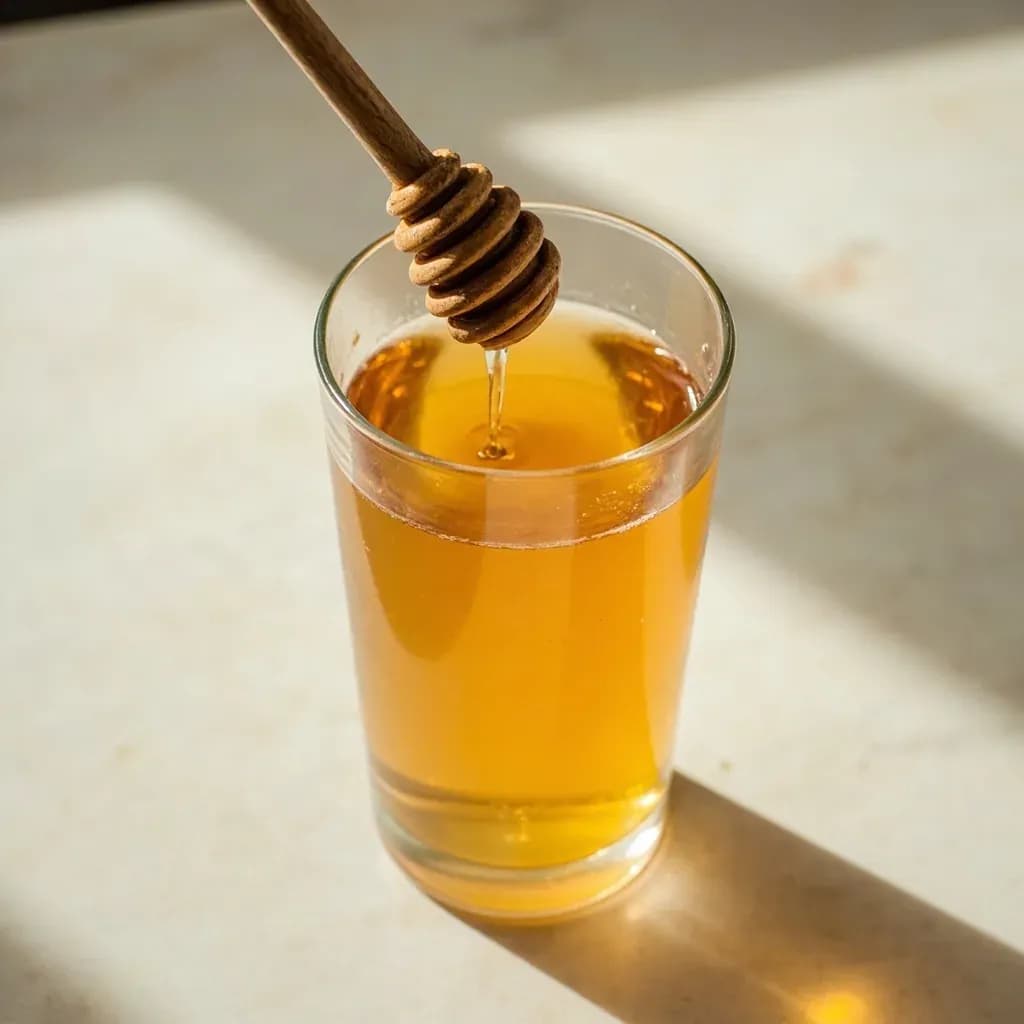
Back-sweetening adds sugar or another sweetener to a finished ferment such as wine, cider, or kombucha to balance flavor once the yeast or culture has been stopped or stabilized. Because live cultures would otherwise eat the new sugar, the ferment is first arrested by cold, filtering, or a stabilizer. It tunes final sweetness precisely without producing more alcohol or gas.
Back-sweetening is the practice of adding sugar to a fermented beverage — mead, cider, wine, kombucha, or a bottle-conditioned soda — after the yeast has run its course, without waking the yeast back up. The trouble is that the very microbes that made the alcohol are still in the liquid, often dormant but very much alive, and they would happily eat any new sugar you give them, re-fermenting the batch inside the bottle and potentially blowing the cap off. The craft of back-sweetening is therefore the craft of controlling those microbes before the sugar ever goes in.
The technique matters because most desirable fermented beverages are not bone dry. Mead styles range from semi-sweet to sack-sweet; fine ciders sit at off-dry; port-style and dessert wines depend on perceptible residual sugar. A dry ferment followed by a controlled sweetening gives the maker more precision than chasing a target gravity with honey or cane sugar during primary fermentation, where yeast strain, temperature, and attenuation all conspire to overshoot or undershoot. The same logic explains why milk stouts contain lactose: the brewer is, in effect, ensuring residual sweetness from a sugar the yeast cannot eat.
Success hinges on three things: proving fermentation is truly finished with a stable hydrometer reading, choosing a stabilization method appropriate to the beverage's pH and intended shelf life, and adding the sweetener in measured increments while tasting. Skip any of these and the bottles gush, the flavor goes thin, or the sweetness never lands where you wanted it.
- Difficulty
- Medium
Types & varieties
Sulfite-preserved grape juice concentrate; the traditional French winemaker's route to port-style and dessert wines without re-fermentation.
A German winemaking technique in which a portion of unfermented or arrested juice is reserved and blended back into a dry base wine to restore sweetness and fresh fruit character.
The classic method: metabisulfite first, wait 24 hours, then sorbate, wait another 24 hours, then sweeten.
Brewers' and home mead-makers' shortcut — lactose is not metabolized by Saccharomyces, so residual sweetness persists without stabilization.
In a keg system, force-carb and hold near freezing; dormant yeast cannot re-ferment the added sugar at low temperature.
Heavy cold-conditioning followed by racking off the yeast lees; reduces viable yeast so a modest amount of sugar can be added without full chemical stabilization.
Back-sweetened at packaging with frozen apple juice concentrate or fresh juice, paired with refrigeration rather than chemical stabilization; a common no-boil cider approach.
How to do it
- 1
Confirm fermentation is complete
Take a hydrometer (or a refractometer reading corrected for alcohol) reading, wait 48–72 hours, and read again. If the two readings match and the gravity sits at or below the expected final gravity for your yeast strain, fermentation is done. Adding sugar before this point guarantees a re-ferment.
- 2
Choose your stabilization method
Decide between chemical stabilization (sulfite plus sorbate), a non-fermentable sweetener (lactose, sucralose), a physical method (sterile 0.45 µm filtration, or pasteurization at around 140°F / 60°C for several minutes), or a keg-and-refrigerate system. The method you pick determines which sweeteners are safe to use later.
- 3
Add sulfite first (if stabilizing chemically)
Crush one Campden tablet per gallon — or dose potassium metabisulfite to roughly 50 ppm free SO₂ — and stir gently. Wait 24 hours so the sulfur dioxide can disperse and bind. This step sanitizes the liquid and creates a hostile environment for yeast.
- 4
Add potassium sorbate
Dissolve about ¼ teaspoon (roughly 1.5 g) of potassium sorbate per gallon in a small amount of the beverage or warm water, then stir into the full batch. Sorbate prevents yeast cells from reproducing; paired with sulfite, it gives reliable protection at the typical 3.0–3.8 pH of cider, wine, and most mead.
- 5
Wait 24–48 hours
Let the sorbate fully integrate. This is not optional — adding sugar before the sorbate has bound to the yeast cells simply feeds the population that has not yet encountered it.
- 6
Prepare the sweetener
Warm honey gently (under 110°F / 43°C) to liquefy it; dissolve granulated sugar in a small ladle of the beverage; or measure juice or concentrate directly. Non-fermentable sweeteners like lactose should be dissolved in a small portion of warm beverage to avoid graininess in the finished product.
- 7
Add sweetener in increments, tasting as you go
Add a small amount (about a quarter of your estimated total), stir, and taste. Chilled, finished beverages taste less sweet than samples pulled from the fermenter, so adjust your expectations. Record the total amount added per batch volume for reproducibility.
- 8
Rack off sediment if needed
If the batch sat on heavy lees during stabilization, siphon the sweetened liquid off the sediment into a clean vessel. This reduces the chance of post-bottle off-flavors and removes a reservoir of dormant yeast.
- 9
Bottle or keg
Bottle into clean, sanitized containers. If you have relied only on sorbate plus sulfite (rather than pasteurization or sterile filtration), remember that spoilage organisms — particularly Brettanomyces and some acetic acid bacteria — are not fully controlled; cold storage and good sanitation still matter.
- 10
Age and taste
Most back-sweetened beverages benefit from 2–4 weeks of conditioning so the sweetness marries with acidity, tannin, and aromatics. Mead in particular often needs several months before the sweetness reads as integrated rather than added.
Why stabilization comes first
Every reliable back-sweetening method is really a stabilization method with sugar added at the end. The two chemistries most home producers reach for are sulfur dioxide (delivered as potassium metabisulfite or a Campden tablet) and potassium sorbate. They work in concert: sulfite sanitizes the liquid, disrupts yeast metabolism, and binds off-odors, while sorbate prevents any yeast cell that survives from budding into a new population. Add them in the wrong order — sorbate before sulfite — and you get a fraction of the protection. Add them in the right order and give each one 24 hours to do its job, and the resulting beverage is shelf-stable for a year or more in cool storage.
- Sulfite first, sorbate second, sweetener third — each separated by 24 hours.
- Sorbate is an inhibitor, not a killer; it does not protect against malolactic bacteria.
- At pH above about 3.8, sorbate's effectiveness drops sharply; acidify first if you can.
- Cold storage alone is not a stabilizer. Dormant yeast recover when warmed.
Choosing a sweetener
The sweetener you choose is partly about flavor and partly about safety. Honey, cane sugar, fruit juice, maple syrup, and agave are all fermentable, so they require full stabilization (sulfite plus sorbate, or pasteurization, or sterile filtration). Lactose, sucralose, stevia, and monk fruit are not metabolized by Saccharomyces and can be added to an otherwise untreated finished beer or mead without risk of re-fermentation — useful in milk stouts and pastry stouts, and in any batch where the brewer prefers to avoid chemical stabilizers. Note that even non-caloric sweeteners can read intensely sweet on the palate compared with sugar, so dose conservatively and taste in the finished, chilled product.
- Fermentable sweeteners (honey, sugar, juice) require a fully stabilized base.
- Non-fermentable sweeteners (lactose, sucralose, stevia) work in unstabilized beverages.
- Match the sweetener to the original style: varietal honey in varietal mead, fresh juice in fresh cider.
- Dissolve crystalline sugars and thick honeys in a small ladle of the beverage before adding to the bulk.
Common uses
Tips & pitfalls
- Always confirm fermentation is truly finished with two stable hydrometer readings 2–3 days apart; a stuck or slow ferment will re-start under fresh sugar.
- If you skip chemical stabilization, rely on sterile 0.45 µm filtration or pasteurization — otherwise the bottle is a bomb.
- Dissolve crystalline sugar or warmed honey in a small portion of the beverage before adding back to the bulk; this prevents layering and helps you taste as you go.
- Potassium sorbate needs acid to work; at pH above roughly 3.8 it becomes unreliable. Adjust acid first if needed.
- Sorbate can produce geranium-like off-aromas when used in excess or combined with certain fruit acids — stay near the recommended dose.
- For mead, many makers prefer to stabilize and then back-sweeten with the same varietal honey used originally, so the varietal character carries through.
- Cold storage alone will not stop fermentation permanently; yeast recover when warmed. Use real stabilization for any bottle that will sit at room temperature.
- Sorbate does not stop malolactic bacteria — if you have residual ML culture, you still need sulfite and/or filtration.
Good to know
- Primary use
- Adjusting sweetness in fermented beverages after fermentation has completed, without restarting the ferment.
- Common contexts
- Mead-making, hard cider, winemaking, fruit wines, kombucha, and bottle-conditioned sodas or ginger beers.
- Key challenge
- Residual yeast will consume added sugar unless the yeast is removed, killed, or its reproduction inhibited.
- Stabilizing agents
- Potassium sorbate (stops yeast reproduction), potassium metabisulfite / Campden tablets (releases SO₂ to sanitize), non-fermentable sweeteners, sterile 0.45 µm filtration, and pasteurization.
- Sorbate pH window
- Most effective below pH 3.5–3.8; unreliable in higher-pH beverages such as mead made from low-acid honey.
- Typical sorbate dose
- Roughly ¼ teaspoon (about 1.5 g) of potassium sorbate per gallon, dissolved before adding.
- Typical sulfite dose
- One crushed Campden tablet per gallon, or potassium metabisulfite to roughly 50 ppm free SO₂.
- Stabilization window
- 24–48 hours between sulfite, sorbate, and sweetener additions so each agent has time to act.
Also called
Backsweetening
Related

Confit
Cook slowly submerged in fat for silky tenderness and keeping

Cure
Draw out moisture with salt and time to preserve and concentrate

Pickle
Steep in acidic brine for bright, tangy, crunchy preservation

Ferment
Let friendly microbes transform food into tangy, complex flavor

Marinate
Soak in a seasoned mix to flavor and tenderize before cooking

Brine
Soak in salt water so meat stays juicy and seasoned throughout

Dehydrate
Slowly dry out moisture to concentrate flavor and extend shelf life

Cold-Smoke
Perfume cured food with smoke without cooking it through