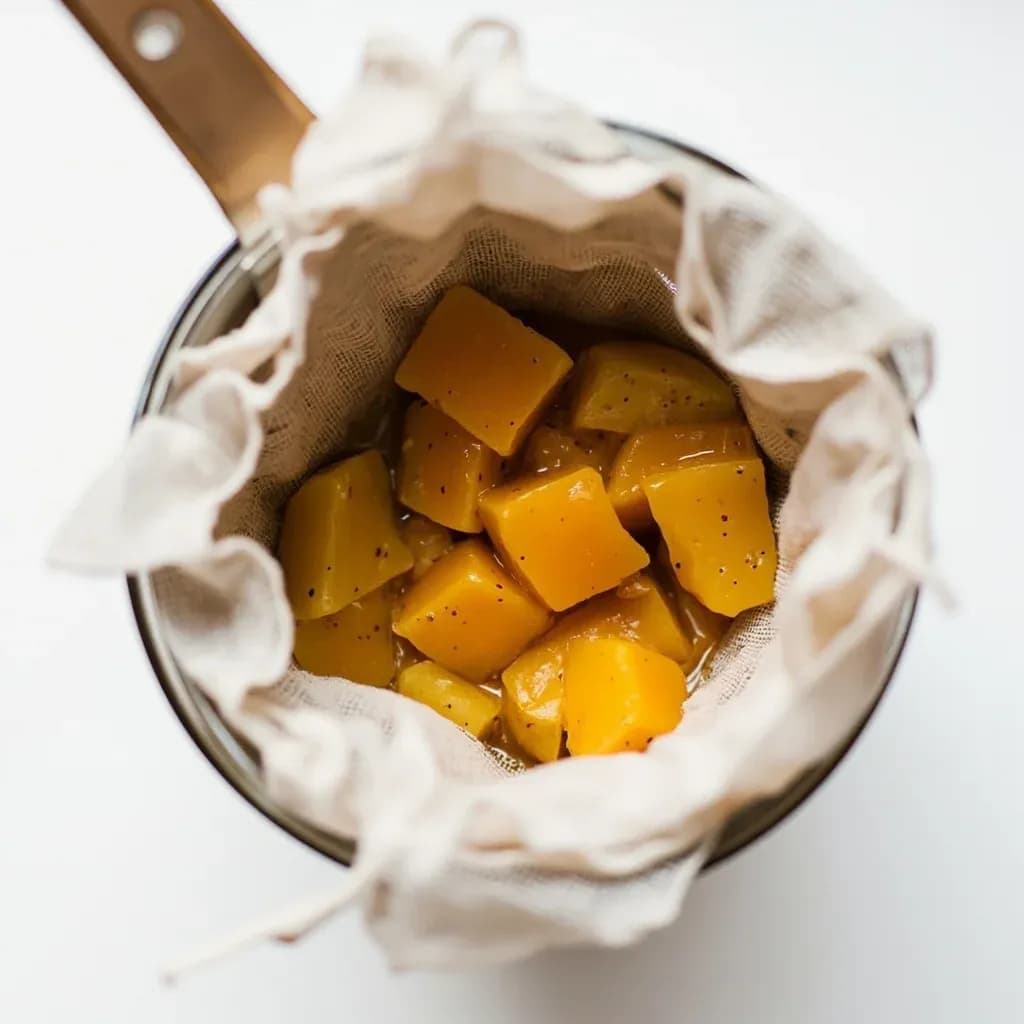
Prep & Assembly
Filtration / Filtering
Passing a liquid through a medium to remove solids and clarify it.
Filtration pours a liquid through a barrier such as a fine sieve, cheesecloth, coffee filter, or paper to catch suspended solids and produce a clear result. It clarifies stocks, juices, infused oils, and clarified butter, and is the basis of brewing coffee and tea. Finer media remove smaller particles, with multiple passes giving progressively clearer liquid.
Filtration is the act of passing a liquid through a porous medium to trap suspended solids and leave the liquid cleaner, clearer, or both. In the kitchen it covers everything from tipping pasta through a colander to pulling a perfectly clear consommé through a paper filter. The principle is identical at every scale — solids are too large to pass, liquid is small enough to flow — but the choice of medium, the speed of the pour, and the patience of the cook determine the result. A coarse mesh removes bones and herb stems in seconds; a layered cloth or paper filter can take an hour to yield a few cups of liquid that catches the light like glass.
The difference between straining and filtering is one of intent, not vocabulary. Straining is a fast, mesh-only pass whose goal is simply to get the big bits out — braising vegetables, poached chicken, pasta water. Filtering implies a finer medium and a clarity goal: a stock that has to gleam under a sauce, a butter that has to burn without blackening, a consommé that must be served in a clear bowl. Most home cooks filter rarely because most home cooking rarely demands it; most professional cooks filter constantly, because clear liquids carry flavor without distraction and clarify fats that would otherwise turn rancid.
Filtration is also one of the gentlest kitchen techniques. It does not cook, dilute, or chemically change the liquid. It only removes what is already in suspension, and it does so without heat or pressure. That makes it the right final step for almost any liquid that needs to look, taste, or keep better — and the wrong step when the suspended solids are part of the point (a rustic bean purée, say, or a thick chowder where texture is the appeal).
- Difficulty
- Easy
Types & varieties
Colander or large-mesh sieve; removes bones, herbs, and coarse pulp but leaves a cloudy liquid.
Conical fine-mesh strainer; the standard for sauce and stock finishing in professional kitchens.
Layered cloth over a sieve; gives greater clarity than mesh alone without the slowness of paper.
Slowest but produces the clearest result; standard for consommé and certain aspics.
Passing liquid first through a fine-mesh sieve, then through cheesecloth- or paper-lined second sieve for a polished finish.
Chilling the liquid so fat solidifies on top, then lifting or scraping it away before filtering the defatted liquid.
Egg whites (often with ground meat and mirepoix) simmered with the cloudy stock trap impurities in a floating 'raft,' which is drained off through cloth.
Setting the liquid into a gel, then freezing and thawing (or draining) so pure liquid separates from suspended solids; a modernist technique.
Buchner funnel with vacuum pump; used in modernist and lab kitchens for very fine particle removal.
Spinning the liquid to throw solids to the perimeter; common in industrial and modernist kitchens.
Filtering rendered or used frying oil through cloth or paper to remove food particles and extend usable life.
How to do it
- 1
Cool and defat
Cool the liquid to room temperature, then refrigerate until chilled (≤ 4 °C / 40 °F). Lift the solidified fat cap off in one piece; this replaces tedious skimming and yields a cleaner stock to filter.
- 2
Set up the strainer
Place a fine-mesh sieve or chinois over a deep, clean bowl or pot. For stock-level clarity, line the sieve with a single layer of dampened, wrung-out cheesecloth or muslin. For consommé-level clarity, line a chinois with a paper coffee filter instead.
- 3
First pass
Pour the liquid slowly down the side of the sieve, filling it no more than two-thirds full. Let gravity do the work — do not stir, press, or agitate the contents.
- 4
Reserve or discard the solids
Once dripping has slowed, lift the cloth and let it drain briefly. Do not squeeze. Reserve the cake for another use (stuffings, risotto, rice), or compost it.
- 5
Second pass (optional)
For a polished result, repeat the process with a fresh piece of dampened cheesecloth or a new paper filter. A double pass is standard for sauces headed for clear service.
- 6
Taste and adjust
Taste the clarified liquid and adjust the seasoning; filtration can mute aromatics slightly, so a final pinch of salt or a splash of fresh stock may be needed.
- 7
Store or reduce
Use immediately, refrigerate in a sealed container for up to 4–5 days, or freeze in portioned containers for up to 3 months. For a concentrate, reduce gently over low heat after filtration.
Straining vs. filtering: a useful distinction
The words are used interchangeably in most cookbooks, but separating them helps you choose the right tool. Straining is mesh-only and fast; its job is to remove the obvious — pasta, bones, herb stems, blanched vegetables. The result is usually still cloudy, and that is fine for a soup that will be puréed, a braise that will reduce, or a stock that will become gravy.
Filtering implies a finer medium — cloth, paper, or both — and a clarity goal. A demi-glace that has to glaze a plate of sliced beef cannot be cloudy. A consommé served in a clear bowl cannot be cloudy. A clarified butter that will be heated to 180 °C / 350 °F cannot have milk solids in it. Reach for a chinois lined with cheesecloth for the first case, a paper filter for the second, a cloth or paper pass for the third.
Cheesecloth and other cloth mediums
Cheesecloth is a loosely woven cotton gauze sold in grades that roughly correspond to thread count. The open end (Grade 10) drains fast and removes little; the tight end (Grade 90) drains slowly and polishes the liquid. Grade 50 to 60 is the workhorse grade for stock and sauce work at home. Muslin is a tighter, more durable woven cotton often used in professional kitchens and preferred for nut milks and custards because it sheds fewer fibers. Both should be rinsed and wrung out thoroughly before use, or they will absorb a surprising share of the liquid you are trying to keep.
The role of cold
Cold is filtration's quiet partner. A warm stock is an emulsion of fat and water, and a fat-laden stock will clog any filter almost immediately, leaving a greasy film on the cloth and a cloudy result. Chilling the stock overnight in the refrigerator lets the fat rise and solidify into a single cap that can be lifted off in one piece — faster and more thorough than skimming — and yields a defatted liquid that runs cleanly through cloth or paper. Most professional kitchens filter stocks cold for this reason, even when they will be reheated within the hour.
Modernist and garde-manger techniques
Beyond cloth and paper, the modern kitchen has several tools for clarity. Raft clarification uses egg whites — sometimes bound with ground meat and mirepoix — to trap impurities as they simmer, producing a consommé of startling brightness. Gelatin or agar clarification sets the liquid into a gel, then drains or freezes and thaws it; suspended solids stay behind in the gel matrix. Centrifugal clarification and vacuum filtration push the same idea further. All of these are advanced, all of them are slow, and none of them are necessary for everyday cooking — but they are the techniques behind ultra-clear consommé, clarified milk punch, and the clarified cocktails of the modern bar.
When not to filter
Filtration removes suspended solids, but suspended solids are sometimes the point. A smooth, seedless raspberry coulis needs filtering; a rustic raspberry sauce does not. A puréed split pea soup should be left cloudy and textured; a vichyssoise should be silky and uniform. The right question is not 'can I filter this?' but 'will the dish be better if the liquid is clear?' If the answer is no, strain coarsely and move on. The clarity imperative is real, but it is also a style choice, not a moral one.
Common uses
Tips & pitfalls
- Always pre-wet cheesecloth and wring it out thoroughly before use — dry cloth absorbs a surprising amount of liquid and lowers yield.
- Never press or squeeze the solids in the filter; this forces fine particles back through the medium and clouds the result.
- Use a chinois rather than a flat sieve whenever possible — the cone shape gives more surface area and faster, cleaner flow.
- For consommé-level clarity, line a chinois with a paper coffee filter and expect a slow drip, not a pour. Patience, not pressure, is the tool.
- Chill stocks overnight and lift the solid fat cap in one piece instead of skimming — it is faster and removes more fat than spooning.
- Reserve the flavorful filter cake (cooked aromatics, raft, herb stems) for stuffings, risotto, or to enrich rice rather than discarding it by default.
- If flow slows to a trickle, swap in a fresh cloth or a new filter rather than trying to push liquid through — pressure ruptures the cake and recontaminates the liquid.
- For acidic liquids (vinegar, citrus, wine reductions), use stainless steel, plastic, or enamel sieves to avoid metallic off-flavors.
- Work in small batches: filling a sieve past two-thirds full causes overflow and re-contamination of the filtered liquid below.
Good to know
- Definition
- Passing a liquid through a porous medium to separate suspended solids, clarify the liquid, or both.
- Cheesecloth grades
- Grade 10 (openest weave) through Grade 90 (tightest); Grade 50–60 is typical for stock clarification, Grade 90 for very fine work. Scales are not standardized across manufacturers.
- Typical mesh sizes
- Fine-mesh sieves are commonly 40–100 mesh (~250–150 µm); chinois is typically 80–100 mesh; paper coffee filters retain particles down to ~10–20 µm.
- Yield
- A well-run cheesecloth pass retains roughly 70–85% of the liquid by volume; a paper-filter pass drops to ~60–75% but yields near-sparkling clarity.
- Cold-filtration temperature
- Stocks are typically chilled to ≤ 4 °C / 40 °F so emulsified fat solidifies and can be lifted off in one piece.
- Common mediums
- Cheesecloth, muslin, fine-mesh sieve, chinois, coffee filter, filter paper, nut-milk bag, microfiber cloth; Buchner funnel and centrifuge for modern/industrial work.
- Time
- A coarse strain takes minutes; a double-pass paper filter for consommé can take 1–2 hours for a few liters.
- Difficulty
- Easy for coarse straining; moderate to high for paper-filter or raft-based clarification.
Also called
Filtering · Sieving
Dishes that rely on it



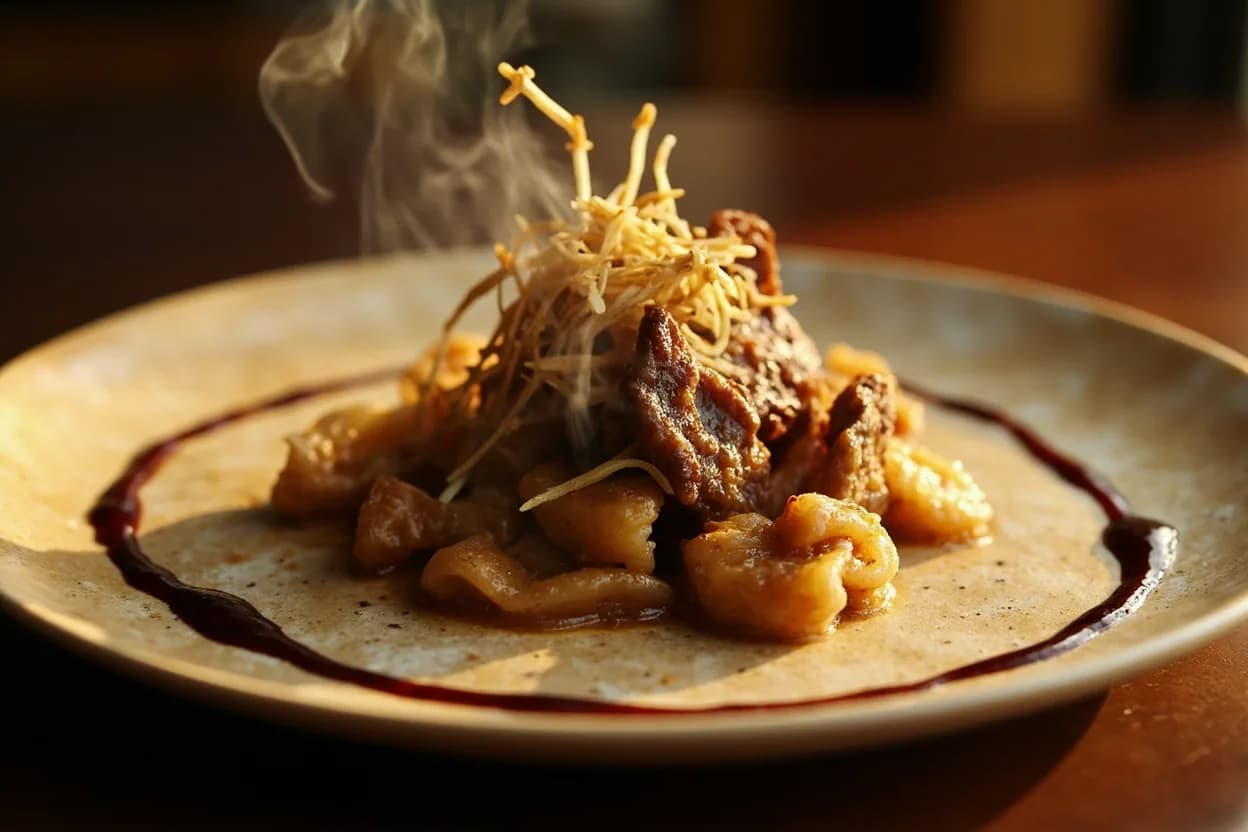
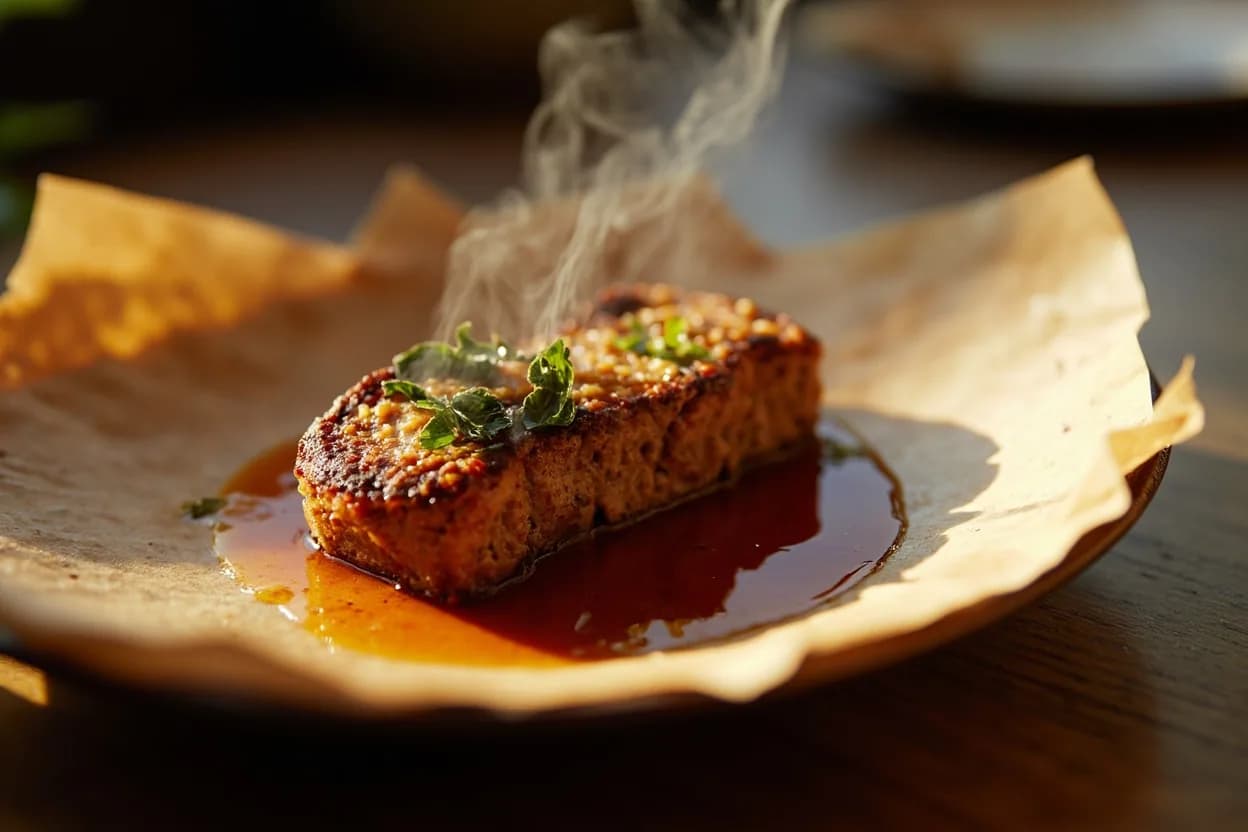
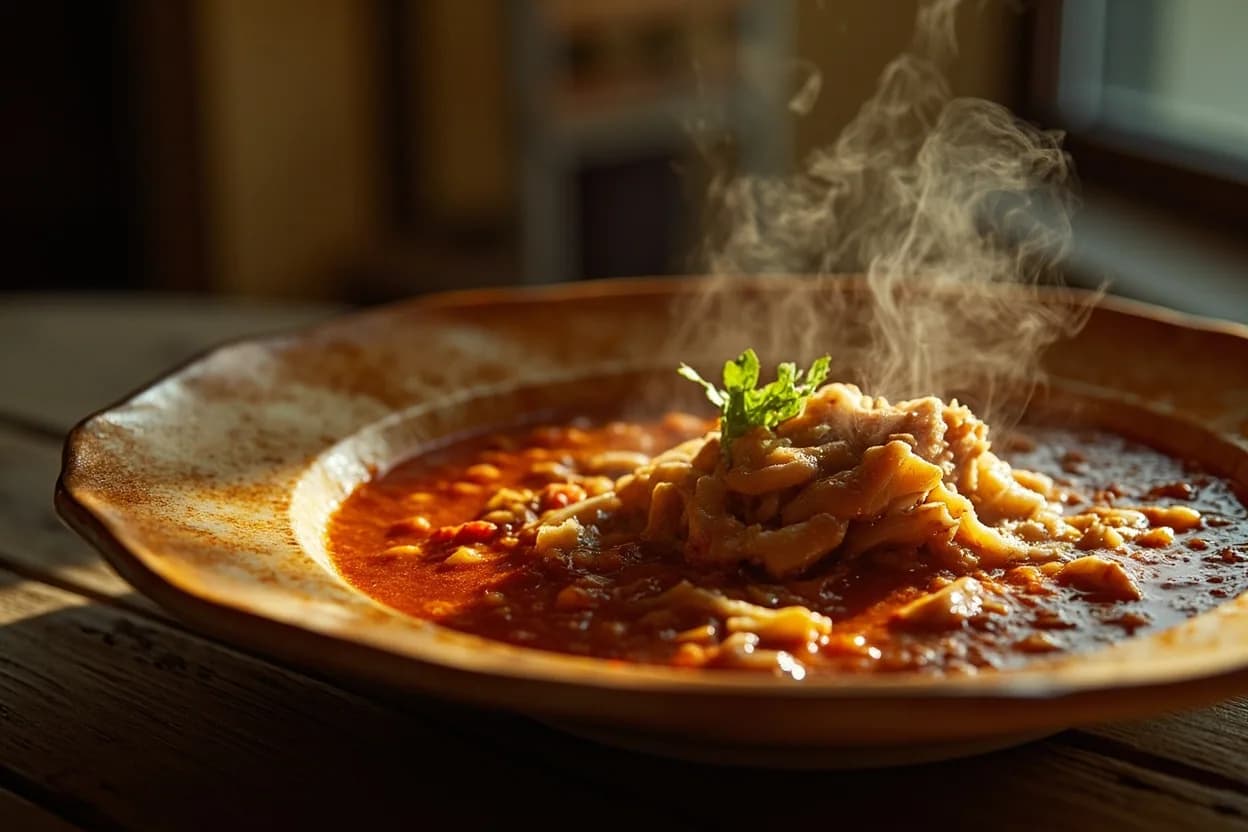
Related

Whisk
Beat ingredients smooth and aerated with a looping wire motion

Sift
Pass dry ingredients through mesh to aerate and remove lumps

Strain
Pour through mesh to separate solids from liquid for a smooth result

Filter
Pass liquid through fine material to clarify out the smallest particles

Rice
Press cooked potatoes through small holes for fluffy, lump-free texture

Mash
Crush soft cooked food into a rustic, creamy purée

Grind
Crush food into a coarse to fine texture, from spices to meat

Grate
Shred food into fine bits against a sharp-toothed surface