Heat & Fire
Maltose Skin Glazing
Coating poultry skin in maltose syrup so it roasts to a lacquered, crackling finish.
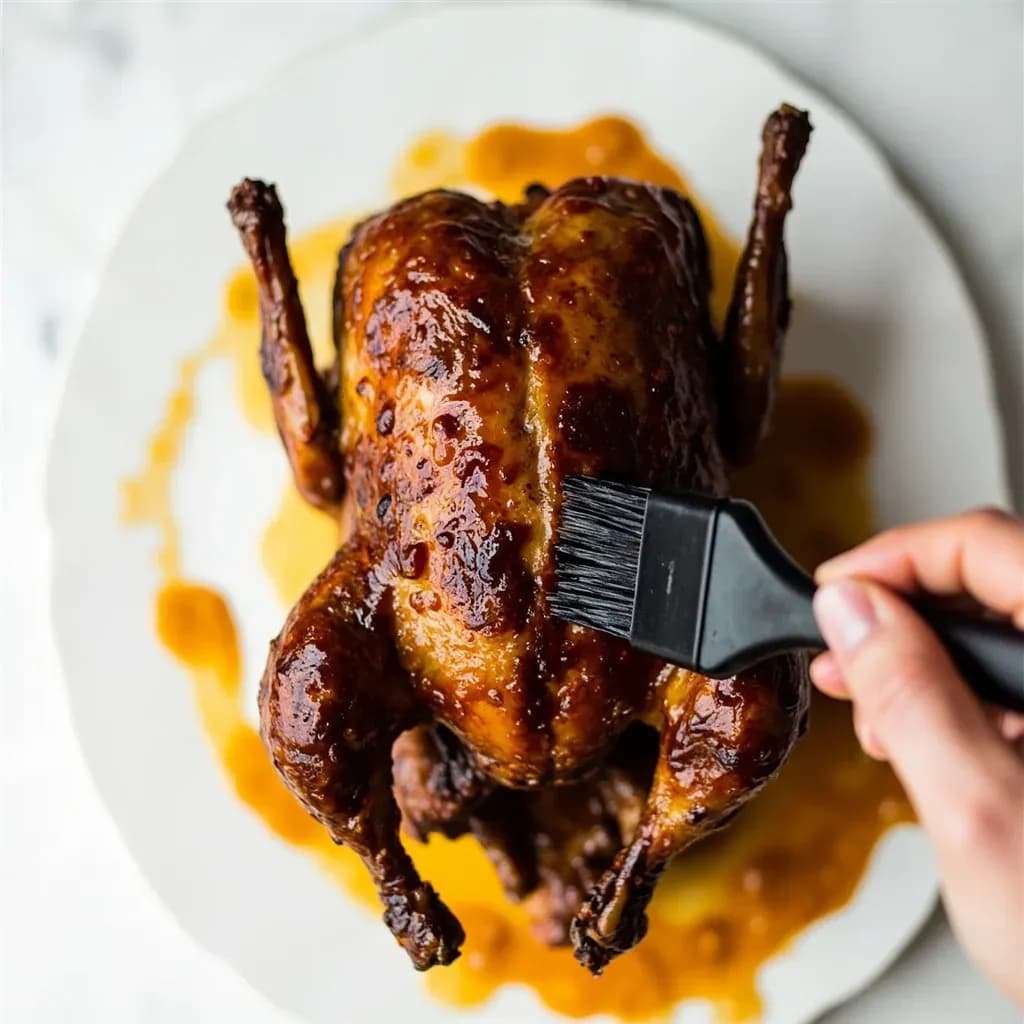
Maltose skin glazing brushes a maltose-and-vinegar solution onto air-dried poultry like Peking duck or char siu before roasting, so the sugars caramelize into a glossy, deep-red, crackling skin. The skin is often scalded and dried beforehand to tighten it. Maltose browns more evenly and less harshly than table sugar, giving the signature lacquer.
Maltose skin glazing is the Chinese roast-shop technique of brushing a thinned maltose syrup over the skin of a whole bird — duck, goose, chicken, or squab — then air-drying it for hours before roasting at fierce heat. The result is a deep, glassy, mahogany lacquer that shatters into crackling when carved, the visual and textural signature of Peking duck, Cantonese siu mei, and most other lacquered-poultry traditions. The glaze itself takes minutes; the real work, and the part most home cooks underestimate, is the long, undisturbed drying that follows.
Maltose is the right sugar for this job because of its chemistry, not its tradition. It is markedly less hygroscopic than glucose and honey, so a maltose-coated skin actually loses moisture during drying instead of pulling humidity from the air. That dryness is what allows the skin to blister and shatter into crackling under high radiant heat rather than going leathery or weeping fat. Honey, rich in fructose, and glucose syrup both stay tacky, attract moisture, and scorch faster than maltose — workable for color, but never for true crackling.
The technique is forgiving in its parts (a brush, a sugar, a hot oven) and unforgiving in its timing. Skip the drying and the skin will never crisp. Glaze too thickly and patches scorch to bitter black before the meat is cooked. Get it right and the bird reads as glassy mahogany outside and juicy, properly rendered inside — the diner's first signal that the cook knows what they're doing.
- Difficulty
- Hard
Types & varieties
Maltose thinned with water and a splash of rice vinegar or Shaoxing wine, applied to a thoroughly air-dried bird and roasted hanging in a very hot oven or pit.
Maltose brushed onto skin after a spiced marinade (five-spice, garlic, soy) has been applied to the flesh; multiple thin coats separated by further drying are common.
A lighter, sweeter wash — maltose thinned with slightly more water — paired with a shorter 4–8 hour air-dry for weeknight cooking.
Smaller birds take a more concentrated maltose wash and a shorter dry of 2–6 hours so the skin bronzes without over-drying the delicate breast meat.
A first coat before drying, then a second, slightly stronger coat just before the bird enters the oven, to deepen the lacquer.
How to do it
- 1
Prepare the bird
Truss or shape the cleaned, rinsed bird so it holds an even form on a rack or hook. Pat the skin — and especially the neck flap, wings, and cavity opening — completely dry with paper towels. Any surface moisture will repel the glaze and ruin the lacquer.
- 2
Tighten the skin (optional but traditional)
For duck, goose, and squab, pour a kettle of boiling water slowly over the entire bird, or dip it briefly in a pot of just-boiled water for 30–60 seconds. This denatures the outer skin proteins so they grip the glaze and contract tightly during drying. Pat dry again immediately.
- 3
Make the maltose wash
Scoop maltose into a small saucepan, add hot water at roughly a 1:3 to 1:5 ratio (maltose to water by volume), and warm gently while stirring until fully liquid and brushable. Stir in 1–2 teaspoons of rice vinegar per 250 ml of wash. It should flow like thin maple syrup — not water, not glue.
- 4
First coat
Using a soft pastry brush or a feather, paint the warm wash evenly over every part of the skin — breast, back, legs, wings, and neck. Avoid the cavity and any exposed flesh. Hang the bird by its neck hook or set it breast-up on a rack over a tray so air circulates all around.
- 5
Dry thoroughly
Place the bird in a cool, dry, well-ventilated spot — a refrigerator with the door closed, a cold pantry, or outdoors on a cool, dry night. Aim for 6 to 24 hours. The skin should feel papery, tight, and slightly tacky but not wet. Some cooks apply a second thin coat partway through drying to deepen the color.
- 6
Bring to room temperature before roasting
Take the bird out of the refrigerator 30–60 minutes before roasting so it isn't ice-cold going into the oven, which would slow browning and make the skin steam.
- 7
Roast at intense heat
Roast at 220–260 °C / 425–500 °F, ideally hanging or on a rack so hot air can reach the back. For Peking duck, roast until the skin is a deep, glassy mahogany and crackles when tapped — typically 25–45 minutes for duck, 50–70 minutes for goose. For whole chickens, roast until juices run clear at the thigh.
- 8
Optional final glaze and rest
Some cooks brush a final, very thin coat of warm maltose wash on the bird in the last 5 minutes for extra gloss. Rest the bird 10–15 minutes, uncovered, before carving so the skin stays crisp and doesn't trap steam against the meat.
Why maltose, and not honey or sugar
The single most important variable in a lacquered bird is how much moisture the skin can shed before it meets the oven. Maltose, a disaccharide of two glucose units, is markedly less hygroscopic than the sugars most home cooks reach for first. Honey, with its high fructose load, and glucose syrup both pull ambient humidity toward themselves, which keeps the skin damp right through drying and into the roast; sucrose behaves more like maltose but lacks maltose's track record in the roast shop. Maltose does the opposite, and the skin it coats becomes papery and tight after a night in a cool, dry place.
That dryness is what crackling needs. When intense heat hits a properly dried skin, surface water flashes off, the proteins and sugars on the surface Maillard-caramelize together, and the layer puffs and shatters into thin, brittle sheets. A skin that still holds moisture will instead steam, sag, and turn leathery — the classic failure of a 'rubbed with honey' duck at home. Color and shine are easy to fake; the crackling is what maltose actually buys you.
- Maltose absorbs far less atmospheric moisture than glucose or honey during drying, so the skin it coats dries to a papery, tight finish rather than staying tacky.
- Honey browns faster than maltose and scorches readily at the temperatures required for crackling, largely because of its fructose content.
- Glucose/corn syrup produces gloss but tends to stay tacky during the long drying stage and burns before the bird is cooked through.
- A thin coat is critical — thick patches scorch to bitter black long before the rest of the bird is lacquered.
The drying stage, and why it cannot be rushed
Glazing takes minutes; drying takes the better part of a day, and it is the step that separates a true lacquered bird from a merely brown one. After the maltose wash goes on, the bird needs to sit in cool, moving air for 6 to 24 hours, uncovered, on a rack or hung by a hook. The skin should end up feeling papery, tight, and faintly tacky — not stiff like leather, not soft like raw chicken.
Refrigeration is the usual answer at home: the dry, cold air of a fridge with a small fan or even just a closed door over many hours is reliable. Outdoors on a cool, dry, breezy night works in temperate climates. The bird must never be wrapped, covered, or sealed in a container, or the maltose will trap steam against the skin and undo its work.
- 6 hours is a working minimum; overnight (12–18 hours) gives the most reliable crackling.
- Hang the bird by a neck hook, or rest it breast-up on a wire rack over a tray so air reaches every surface.
- Never cover, wrap, or bag the drying bird — trapped steam is the enemy of crackling.
- A small fan aimed at the bird in a fridge will tighten the skin faster and more evenly.
Common uses
Tips & pitfalls
- Pat the skin completely dry with paper towels before brushing — maltose will not adhere to wet skin and will run off unevenly.
- Dilute maltose with hot water, not cold; the syrup is extremely viscous and needs warmth to thin into a brushable wash.
- Add a splash of rice vinegar to the glaze; the mild acidity helps the skin tighten and speeds drying.
- The drying stage is the step most home cooks under-do — six hours is a working minimum, and overnight in a cool, dry, well-ventilated spot is the gold standard.
- Never cover or wrap the drying bird; trapped steam will keep the skin soft and undo the crackling.
- Apply the glaze to skin only — never to exposed flesh where a marinade has been rubbed, or the spices will bleed and scorch.
- Brush on thin, even coats; thick patches of maltose scorch to bitter black well before the rest of the bird is cooked.
- Roast at the highest heat your oven can sustain; maltose needs intense radiant heat to blister into crackling rather than just brown.
- Rest the bird 10–15 minutes before carving so the rendered fat under the skin redistributes and the crackling stays attached.
Good to know
- Also known as
- 麦芽糖上色 (màiyátáng shàngsè) in Chinese kitchens; 'maltose wash' or 'maltose painting' in English-language kitchens
- Primary sugar used
- Maltose syrup (麦芽糖), a golden, viscous syrup made from malted grains
- Key property
- Maltose is far less hygroscopic than glucose and honey, so it helps the skin dry out instead of staying tacky
- Best for
- Whole duck, goose, chicken, and squab — any bird where glossy, crackling, mahogany skin is the goal
- Cuisine context
- Chinese roast-meat tradition: Beijing-style hung-roast Peking duck (挂炉 guà lú) and Cantonese siu mei (燒味)
- Drying time
- 6 to 24 hours in a cool, dry, ventilated spot — overnight in a refrigerator is the gold standard
- Roasting temperature
- 220–260 °C / 425–500 °F, hot enough to blister the skin into crackling
- Typical glaze ratio
- Roughly 1 part maltose to 3–5 parts hot water, with 1–2 teaspoons rice vinegar per 250 ml wash
- Difficulty
- Moderate — the work is simple but the timing of drying and roasting is unforgiving
- Storage of maltose
- Shelf-stable for months at room temperature in a sealed jar; it thickens or crystallizes in cold conditions — warm gently before use
Also called
Maltose Skin Glazing (上糖皮)
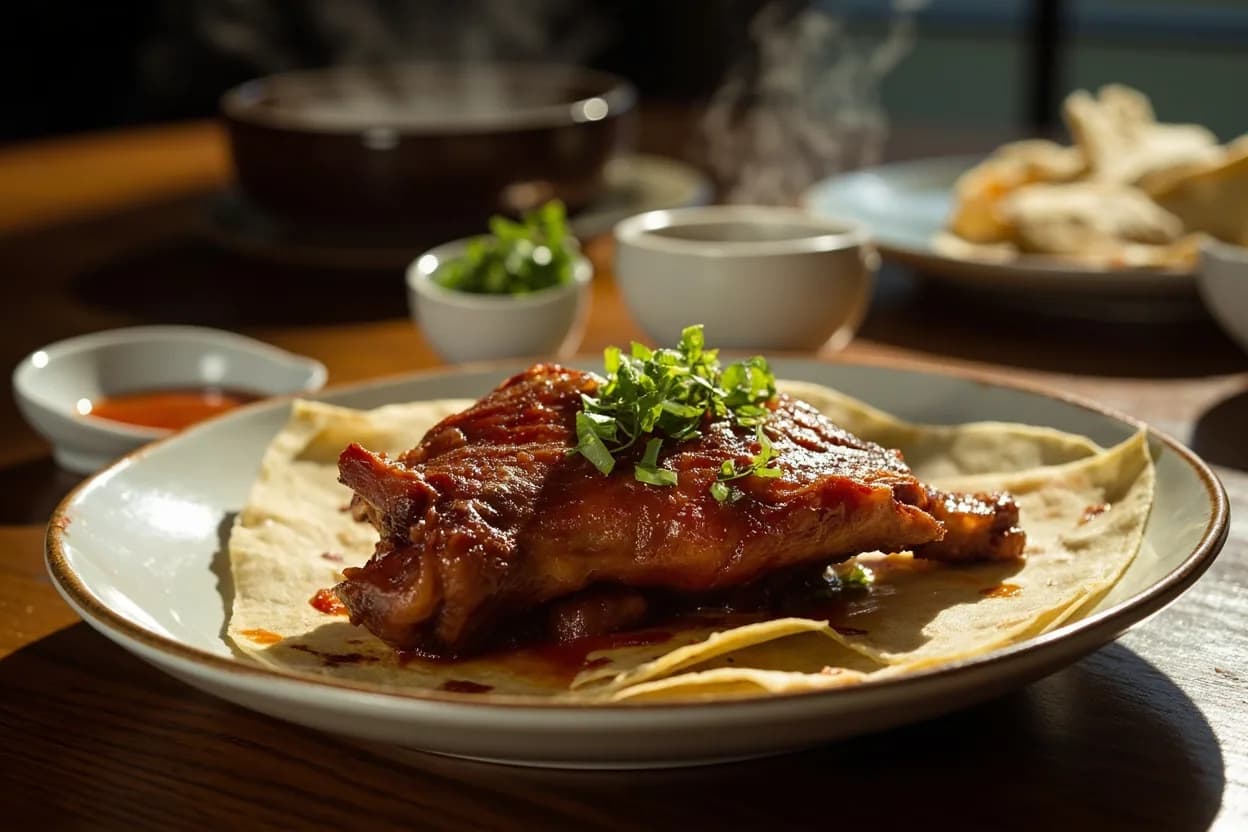
Dishes that rely on it
Related

Sear
Blast the surface hot for a deep-browned, savory crust

Sauté
Cook quickly in a little fat over lively heat, tossing as you go

Stir-Fry
Toss bite-sized pieces over roaring heat for fast, smoky cooking

Pan-Fry
Crisp food in a shallow layer of hot fat, turning once or twice

Deep-Fry
Submerge in hot oil for an all-over crackling crust

Roast
Cook uncovered in dry oven heat for browned edges and tender centers

Bake
Cook with steady, surrounding oven heat — the soul of bread and pastry

Broil
Hit food from directly above with fierce overhead heat