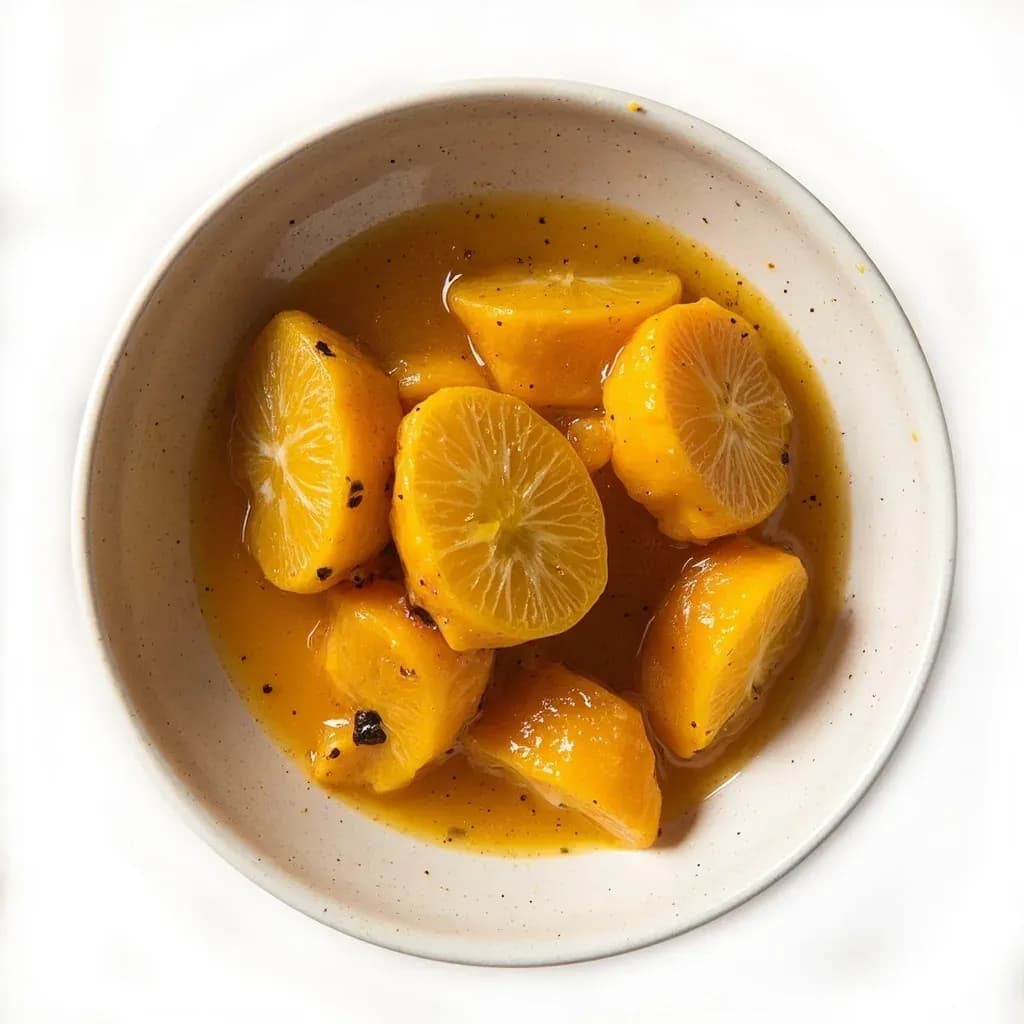
Prep & Assembly
Palm Nut Pulp Extraction
Boiling and pounding palm fruit, then pressing the mash to extract rich pulp for soups and sauces.
Palm nut pulp extraction boils palm fruits until soft, then pounds them in a mortar to separate the fibrous orange pulp from the hard nuts. The mash is mixed with water and kneaded, and the liquid is strained to yield a thick, oily palm cream. This concentrated pulp is the base for West and Central African dishes such as banga and moambe soup.
Palm nut pulp extraction is the foundational preparation behind the soup and stew traditions of the Niger Delta, coastal Cameroon, Ghana, Côte d'Ivoire, and the Congo basin. The technique turns fresh oil-palm fruit — not the seed, but the fibrous, oil-rich pericarp that surrounds it — into a thick, deep-orange liquid used as the base for dishes like Nigerian banga soup, Ghanaian abenkwan, Cameroonian mbongo tchobi, and Ivorian sauce graine. It is the cooking-pulp counterpart to industrial palm oil production, and in African kitchens it has long been the everyday way to bring palm flavor into a dish.
The extract that comes off the press is not a clear oil but an opaque, fiber-rich suspension, somewhere between heavy cream and loose applesauce in body, carrying the fruit's full spectrum of flavor: rich and nutty, with a slight vegetal bitterness and a deep carotenoid color that stains everything it touches. As it simmers, the suspended pulp breaks down and releases its oil, thickening the cooking liquid into a glossy, almost gravy-like base. That thickening and color release is what the canned shortcut can only approximate, and it is the reason cooks who care about depth still keep a heavy wooden mortar for this job.
The pressing step is where the technique diverges from a quick kitchen task into something that rewards practice. Squeeze too gently and the extract is thin and pale; squeeze too hard and the nut fragments and kernel oils express into the liquid, turning the finished soup sharp and bitter. Getting it right is mostly a matter of pressure, batch size, and the timing of when the fruit is hot enough for the mesocarp to release but cool enough that the nuts stay intact.
- Difficulty
- Medium
Types & varieties
The reference technique: fruits boiled, pounded in a heavy wooden mortar, then hand-pressed in batches through a sieve or muslin.
Modern adaptation: softened fruits are pulsed with water in a blender before straining; faster but produces a slightly more emulsified, less clean extract.
Fruits are pressure-cooked for 15–20 minutes instead of open-boiled, then pounded or blended; common shortcut in urban Nigerian and Cameroonian kitchens.
Commercially prepared pulp (sold in tins or jars under brands like 'Banga' or 'Ogbom'-style concentrates); dissolves directly into hot water with no extraction required.
Pre-extracted pulp sold in blocks in diaspora markets (especially in the UK, US, Canada); thawed and used like fresh extract.
A first pressing yields a thick, rich concentrate for the main soup; a second, lighter pressing is used as a base or for rice dishes like ofe akwu and white soup variants.
How to do it
- 1
Sort and wash the fruit
Pick through the palm fruit bunch, discarding rotten, blackened, or unripe green fruits. Wash thoroughly in cool water three to four times to remove grit, loose fibers, and insects. Drain in a colander.
- 2
Boil until soft
Place fruit in a large pot, cover with water by about 5 cm, and add a generous handful of salt. Bring to a boil, skim the surface foam, and cook 30–60 minutes (or 15–20 minutes in a pressure cooker) until the pericarp is tender and slips off the nut when rubbed between your fingers. The nuts should still feel firm.
- 3
Drain and cool briefly
Pour the fruit into a colander and let it drain and cool just enough to handle — hot enough that the pulp flows freely, cool enough to protect your hands during pounding.
- 4
Pound or blend to release the pulp
Transfer small batches to a wooden mortar and pound firmly until the fibrous mesocarp separates from the hard nuts and forms a wet, oily mash. In a modern setup, pulse the cooked fruit in a blender with a little warm water in short bursts — do not purée; you want separation, not a smooth paste.
- 5
First pressing
Scoop the mash into a large bowl, add a cup or two of warm water, and mix by hand. Press and squeeze the mash through a fine-mesh sieve or muslin cloth set over another bowl, collecting the thick orange-red liquid. Discard the trapped nut-and-fiber solids, or save them for a second, lighter pressing.
- 6
Strain and clarify
Pass the collected liquid through a finer sieve or doubled cheesecloth to remove any remaining fiber and nut fragments. The result should be a glossy, opaque, deep-orange extract with the consistency of light cream.
- 7
Optional second pressing
Return the pressed solids to the bowl, add more warm water, and repeat the squeeze for a thinner extract — ideal as the cooking liquid for rice dishes or as a base for lighter soups.
- 8
Store or use immediately
Use the fresh extract within 24 hours for best color and aroma, or refrigerate up to 4 days. For longer storage, freeze in measured portions (1-cup or 2-cup blocks) in zip-top bags; thaw overnight in the refrigerator before use.
Fresh extraction vs. canned concentrate
Most diaspora cooks today reach for a tin of palm fruit concentrate, and for everyday weeknight soups it is a perfectly good product. But the trade-offs are real, and they show up most clearly in color, body, and depth. Fresh extraction gives a brighter, more layered flavor and a natural thickening as the suspended pulp cooks down; the canned version is a more uniform, sometimes sweeter liquid that needs a longer simmer with aromatics to develop comparable roundness. The fiber content is also different — fresh pulp carries a small amount of fine plant fiber that contributes to the silky, gravy-like body of a properly cooked banga, while canned concentrate is largely fiber-free.
- Fresh: richer color that holds through long simmers; canned: fades faster and often needs a finishing swirl of palm oil.
- Fresh: natural thickening as suspended pulp breaks down; canned: relies on reduction and starch to thicken.
- Fresh: deeper, more complex flavor with subtle bitter and earthy notes; canned: cleaner and slightly sweeter, occasionally metallic.
- Canned: works in a fraction of the time and travels well; fresh: demands planning, boiling, pounding, and pressing.
A note on naming
In West and Central African usage, 'palm nut' refers to the whole fruit — pericarp plus seed — not the seed itself. English-language recipes sometimes use 'palm nut' to mean only the kernel, which is a different ingredient with a different flavor and a very different use. The pulp that makes banga soup is extracted from the pericarp, the soft, oily, carotene-loaded flesh that surrounds the hard seed. The kernel inside is pressed separately, in a much longer industrial process, to make palm kernel oil. If a recipe calls for 'palm nuts' and shows them as small, hard, ivory-colored kernels, the cook is looking at the wrong ingredient and will end up with a sharp, soapy result.
What to do with the pressed solids
The nut-and-fiber mass left in the cloth is not waste. In many households it is given a second, lighter pressing for a thinner extract used to cook rice or stretch a soup. After that it can be fed to livestock, composted, or — in some coastal communities — dried and used as a fuel for the cooking fire. The first-pressing solids still carry enough oil that they should not be discarded while still warm.
- Reserve a second pressing (water + light squeeze) for rice dishes and lighter soups.
- Compost the final spent solids or feed to poultry and pigs.
- Do not discard the solids while still warm — the residual oil can stain surfaces and attract insects.
Common uses
Tips & pitfalls
- Boil fruit until the pericarp slips off the nut when rubbed between your fingers, but the nuts themselves should still feel firm — over-soft nuts burst and release bitter oil into the extract.
- Add a generous handful of salt to the boiling water; this firms the nuts and prevents them from breaking during pounding.
- Work in small batches when pounding or pressing — trying to do too much fruit at once leaves unseparated pulp and yields a thin, watery extract.
- Squeeze gently: aggressive pressing forces nut fragments and bitter kernel oil into the extract, turning a fragrant soup into a sharp-tasting one.
- Strain twice: a coarse strain to remove nuts and fiber, then a fine-mesh or muslin pass to catch fine particles for a glossy finish.
- Reserve the first (thickest) pressing for the soup itself; use a second, lighter pressing as the cooking liquid or for rice accompaniments.
- Skim foam off the boiling fruit — it carries bitter compounds and dulls the final color.
- If using canned concentrate, simmer it gently for 10–15 minutes with aromatics (onion, pepper, scent leaf) before adding proteins, to mimic the depth of fresh extraction.
- Add banga spice, beletete leaves, or bitter leaf at the simmering stage, not during the boil, to preserve their volatile aromatics.
- If the extract tastes flat, finish with a small amount of fresh palm oil (about 1–2 tablespoons per liter) for sheen and roundness — this is standard in Nigerian Delta kitchens.
Good to know
- Origin
- West and Central Africa, tied to the oil palm (Elaeis guineensis), native to the Gulf of Guinea region.
- Source material
- Fresh palm fruit bunches (pericarp + nuts); the Tenera variety is preferred for cooking because of its thin shell and high mesocarp-to-nut ratio, though local Dura and other landrace types are also used.
- Color of extract
- Deep orange to brick red, depending on ripeness and variety of fruit.
- Flavor profile
- Rich, nutty, slightly earthy, with a mild bitterness if nut fragments are pressed too hard; carries a distinct vegetal note.
- Yield
- Roughly 1.5–2 liters of thick pulp liquid per 5 kg of fresh palm fruit, varying with ripeness and pressing effort.
- Active time
- About 30–45 minutes of hands-on work.
- Total time
- 1.5–2.5 hours including boiling.
- Difficulty
- Intermediate; the pressing step is where skill differentiates a good cook from a great one.
- Traditional equipment
- Large aluminum or cast-iron pot, wooden mortar and pestle (or large basin), muslin cloth or fine-mesh sieve, ladle.
- Modern shortcuts
- Pressure cooker (cuts boil to about 20 min), food processor or blender in place of mortar, canned or jarred palm fruit concentrate.
- Storage of extract
- Refrigerated in a sealed container for 3–4 days; frozen in measured portions for 2–3 months.
- Storage of fresh fruit
- Fresh palm fruits keep 5–7 days at room temperature; up to 2 weeks refrigerated; frozen fruit is common in West African diaspora markets.
- Shelf life of canned concentrate
- Unopened tins last 2–3 years; once opened, refrigerate and use within a week.
Also called
Palm Nut Pulp Extraction · Banga Extraction · Palm Cream Making
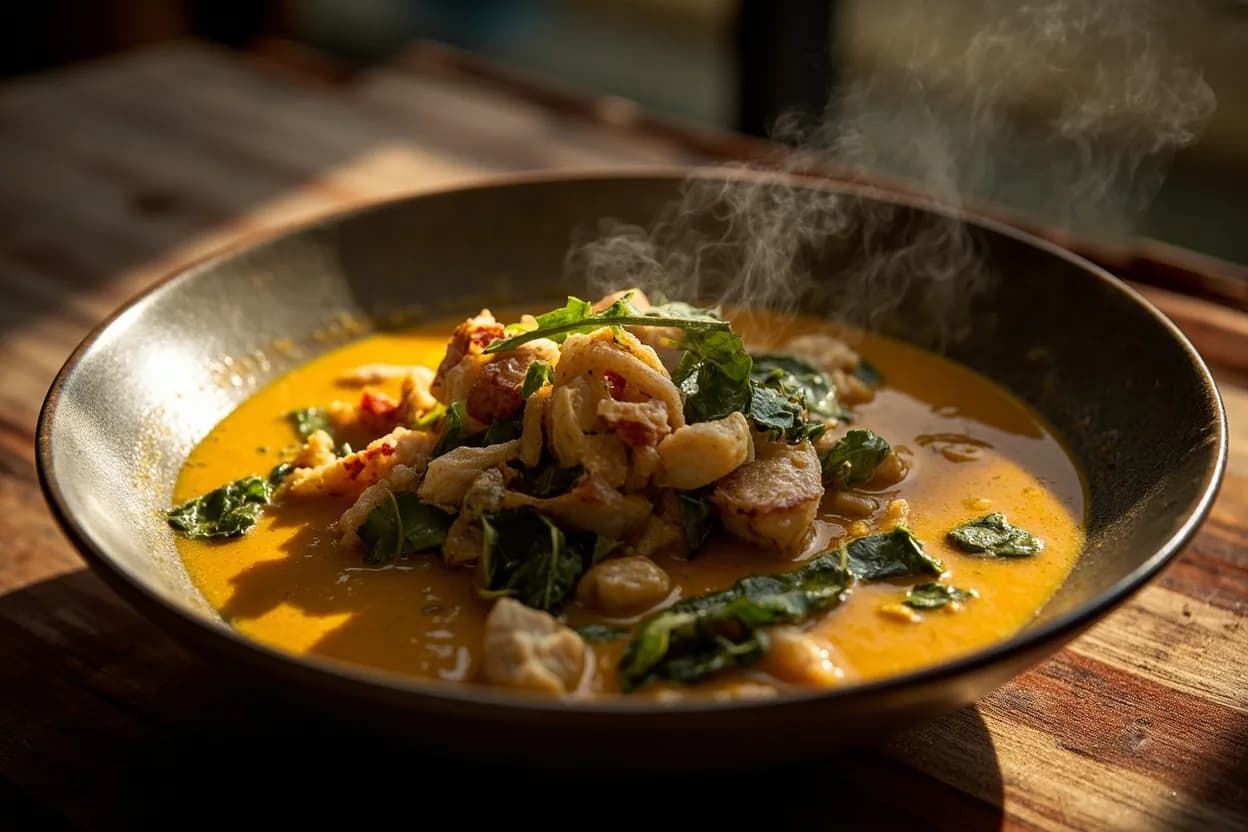
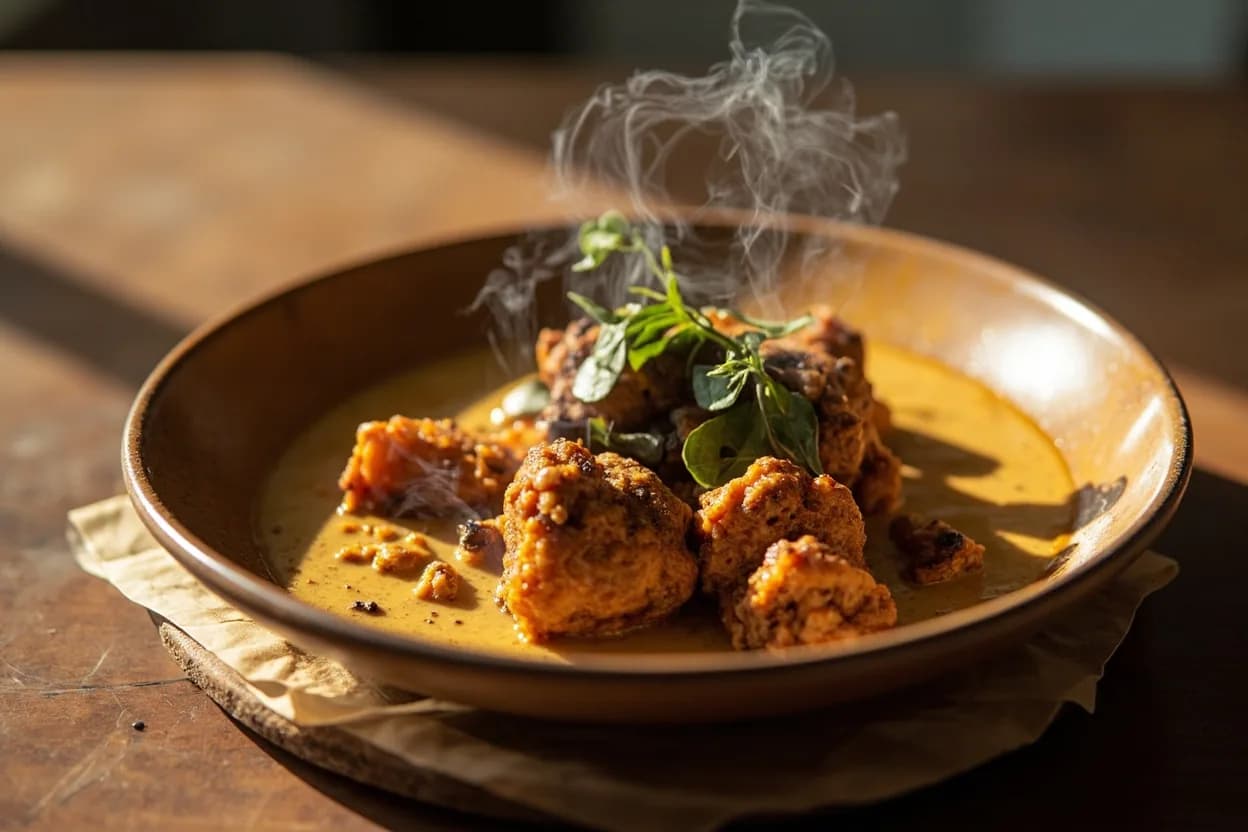
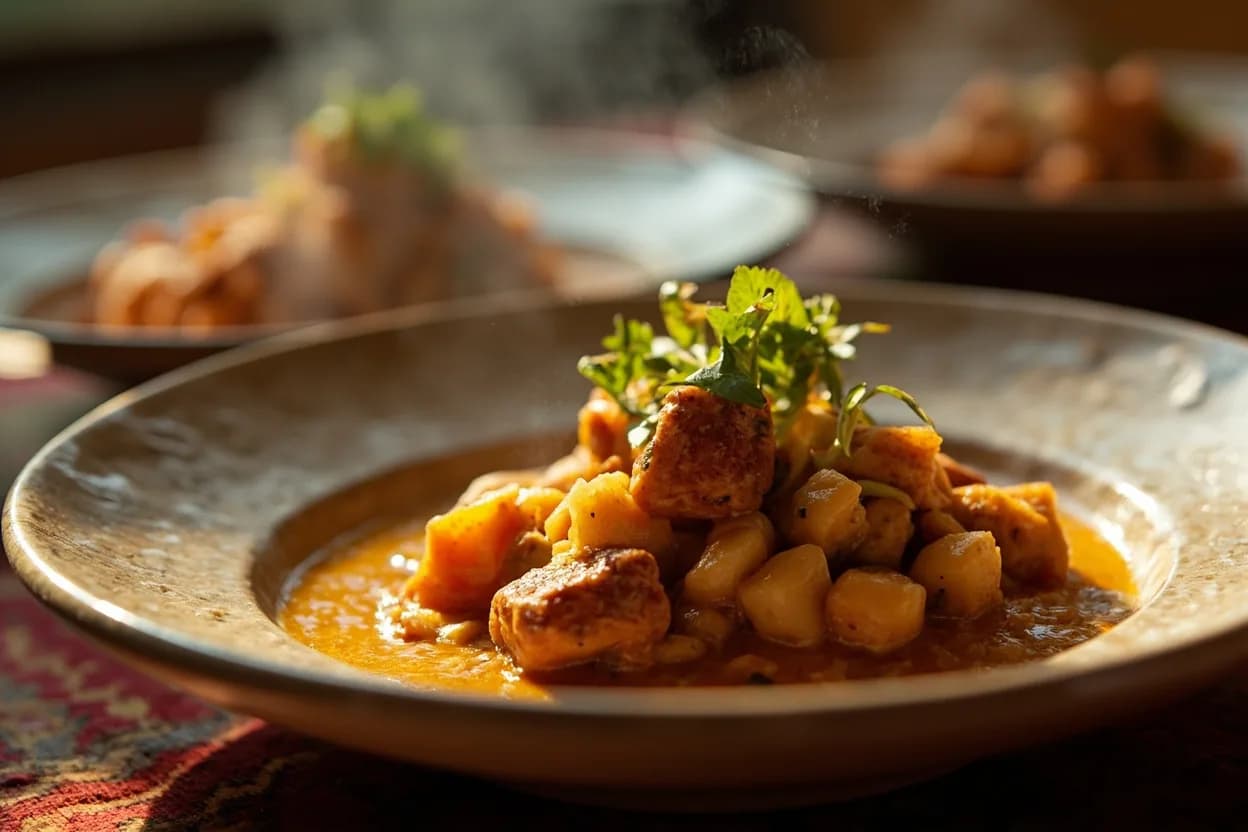
Dishes that rely on it
Related

Whisk
Beat ingredients smooth and aerated with a looping wire motion

Sift
Pass dry ingredients through mesh to aerate and remove lumps

Strain
Pour through mesh to separate solids from liquid for a smooth result

Filter
Pass liquid through fine material to clarify out the smallest particles

Rice
Press cooked potatoes through small holes for fluffy, lump-free texture

Mash
Crush soft cooked food into a rustic, creamy purée

Grind
Crush food into a coarse to fine texture, from spices to meat

Grate
Shred food into fine bits against a sharp-toothed surface