Water & Steam
Red Braise (Hong Shao)
A Chinese braise in soy sauce, sugar, and spices that lacquers meat a glossy reddish-brown.
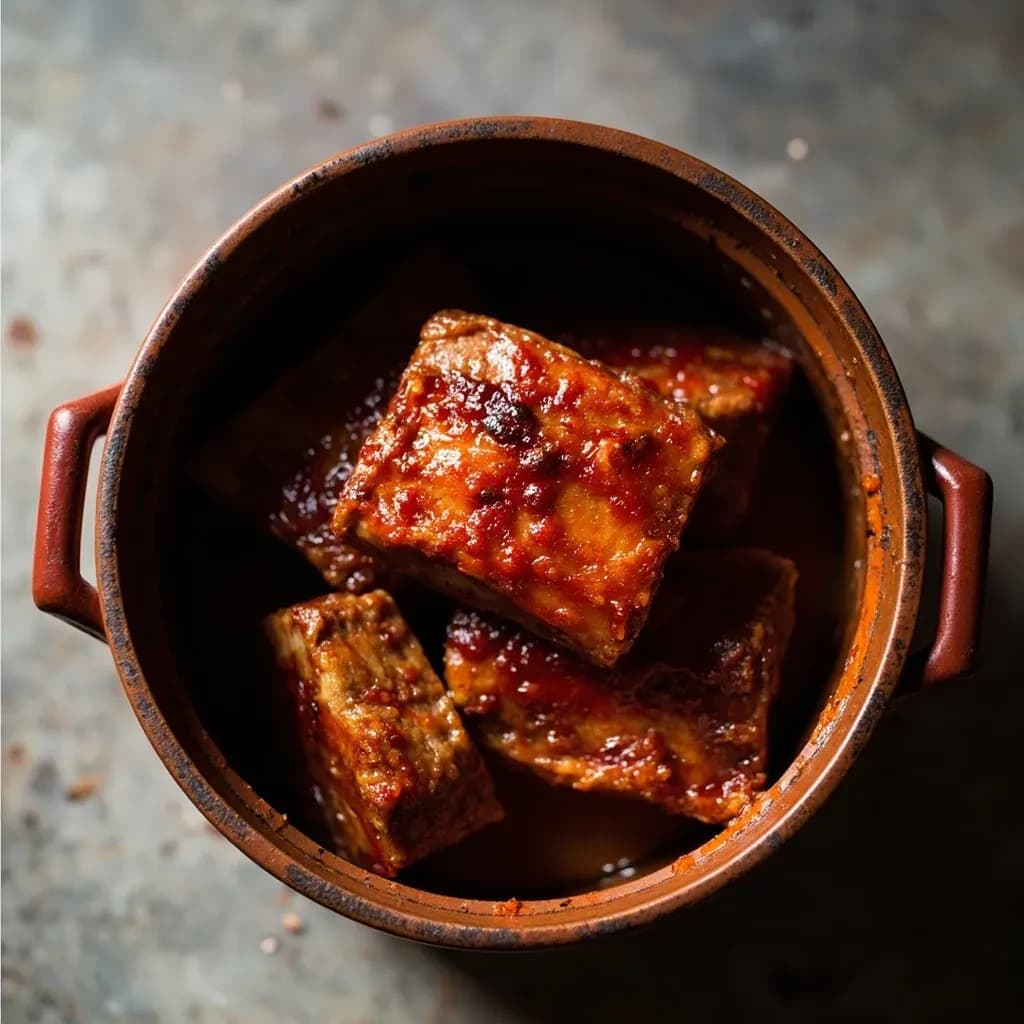
Hong shao, or red braising, simmers meat slowly in soy sauce, sugar, rice wine, and aromatics like ginger, star anise, and scallion. As the liquid reduces it caramelizes into a dark, glossy, slightly sweet sauce that coats the meat and gives the dish its signature reddish color. It is the foundation of classics such as red-braised pork belly and is prized for the deep umami the long simmer develops.
Red braise — 红烧 (hóng shāo), literally "red-cooked" — is one of the foundational techniques of Chinese home and banquet cooking, a shallow braise that turns out meat lacquered in a glossy, reddish-brown glaze. Unlike a Western stew, the cooking liquid is not meant to be served as a broth; it is a vehicle that slowly reduces, sugar and soy caramelizing together, until what remains is a syrupy sauce that clings to the protein. The "red" is the color of caramel, not chilies, and the hallmark flavor is a deliberate balance of sweet, salty, and aromatic — never one-dimensionally soy-saucy.
The technique belongs to the water-and-steam family of Chinese methods because the medium is liquid, but it is defined not by the liquid itself but by a trinity of seasonings: Shaoxing wine, light and dark soy sauce, and rock sugar caramelized separately before the meat ever goes in. That standalone sugar caramelization — called 糖色 (tángshǎi), or "sugar color" — is what gives a true hong shao its lacquered sheen and a faintly bitter-sweet backbone that distinguishes it from a plain soy stew. Skipping it is the single most common reason a Western cook's version tastes dull and one-noted.
In practice the technique is forgiving: the simmer is gentle, the aromatics are flexible, and most proteins improve after a night in the refrigerator as the sauce reabsorbs and the flavor deepens. The cook's real work is patience and attention at two moments — pulling the caramel off the heat at deep amber rather than letting it smoke, and finishing the dish with the lid off so the sauce reduces to a glaze. Get those two things right and the dish almost cooks itself.
- Difficulty
- Medium
Types & varieties
Noticeably sweeter with more sugar; darker, glossier sauce, often a touch of dark soy for color
Balanced sweet-savory; the classic Wuxi version uses even more sugar and sometimes fermented red rice (红曲) for color
Less sweet and saltier; more garlic, fewer warm spices, heartier overall
Adds dried chilies and Sichuan peppercorns to the standard braise; known as mala hong shao
Spicier finish with fresh or dried chilies and a sharper, more pungent profile
Related but distinct: charsiu (叉烧) uses a similar color palette via maltose and is roasted, not braised
How to do it
- 1
Cut and (optionally) blanch the meat
Cut pork belly or other protein into roughly 3–4 cm chunks. For richer cuts, place in a pot of cold water, bring to a boil, and simmer 5 minutes; drain and rinse. Blanching tightens the texture and washes out impurities so the final sauce stays clear rather than cloudy.
- 2
Caramelize the sugar
In a clean wok or heavy pot, heat 2–3 tablespoons neutral oil over medium heat. Add 30–50 g crushed rock sugar (or 2–3 tablespoons granulated) and stir. When the sugar melts, foams, and turns a deep amber — the color of strong tea or maple syrup — move immediately to the next step. Do not let it smoke or turn black.
- 3
Sear the meat in the caramel
Add the meat to the caramel and toss to coat evenly. Let it sit undisturbed for 1–2 minutes so the pieces take on color, then stir to coat all sides. The caramel will seize around the meat; that is what builds the lacquer.
- 4
Add wine and aromatics
Pour in 3–4 tablespoons Shaoxing wine to deglaze, scraping up any browned bits. Add sliced ginger, smashed scallions, 2–3 star anise, a small piece of cassia or cinnamon bark, and optionally 1–2 bay leaves.
- 5
Add soy sauce and liquid
Stir in 3–4 tablespoons light soy sauce and 1 tablespoon dark soy sauce (for color). Add just enough hot water or unsalted stock to barely cover the meat — usually 500–700 ml for 1 kg of pork.
- 6
Bring to a boil, then simmer
Bring to a boil, skim any foam, reduce heat to the gentlest simmer, cover, and cook: about 90 minutes for pork belly, 40–60 minutes for chicken, 2–2.5 hours for beef brisket. The liquid should barely tremble; a hard boil toughens proteins and clouds the sauce.
- 7
Mid-braise check
Around the halfway point, fish out the hard aromatics (star anise, cinnamon, bay leaves) so they do not turn bitter. If the sauce has dropped below the level of the meat, top up with a little hot water.
- 8
Reduce to a glaze
Uncover, raise heat to medium-high, and simmer steadily until the sauce reduces to a glossy syrup that clings to the meat. Tilt the pot to see the bottom; the sauce should leave a slow-trailing trail when a spoon is drawn through it. This usually takes 8–15 minutes.
- 9
Rest and serve
Off the heat, let the meat rest 10–15 minutes so the glaze sets and the juices redistribute. Serve over steamed rice or with mantou, spooning the reduced sauce generously over the top.
The Sugar Caramelization (Tángshǎi)
The single technique that separates a real hong shao from a soy stew is the standalone caramelization of sugar in oil before the meat is introduced. Cook the sugar slowly over medium heat, stirring, until it melts, foams, and turns a deep amber — about the color of strong tea, maple syrup, or a copper penny. At that point add the meat immediately; the caramel will seize around it, coat it, and begin to build the lacquered crust that defines the dish. Beyond deep amber, the sugar passes into acrid bitterness in a matter of seconds, so have everything else prepped and within reach. Rock sugar (冰糖, bīngtáng) is preferred because it melts more evenly and produces a rounder, less harsh sweetness, but granulated sugar works if that is what you have — just use slightly less and watch the color carefully.
Balancing the Soy
A reliable rule of thumb for 1 kg of meat is 3–4 tablespoons light soy sauce for salt and umami, plus 1 tablespoon dark soy sauce purely for color. Dark soy is thicker, less salty, and carries molasses-like depth that pushes the final hue toward mahogany; using it in place of light soy will make the dish muddy and under-seasoned. A splash of a premium first-press soy (头抽, tóuchōu) adds an extra layer of roundness if you have it, but the everyday supermarket bottle of light soy is perfectly serviceable.
Reading the Glaze
The doneness test for a finished hong shao is visual, not timed. Tilt the pot: the sauce should part slowly and leave a wide, glossy trail when a spoon or spatula is drawn through it. The meat itself should look varnished, with the sauce clinging rather than pooling. If the sauce runs like water, keep reducing; if it looks like jam, you have gone too far and should splash in a tablespoon of hot water and swirl to loosen it. Aim to remove the pot from the heat a few seconds before the sauce looks "done" — residual heat will carry it the last bit.
Common uses
Tips & pitfalls
- Caramelize the sugar separately in oil to a deep amber (the color of maple syrup or slightly darker) before adding the meat — this tangsha is the soul of the dish; going past it turns the whole pot bitter.
- Use rock sugar (bing tang) when you can; it melts smoother and gives a more lacquered, less harsh sweetness than granulated.
- Balance light and dark soy: light soy for salt and umami, dark soy for color without extra saltiness — using only one or the other throws off both flavor and hue.
- Add Shaoxing wine early so the alcohol cooks off, and add hard aromatics (star anise, cinnamon, bay) at the start but fish them out at the halfway point so they do not turn bitter.
- Keep the simmer gentle — a hard boil toughens proteins and clouds the sauce; the surface should barely tremble.
- Finish by tilting the pot and reducing the sauce uncovered over medium-high heat until it coats the back of a spoon and clings to the meat; covering the pot the whole time leaves the sauce thin and watery.
- Rest the meat off heat for 10–15 minutes before serving so the glaze sets; sauce made ahead actually improves overnight in the refrigerator as flavors meld.
- Common mistake: skipping the sugar caramelization and relying only on soy sauce for color — the result is dull brown, not lacquered red.
- Common mistake: adding too much soy sauce early; it overwhelms the sugar caramelization and the meat never tastes sweet.
- Common mistake: cutting pork belly too small; chunks of about 3–4 cm survive the long braise and keep their shape through the final reduction.
Good to know
- Chinese name
- 红烧 (hóng shāo), literally 'red-cooked' or 'red-braised'
- Defining trinity
- Light and dark soy sauce, Shaoxing wine, and rock sugar caramelized separately as tangsha
- Color source
- Caramelized sugar combined with soy sauce; never from chilies or food coloring
- Canonical dish
- Hong shao rou (red-braised pork belly) — the signature preparation
- Regional home
- Jiangsu (Su cuisine) and Shanghai; also fundamental in Shandong and northern home cooking
- Braise times
- Pork belly 1.5–2 h; chicken 40–60 min; beef brisket 2–2.5 h; always at a gentle simmer
- Equipment
- Heavy wok or Dutch oven with lid; a clay sand pot (shāguō) is traditional for serving
- Make-ahead
- Improves overnight in the fridge as flavors meld; reheat gently and re-reduce the sauce before serving
Also called
hong shao · red braising · red-cooking
Related

Boil
Cook in vigorously bubbling liquid at full rolling heat

Simmer
Hold liquid at a gentle shimmer for tender, unhurried cooking

Poach
Cook gently in barely-trembling liquid for silky, tender results

Steam
Cook in rising vapor to keep color, nutrients, and shape intact

Blanch
Plunge briefly in boiling water, then shock cold to lock color

Braise
Sear, then cook slow in a little liquid until fall-apart tender

Stew
Simmer bite-sized pieces fully submerged into a rich, unified pot

Sous-Vide
Seal and cook in precise warm water for edge-to-edge doneness