Water & Steam
Reboiling (Ribollita)
Reheating and re-simmering a leftover bean-and-bread soup so it thickens into a richer dish.
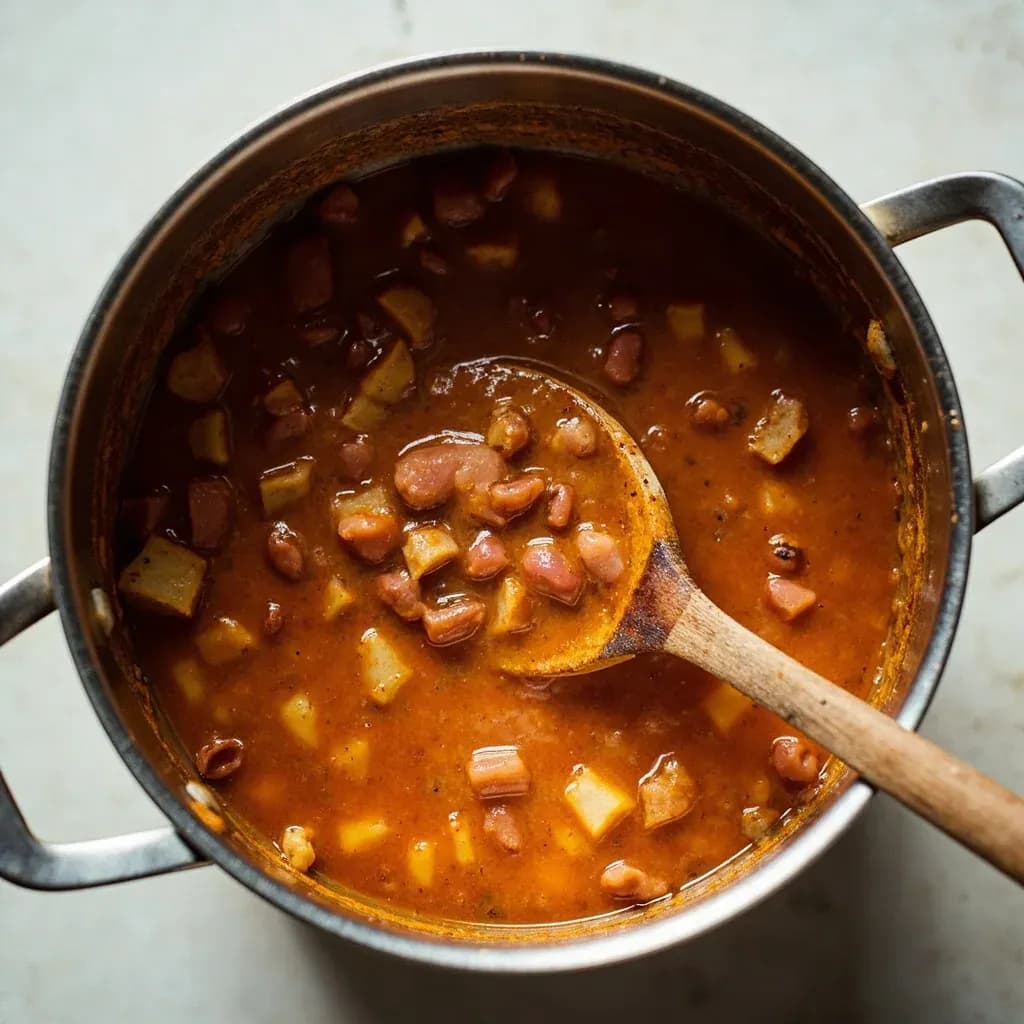
Ribollita literally means reboiled, the Tuscan practice of taking yesterday's bread-and-vegetable soup and simmering it again the next day. The second cook lets the stale bread fully break down and the flavors meld, turning a thin soup into a thick, almost spoon-standing stew. It is a frugal technique built around using up day-old bread and cooked beans rather than wasting them.
Ribollita is a Tuscan technique, not just a soup: cook a thick base of beans, vegetables, and greens, stir in stale bread, let the pot rest overnight, then reboil it the next day. The name itself — literally 're-boiled' — names the method. The rest and the gentle second simmer are what separate ribollita from an everyday minestrone or bread soup.
What the technique produces is a dense, porridge-like dish thick enough to eat with a fork, not a spoon. The overnight rest lets the bread swell and the flavors marry; the gentle reboil breaks the swollen bread down into the broth, concentrates the seasoning, and pulls everything into a unified, almost stew-like body. Each successive reboil deepens the result, which is why the most traditional practice is to reboil up to three times — the 'tris.'
This is one of the defining expressions of cucina povera Toscana: a way to transform a thin leftover minestrone and a heel of stale bread into a meal substantial enough to feed farmhands. The technique is forgiving — proportions vary by region and household — but the non-negotiable elements are the overnight rest, the gentle simmer, and a generous finish of raw extra virgin olive oil.
- Difficulty
- Easy
Types & varieties
The Florence-area canonical version: heavy on cavolo nero, beans, and bread; cooked, rested, and reboiled once or twice.
The Lucca version, often lighter, sometimes more tomato and less cavolo nero; occasionally enriched with chicken or pork scraps.
The Siena version, tends toward borlotti beans and savoy cabbage; a Parmigiano rind is sometimes simmered in the base for depth.
The Arezzo version, frequently combines beans and chickpeas and uses a more robust country bread.
Close Tuscan relative: a Pisan bread-and-vegetable soup, generally less thick and not necessarily reboiled.
Maremma bread-and-vegetable soup; much thinner than ribollita, often finished with a poached egg and pecorino.
Tuscan tomato-and-bread soup; shares the spirit of cucina povera but is tomato-forward and never reboiled.
How to do it
- 1
Cook the beans
Soak 250 g dried cannellini (or borlotti) overnight in cold water. Drain, cover with fresh water, and simmer with a bay leaf, a peeled garlic clove, and a sprig of sage until tender, 45–90 minutes depending on age. Reserve the cooking liquid. If using canned beans, drain and rinse them well and proceed with water in place of the cooking liquid.
- 2
Build the soffritto and base vegetables
In a heavy pot or Dutch oven, warm 6–8 tablespoons of extra virgin olive oil over medium-low heat. Sweat a chopped onion, carrot, and celery stalk with a pinch of salt until soft and translucent, about 10 minutes. Add 2–3 minced garlic cloves and a small pinch of chili or peperoncino if you like warmth.
- 3
Add greens and tomato
Stir in 200 g cavolo nero (ribboned, tough stems removed) and 150 g shredded savoy cabbage. Cook until wilted, 5–7 minutes. Add 400 g chopped ripe tomatoes (or a small can of San Marzano) and cook until the liquid reduces and the mixture looks jammy, about 10 minutes.
- 4
Simmer the base soup
Add the cooked beans and enough bean-cooking liquid (or water) to cover by 2–3 cm. Hold off on salting — the final reboil is where the seasoning belongs, and any salt added now will concentrate as the soup reduces. Slip in a Parmigiano rind now if using. Simmer uncovered for 30–40 minutes, until everything is very soft and the greens have nearly dissolved into the broth.
- 5
Add the bread and rest
Stir in 150–200 g torn, stale unsalted Tuscan bread, pressing it under the surface so it absorbs the liquid. Let the pot cool to room temperature, then cover and refrigerate for at least 8 hours, ideally overnight. The bread will swell and the flavors will marry during the rest — this pause is the heart of the technique.
- 6
The reboil
The next day, place the pot over low heat. Season now with salt and pepper to taste, then bring it up to a gentle, barely-there simmer — never a rolling boil — stirring often and scraping the bottom. Cook for 20–30 minutes, mashing any remaining bean or bread chunks against the side of the pot. The texture should be thick, dense, and porridge-like. Add a ladle of water only if the soup is stiff and dry; it should slump on a plate, not pour.
- 7
Optional second or third reboil
For the classical deep-flavored version, let the soup cool, rest it in the refrigerator overnight, and reboil it again the next day. A third reboil is the traditional 'tris.' Each pass concentrates flavor and thickens the body further.
- 8
Serve
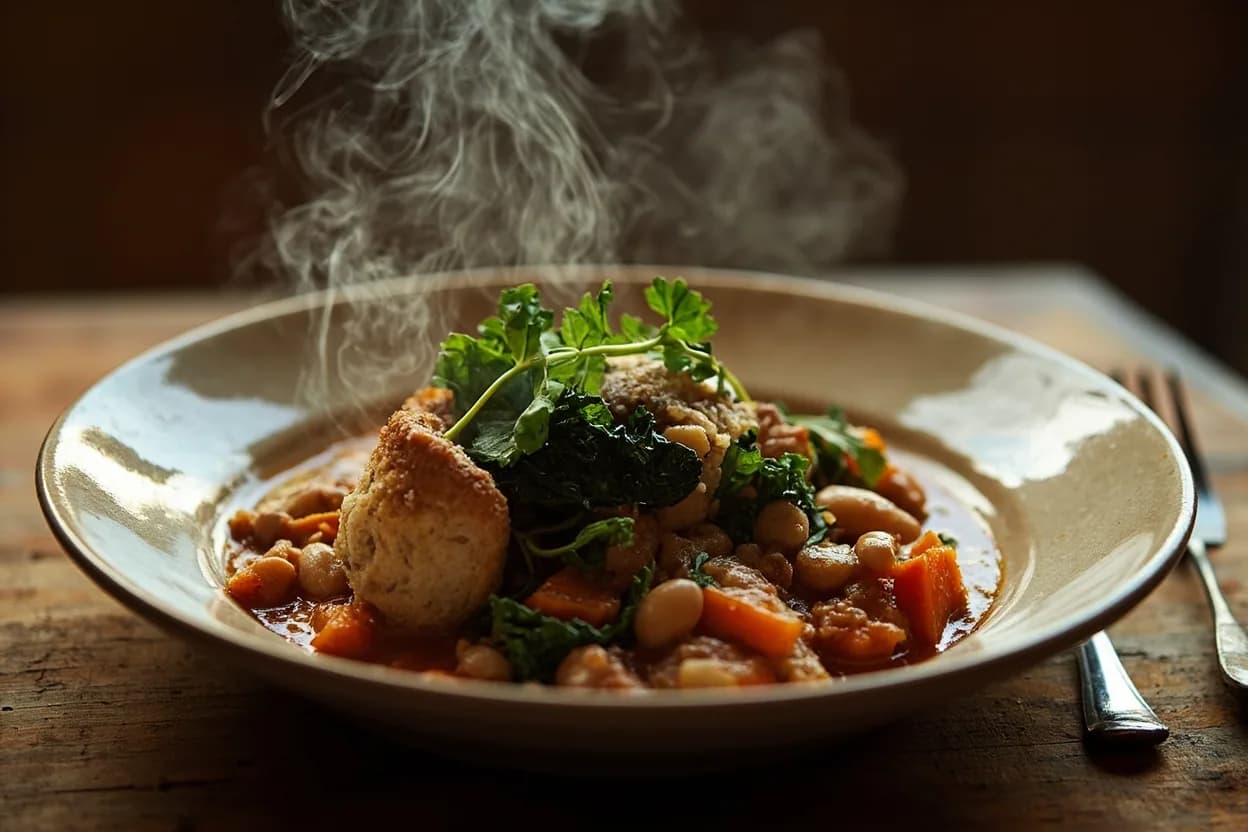
Ladle into warm shallow bowls. Drizzle generously with raw extra virgin olive oil and finish with freshly cracked black pepper. Pass a wedge of pecorino Toscano or aged Parmigiano and crusty bread on the side. Serve very hot, traditionally with a young Chianti.
Judging the texture
The defining quality of properly reboiled ribollita is density, and density is what tells you the technique has worked. A finished bowl should slump on the plate rather than flow; a spoon lifted from the pot should drop its contents with a heavy, audible 'plop.' If the soup pours, it is still minestrone. If it sits in a stiff mound, it has gone too far and needs a ladle of water or stock to loosen it.
- The bread should be fully broken down — no distinct slices remaining, just a uniform, starchy body.
- Beans and greens should be very soft, dissolving into the broth rather than holding their shape.
- The surface should look glossy from olive oil emulsifying into the liquid during the reboil.
- Tilt the pot: the soup should move slowly, like wet porridge, not run like a broth.
The tris: why three reboils?
Traditional recipes — and the cooks who keep the strictest accounts of the dish — call for the soup to be reboiled not once but up to three times. Each cycle drives off water, deepens the savory notes from the beans and greens, and integrates the bread more completely into the body of the soup. The name 'ribollita' describes the technique itself; the 'tris' is the classical intensification of it. In a modern kitchen, a single overnight rest and one careful reboil produce an excellent result; a second pass the following day is closer to the classical method.
- Reboil 1 (day 2): minimum acceptable; the bread has swollen overnight and the flavors have married.
- Reboil 2 (day 3): noticeably deeper, more unified, thicker body.
- Reboil 3 (day 4): the classical 'tris' — concentrated, almost gravy-like, intensely savory.
- Always cool and rest between reboils; reboiling hot soup concentrates it unevenly and risks scorching.
Common uses
Tips & pitfalls
- Use day-old (or several-day-old) bread — fresh bread turns to glue rather than absorbing broth evenly.
- Tear the bread by hand rather than cutting it; ragged edges absorb more liquid and integrate better into the body of the soup.
- Cook the base soup the day before so flavors meld and the bread has time to swell and break down — the overnight rest is non-negotiable.
- Keep the reboil gentle. A slow simmer, not a rolling boil, prevents the dense, starchy soup from sticking and scorching on the bottom.
- Stir frequently and from the bottom once thickened; the dense texture makes ribollita prone to catching on the pot base.
- Season only at the final reboil. Salt and pepper added too early will be concentrated by the reduction and can over-season the dish.
- If the soup loosens too much on the reboil, add a handful of torn dry bread and simmer a few more minutes to re-thicken.
- Finish with a generous, raw drizzle of Tuscan extra virgin olive oil — the grassy bite of uncooked oil is part of the signature flavor.
- A Parmigiano rind simmered in the base adds savory depth without compromising the vegetarian profile; a strip of guanciale does the same if you are not keeping the dish vegetarian.
- Don't be afraid of the texture — proper ribollita should slump on the plate, not pour; it should be thick enough that a spoon stands up momentarily.
- Each successive reboil deepens the flavor, which is the whole point of the name; traditional recipes call for up to three reboils ('tris').
- Leftover ribollita set in a pan with olive oil and pan-fried until golden is a celebrated Tuscan second-day preparation — slice it like a frittata.
Good to know
- Origin
- Tuscany, Italy — historically a peasant dish for farmhands and servants
- Name
- Italian for 're-boiled' (ri- + bollita, past participle of bollire, 'to boil')
- Core components
- Stale unsalted Tuscan bread, cannellini beans, cavolo nero, onion, carrot, celery, tomato, olive oil
- Traditional bread
- Pane sciocco — unsalted Tuscan country bread, several days old
- Resting
- At least one overnight rest between the initial cook and the reboil
- Consistency
- Dense and porridge-like — thick enough to eat with a fork, not a spoon
- Difficulty
- Easy; low-attention cooking, but plan for the overnight rest
- Storage
- Refrigerate up to 4 days; improves with each reheating; freezes well for 2–3 months
Also called
ribollita · reboiled soup
Dishes that rely on it
Related

Boil
Cook in vigorously bubbling liquid at full rolling heat

Simmer
Hold liquid at a gentle shimmer for tender, unhurried cooking

Poach
Cook gently in barely-trembling liquid for silky, tender results

Steam
Cook in rising vapor to keep color, nutrients, and shape intact

Blanch
Plunge briefly in boiling water, then shock cold to lock color

Braise
Sear, then cook slow in a little liquid until fall-apart tender

Stew
Simmer bite-sized pieces fully submerged into a rich, unified pot

Sous-Vide
Seal and cook in precise warm water for edge-to-edge doneness