Prep & Assembly
Roux Making
Cooking flour in fat to make a thickener for sauces, gravies, and soups.
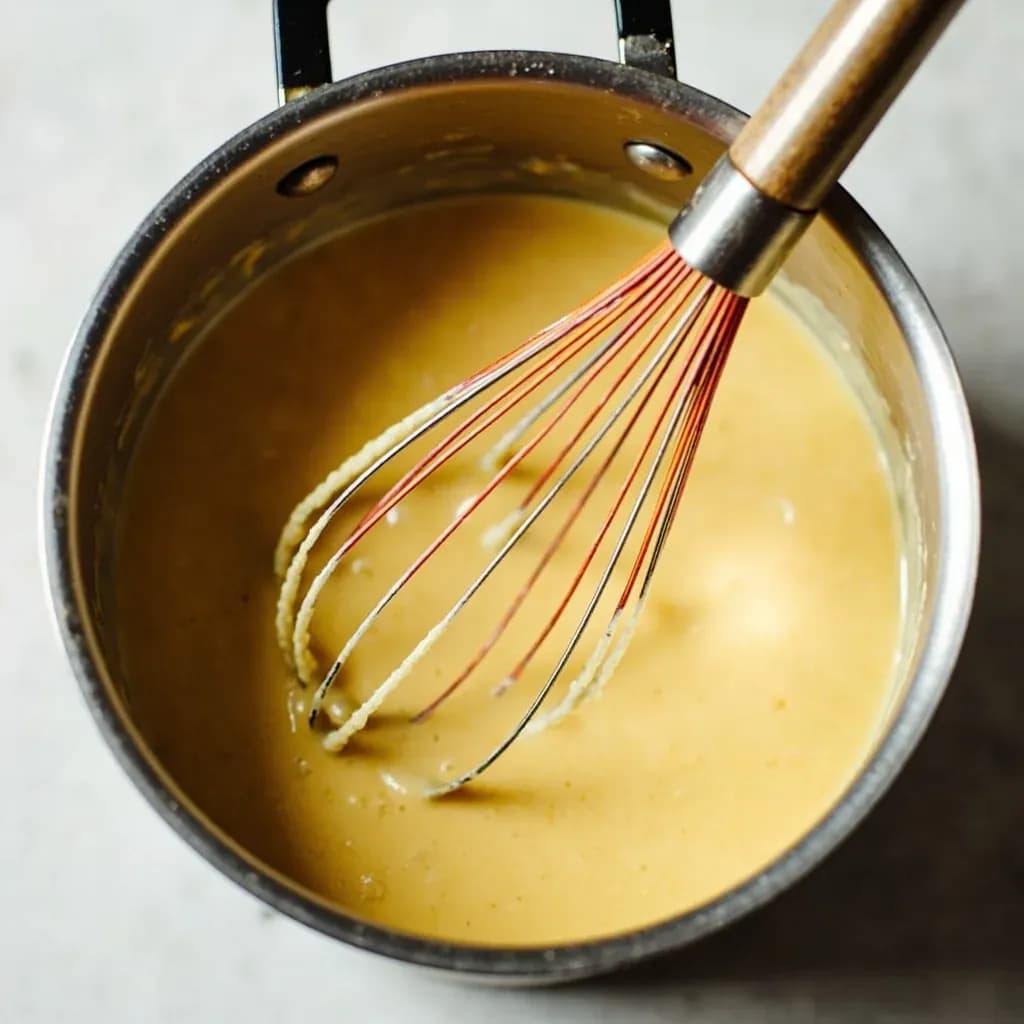
Roux making cooks equal parts flour and fat together until the raw flour taste disappears, creating a paste that thickens liquids smoothly. It is the foundation of béchamel and countless gravies, and cooking it longer deepens color and flavor from blond to brown. German Mehlschwitze and Norwegian hvit saus rely on the same technique to bind and enrich sauces.
A roux is a cooked blend of equal parts fat and flour that serves as the principal thickening agent in classical French and Louisiana cooking. The cooking does two jobs at once: it disperses starch granules in fat so they won't clump when they hit liquid, and it transforms the raw, pasty flavor of raw flour into something toasted and savory. Because a roux is fat-based and fully cooked before any liquid touches it, it gives cooks an unusual degree of control — you choose how dark to take it, how much thickening power you want, and what flavor you're building toward.
The deeper a roux cooks, the more flavor it develops and the less it thickens. White roux barely loses any thickening power and tastes neutral; blond roux adds a faint nuttiness for veloutés; brown roux deepens into caramel and toffee notes for espagnole and demi-glace; Cajun-dark or "brick" roux is cooked to mahogany and contributes almost no thickening at all, only the smoky, roasted backbone of a gumbo. Roux is the foundation of three of Escoffier's five mother sauces — béchamel, velouté, and espagnole — and remains the everyday starting point for gravy, cheese sauce, cream soups, and macaroni and cheese. A small amount of well-made roux can carry an entire dish, which is why learning to make it confidently pays off across nearly every savory repertoire.
- Difficulty
- Medium
Types & varieties
Cooked just past the raw stage; palest in color, strongest thickener, mildest flavor. Base for béchamel and cheese sauces.
Pale golden with a faint nutty aroma; the classical base for velouté.
Warm peanut-butter to caramel color with a pronounced toasted-nut aroma; base for espagnole and demi-glace. Thickens less than white.
Cooked to chocolate-brown mahogany; almost no thickening power but delivers the deep, smoky flavor essential to gumbo and étouffée. Usually made with oil rather than butter for its higher smoke point.
Cooked well beyond the usual stages until sandy and fully dehydrated, sometimes finished in a low oven. Stores well in a sealed jar for long keeping and reconstitutes into liquid.
How to do it
- 1
Measure and choose
Weigh or measure equal parts fat and flour. Plan on roughly 1.5–2 oz of each for every quart of liquid you intend to thicken. Pick a fat suited to your target color: butter for white and blond; oil, clarified butter, or another high-smoke-point fat for brown and Cajun-dark.
- 2
Melt the fat
Heat the fat in a heavy-bottomed saucepan over medium heat (medium-low for darker roux) until fully melted and just shimmering. Do not let it smoke.
- 3
Add the flour
Add all the flour at once and whisk immediately into a smooth, homogenous paste with no dry pockets. Move quickly so the flour begins toasting evenly rather than clumping.
- 4
Cook to color
Whisk frequently and steadily. White roux is done when the foaming calms and the raw flour smell disappears (2–3 minutes). Blond roux is a pale straw (5–7 minutes). Brown roux reaches a warm peanut-butter tone (15–25 minutes). Cajun-dark roux reaches milk-chocolate to mahogany (30–45 minutes or longer). Lower the heat as the color deepens to keep the browning even.
- 5
Combine with liquid
Whisk the hot liquid in a slow, steady stream into the roux, or off-heat ladle a portion of hot liquid into the roux to loosen it, then return the thinned mixture to the pot and bring it to a simmer. Whisk constantly until smooth and thickened.
- 6
Adjust and finish
Simmer the sauce for 5–10 minutes to cook out the starchy taste, then season with salt and adjust the consistency with more liquid or by reducing.
- 7
Or cool for storage
Spread the finished roux in a thin layer on a parchment-lined sheet pan to stop the cooking, then transfer to a covered container. Refrigerate up to 2 weeks or freeze up to 6 months.
The color-versus-thickening tradeoff
Every minute a roux spends over heat, two things are happening: starch granules are swelling and absorbing fat, and the proteins and sugars are browning. The first effect drives thickening; the second drives flavor. They work in opposite directions. A white roux has nearly all of its thickening power intact but tastes only of cooked flour; a Cajun-dark roux tastes richly of caramel and roasted grain but has lost so much of its starch-swelling capacity that you would need roughly twice as much of it (by volume) to thicken the same amount of liquid. This is why classical French sauces stay pale — they want maximum thickening per ounce of butter — and why Louisiana cooks chase deep color — they want flavor above all else and are willing to thicken the pot with a long simmer or a second agent later.
- White → roughly full thickening power, neutral flavor.
- Blond → almost full thickening power, faint nuttiness.
- Brown → noticeably less thickening power, toasted caramel notes.
- Cajun-dark → roughly half the thickening power, deep roasted flavor.
- Roux keeps darkening from residual heat after leaving the pan, so pull it just shy of your target color.
Choosing the fat
The fat you choose sets the ceiling on how dark your roux can go before it scorches. Butter foams and browns quickly because of its milk solids, which is fine for white and blond but limits how deep you can push it. Clarified butter, neutral oil, lard, duck fat, and bacon fat all have higher effective smoke points because the milk solids have been removed (or were never present), letting the roux ride to brown and Cajun-dark without burning. Many Cajun cooks reach for plain vegetable or canola oil for that reason.
- Butter — best for white and blond roux; adds dairy richness to béchamel.
- Clarified butter, lard, duck fat — good across all colors; clean, high-heat frying.
- Neutral oil — the standard for Cajun-dark; highest smoke point, no competing flavor.
- Bacon or schmaltz — use when you want the rendered-meat aroma to come through in the finished sauce.
Common uses
Tips & pitfalls
- Use a heavy-bottomed pan over moderate heat; thin pans scorch the flour before it can brown evenly, and a scorched roux cannot be saved.
- Whisk steadily once the flour goes in — the moment stirring stops is the moment a roux burns on the bottom of the pot.
- Add cold roux to hot liquid (or hot roux to warm liquid in small additions) to avoid lumps; the temperature contrast helps the starch disperse before it can gel into clumps.
- For Cajun-dark roux, drop the heat lower than feels right and consider finishing in a 350°F oven, stirring every few minutes — this evens out the browning and sharply reduces the risk of scorching.
- Have your liquid measured, warmed, and within arm's reach before you start a dark roux; it must be added the moment you hit the target color, or the roux will over-brown in seconds.
- Dark roux thickens roughly half as much as white roux; recalculate the amount when swapping one for the other in an old recipe.
- Rescue a lumpy sauce with an immersion blender or by passing it through a fine-mesh strainer — whisking will not break up lumps once liquid has been added.
- Salt the finished sauce, not the roux itself: salt draws moisture out of the roux and can cause hot fat to spatter, and adding it late keeps you in control of seasoning.
- Trust your nose more than your eyes: a properly cooked roux smells toasted and nutty; an acrid or sharp smell means it has gone too far and should be discarded.
- Make a large batch of blond roux, cool it on a sheet pan, break it into pieces, and keep a jar in the fridge — it melts into hot liquid almost instantly for fast weeknight sauces.
Good to know
- Origin
- French; the word 'roux' is French for 'reddish-brown,' named for the cooked color.
- Standard ratio
- Equal parts fat and flour by weight (1:1); older recipes occasionally used a slightly flour-heavy proportion.
- Thickening power
- Roughly 1.5–2 oz (3–4 Tbsp) of finished roux per quart of liquid gives a light to medium sauce; dark roux thickens noticeably less than white.
- Color source
- Caramelization of starch combined with Maillard browning of flour proteins — not simply toasting.
- White roux cook time
- 2–3 minutes after the foaming subsides and the raw flour smell disappears.
- Brown roux cook time
- 15–25 minutes to a deep peanut-butter or caramel tone.
- Cajun-dark roux cook time
- 30–45 minutes (sometimes longer) to milk-chocolate or mahogany.
- Storage
- Covered and refrigerated 1–2 weeks; frozen up to 6 months; or fully dry-cooked and stored like a powder.
- Yield
- Roughly half the original combined volume of fat and flour once the roux is cooked.
Also called
Make a Roux · Faire un Roux · Mehlschwitze · Einbrennen
Related

Whisk
Beat ingredients smooth and aerated with a looping wire motion

Sift
Pass dry ingredients through mesh to aerate and remove lumps

Strain
Pour through mesh to separate solids from liquid for a smooth result

Filter
Pass liquid through fine material to clarify out the smallest particles

Rice
Press cooked potatoes through small holes for fluffy, lump-free texture

Mash
Crush soft cooked food into a rustic, creamy purée

Grind
Crush food into a coarse to fine texture, from spices to meat

Grate
Shred food into fine bits against a sharp-toothed surface