Prep & Assembly
Seasoning to Taste
Tasting and adjusting salt, acid, and other seasonings until the dish is balanced.
Seasoning to taste is the iterative practice of tasting a dish as it cooks and adding salt, acid, sweetness, heat, or herbs until its flavors are balanced. It is the final calibration before serving, correcting flatness with salt, dullness with a squeeze of acid, or harshness with a touch of sugar. Skilled cooks adjust in small increments and re-taste, since seasoning can always be added but rarely removed.
Seasoning to taste is the disciplined habit of tasting food at multiple stages of cooking and making small, deliberate adjustments to salt, acid, fat, sweetness, heat, and aromatics until the dish reads as balanced on the palate. It is less a discrete technique than a posture the cook takes toward the pan — an ongoing conversation between tongue and ingredients rather than a final flourish of salt at the end. The principle is ancient and universal (every tradition has its version: French assaisonner, the layered fish sauce–lime–palm sugar–chili balance of Southeast Asia, the calibration of dashi and soy in Japanese cookery), but the loop is always the same: taste, identify what is missing or excessive, adjust in small increments, retaste.
The reason it matters is that flavor compounds concentrate, evaporate, and transform throughout cooking. A braise that tastes perfectly salted at the start will be over-salted at the end. A pan sauce that reads balanced raw will read sharp once reduced by half. A salad dressed an hour before service will taste flatter than when first tossed. The cook who tastes only at the finish is gambling on a guess; the cook who tastes throughout is steering in real time.
Mastery is less about knowing how much salt to add than about recognizing imbalances quickly. Flat usually means under-salted. Heavy or dull usually means under-acidic. Muddy usually means missing fat or aromatics. Harsh usually means needing sweetness or dilution. Once those signals can be read in a single taste, the rest is discipline: small additions, a brief wait, retaste, repeat.
- Difficulty
- Medium
Types & varieties
Adding salt, acid, or aromatics at multiple stages — salting onions while sweating, adjusting a sauce as it reduces, finishing with flaky salt. Builds depth that single-stage seasoning cannot.
A single round of final tasting and correction just before service. Common in quick sautés, pan sauces, and simple vegetable dishes where cooking time is short.
Seasoning each element of a composed dish separately — the grain, the protein, the greens, the dressing — so the assembled plate is balanced rather than relying on one dressing to do all the work.
Brightening a finished dish with a squeeze of citrus, splash of vinegar, or spoonful of pickle brine. The classic last-second adjustment for dishes that taste heavy or flat.
Finishing with flaky sea salt, kosher salt, or a seasoned salt to add both salinity and a pleasant textural crunch on the surface.
Tasting and adjusting as a sauce reduces, because concentration shifts all the flavor axes at once. What reads balanced at full volume may be over-salted and over-acidic by the time the sauce coats a spoon.
How to do it
- 1
Set up a clean tasting station
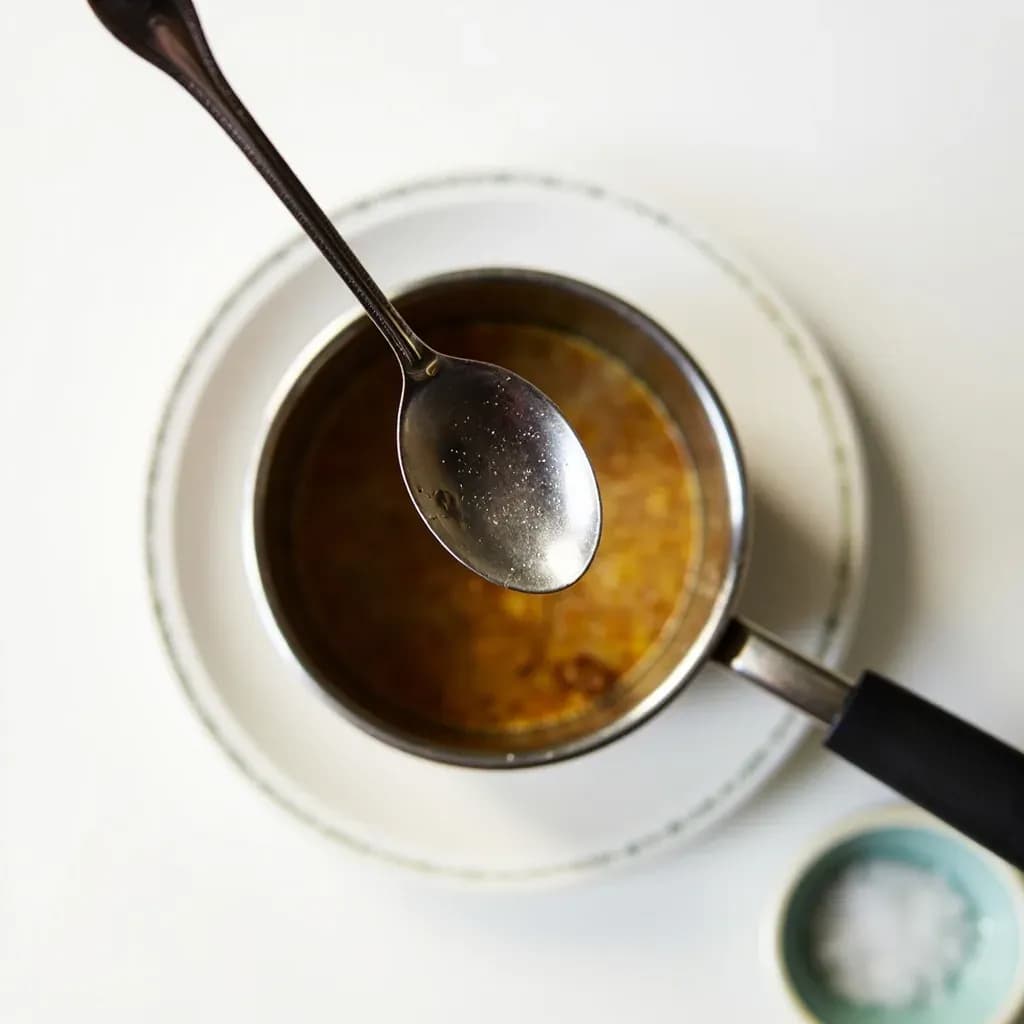
Keep a small tasting spoon, a pinch bowl of kosher or fine sea salt, a bottle of neutral acid (white wine vinegar or lemon juice), and a scrap spoon separate from your cooking utensils. The tasting spoon goes in your mouth only — never in the pan.
- 2
Taste the raw or base components
Before heat is applied, taste the base — the stock, the tomato sauce, the chopped vegetables, the dressing. Note whether it is under-salted, flat, or sharp. This becomes your starting reference point.
- 3
Taste after each major addition or stage
Sweating onions? Taste once they have softened. Deglazed a pan? Taste the liquid before reducing. Added stock to a braise? Taste once it comes to a simmer. Each transition is a chance to correct course before mistakes compound.
- 4
Identify which axis is off
Ask in order: Is it flat? It probably needs salt. Heavy or dull? It probably needs acid. Muddy or one-note? It probably needs fat or aromatics. Harsh? It probably needs sweetness or dilution.
- 5
Adjust in small increments
Add salt or acid a little at a time — a pinch, a few drops — then stir, wait ten to fifteen seconds, and retaste. Salt and acid build quickly and cannot easily be un-added.
- 6
Account for reduction and carryover
If the dish will cook down further, under-season slightly so the final concentration lands balanced. If it will be held or reheated, remember that salt perception drops as food cools.
- 7
Taste at service temperature
Plate a small portion and taste it the way it will be eaten — hot food hot, cold food cold. Make a final round of adjustments: flaky salt on the surface, a squeeze of citrus, a grind of pepper, a drizzle of finishing oil.
- 8
Retaste after a brief rest
Sauces, braises, and dressed dishes often settle into balance after two to five minutes off the heat as flavors meld and salt distributes. A final taste before serving catches any late shifts.
Reading a Dish: The Diagnostic Loop
When a dish tastes wrong, the trick is to identify which axis is off before reaching for the salt cellar. The standard order of checks runs salt, then acid, then fat, then aromatics, then sweetness or heat. Most home cooks default to salt and stop there, which is why so many finished dishes feel heavy or dull — the actual missing element is often acid.
A useful shortcut: taste, then ask what the dish needs to be more of itself. A stew that tastes flat and one-dimensional needs salt. A stew that tastes rich but lifeless needs acid. A stew that tastes full but muddy needs aromatics — a herb, a grating of citrus zest, a fresh cracked pepper. A stew that tastes harsh or bitter at the finish needs either a touch of sweetness or, more often, dilution with more liquid.
- Flat or one-note → needs salt
- Heavy or dull → needs acid (lemon, vinegar, pickle brine)
- Muddy or closed → needs fat (butter, olive oil) or fresh aromatics
- Harsh or sharp → needs sweetness, dilution, or a starch to round the edges
- Greasy or slick → needs acid or salt to cut through
Cultural Approaches to the Same Loop
Although the underlying loop of taste–adjust–retaste is universal, different cuisines weight the flavor axes differently. A cook seasoning across traditions is essentially recalibrating which axis leads.
- French cooking leans on butter, salt, and reduction; sauces are built around the way fat carries flavor and concentrates with evaporation.
- Japanese cooking calibrates dashi, soy, and mirin in narrow ratios, treating salt, acidity, and umami as measurable axes.
- Southeast Asian cooking layers fish sauce, lime juice, palm sugar, and chili in a single sweet–sour–salty–heat balance often adjusted at the very last moment.
- Latin American cooking finishes many dishes with a final squeeze of lime that functions as both acid and aromatic lift.
Common uses
Tips & pitfalls
- Use a fresh, clean spoon for every taste — never the spoon you stirred with, which carries concentrated salt and fat from its edge.
- Taste early and often. Waiting until the end to season is the most common reason dishes taste flat or harsh.
- Season in small amounts and wait ten to fifteen seconds before retasting; salt and acid take a moment to register and distribute.
- Let hot food cool a few seconds before tasting; extreme heat dulls sweet and salt receptors and exaggerates bitterness.
- Remember that reduction concentrates everything — a sauce balanced raw will taste over-salted and over-acidic when reduced by half.
- Under-salted food can almost always be rescued; over-salted food is very hard to fix. Season conservatively and build up.
- Acid is the most underused correction — a dish that tastes flat or heavy often needs a squeeze of lemon, not more salt.
- Fat carries flavor but also masks it. If a dish tastes dull, a small pat of butter or drizzle of good oil can round it out without adding more salt.
- Taste every component of a composed dish separately — the dressing, the grain, the protein, the garnish — to find where the imbalance actually lives.
- Adjust with service temperature in mind — a dish that will be eaten very hot will read saltier and less acidic on the plate than it does while still simmering.
Good to know
- Core definition
- The practice of tasting food throughout cooking and adjusting salt, acid, fat, sweetness, heat, and aromatic intensity in small increments until the dish is balanced.
- Flavor axes
- Salt, acid, fat, sweetness, heat, and aromatic intensity.
- When to taste
- Before cooking (raw ingredients, marinades, dressings), mid-cook (stocks, braises, pan sauces), and at the finish on the plate.
- Tasting tool
- A clean tasting spoon kept separate from the stirring spoon — never the spoon that has been in the pan, which carries concentrated salt and fat from its edge.
- Reduction effect
- Reduction concentrates salt and acid along with flavor, so a sauce that tastes balanced at one stage may be too intense when reduced further.
- Temperature effect
- Hot food reads saltier and less acidic than the same dish at room temperature, so the final adjustment should be made at eating temperature.
- Difficulty
- Beginner to advanced; the principle is simple, mastery comes from recognizing imbalances quickly.
Also called
Season to Taste · Balancing Flavors · Adjusting Seasoning
Dishes that rely on it





Related

Whisk
Beat ingredients smooth and aerated with a looping wire motion

Sift
Pass dry ingredients through mesh to aerate and remove lumps

Strain
Pour through mesh to separate solids from liquid for a smooth result

Filter
Pass liquid through fine material to clarify out the smallest particles

Rice
Press cooked potatoes through small holes for fluffy, lump-free texture

Mash
Crush soft cooked food into a rustic, creamy purée

Grind
Crush food into a coarse to fine texture, from spices to meat

Grate
Shred food into fine bits against a sharp-toothed surface