Water & Steam
Simmering in Coconut Milk
Slow-cooking food in coconut milk for rich, creamy curries and one-pot dishes.
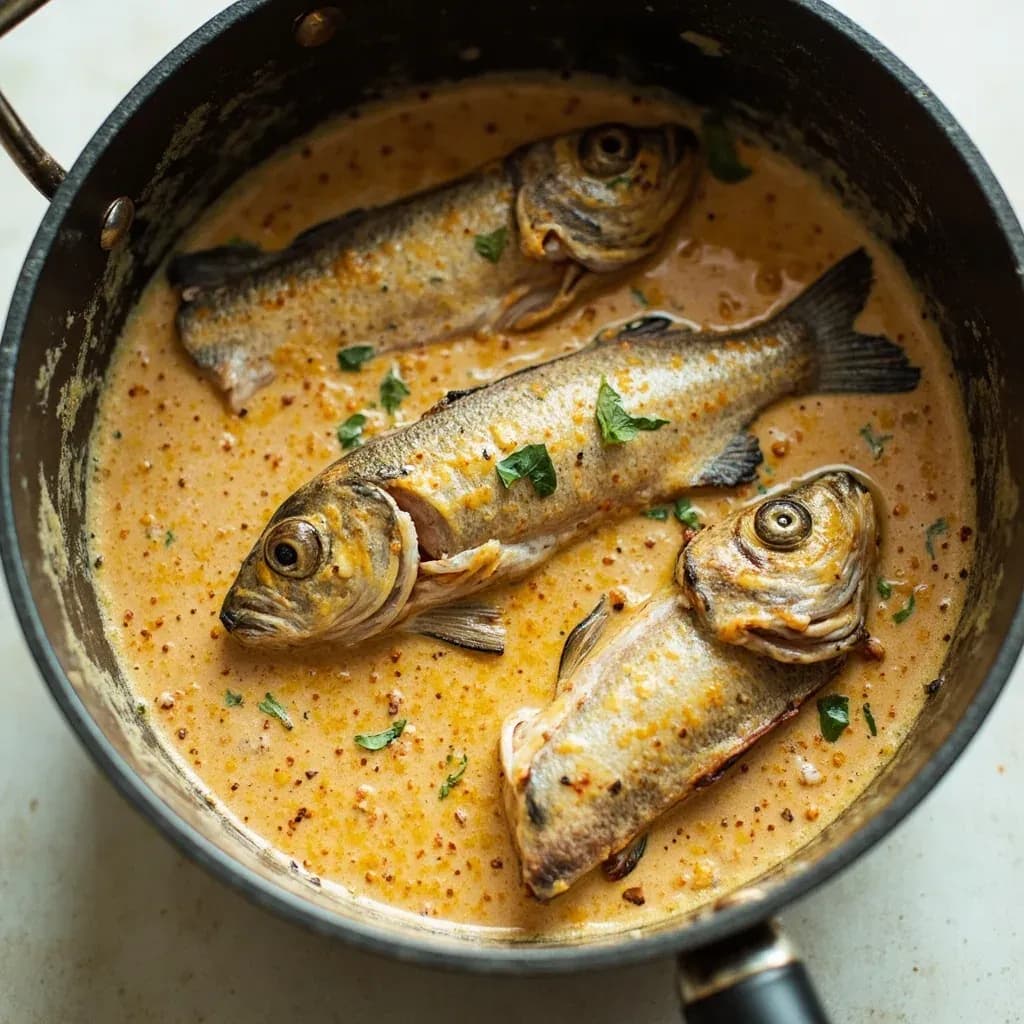
Simmering in coconut milk cooks food gently in coconut milk or cream so it absorbs richness while the liquid reduces to a silky sauce. It defines dishes like Filipino ginataan, Indonesian santan braises, and Caribbean oil down. Simmering slowly and stirring keeps the coconut milk from splitting into oil and curds.
Simmering in coconut milk is a foundational technique across a wide belt of tropical and subtropical cuisines — from Thai and Burmese curries to Goan fish moilee, Filipino ginataan, Indonesian opor ayam, and the long, slow reduction of rendang. What unites all of these dishes is the management of a fragile oil-in-water emulsion that gives coconut milk its creamy body in the raw state but separates readily under heat, cold, or acid. Cook the liquid too hot, shock it with cold water, or finish it with citrus too early, and the emulsion shears apart, leaving an oily layer floating on a thin, broken liquid.
The defining challenge of the technique is the same quality that makes the result rewarding. Coconut milk is roughly 12–18% fat suspended in water with a small amount of protein and sugars; it behaves less like dairy cream and more like a thin sauce that happens to look rich. Experienced cooks in coconut-milk traditions treat it almost like a stock — building flavor in stages, separating the thick cream from the watery milk in the can, blooming spices in oil before combining, and reserving the most delicate finishers for the very end. The cream enriches and silks the sauce; the watery milk carries and concentrates the spices; the aromatics, cooked in fat first, perfume the whole pot without scorching.
The single principle that ties every regional variation together is temperature control: a bare bubble, not a rolling boil, in a heavy pot with the lid loose or off. Master that, and the rest is regional preference — a five-minute Thai green curry and a two-day Indonesian rendang are simply different points on the same curve of reduction.
- Difficulty
- Easy
Types & varieties
12–18% fat; the standard for curries and braises because the higher fat resists breaking and carries flavor.
5–7% fat; thinner, more prone to splitting, best for soups and quick sauces where richness is not the goal.
20–24% fat; the thick layer that rises in a can or the first press of fresh grated flesh; used to finish sauces or enrich a curry at the end.
Made by blending grated mature coconut with hot water and straining; brighter flavor, more delicate emulsion than canned.
Dehydrated coconut milk reconstituted with water; used in some commercial kitchens for consistency and shelf stability.
How to do it
- 1
Prepare and separate the coconut milk
Open the can without shaking. Spoon the thick cream on top into a small bowl and reserve the thinner watery milk in the cooking pot. This split is intentional: the watery milk builds the base, the cream enriches and finishes the sauce. Always stir the cream to a uniform consistency before reserving.
- 2
Build the aromatic base in oil
Heat 1–2 tablespoons of a neutral oil or coconut oil in a heavy pot or Dutch oven over medium heat. Sweat onions, garlic, ginger, lemongrass, or shallots 3–5 minutes until soft and translucent. Add curry paste, ground spices, or whole spices and cook 1–2 minutes until fragrant and darkened slightly. This step blooms fat-soluble aromatics and prevents them from tasting raw in the finished dish.
- 3
Crack the watery coconut milk
Pour the thin coconut milk into the pot and stir, scraping up any fond. Bring it up to a gentle simmer — small bubbles breaking the surface every second or two, never a rolling boil. This phase cooks out the raw coconut flavor and the harshness of the paste; it should take 5–10 minutes.
- 4
Add proteins or vegetables by cook time
Add ingredients from longest to shortest cook time: tough meats (beef shank, bone-in chicken thighs) first, simmer 20–40 minutes; then quick-cooking seafood, tofu, or leafy greens in the final 3–5 minutes. Root vegetables like potato or squash go in 10–15 minutes before the end. Stir gently so as not to break the emulsion.
- 5
Reduce and concentrate
Continue at a bare simmer, stirring occasionally to prevent the milk from catching on the bottom. Let the sauce reduce by roughly one-third for a curry consistency, or further for dishes like rendang where the milk almost disappears into the meat. Keep the lid off or loosely tented.
- 6
Finish with the reserved cream and seasonings
Stir in the reserved thick cream off the heat, taste, and adjust salt. Add any acid (lime juice, tamarind) at this point — not before. Garnish with fresh herbs (cilantro, Thai basil, curry leaves) and serve immediately over rice or with flatbread.
The Emulsion Problem
Coconut milk is an oil-in-water emulsion — tiny droplets of coconut fat suspended in watery coconut liquid, held in place by proteins and emulsifiers naturally present in the meat. Heat, mechanical agitation, cold shock, and acid all destabilize it. A rolling boil physically shears the fat droplets apart and they coalesce on the surface as a clear oil slick; cold liquid dropped into hot milk locally drops the temperature below the emulsion's stability point; acid (lime, tamarind, tomato, vinegar) protonates the proteins and causes them to flocculate. The visible signs are the same in every case: a pool of clear oil on top, a thin and sometimes grainy liquid below, and a curdled look around proteins such as fish or chicken. Prevention is easier than repair. Cook at a bare bubble in a heavy pot, never add cold liquid to the simmering milk, and always finish acid off the heat or in the last minute of cooking.
- Heat above ~200°F (93°C) is the most common cause of splitting.
- A tight lid traps steam that drips back as cold water — another splitting trigger.
- Thin stainless steel pots scorch the milk on the bottom, which locally overheats the emulsion.
- Stir gently; aggressive whisking can also break the emulsion.
- A small amount of cornstarch slurry whisked in at the end helps stabilize a fragile sauce.
Regional Approaches
Different cuisines apply the same principles at very different scales. A Thai green or red curry simmers coconut milk with paste for 10–15 minutes, adds pre-cooked protein, and finishes with herbs and a squeeze of lime — fast, fresh, and delicate. A Filipino chicken adobo sa gata simmers longer to let the vinegar and soy penetrate the meat, with the coconut milk added toward the end so the acid does not break it. Indonesian rendang and opor ayam push the technique to its extreme, simmering the milk for hours until almost all the water has evaporated and the fat has reabsorbed into the meat itself, leaving a dark, dry, intensely flavored dish. Indian kormas and moilee use the milk more as a poaching medium than a sauce, briefly simmering spices and proteins in a thin, fragrant bath. Understanding where a given dish sits on this spectrum of reduction and cook time is the key to choosing the right pot, heat, and timing.
Common uses
Tips & pitfalls
- Bring coconut milk up to a bare bubble, then drop the heat to low — a hard boil shears the emulsion and causes the fat to pool on top.
- Always stir the separated cream in the can into the watery milk before measuring, or spoon it off and reserve it for finishing; either way, never discard it.
- Bloom aromatics (curry paste, whole spices, garlic, ginger) in a little oil first, then 'crack' the coconut milk into that base rather than pouring it into a cold empty pan.
- Add a pinch of salt early. Salted liquid is more thermally stable and helps seasonings penetrate proteins.
- Add acidic ingredients (lime juice, tamarind, tomatoes, vinegar) only in the last minute of cooking, or the milk will split into a grainy, oily mess.
- If a curry does break, whisk a tablespoon of cold coconut milk back in off the heat, or finish with a swirl of fresh cream or reserved coconut cream to help re-emulsify.
- Use a heavy-bottomed pot or Dutch oven. Thin steel scorching breaks the milk at the bottom and imparts a burnt taste that no spice will hide.
- Cover loosely if at all. A tight lid traps steam that drips back as cold water droplets and can thin or curdle the sauce.
- For longer braises, add the main ingredient (chicken, seafood, vegetables) only after the milk has simmered 5–10 minutes and any paste has cooked out.
Good to know
- Heat range
- Gentle simmer at 180–200°F (82–93°C); never a rolling boil
- Fat content (full-fat canned)
- Approximately 12–18% fat, with the remainder water, sugars, and protein
- Yield from fresh
- A mature coconut yields roughly 1–1.5 cups of thick pressed milk after straining
- Emulsion behavior
- Coconut milk is a fragile oil-in-water emulsion that separates (or 'breaks') above ~200°F or when shocked by cold liquid or acid
- Region of use
- Pervasive across Thai, Malaysian, Indonesian, Filipino, Sri Lankan, South Indian, Caribbean, and Brazilian cuisines
- Cooking time
- Most dishes finish in 20–60 minutes of simmering; tougher cuts may need 2–3 hours at a bare bubble
- Acid rule
- Acid (lime, tamarind, tomato) should be added at the end, or the emulsion can split
- Reduction
- Simmering reduces coconut milk by roughly one-third to one-half to concentrate flavor without over-thickening
Also called
Coconut Milk Simmering · Ginataan · Oil Down · Coconut Milk Braising
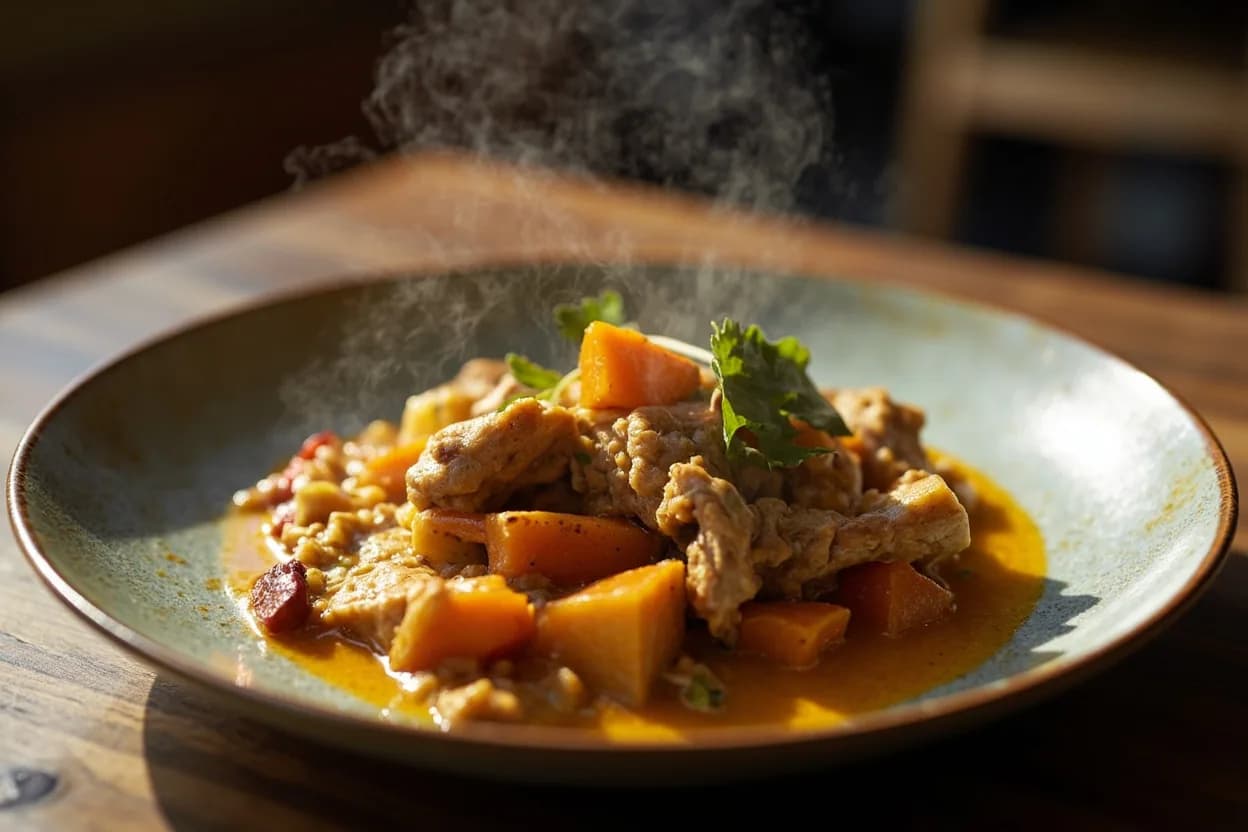
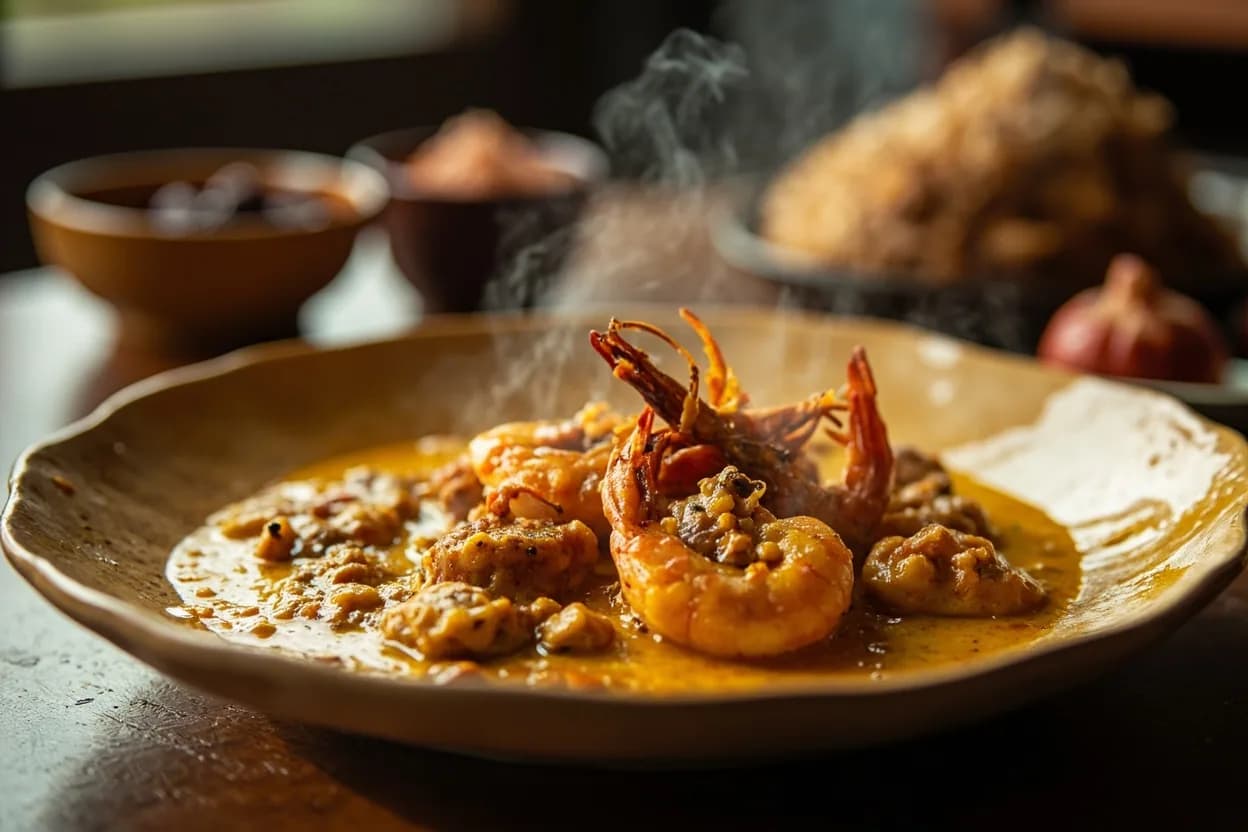
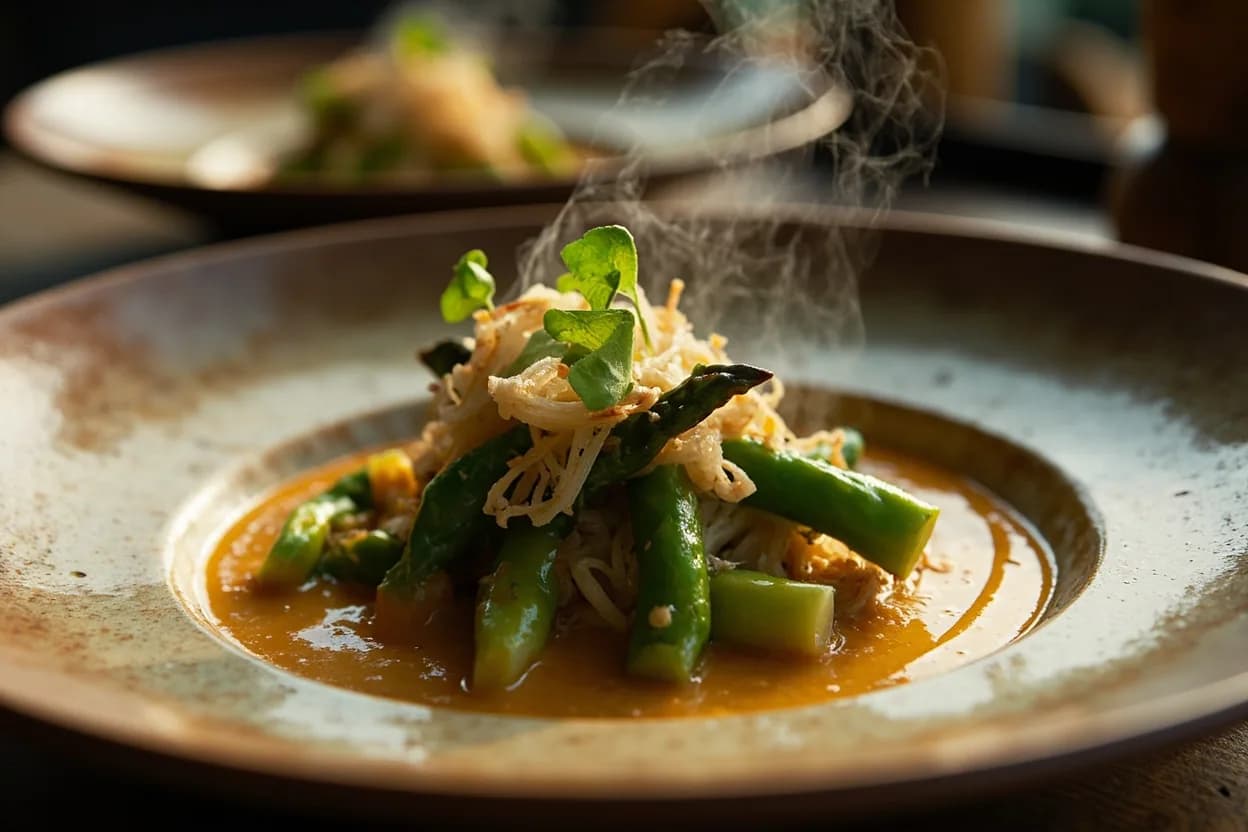
Dishes that rely on it
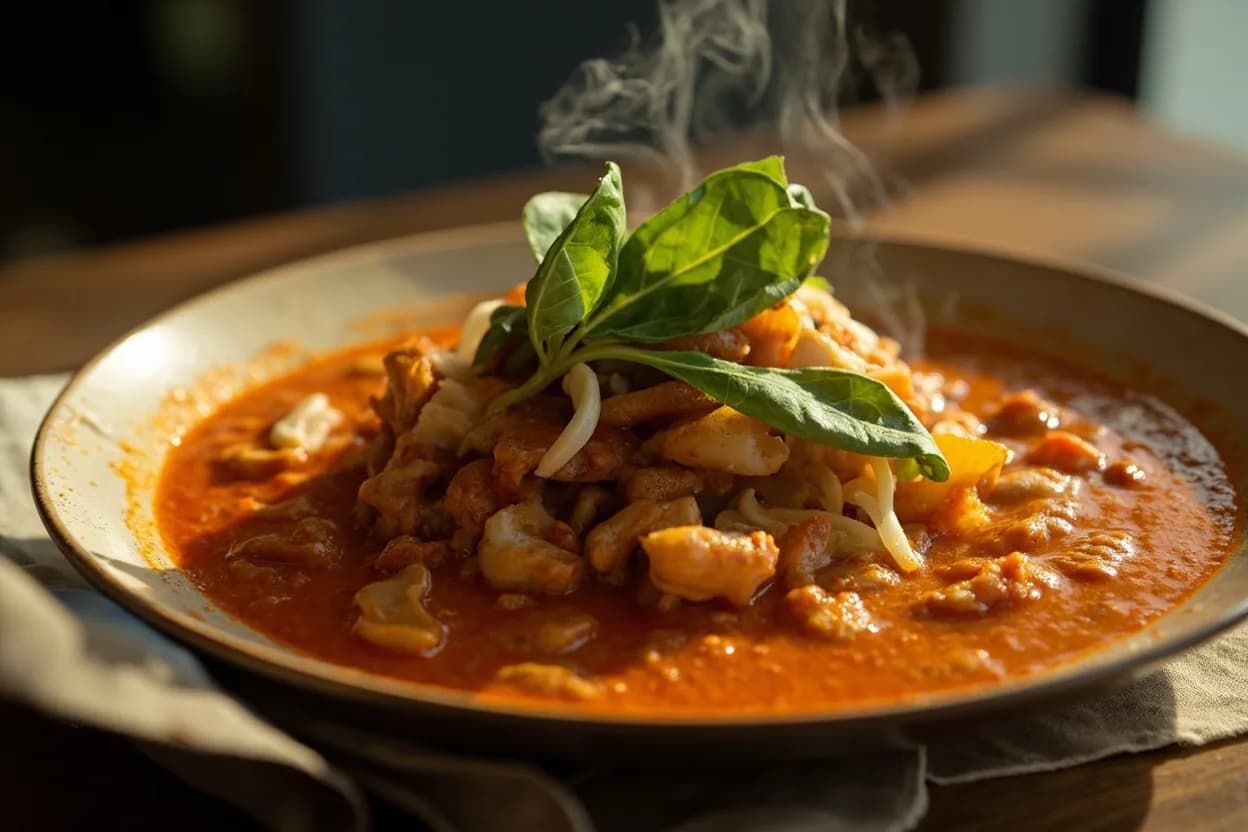
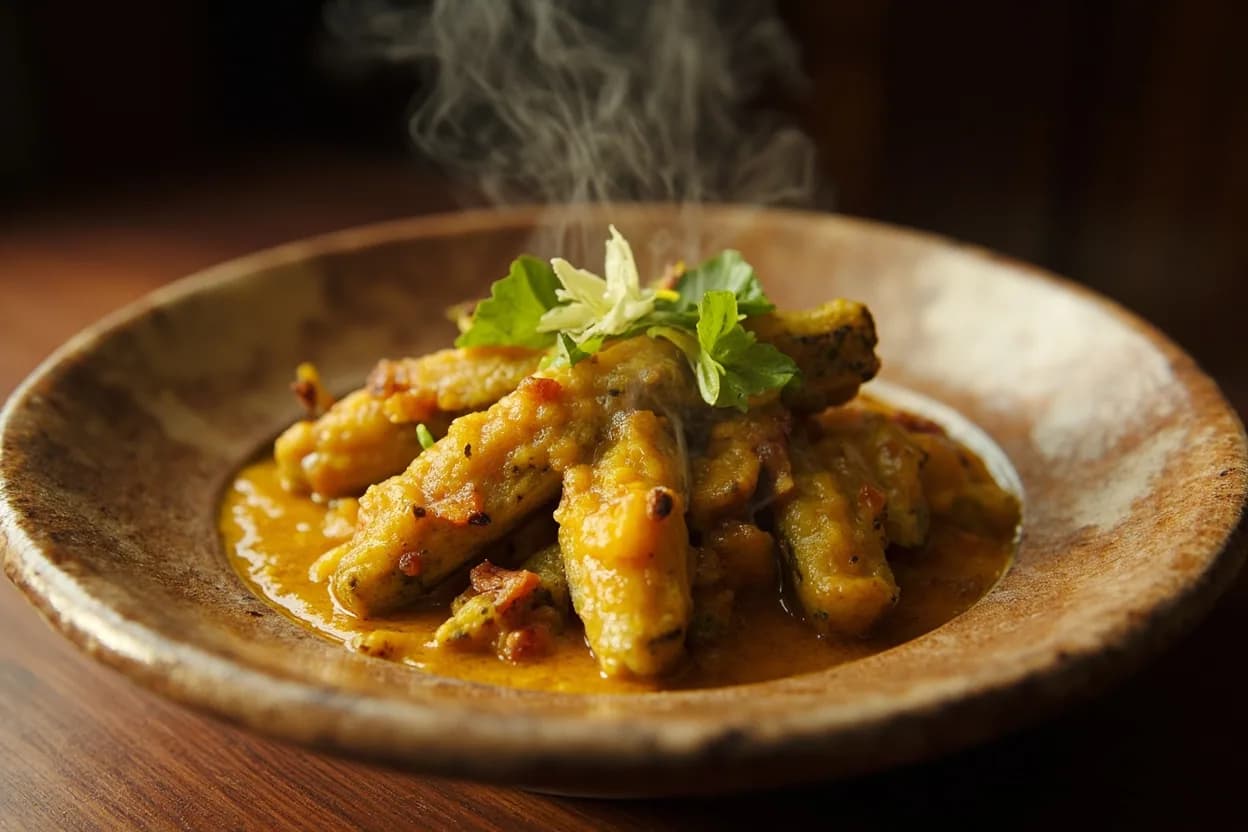
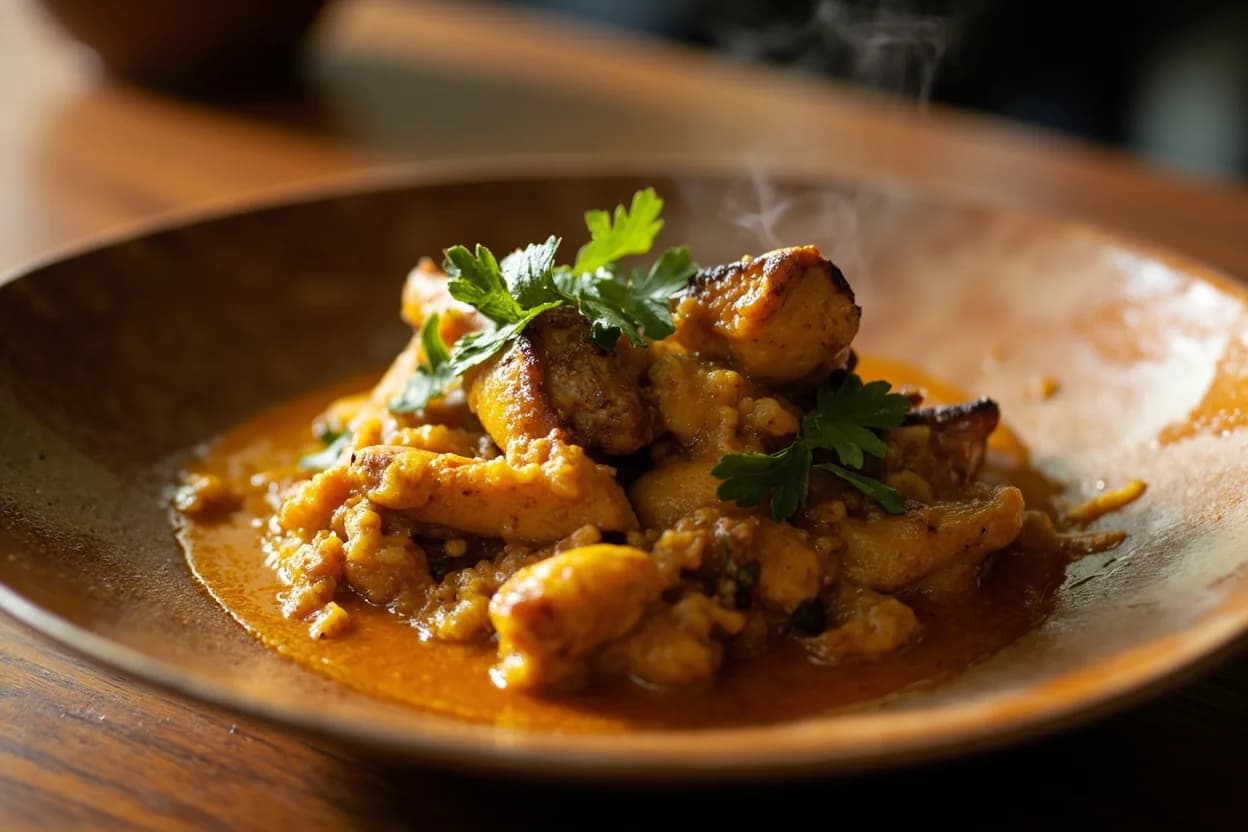
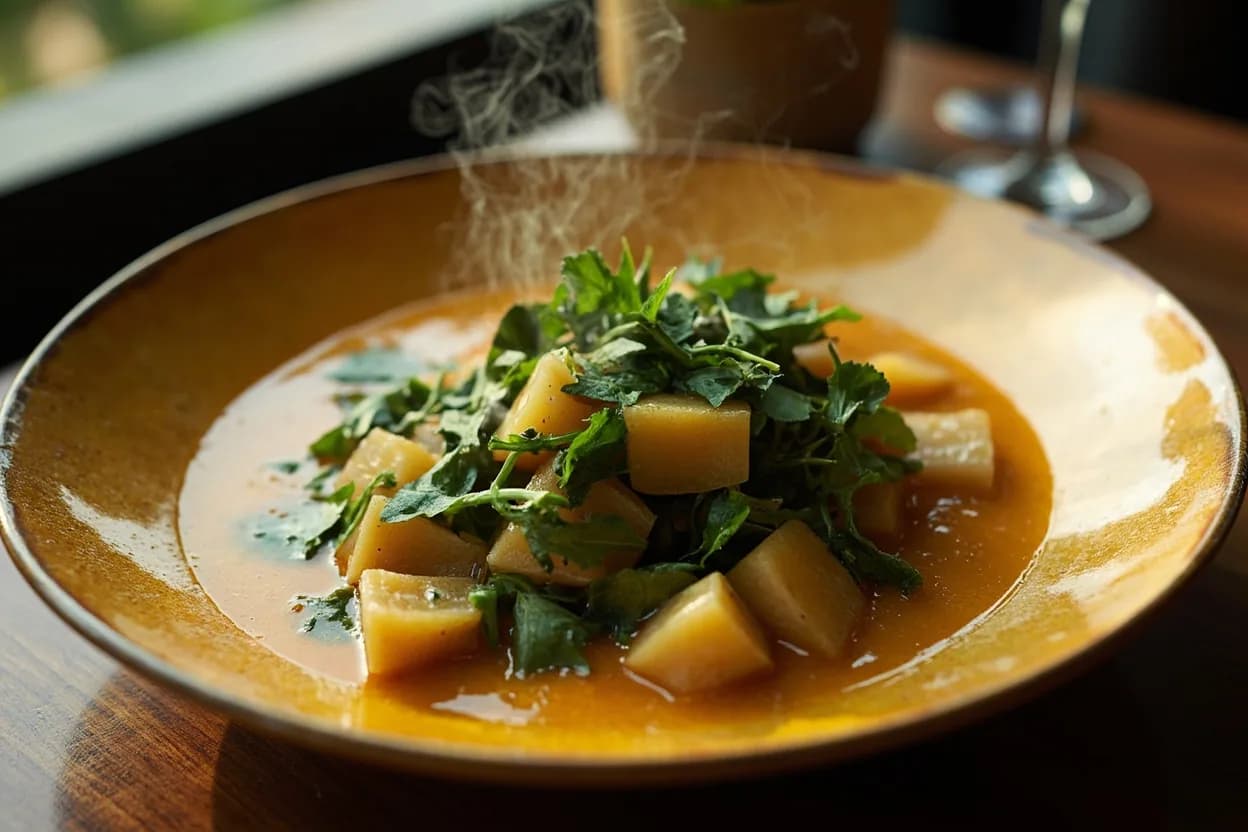

Related

Boil
Cook in vigorously bubbling liquid at full rolling heat

Simmer
Hold liquid at a gentle shimmer for tender, unhurried cooking

Poach
Cook gently in barely-trembling liquid for silky, tender results

Steam
Cook in rising vapor to keep color, nutrients, and shape intact

Blanch
Plunge briefly in boiling water, then shock cold to lock color

Braise
Sear, then cook slow in a little liquid until fall-apart tender

Stew
Simmer bite-sized pieces fully submerged into a rich, unified pot

Sous-Vide
Seal and cook in precise warm water for edge-to-edge doneness