Prep & Assembly
Slathering (Binder)
Coating meat with a thin wet binder so a dry rub adheres before smoking.
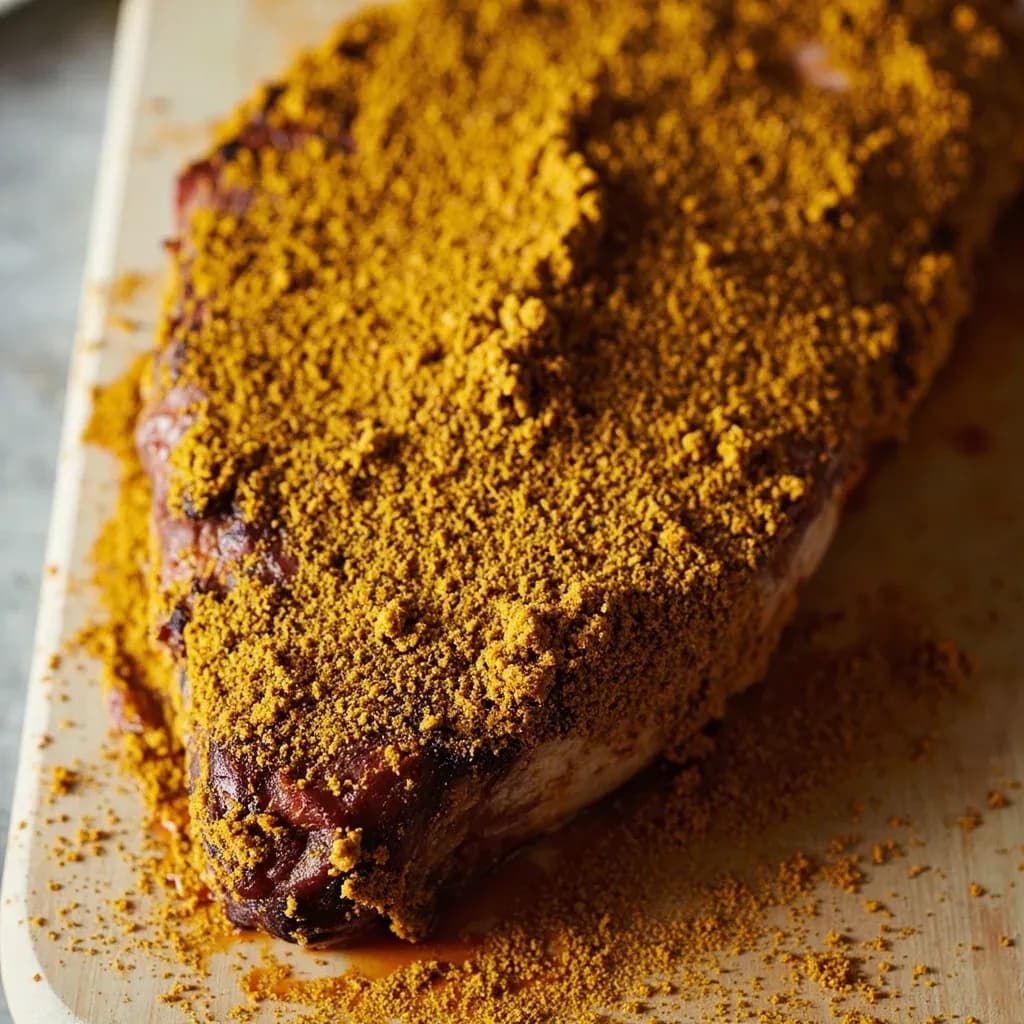
Slathering spreads a thin wet layer, the binder, such as mustard, oil, or hot sauce, over meat before applying a dry rub in barbecue. The binder helps the rub stick and form a more even bark during the long smoke, and contributes little flavor of its own once cooked. It is a standard prep step for brisket, ribs, and pork shoulder.
Slathering is the practice of coating meat with a thin wet layer — a binder — so a dry rub has something to grip during a long, low-and-slow cook. On brisket, ribs, pork shoulder, or whole birds that will spend six to eighteen hours on a smoker, dry seasoning has a way of sliding off, falling away, or being swept off by rendered fat. A wet underlayer solves the problem mechanically: the rub embeds into the tacky surface and stays put through hours of heat, smoke, and moisture.
Prepared yellow mustard is the workhorse binder of American barbecue because its sharp tang almost entirely evaporates during a long smoke, leaving the meat tasting of meat and rub, not mustard. Other binders — water, apple cider vinegar, oil, mayonnaise, hot sauce, Worcestershire, buttermilk, even thin beer or stock — are chosen for similar adhesion with varying flavor contributions, most of which cook out. The job is adhesion, not taste.
A good slather is barely there: a translucent sheen you can still see the meat through. Apply too much and the rub turns into a wet paste that clumps, slides, or steams the surface instead of forming bark. A few notable pitmasters, most famously Aaron Franklin of Franklin Barbecue, skip a separate binder altogether and rely on the meat's own surface moisture to hold a simple salt-and-pepper rub — proof that the technique is helpful rather than mandatory.
- Difficulty
- Easy
Types & varieties
The classic BBQ binder; tang cooks out during long smokes and leaves no detectable flavor in the finished meat.
Plain water from a spritz bottle or the meat's own damp surface; pure adhesion with zero flavor impact — how salt-and-pepper brisket is typically prepped.
Adds light tang and helps bark set on pork shoulder and ribs.
Helps rub adhere on lean cuts and can aid crisping on poultry skin.
Oil-and-egg emulsion; the browning proteins in the yolk encourage color and bark, especially on poultry and ribs.
Adds background heat that largely cooks out; common on chicken and pork.
Adds umami depth; a favorite on brisket and beef ribs.
Sweet binder that helps caramelization; use cautiously on very long cooks because it can scorch.
Traditional on fried chicken and whole smoked chickens; light tang and a touch of dairy richness.
Less common but used by some pitmasters for added savoriness.
How to do it
- 1
Trim and prep the meat
Trim excess fat, silver skin, and loose pieces as appropriate for the cut. Pat the surface dry with paper towels if you want a less slick starting surface, or leave it slightly moist if you plan to skip binder.
- 2
Choose and portion the binder
Select a binder (yellow mustard is the default for beef and pork). Put a few tablespoons in a small bowl or spray bottle — you need only enough to coat, not soak.
- 3
Apply a thin, even layer
Using clean hands, a silicone brush, or a spray bottle, coat all exposed surfaces of the meat with a very thin, even film. Work it into crevices, around edges, and across the fat cap. A translucent sheen is the goal — you should still see the meat through it.
- 4
Season with dry rub immediately
While the binder is still wet and tacky, apply your dry rub generously. The wet surface grabs the seasoning and holds it through hours of cook time.
- 5
Press and set the rub
Pat the rub gently into the meat with clean, dry hands to ensure adhesion. Let the seasoned meat rest 10–15 minutes so the binder can tack up before it goes on the cooker.
- 6
Cook as directed
Proceed with your smoking or roasting schedule. The binder's flavor largely washes out during the cook — its job is mechanical adhesion, not flavor.
The role of binder in bark formation
Bark is the dark, crusted exterior that defines great barbecue, and a binder plays a supporting role in building it. The crust itself comes mostly from the rub — salt, sugar, and spices reacting with rendered fat and smoke over many hours — but the binder decides whether that rub is still on the meat by the time bark can form. Without adhesion, the rub falls into the drip pan or rides out with the rendering fat, and the surface of the meat darkens unevenly or not at all.
Binders also contribute small amounts of sugar, protein, and oil to the surface. Mayonnaise's egg proteins brown readily, Worcestershire adds glutamates that deepen savory flavor, and oil helps lean cuts crisp. None of this replaces good rub and patient cooking, but it gives the bark more raw material to work with. Think of the binder as the primer coat: invisible on its own, but the reason the finish holds.
When to skip the binder
A binder is not strictly necessary, and there are situations where skipping it is the right call. On a whole packer brisket seasoned simply with coarse salt and black pepper, the meat's own damp surface grabs the rub and the rendered fat seals it in. Forcing mustard under that rub adds nothing and can muddy the peppery crust some pitmasters spend careers perfecting.
Short cooks are another good case against binder. A chicken breast that will spend forty-five minutes on the grill holds rub just fine without help. The technique earns its keep on long, damp cooks where hours of rendered fat, condensation, and meat handling threaten to strip seasoning away — competition holds, overnight brisket cooks, and any rub-heavy preparation meant to read clearly at the table.
Common uses
Tips & pitfalls
- Apply a thin sheen — too much binder turns the rub into a paste that slides off, clumps, or steams the meat instead of crusting it.
- Coat every exposed surface, including edges, sides, and the fat-cap side; the bark only forms where rub actually sticks.
- Apply the dry rub immediately while the binder is still wet and tacky; once the binder dries, adhesion drops sharply.
- Pat or press the rub gently into the meat with dry hands after applying — this sets the crust and prevents rub from shedding onto the grate.
- Yellow mustard is the default because its tang cooks off almost entirely during long smokes; don't substitute Dijon or whole-grain unless you want that flavor to come through.
- Skip binders with heavy sugar (straight honey, sweet BBQ sauce) on long smokes — they scorch and turn bitter well before the meat is done.
- Mayonnaise works particularly well on poultry skin; the egg proteins in the yolk brown readily and help build color.
- Don't apply binder hours ahead of the cook — it can pool, drip, or interact oddly with the meat's surface as it sits.
Good to know
- Category
- Prep & Assembly / BBQ surface prep
- Also called
- Binder, wet binder, slather, mustard slather
- Default binder
- Prepared yellow mustard
- Coat thickness
- Thin, translucent sheen — not a glaze
- Application timing
- After trimming, immediately before dry rub
- Flavor contribution
- Minimal — most binder flavor dissipates during long smokes
- Primary purpose
- Mechanical adhesion of dry rub, with secondary bark support
- Skill level
- Beginner — essentially foolproof
- Required equipment
- Hands, silicone brush, or spray bottle; small bowl
Also called
Binding · Mustard Slather
Dishes that rely on it



Related

Whisk
Beat ingredients smooth and aerated with a looping wire motion

Sift
Pass dry ingredients through mesh to aerate and remove lumps

Strain
Pour through mesh to separate solids from liquid for a smooth result

Filter
Pass liquid through fine material to clarify out the smallest particles

Rice
Press cooked potatoes through small holes for fluffy, lump-free texture

Mash
Crush soft cooked food into a rustic, creamy purée

Grind
Crush food into a coarse to fine texture, from spices to meat

Grate
Shred food into fine bits against a sharp-toothed surface