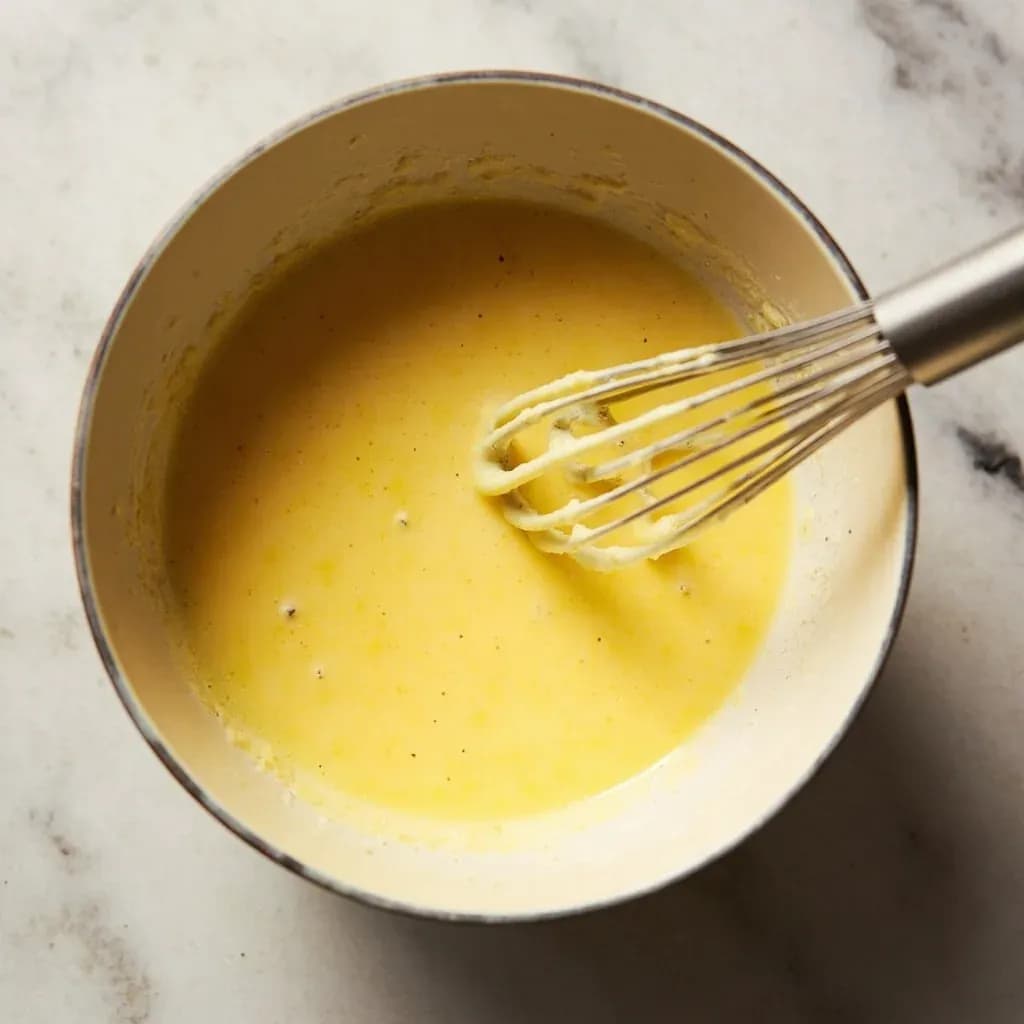
Prep & Assembly
Tempering Eggs
Slowly warming eggs with hot liquid so they thicken without scrambling.
Tempering eggs gradually raises the temperature of beaten eggs by whisking in small amounts of a hot liquid before combining the mixture fully. This prevents the proteins from setting too fast and curdling, producing smooth custards, sauces, and tempered chocolate-style emulsions. It is essential for crème anglaise, carbonara, and avgolemono, where a silky texture depends on gentle, controlled heating.
Tempering is the controlled warming of beaten eggs (whole, yolks only, or yolks-and-sugar) by introducing hot liquid in small stages before the mixture ever meets a flame in earnest. It matters because egg proteins begin to set in a narrow window — whites at 62–65°C / 144–149°F, yolks at 65–70°C / 149–158°F — and a naked egg dropped into simmering milk or broth will scramble almost instantly. By raising the egg's temperature gradually while keeping it in motion, the cook brings it across that coagulation range slowly enough that the proteins unfold and thicken the liquid into a glossy sauce instead of seizing into curds.
In classical French cooking this technique is the practical arm of the broader idea of the liaison — the egg-and-cream mixture that thickens a velouté, a sauce, or a custard. Tempering is also the foundation of nearly every warm egg emulsion, from hollandaise (where hot melted butter is dripped into yolks) to zabaglione (where yolks and sugar are warmed over a bain-marie before any liquid is added). Done well, the cook barely notices the technique: the result is a smooth, nappe-coated sauce that holds its shape on a spoon. Done badly, it announces itself as soon as a fleck of white turns into scrambled threads.
The discipline is simple but unforgiving of shortcuts: whisk the whole time, add in small amounts, finish over gentle heat, and stop just before a simmer. Most tempering failures are not the eggs' fault — they are the cook's, for adding too much hot liquid at once, walking away, or letting the pan come to a boil after combining.
- Difficulty
- Medium
Types & varieties
For richer custards and liaison sauces (hollandaise, béarnaise, pastry cream) where maximum thickening and a velvety texture are wanted.
For lighter custards such as crème anglaise, ice cream bases, and many pudding sauces where a more delicate set is appropriate.
Eggs and sugar whisked over a bain-marie to a pale, ribboned foam before the hot liquid is introduced — the start of zabaglione and pastry cream.
Yolks whisked with a little cold cream or beurre manié, then stirred into a hot sauce off the heat at the last moment (the classic French liaison for veloutés).
The warmed egg mixture is poured back into the saucepan of hot liquid and finished over gentle heat — the standard custard finishing method.
Whisked egg-lemon mixture tempered with hot broth and returned to the pot only to warm through, never boiled.
How to do it
- 1
Set up
Crack the eggs (whole or yolks only, per recipe) into a medium heatproof bowl. Add sugar if the recipe calls for it and whisk just until smooth and homogenous — do not whip to a foam unless you are making a sabayon-style base.
- 2
Heat the liquid
Bring the milk, cream, stock, or other liquid to a gentle simmer in a heavy-bottomed saucepan. If aromatics (vanilla, citrus zest, peppercorns, herbs) are part of the recipe, steep them off the heat for 10–15 minutes, then reheat before you begin tempering.
- 3
First addition
Ladle roughly 1/4 of the hot liquid into the eggs in a thin, steady stream while whisking constantly. The eggs should warm noticeably but stay liquid and smooth — if they begin to thicken or look grainy, slow the stream or add less.
- 4
Build the temperature
Repeat with a second and third ladleful, whisking continuously, until the bowl holds roughly the same volume as the saucepan. By the end, the egg mixture should feel distinctly warm to the touch, like a comfortable bath.
- 5
Combine and finish
Pour the warmed egg mixture back into the saucepan with the remaining hot liquid (or vice versa, per recipe). Set over low to medium-low heat and stir constantly with a wooden spoon, flat whisk, or silicone spatula, scraping the bottom and corners.
- 6
Cook to nappe
Cook just until the mixture coats the back of a spoon and a finger-drawn line holds its edges, or reaches 78–82°C / 172–180°F on a thermometer. Do not let it simmer or boil — the moment you see bubbles breaking on the surface, pull the pan off the heat.
- 7
Strain and cool
Immediately pass the finished sauce or custard through a fine-mesh strainer into a clean bowl. For pastry cream, press plastic wrap directly onto the surface to prevent a skin; for anglaise, set the bowl over an ice bath and stir to stop the cooking fast.
The science behind tempering
Egg proteins are long chains folded into a compact shape. Heat unfolds them, and once unfolded they bond with their neighbours — that bonding is what thickens a custard, but it is also what turns a yolk into a rubbery white fleck if it happens too fast. Tempering works because unfolding is gradual: by giving each protein molecule time to find a partner before the next wave of heat arrives, you end up with a smooth three-dimensional network of thin threads rather than tight clumps. A small amount of sugar, fat, or starch in the egg mixture delays coagulation and gives extra working time, which is why pastry cream (yolks + sugar + milk) is more forgiving than a straight yolk liaison.
Tempering versus related techniques
Three techniques sit close to tempering and are often confused with it. A bain-marie is gentle, indirect heat from simmering water, used to finish custards without scorching — it is the partner to tempering, not a substitute. Whisking yolks and sugar over a bain-marie until they ribbon (a sabayon) is a pre-tempering step that aerates and warms the eggs before any liquid joins them. The liaison itself is the finished thickener — yolks and cream that get stirred into a sauce, often off the heat, to enrich and bind it without ever returning to a boil.
Common uses
Tips & pitfalls
- Whisk constantly with the non-dominant hand while ladling with the dominant one — pausing even for a few seconds lets the eggs set on contact with the hot bowl.
- Add the hot liquid in thin, slow streams or one small ladle at a time; 'a little at a time' is the whole rule.
- Use room-temperature eggs — cold eggs are more shockable and seize into threads much more easily.
- After combining, keep the saucepan on low to medium-low heat; a bare simmer at most. Boiling breaks the emulsion and scrambles the eggs.
- Strain the finished custard through a fine-mesh sieve into a clean bowl — it is cheap insurance against any curds that formed early and unnoticed.
- Stop cooking as soon as the mixture nappes the spoon; carryover heat will push it another 2–3°C / 4–5°F even off the burner.
- If you see any flecks forming, pull the pan off heat and whisk hard before they multiply. If the sauce has already scrambled, strain immediately and try an ice bath with vigorous whisking — sometimes it can be rescued, otherwise start over.
- Never try to rescue a fully broken mixture by blending it; strain first and only blend if the sauce is still smooth underneath the surface.
Good to know
- Also known as
- Liaison (the egg-and-cream thickener that tempering supports); also called 'bringing to temperature'
- Egg coagulation range
- Whites 62–65°C / 144–149°F; yolks 65–70°C / 149–158°F; whole eggs ~70°C / 158°F; custards curdle ~82–85°C / 180–185°F
- Typical yolk ratio
- 2–4 yolks per 250 ml / 1 cup of liquid for medium custards; 1 yolk per cup for light liaison sauces
- Liquid temperature
- Bring to a gentle simmer or scald (~85–90°C / 185–194°F) before ladling
- Add in stages
- 3–4 additions of hot liquid, each ~1/4 of the total volume, whisking constantly
- Doneness test
- Coats the back of a spoon with a finger-drawn line that holds (nappe); or 78–82°C / 172–180°F on a thermometer
- Equipment
- Whisk (balloon or flat), medium heatproof bowl, fine-mesh strainer, heavy-bottomed saucepan
- Common confusion
- Not the same as chocolate tempering, which controls cocoa butter crystal structure
Also called
egg tempering
Dishes that rely on it
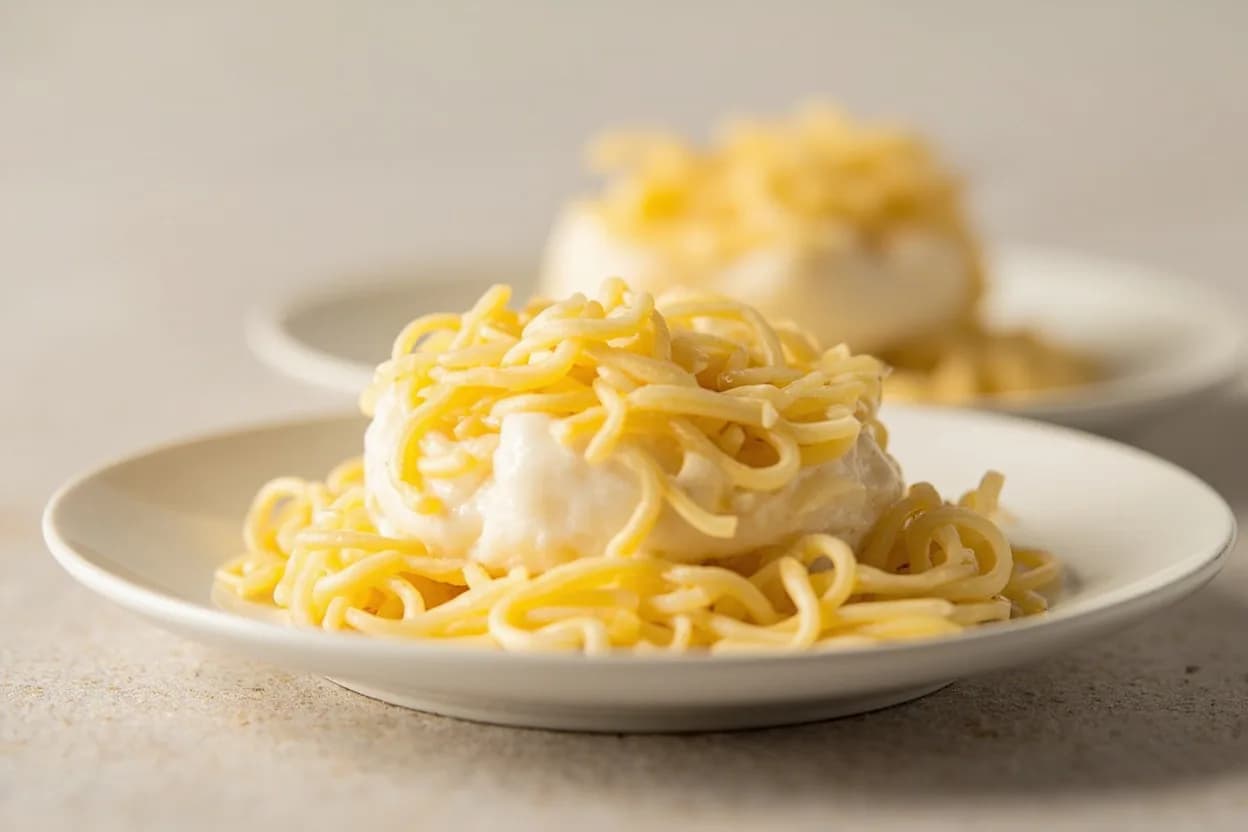
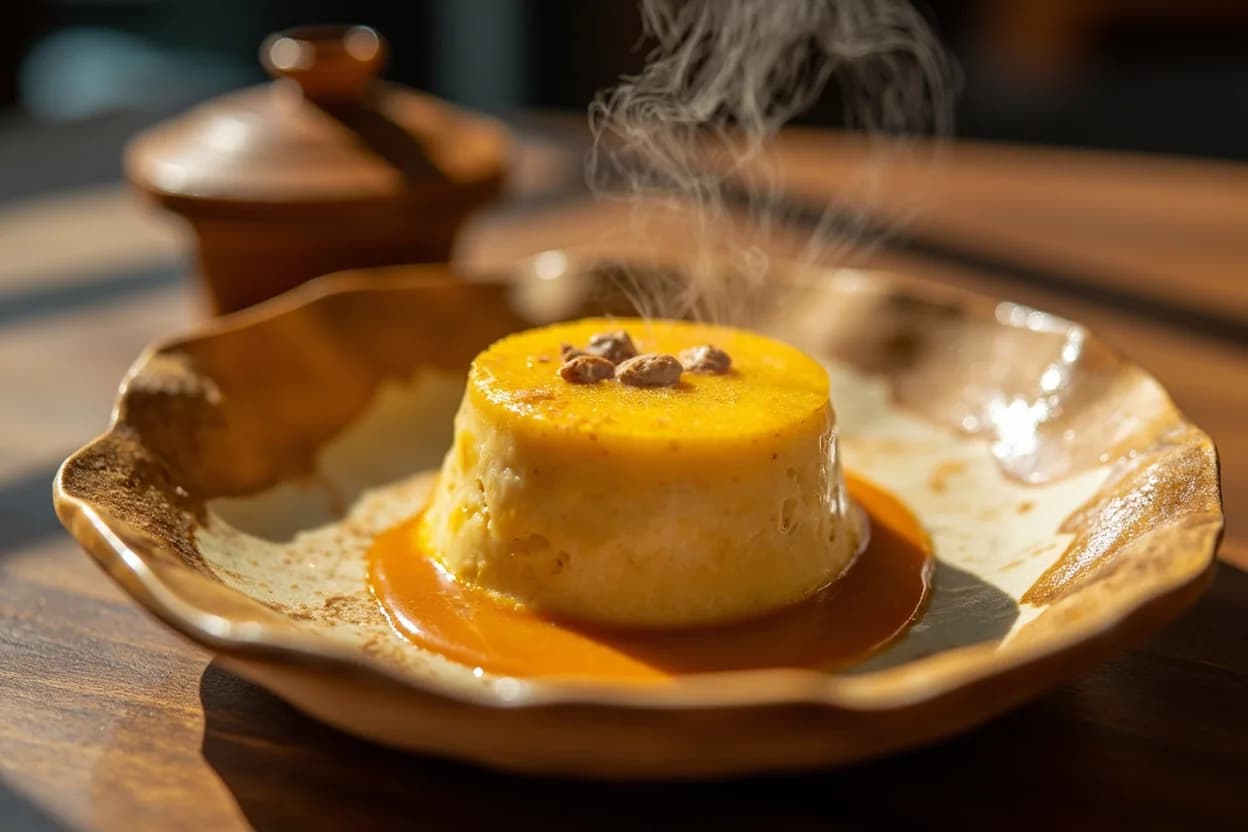
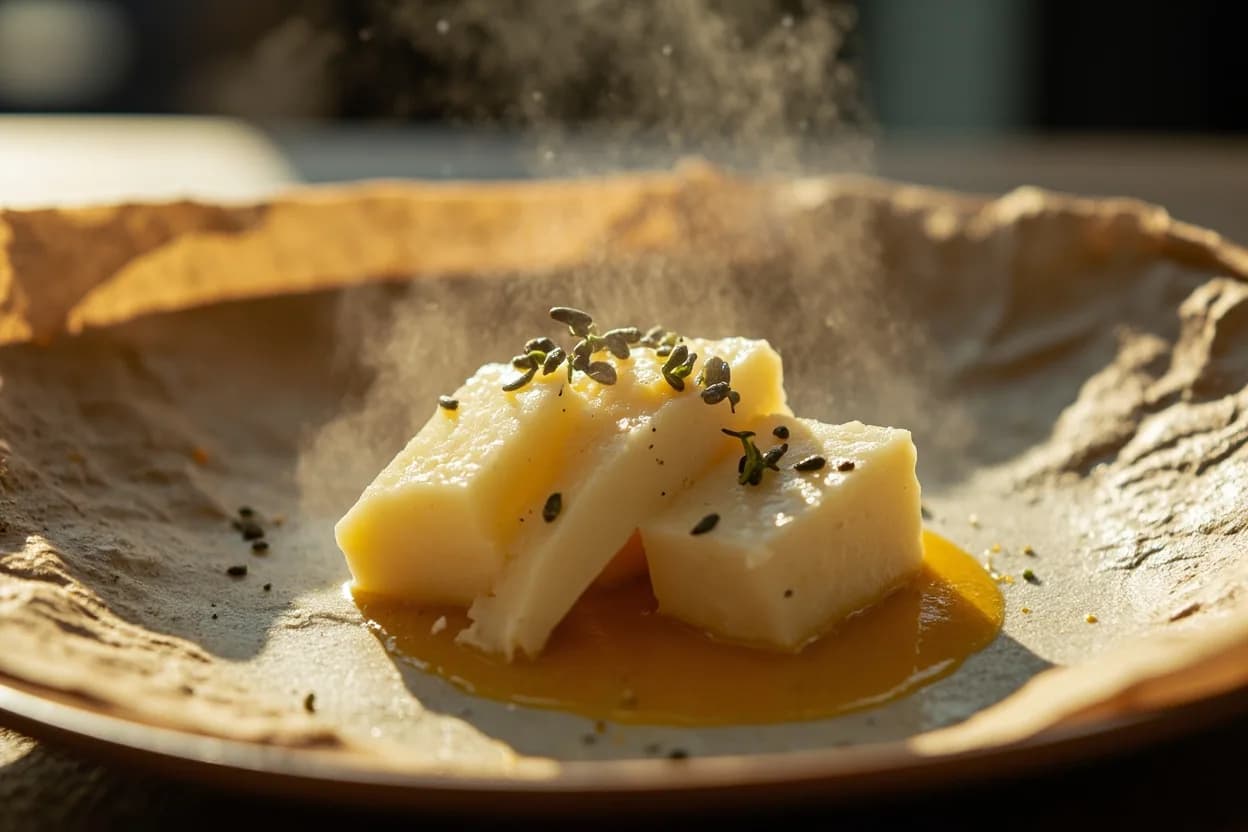
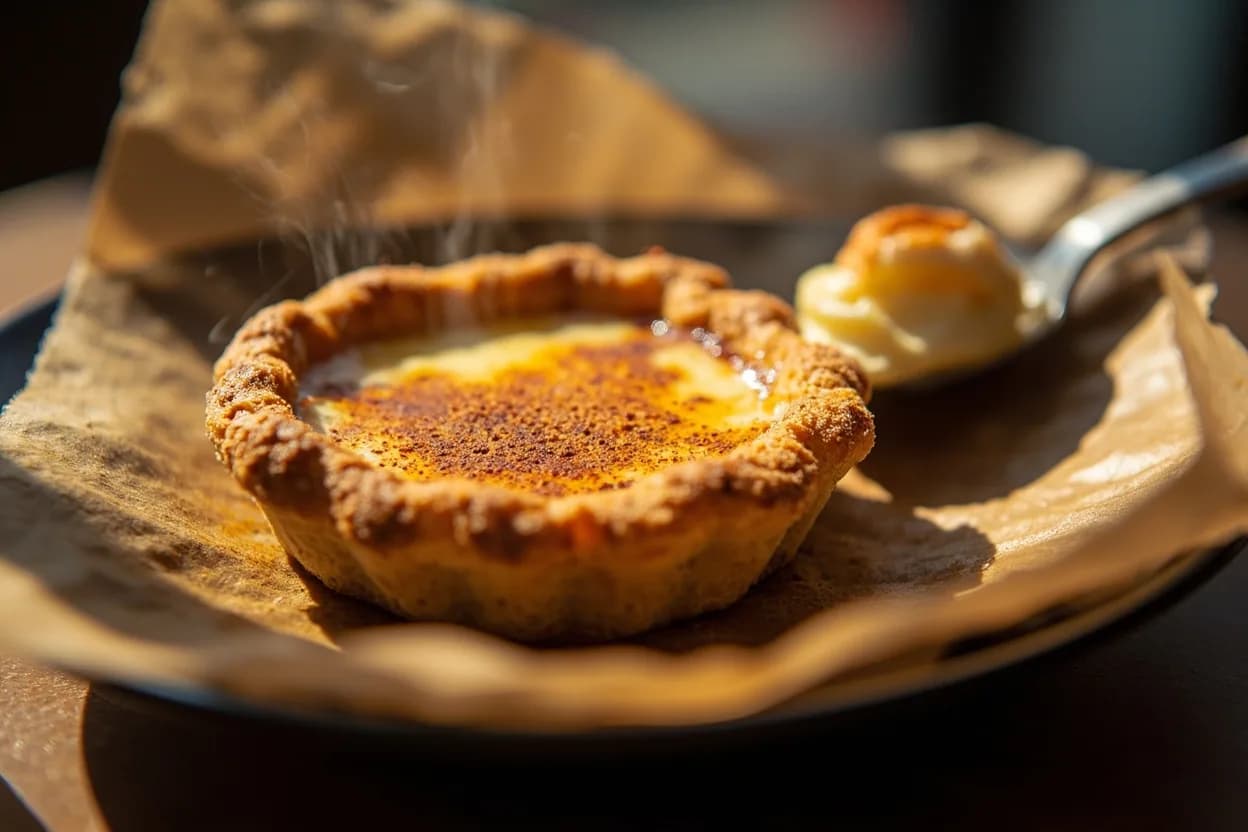
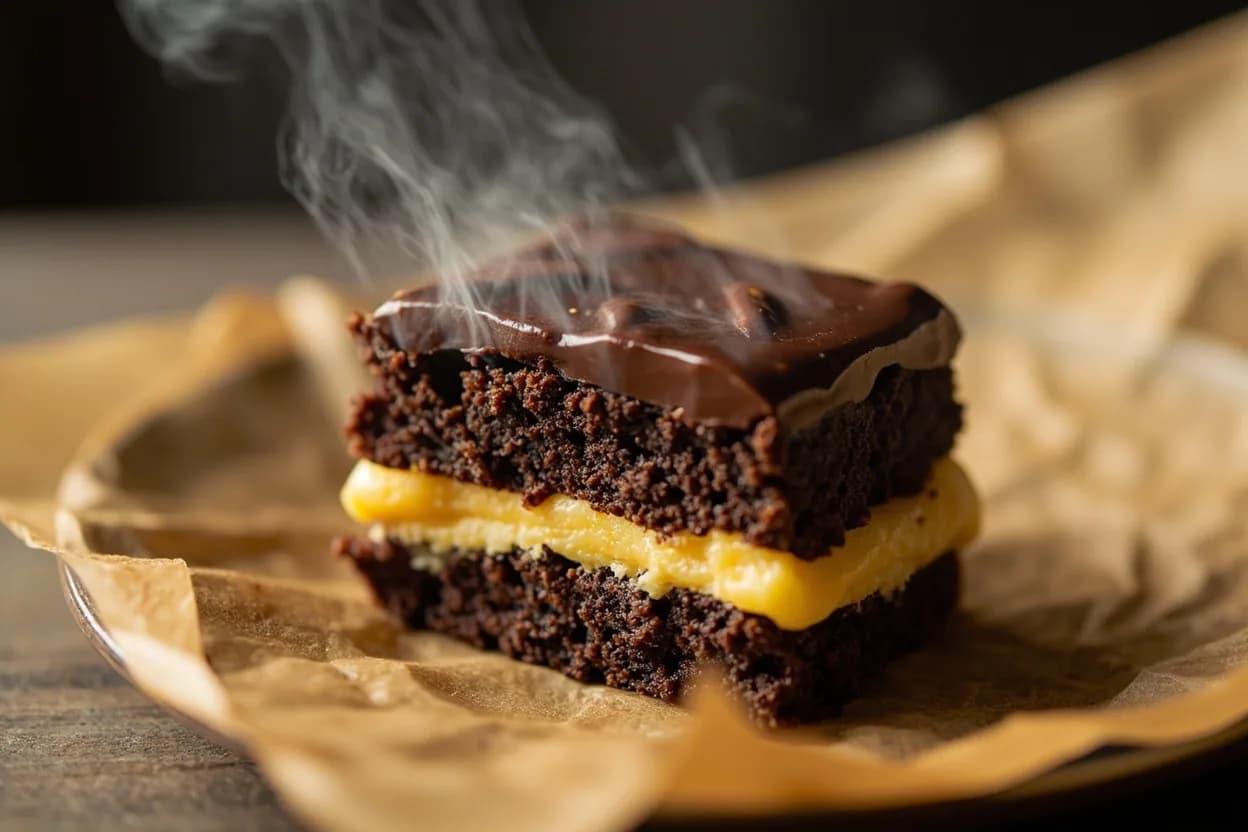
Related

Whisk
Beat ingredients smooth and aerated with a looping wire motion

Sift
Pass dry ingredients through mesh to aerate and remove lumps

Strain
Pour through mesh to separate solids from liquid for a smooth result

Filter
Pass liquid through fine material to clarify out the smallest particles

Rice
Press cooked potatoes through small holes for fluffy, lump-free texture

Mash
Crush soft cooked food into a rustic, creamy purée

Grind
Crush food into a coarse to fine texture, from spices to meat

Grate
Shred food into fine bits against a sharp-toothed surface