Prep & Assembly
Tempering to Serving Temp
Letting cold food rest to room temperature so it cooks evenly and tastes its best.
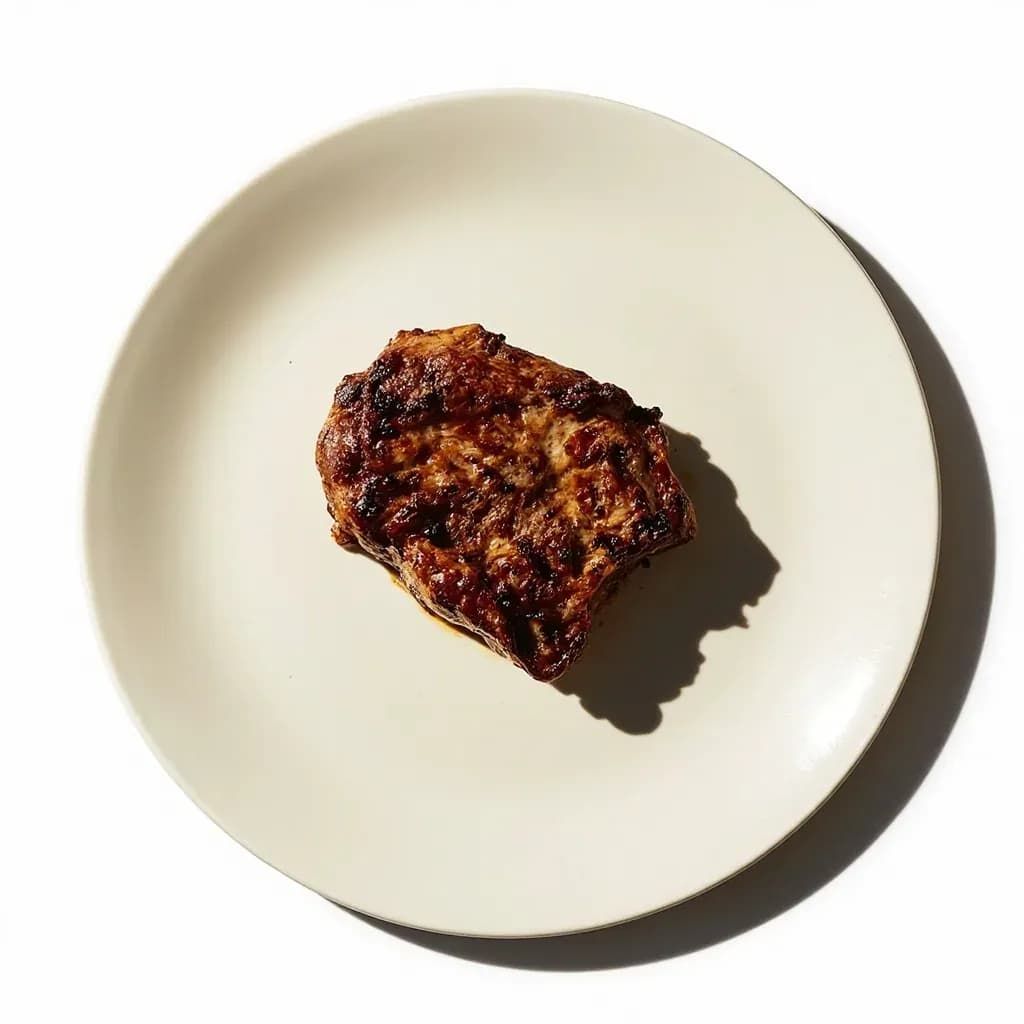
Tempering to serving temp means letting refrigerated food, especially steaks and roasts or cheeses, sit out and warm toward room temperature before cooking or serving. Cold meat cooks unevenly because the center lags far behind the surface, so a rest evens it out and improves the final result. For cheeses and some desserts, it lets aromas and texture bloom that the fridge mutes.
Tempering to serving temp is the controlled warming of chilled or frozen food to the temperature where it performs — or tastes — as intended. For a steak pulled from the fridge, that means letting the chill bleed out of the interior so a hot sear cooks it edge-to-edge rather than leaving a raw band behind the crust. For a wheel of Comté, it means coaxing the butterfat back to a pliable state so the volatile aromatics bloom on the palate. The principle is the same in every case: thermal equilibration, not cooking, and the difference between a finished dish and one that tastes flat, underdone, or gummy.
The technique sits at the intersection of three competing concerns — flavor, texture, and food safety. Cold fat tastes mute; cold butter won't cream; cold eggs shatter an emulsion; cold ice cream is too firm to scoop. Yet every minute a perishable item spends between 40°F and 140°F is a minute bacteria can multiply, which is why method and timing are chosen around size and risk rather than convenience. Done well, tempering is invisible on the plate. Done badly, it produces a grey, overcooked band around a still-cold center, or worse, a trip to the doctor.
- Difficulty
- Easy
Types & varieties
Slowest, safest method; 1–3 days for large roasts, food stays below 40°F (4°C) the entire time
Submersion in cool water for sealed items; about 1 hour per pound, water refreshed every 30 min
Rest on a rack or tray at room temperature; suited to small cuts, butter, dairy, and cheese
Insulated unit with low-wattage heat or a refrigerator cycle that holds 28–32°F (-2 to 0°C); standard in butcheries and fish counters
Fastest; can partially cook edges and is best used when food will be cooked immediately after
Vacuum-sealed bag placed in a temperature-controlled bath; precise, used in modern restaurant prep lines
How to do it
- 1
Identify the target temperature and use
Decide whether you need room-temperature service (cheese, butter, eggs ~65°F/18°C), a pre-cook rest for meat (~60°F/15°C at the surface), or commercial 'tempered' frozen (~30°F/-1°C) for slicing. The target dictates the method and the clock.
- 2
Choose the method by size and food-safety risk
Small items under 1 inch / 250 g → counter rest. Larger or stuffed items → refrigerator. Frozen proteins in sealed waterproof packaging → cold-water bath if speed matters. Bulk frozen blocks for butchery → commercial tempering cabinet.
- 3
Unwrap or stage correctly
Remove commercial wrapping if it traps condensation, but keep raw meat on a rack over a tray to catch drips and allow airflow. Cheese and butter should be unwrapped on a board; ice cream tubs stay closed until the last 10 minutes.
- 4
Monitor with a thermometer, not the clock
Insert a probe into the thickest, coldest part. For meat pre-cook, check every 10–15 minutes. For overnight fridge temper of a frozen item, set a leave-in alarm to your target so you know exactly when it is ready.
- 5
Test readiness
Meat should feel neither cold nor warm to the touch and an instant-read at the center reads 55–65°F (13–18°C). Butter should yield to a thumbprint without crumbling. Cheese should flex slightly and smell fully aromatic. Ice cream should scoop cleanly with light pressure.
- 6
Use, cook, or hold promptly
Tempered food is in or near the danger zone. Cook it, plate it, or refrigerate it within 30–60 minutes. Never re-refrigerate ice cream that has tempered and re-melted; the texture is ruined.
- 7
Document for repeatability
Note the mass, ambient temperature, method, and time-to-target so the next cook can replicate it. Restaurant prep sheets list temper times alongside portion sizes for this reason.
Target temperatures by food
Different foods have different 'ready' points, and aiming for the wrong one is one of the most common service errors in both home and restaurant kitchens.
- Meat pre-cook: 55–65°F (13–18°C) at the thickest point — no longer fridge-cold, not yet warm to the touch
- Butter for creaming: 60–65°F (15–18°C) — yields to a thumbprint without crumbling; cube-and-rest if forgotten
- Eggs for emulsification: 65–70°F (18–21°C) — break cleanly and incorporate without splitting mayonnaise or custard
- Cheese for service: 65–70°F (18–21°C) — flexes slightly, aroma opens; hard cheeses need 30–60 min, soft cheeses 20–30 min
- Ice cream for scooping: 10–15°F (-12 to -9°C) — about 8–15 min on the counter depending on fat and sugar
- Sashimi-grade fish: just above freezing, 30–34°F (-1 to 1°C) — firm enough to slice, not rock-hard
- Commercial 'tempered' frozen for slicing: 26–32°F (-3 to 0°C) — what butchers call tempering, distinct from room-temp service
Three other 'tempers' (and why they aren't this)
The word shows up in four different culinary contexts, all descended from the Latin temperare — to moderate. They share a name, not a technique.
- Tempering eggs — whisking a little hot liquid into beaten eggs to slowly raise their temperature before combining, so they don't scramble in a custard, sabayon, or pan sauce.
- Tempering chocolate — heating, cooling, and re-warming dark, milk, or white chocolate to specific curves so cocoa butter crystallizes into Form V, the stable polymorph that gives glossy snap.
- Tempering spices (tadka, chaunk) — blooming whole or ground spices in hot fat at the start of Indian cooking to release fat-soluble aromatics; this is a flavor technique, not a temperature one.
- Tempering to serving temp — the present entry: warming a cold item to the temperature at which it cooks evenly, slices cleanly, or tastes right.
Food-safety math
The reason tempering exists as a deliberate technique, not a casual afterthought, is the bacterial growth curve in the danger zone.
- 40–140°F (4–60°C) is the range where pathogens like Salmonella, Listeria, and Staphylococcus aureus multiply fastest.
- The 2-hour / 1-hour rule is a cumulative ceiling, not a per-session one — partial tempering, refrigeration, and re-tempering all count.
- Counter-resting a frozen 12-pound turkey for 8 hours will leave the surface above 40°F for hours while the core is still icy; refrigerator tempering is the only safe answer.
- Tempered food that is not cooked or served within 30–60 minutes should go back into refrigeration, with the exception of dry, low-water-activity items like hard cheese.
Common uses
Tips & pitfalls
- Probe the thickest part, not the surface — a steak can read 70°F outside and 38°F at the bone, which guarantees a raw center after searing.
- For a meat pre-cook rest, 30–45 minutes is usually enough; longer than 90 minutes invites surface drying and bacterial growth.
- Never temper large poultry or roasts on the counter overnight — the exterior will sit in the danger zone for hours while the core stays frozen.
- If you forgot to pull butter, cut it into ½-inch cubes: surface-area math turns a 45-minute wait into about 10 minutes.
- Cheese pulled from the fridge should be unwrapped and placed on a wooden board, not sealed in plastic, or it will sweat.
- Ice cream that refreezes after tempering forms ice crystals — temper only what you'll serve in the next 15–20 minutes.
- A small digital leave-in thermometer with an alarm lets you temper overnight in the fridge without guessing.
- Don't confuse 'tempering to serving temp' with 'tempering chocolate,' 'tempering eggs,' or a spice tadka — the word is shared, the technique is not.
Good to know
- Technique type
- Temperature equilibration — bringing chilled or frozen food to a target serving or working temperature, not a full cook
- Target range, room-temp service
- 60–70°F (15–21°C) for most cheeses, butter, and produce intended for immediate service
- Target range, commercial 'tempering' of frozen
- 26–32°F (-3 to 0°C) — firm but sliceable, well above the 0°F (-18°C) storage temp
- Target range, meat pre-cook
- 55–65°F (13–18°C) at the surface; pulled from the fridge 30–60 min before cooking
- USDA safety ceiling
- Perishable food should not sit in the 40–140°F (4–60°C) 'danger zone' for more than 2 hours (1 hour above 90°F/32°C)
- Typical timing, fridge temper of frozen protein
- 12–24 hours per 5 lb (2.3 kg); thick roasts may need 24–48 hours total depending on diameter
- Typical timing, cold-water thaw
- 30 min per pound (450 g), water changed every 30 min, kept at or below 70°F (21°C)
- Difficulty
- Low skill, high in food-safety stakes — failure means bacterial growth rather than a ruined dish
Also called
Tempering to Serving Temp · Bringing to Room Temperature
Related

Whisk
Beat ingredients smooth and aerated with a looping wire motion

Sift
Pass dry ingredients through mesh to aerate and remove lumps

Strain
Pour through mesh to separate solids from liquid for a smooth result

Filter
Pass liquid through fine material to clarify out the smallest particles

Rice
Press cooked potatoes through small holes for fluffy, lump-free texture

Mash
Crush soft cooked food into a rustic, creamy purée

Grind
Crush food into a coarse to fine texture, from spices to meat

Grate
Shred food into fine bits against a sharp-toothed surface