Prep & Assembly
Tempering Yogurt
Gradually warming yogurt with stabilizer or hot liquid so it blends into a sauce without curdling.
Tempering yogurt means slowly raising its temperature, often by whisking in a little hot liquid or by stabilizing it with starch or egg, before it joins a hot dish. Yogurt proteins curdle and separate when shocked by direct high heat, so this gentle introduction keeps the sauce smooth. It is essential for many Middle Eastern, Turkish, and South Asian yogurt-based sauces and soups.
Tempering yogurt is the cook's way of persuading an acidified dairy product to mix with hot food without breaking. Yogurt's casein proteins begin to set around 70–80°C (158–176°F), and the lactic acid from its cultures pushes that curdling point even lower — meaning a cold scoop dropped straight into a simmering curry will almost always seize and weep. The fix is to equalize temperature gradually: small amounts of the hot liquid are whisked into room-temperature yogurt until the two are roughly the same warmth, and only then is the thinned yogurt returned to the pot.
The technique works because dairy proteins need time to rearrange. A sudden temperature shock folds the casein network into tight, stubborn clumps; a slow, whisked warming keeps the proteins dispersed in the water phase. Stabilizers such as cornstarch, flour, egg yolk, or gelatin are an optional chemical safety net on top of the physical insurance of slow warming — useful when the sauce will simmer for more than a few minutes, but rarely necessary for a quickly warmed raita or finishing drizzle.
The logic is identical to tempering cream into a pan sauce or folding sour cream into a stroganoff: dairy and direct heat are natural enemies, and a two-sided meeting in the middle is the only reliable compromise. Mastering this one move unlocks everything from a North Indian kadhi and a Turkish yogurt soup to a warm tzatziki spooned over grilled lamb.
- Difficulty
- Medium
Types & varieties
The classic method: small amounts of hot liquid are whisked into room-temperature yogurt until temperatures equalize, then the mixture is returned to the pot.
The yogurt bowl is set over a pot of barely simmering water and stirred until gently warm before being added to the dish — useful when there is no cooking liquid to ladle.
A binder (cornstarch, flour, egg yolk, or gelatin) is whisked into the cold yogurt first, providing a chemical safety net against curdling for long-simmered sauces.
Egg yolks are beaten into the yogurt and the sauce is finished with cream or butter; common in richer Persian and Mughlai-style gravies.
How to do it
- 1
Bring the yogurt to room temperature
Take the yogurt out of the refrigerator 15–20 minutes ahead. Cold yogurt hitting hot liquid is the single most common cause of curdling; even a few degrees warmer makes a real difference.
- 2
Whisk in a stabilizer if needed
For dishes that will simmer for more than a few minutes, whisk 1–2 teaspoons of cornstarch, 1 tablespoon of flour, or 1 egg yolk per cup of yogurt into the cold yogurt until completely smooth. Skip this for short, lightly warmed sauces.
- 3
Set up the hot liquid
Bring the curry, soup, or sauce in its main pot to just below a simmer — hot enough to cook with, not boiling. Boiling makes successful tempering almost impossible.
- 4
Add the first small amount of hot liquid
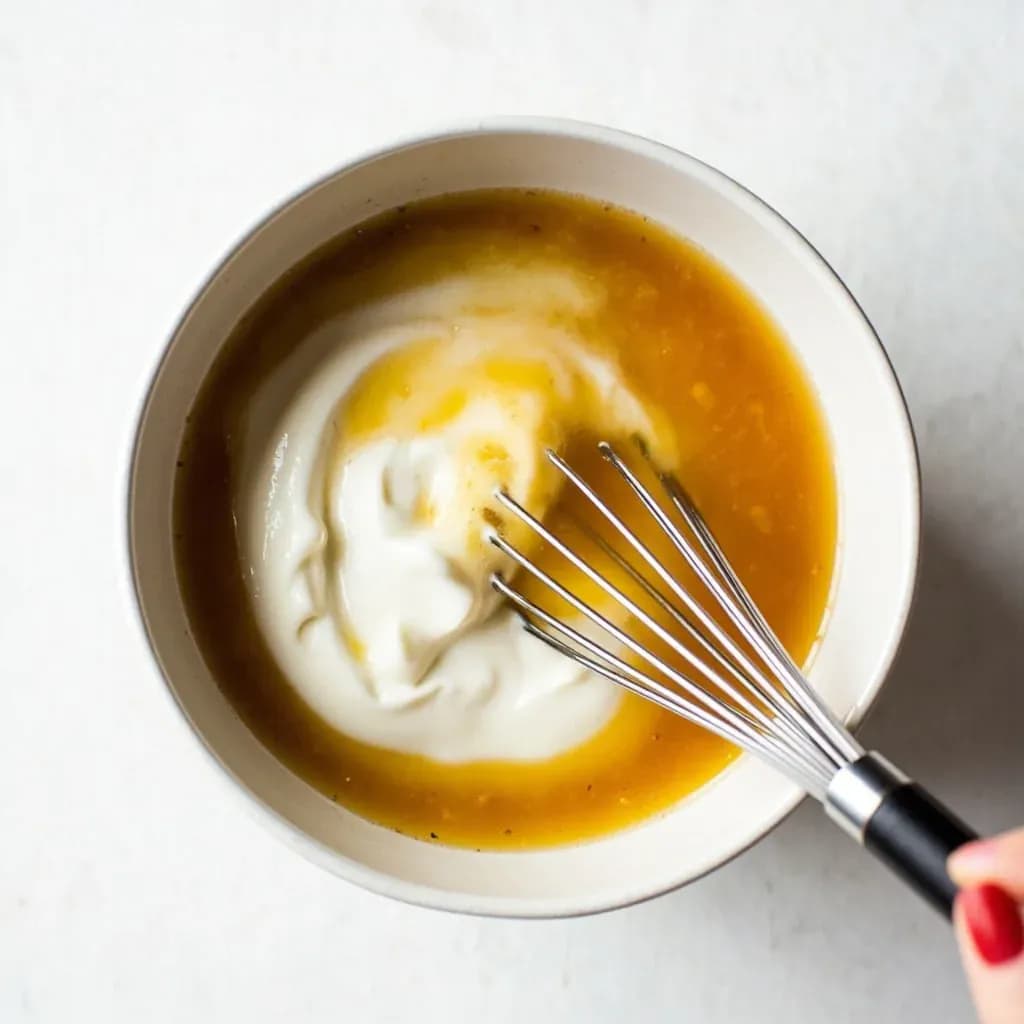
Ladle about 2–3 tablespoons of the hot liquid into the yogurt. Whisk continuously in a circular motion until the yogurt thins out and looks uniform. This first addition does the most work equalizing temperature, so take your time here.
- 5
Repeat with gradually larger additions
Add another ladle, whisk, then another, roughly doubling the amount each time. After 3–4 additions the yogurt should be warm to the touch and roughly the temperature of the pot. By the time you have added about an equal volume of hot liquid to the yogurt, the mixture can go back in.
- 6
Return the mixture to the pot
Pour the thinned, warm yogurt back into the main pot in a slow stream while whisking the pot. This keeps the temperature change gentle from both sides.
- 7
Finish on low heat only
Keep the flame on the lowest possible setting. The sauce should steam and thicken gently but never boil. Stir often, especially at the bottom, until it reaches the consistency you want. If the recipe calls for a final simmer, cap it at 5–7 minutes.
- 8
Rescue off the heat if it breaks
If fine white flecks begin forming, pull the pot off the heat immediately. Whisk a tablespoon of cold cream, a small ladle of cool yogurt, or a beaten egg yolk into the sauce off the heat to bring the emulsion back together.
Choosing and matching a stabilizer
A stabilizer is insurance, not a requirement. For a sauce that will be warmed through and served within a minute or two — a finishing drizzle over grilled fish, a warmed raita — full-fat yogurt whisked gently with hot liquid is enough. For anything that simmers for longer than five minutes, a stabilizer earns its place.
- Cornstarch (1–2 tsp per cup): the most neutral option; choose this when the sauce should taste purely of yogurt and spices, as in kadhi.
- All-purpose flour (1 tbsp per cup): traditional in North Indian kadhi; gives a slightly grainier body that many cooks consider characteristic.
- Egg yolk (1 per cup): best for rich, restaurant-style gravies such as Mughlai or Persian dishes; adds color and mouthfeel but must be fully cooked through.
- Gelatin: a small amount of bloomed gelatin whisked into the cold yogurt helps the sauce set as it cools, but it will not protect against a hard boil.
Common uses
Tips & pitfalls
- Always bring yogurt out of the fridge 15–20 minutes before tempering — cold yogurt hitting a hot pan is the single most common cause of curdling.
- Whisk constantly and add hot liquid in small additions (a ladle at a time). Never pour a full cup of hot stock into yogurt in one go.
- Use full-fat yogurt whenever possible; the extra fat physically cushions the protein network and resists breaking.
- For a thick, saucy finish that will simmer, whisk 1–2 teaspoons of cornstarch into the cold yogurt before you begin tempering.
- If using egg yolk as a stabilizer, beat it into the cold yogurt first, then temper. Do not add raw yolk directly to a simmering pot.
- Once the tempered yogurt is back in the pan, keep the heat low. A bare tremble is the maximum; any bubbling will split the sauce.
- Avoid yogurt that has been frozen and thawed — the emulsion is already damaged and will break easily.
- If a sauce does split, lift the pan off the heat and whisk in a tablespoon of cold cream or a fresh egg yolk; it can usually be rescued.
- Salt early in the cooking process rather than at the end — salt added to hot yogurt can also encourage curdling.
- A pinch of sugar (a traditional touch in many kadhi recipes) helps mask any slight graininess from partial curdling.
Good to know
- Primary purpose
- Prevent yogurt from breaking (curdling) when combined with hot ingredients or cooked.
- Why yogurt breaks
- Casein proteins coagulate around 70–80°C (158–176°F); the lactic acid in yogurt (pH ~4–4.5) lowers that threshold further.
- Most stable yogurt
- Full-fat plain yogurt — the fat physically cushions the protein network. Low-fat and non-fat versions break more readily.
- Common stabilizers
- Cornstarch (1–2 tsp per cup), all-purpose flour (1 tbsp per cup), egg yolk (1 per cup), or a small amount of gelatin.
- Heat ceiling
- Never bring the finished sauce to a rolling boil; keep it at a bare tremble or below.
- Time required
- 5–10 minutes for the tempering itself, plus 15–20 minutes to take the yogurt off the fridge first.
- Rescuing a broken sauce
- Possible — lift off heat and whisk in cold cream or a fresh egg yolk to re-emulsify; vigorous blending can also help mild cases.
Also called
Tempering Yogurt · Stabilizing Yogurt
Dishes that rely on it

Related

Whisk
Beat ingredients smooth and aerated with a looping wire motion

Sift
Pass dry ingredients through mesh to aerate and remove lumps

Strain
Pour through mesh to separate solids from liquid for a smooth result

Filter
Pass liquid through fine material to clarify out the smallest particles

Rice
Press cooked potatoes through small holes for fluffy, lump-free texture

Mash
Crush soft cooked food into a rustic, creamy purée

Grind
Crush food into a coarse to fine texture, from spices to meat

Grate
Shred food into fine bits against a sharp-toothed surface