Prep & Assembly
Texture Modification
Altering food consistency, as in puréed or minced diets, for safe swallowing.
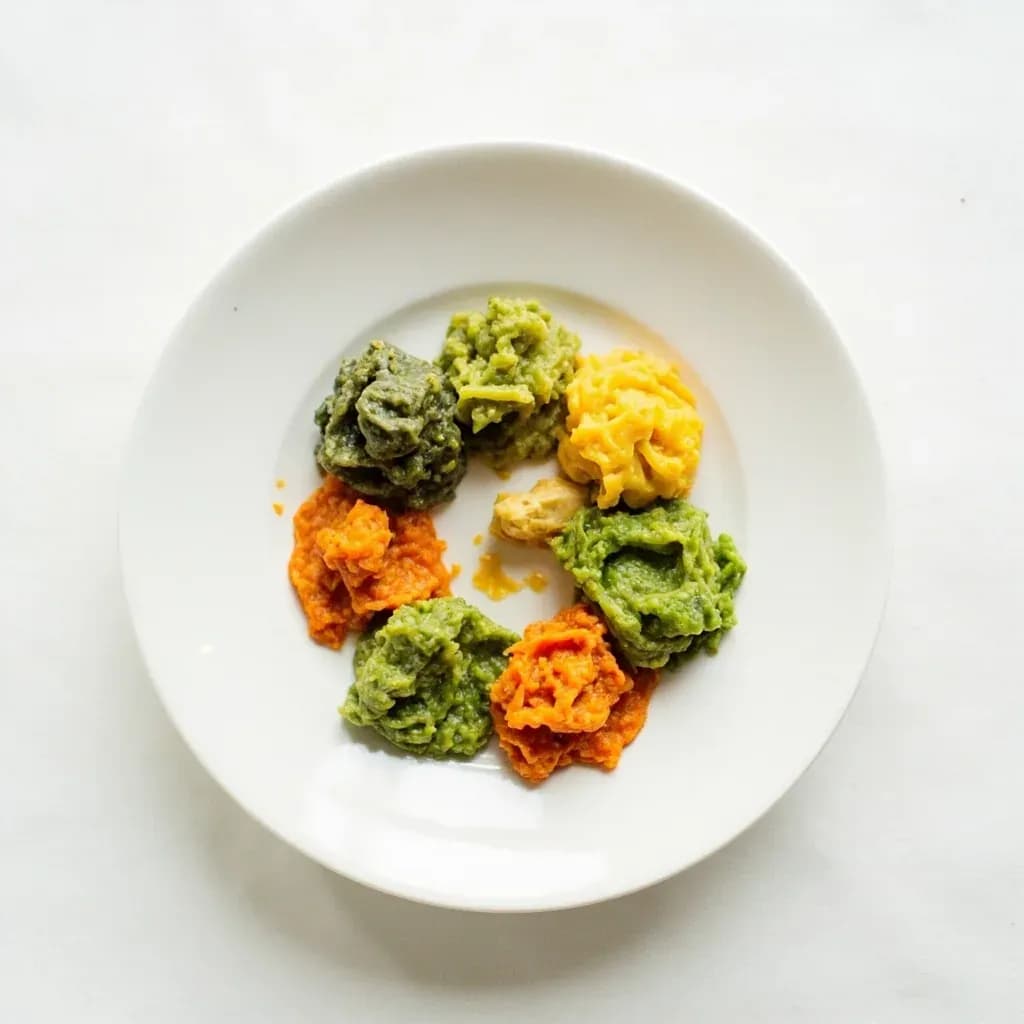
Texture modification reworks the consistency of food, by blending, mincing, mashing, or thickening, so it can be safely eaten by people with chewing or swallowing difficulties. It is central to dysphagia care, following standardized levels from thin liquids to puréed and soft-bite textures. Done well it preserves flavor, nutrition, and appealing presentation despite the changed form.
Texture modification is the deliberate alteration of a food's physical structure — how it breaks, flows, or holds together in the mouth — to make it safer or easier to eat. In clinical practice it underpins dysphagia management, the care of people whose swallow mechanism has been compromised by stroke, Parkinson's disease, dementia, head-and-neck cancer, or simply the loss of chewing strength that comes with age. The same skills sit quietly at the heart of classical cookery: a velouté passed through a tamis, a bisque worked to satin smoothness, a forcemeat forced through a fine sieve are all acts of texture modification. The International Dysphagia Diet Standardisation Initiative (IDDSI) brought global order to this territory in 2017 with an eight-level framework (0–7) covering both food and drink, replacing the older, inconsistent national systems that had made cross-discipline communication unreliable.
What matters in practice is not just how a food looks but how it behaves under pressure, on a spoon, in a syringe, and — ultimately — in a swallow. A properly executed Level 4 purée mounds on a spoon and slides off cleanly without leaving residue; a Level 5 minced-and-moist preparation holds small, soft lumps coated in a binder so no thin liquid pools separately. Liquids are graded independently, from Thin (Level 0) through Extremely Thick (Level 4), because thin water-like fluids are often the hardest thing for a weakened swallow to control. Starch-thickened drinks thin out as salivary amylase does its work, so xanthan-gum-based thickeners are the clinical default for stability. The cook's job is to understand the target level, hit it reliably, and verify it — not by eye, but with a fork, a spoon, and a flow test.
- Difficulty
- Medium
Types & varieties
Smooth, lump-free, holds shape on a spoon, slides off easily; usually passed through a fine sieve. Used for severe dysphagia.
Soft, moist pieces no larger than 4 mm wide and 15 mm long for adults; can be mashed with a fork. No separate thin liquid should pool on the plate.
Soft, tender pieces ≤1.5 cm that break apart with fork pressure; appropriate for mild to moderate dysphagia.
Normal everyday foods soft enough to bite and chew without tiring the jaw; for those with adequate chewing but reduced endurance.
Drinkable from a cup but considerably thicker than water — closer to a thick milkshake; used as a transitional consistency between thin fluids and puréed food.
Slightly, Mildly, Moderately, or Extremely Thick grades; matched to the individual's swallow safety assessment.
How to do it
- 1
Assess and select the target texture level
Confirm the prescribed IDDSI level (or desired culinary consistency). Review the size, moisture, and cohesion criteria before you start: Level 4 is smooth and lump-free; Level 5 allows soft lumps no wider than 4 mm in a moist binder; Level 6 allows tender pieces up to 1.5 cm. Match drink thickness to the same prescription.
- 2
Cook ingredients until fully tender
Roast, simmer, steam, or boil the food well past the point of 'done' so that fibers and connective tissue will break down. Under-cooked starches and fibrous vegetables are the single most common reason a purée stays grainy no matter how long it is blended.
- 3
Reserve cooking liquid and trim the unworkable
Strain off and keep the cooking liquid, stock, or braising liquor — you will use it to adjust consistency and preserve flavor. Trim away anything that will not break down: skin, sinew, seeds, woody stems, fish bones, fruit pips, and gristle.
- 4
Process in a high-powered blender or food processor
Work in small batches, leaving room for the food to move. Run on high for 60–90 seconds, scrape down, and repeat. For purées, blend until the mixture looks like soft-serve ice cream and you can draw a clean line through it with a spoon.
- 5
Pass through a fine sieve or food mill
For a true Level 4 purée, press the blended mixture through a tamis or chinois using a flexible spatula. This catches any remaining fibers, seed coats, or starch granules and gives a satin-smooth finish — the difference between a clinical purée and a refined one.
- 6
Adjust consistency to the target level
Thin with warm reserved liquid, stock, cream, or milk; thicken by reducing in a saucepan, whisking in a beurre manié, or folding in a starch slurry or commercial thickener. Test against IDDSI criteria: it should mound on a spoon and slide off with little residue, or hold a fork pattern without flowing through the prongs.
- 7
For minced and moist: chop, then bind
Finely mince cooked food to pieces no larger than 4 mm wide and 15 mm long. Fold into a moist binder — béchamel, gravy, mashed potato, or a thickened sauce — so the pieces are coated and suspended rather than sitting in loose liquid, which is unsafe at this level.
- 8
For soft & bite-sized: portion and verify size
Cut tender cooked food into pieces no larger than 1.5 cm. Test with a fork: the pieces should deform and break apart easily under gentle pressure. Serve with a sauce to keep pieces lubricated during the swallow.
- 9
Season, finish, and hold correctly
Adjust salt, acid, and fat at the end — blending redistributes and mutes flavor. Hold purées in a covered bain-marie or reheat gently, since prolonged heat thins starch-bound purées. Plate in shallow mounds rather than deep pools, and avoid garnishes that would push the dish to a different IDDSI level (no crisps, no runny coulis on Level 5).
The IDDSI testing methods in practice
Three simple field tests are the working vocabulary of texture modification. None requires a lab, and every cook producing modified food should know them cold.
- Fork Pressure Test: press the tines of a standard fork into the food until the thumbnail blanches white. The food should be squashed easily and not return to its original shape — this confirms it will yield to tongue pressure during a swallow.
- Spoon Tilt Test: scoop the food onto a spoon and tilt it. A Level 4 purée should slide off with little left behind; a Level 5 minced-and-moist mixture should hold its shape and slide off in one piece, not flow.
- Fork Drip Test: see whether liquid drips continuously through the fork prongs (Thin, Level 0), drips in short threads (Slightly Thick, Level 1), or sits in mounds between the prongs (Mildly Thick, Level 2 and above).
- Flow Test (for drinks): fill a 10 mL syringe with 10 mL of liquid, release the nozzle, and time how long it takes to drain to the 1 mL mark. The result places the drink in Level 0–4.
Thickener choice: starch vs. xanthan
Starch and xanthan-gum thickeners behave very differently in the mouth, and the choice is more than cosmetic. In a clinical setting the recommendation is almost always xanthan.
- Cornstarch, tapioca, and modified food starch thicken well but thin progressively as salivary amylase breaks the polymer chain — a drink thickened with cornstarch in the kitchen may be noticeably thinner by the time the patient finishes it.
- Xanthan gum resists amylase, holds its viscosity across hot and cold temperatures, and produces a more cohesive bolus that swallows as a single mass rather than separating.
- Xanthan is slippery and slightly elastic; a little goes a long way. It can be dispersed with a whisk into cold or warm liquid and hydrates within minutes.
- Starch thickeners can mute flavor and turn cloudy in clear drinks; xanthan stays clear and adds no taste — useful for juices and broths.
- For cost and accessibility, starch is still the home default; if using it, thicken closer to service and retest at the table.
Common uses
Tips & pitfalls
- Cook food until fully tender before blending — under-cooked vegetables will not break down to a true purée even in a high-powered blender.
- Pass purées through a fine-mesh tamis or chinois for a velvety, restaurant-quality mouthfeel; this single step separates a clinical purée from a refined one.
- Adjust moisture with the cooking liquid, stock, cream, or milk rather than water — it preserves flavor and adds body.
- If starch-thickened liquids thin out after standing, switch to a xanthan-based thickener, which is saliva- and amylase-resistant.
- Always re-test thickness at serving temperature and after standing; viscosity changes with heat and time.
- Do not serve purées in a deep well or with a straw — depth and suction alter how the bolus is controlled in the mouth.
- Season at the end. Blending distributes salt and acid differently, and fat can mute flavor; taste and adjust after processing.
- For minced-and-moist diets, use binders (roux, béchamel, mashed potato, or a cornstarch slurry) to keep pieces coated and prevent a watery pool forming on the plate.
- Avoid mixed or dual textures (e.g. broth with vegetables) at Levels 3–4 unless specifically prescribed — separated components are safer to swallow.
- Verify the final product against the IDDSI testing methods every batch, not just by appearance.
Good to know
- Standardization
- The International Dysphagia Diet Standardisation Initiative (IDDSI), founded 2013, launched its 8-level framework (0–7) in 2017 to unify terminology across countries and disciplines.
- Clinical levels
- Three food textures are most commonly prescribed: Puréed (IDDSI Level 4), Minced & Moist (Level 5), and Soft & Bite-Sized (Level 6).
- Drink thickness
- Liquids are graded 0–4 in IDDSI: Thin, Slightly Thick, Mildly Thick, Moderately Thick, and Extremely Thick.
- Primary use
- Prescribed by speech-language pathologists for people with dysphagia (swallowing difficulty) from stroke, Parkinson's, dementia, head/neck cancer, or age-related changes.
- Key equipment
- High-powered blender, food processor, fine-mesh tamis or chinois, potato ricer, food mill, and for testing, the IDDSI Flow Test syringe and fork/spoon.
- Common thickeners
- Commercial xanthan-gum or modified-starch thickeners (e.g. Thick-It, SimplyThick, Resource ThickenUp), plus starch-based options like cornstarch, tapioca, and arrowroot.
- Test method
- The IDDSI Flow Test measures 10 mL of liquid through a 10 mL syringe in 10 seconds; the Fork Pressure Test and Spoon Tilt Test assess food softness and cohesiveness.
- Time sensitivity
- Starch-thickened liquids thin as they sit, break down with salivary amylase, and change viscosity with temperature; xanthan-based thickeners are more stable.
- Piece size at Level 5
- Minced & moist food should have lumps no larger than 4 mm in width and no more than 15 mm in length for adults (smaller for children).
- Piece size at Level 6
- Soft & bite-sized pieces for adults should be no larger than 1.5 cm (about the width of a standard fork).
Also called
Dysphagia Diet Texturing · Texture-Modified Diet
Related

Whisk
Beat ingredients smooth and aerated with a looping wire motion

Sift
Pass dry ingredients through mesh to aerate and remove lumps

Strain
Pour through mesh to separate solids from liquid for a smooth result

Filter
Pass liquid through fine material to clarify out the smallest particles

Rice
Press cooked potatoes through small holes for fluffy, lump-free texture

Mash
Crush soft cooked food into a rustic, creamy purée

Grind
Crush food into a coarse to fine texture, from spices to meat

Grate
Shred food into fine bits against a sharp-toothed surface