Prep & Assembly
Tasting and Seasoning Adjustment
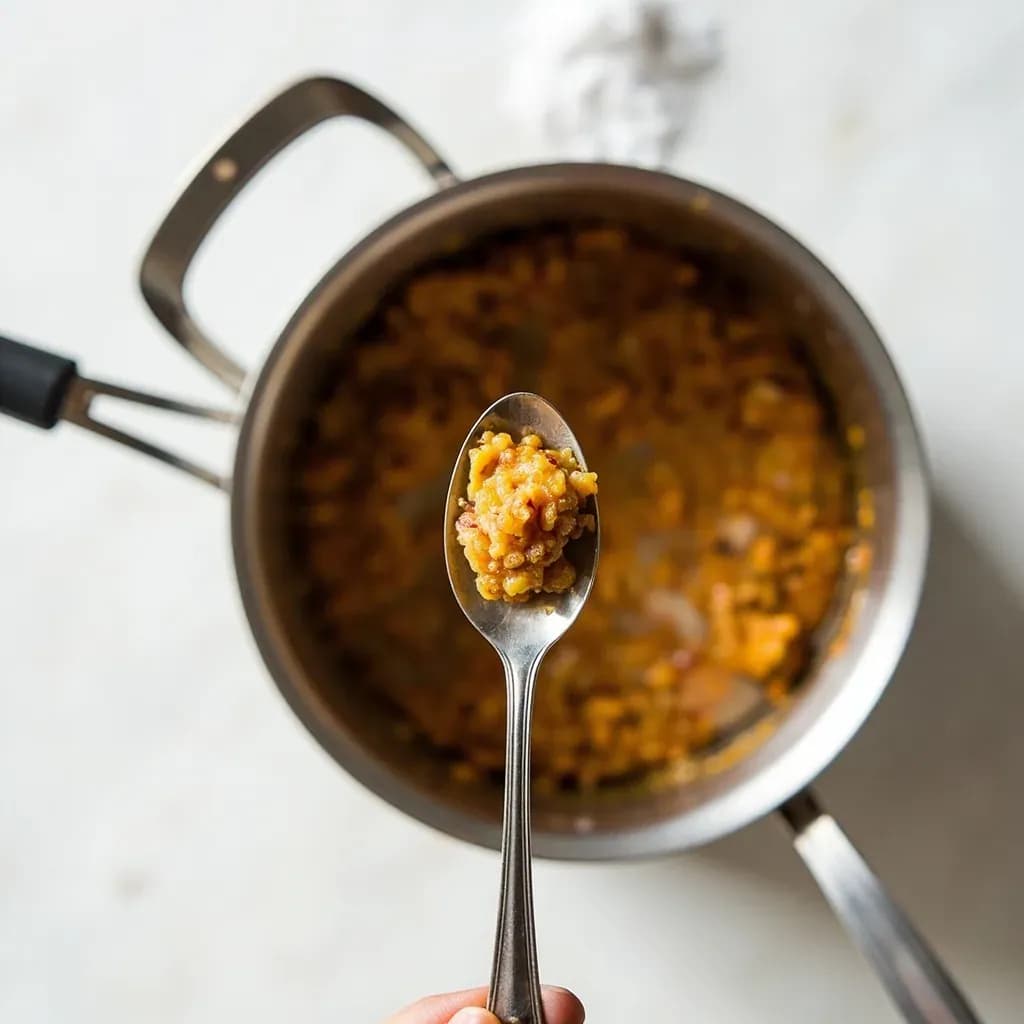
Repeatedly tasting a dish and correcting salt, acid, heat, and sweetness as it cooks.
Tasting and adjusting is the iterative habit of sampling a dish throughout cooking and correcting its balance of salt, acid, sweetness, heat, and richness. It is the single most reliable technique for consistent results because raw ingredients vary in strength and seasoning evolves as flavors meld. Good cooks adjust in small increments and taste again before serving.
Tasting and adjusting seasoning is the technique that converts a recipe into a finished dish. Recipes are useful starting points, but they cannot account for the saltiness of your particular stock, the ripeness of your tomatoes, the sharpness of your vinegar, or the way your stove concentrates a reduction. The cook who tastes and corrects as they go is the one whose food actually tastes right.
The practice balances six dimensions: salt, acid, sweetness, heat (pungency), umami, and the way fat carries flavor across the palate. Each of these shifts as a dish cooks — reduction concentrates salt and acid, fat coats the tongue and dampens perceived seasoning, and chili heat builds over time. A sauce that tastes balanced at one liter may be over-salted at 250 ml; a stew that tastes right in the pot may taste flat or under-seasoned once it cools on the plate. Cooking well means reading the food in real time and making small, targeted corrections rather than one large dump at the end.
The most useful framework for home cooks is the four-flavor lens of salt, acid, heat, and a touch of sweetness: a dull dish usually wants salt; a heavy dish usually wants acid or heat; a sharp dish usually wants a little sweetness or fat. Mastery is less a secret ratio than a habit — taste, name what is missing, change one variable at a time, wait, retaste, and repeat.
- Difficulty
- Easy
Types & varieties
Adding small amounts of salt and acid at multiple stages as a dish reduces, building flavor gradually rather than all at once at the end.
Targeted late-stage fix for a single imbalance — a squeeze of lemon for a flat sauce, a pinch of sugar to tame acid, a splash of vinegar to lift richness.
The last adjustment just before plating, including finishing salts, fresh acid, raw herbs, or fresh chili.
Pre-salting components (pasta water, blanching water, meat dry-brines) that season the final dish indirectly through contact.
Fixing one element by reducing another — diluting an over-salted sauce with unsalted stock, or counteracting sweetness with acid rather than piling on more sugar.
How to do it
- 1
Establish a baseline
Taste the dish at the first point it becomes seasoned at all — after the first salt, after the aromatics soften, or once liquid ingredients are combined. Note what is present and what is missing: salt, acid, sweetness, heat, body from fat, savoriness from umami.
- 2
Assess each dimension separately
Before adding anything, isolate one variable at a time. Ask: is this under-salted? Does it taste flat (low acid)? Heavy (needs acid or heat)? Dull on the finish (needs salt or umami)? Naming the imbalance tells you what to add.
- 3
Make one correction at a time
Add a single seasoning — a pinch of salt, a squeeze of lemon, a drop of vinegar, a pinch of sugar, a pinch of chili — then stir it in and wait. Do not stack corrections; you will not know which one fixed the problem or which one overshot.
- 4
Wait and retaste
Let the dish simmer or rest 30–60 seconds after each addition so the new flavor fully integrates. Some adjustments (sugar, soy sauce) need heat to round out; acid and fresh herbs register almost instantly.
- 5
Repeat in small increments
Cycle: taste → identify → correct by one small addition → retaste. Most dishes need three to six passes between raw and finished, not one big dump at the end.
- 6
Adjust for reduction
As sauces reduce, stews simmer, and pan juices concentrate, salt and acid intensify. Taste more frequently as liquid drops, and undershoot early so the final concentration lands right.
- 7
Account for fat and richness
Butter-, cream-, cheese-, or oil-heavy dishes mute perceived seasoning. Plan to use more salt and finish with a brighter acid (lemon, vinegar, pickle brine) than the same dish made leaner.
- 8
Final seasoning at service
Right before plating, do one last taste and adjust for the plate. This is the moment for finishing salt, fresh-ground pepper, a final squeeze of citrus, a drizzle of raw finishing oil, or a grating of cheese — additions that should taste bright and present, not cooked.
- 9
Plate and taste again
Once on the plate, taste the dish as the diner will — at eating temperature, with any accompaniments (rice, bread, salad) on the same fork. A sauce that worked alone may need a final tweak once it is over its base.
The four-flavor diagnostic
When a dish is off, run through the four-flavor check before reaching for the salt. Most home cooks default to salt when something is wrong, but acid and heat are the more common missing pieces.
- Dull or flat → almost always needs salt, sometimes a finishing acid.
- Heavy or cloying → needs acid (lemon, vinegar, pickle brine) or heat (chili, pepper, mustard).
- Sharp or harsh → needs a touch of sweetness or fat to round it out.
- Tastes fine in the pot but flat on the plate → the dish cooled; retaste at eating temperature before adjusting.
Why hot food lies to you
Temperature distorts perception of seasoning in predictable ways. The single biggest reason home-cooked food is unevenly seasoned is that cooks judge it straight from the burner instead of letting a small spoonful cool for a few seconds.
- Salt and sweetness read stronger when food is very hot.
- Chili heat compounds with temperature — capsaicin and actual heat activate the same receptors, so a dish straight from the pan will feel spicier than the same dish at the table.
- Volatile acids like vinegar bloom with heat; a reduction that seems balanced at a rolling simmer can taste sharper once it cools.
- Fat (butter, cream, cheese, olive oil) coats the palate and dampens every other seasoning, so rich dishes need more salt and brighter acid than they seem to.
- A two-second cool on a clean spoon gives a much more honest read than a blow-on-the-spoon-and-shrug.
Common uses
Tips & pitfalls
- Use a dedicated clean tasting spoon — double-dipping from the cooking spoon contaminates the pot and gives an inaccurate, increasingly salty read on the food.
- Cool a small spoonful a few seconds before judging salt and sweetness; very hot food reads saltier and can mask acid and heat, leading to over-seasoning.
- Season in small increments. Salt and acid are far easier to add than to remove; a pinch at a time is the rule, especially in reductions.
- Remember that reduction concentrates everything — a sauce balanced at 1 liter will be over-salted at 250 ml. Taste and adjust earlier than you think you need to, then taste again as it reduces.
- Fat coats the palate and dampens perceived seasoning. Rich, buttery, or creamy dishes typically need more salt and a brighter acid than they seem to.
- A finishing squeeze of lemon or splash of vinegar at the end will often do more for a heavy dish than more salt will — try acid before you reach for the salt cellar.
- If a dish is too salty, dilute with more of the unsalted base (water, stock, cream, tomato); the potato-in-the-sauce, dairy, or sugar 'absorber' tricks are mostly myths that just add another flavor on top of the problem.
- Sugar in tiny amounts can smooth excessive acid and tame aggressive chili heat without making a dish taste sweet.
Good to know
- Category
- Fundamental cooking technique
- Also known as
- Seasoning in layers, iterative tasting, balancing seasoning
- Core dimensions
- Salt, acid, sweetness, heat, umami, and fat as a carrier
- Tasting cadence (pro kitchen)
- Every 1–2 minutes for active sauces; at every major addition for soups, braises, and sautés
- Spoon discipline
- Always use a clean spoon — never the stirring spoon that has touched the food
- Temperature effect
- Hot food tastes saltier and sweeter; cool a small amount before final assessment
- Difficulty
- Beginner-level skill, lifelong mastery
- Related principle
- Samin Nosrat's 'Salt, Fat, Acid, Heat' (2017) brought structured public attention to the practice
Also called
Tasting and Adjusting · Seasoning to Taste · Taste and Adjust
Dishes that rely on it



Related

Whisk
Beat ingredients smooth and aerated with a looping wire motion

Sift
Pass dry ingredients through mesh to aerate and remove lumps

Strain
Pour through mesh to separate solids from liquid for a smooth result

Filter
Pass liquid through fine material to clarify out the smallest particles

Rice
Press cooked potatoes through small holes for fluffy, lump-free texture

Mash
Crush soft cooked food into a rustic, creamy purée

Grind
Crush food into a coarse to fine texture, from spices to meat

Grate
Shred food into fine bits against a sharp-toothed surface