Transform & Preserve
Wild Vinegar-Making
Letting wild acetobacter convert an alcoholic liquid into vinegar over weeks of open fermentation.
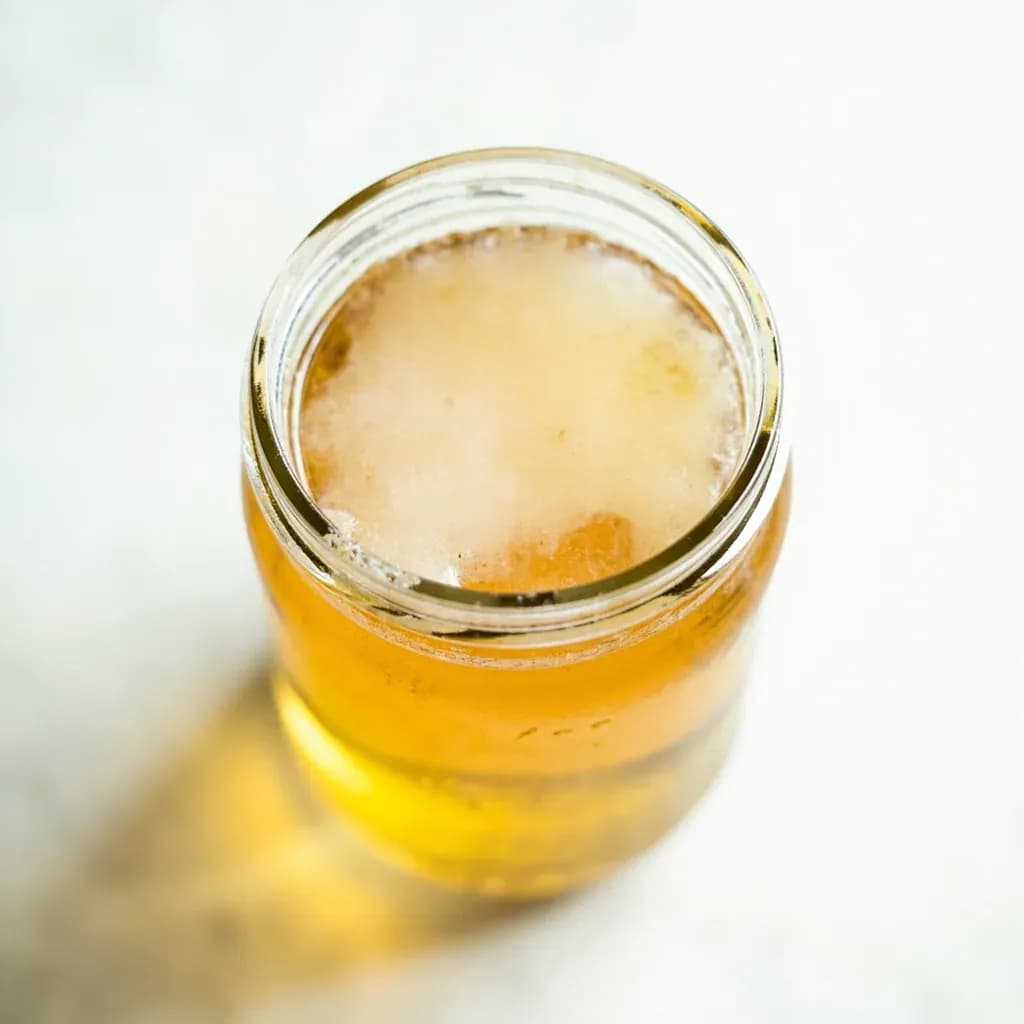
Wild vinegar-making exposes a fermented alcoholic liquid, such as wine, cider, or fruit scrap brew, to air so naturally present acetobacter bacteria convert the alcohol into acetic acid. A 'mother' of cellulose forms on the surface as fermentation proceeds over weeks to months at warm temperatures. The result is a living, complex vinegar with depth that mass-produced versions lack.
Wild vinegar-making is the slow, open-air conversion of an alcoholic liquid into acetic acid by Acetobacter bacteria that arrive on their own — no purchased starter, no thermometer-controlled reactor, just a vessel, a breathable cover, and patience. The bacteria metabolize ethanol in the presence of oxygen and excrete acetic acid, transforming wine, cider, rice wine, malt, or mead into something sharper, more shelf-stable, and entirely new. It is among the oldest food biotechnologies still practiced, with documented vinegar production in ancient Babylon, Egypt, and China, and the slow Orleans barrel method codified in 17th-century France.
The process behaves very differently from baking or brewing: the working organism needs air, not a sealed environment, and the final product is measured by acidity rather than sugar depletion. A wide, shallow vessel is faster than a deep one because surface area is where the bacteria do their work. Temperature matters more than recipe: below 60°F the culture stalls, above 85°F it dies. A successful batch is signaled by a gelatinous cellulose mat — the so-called mother of vinegar — forming on the surface, and by the gradual replacement of fruity, vinous aromas with a clean, sharp bite.
For cooks, wild vinegar-making is rewarding precisely because it is forgiving. There is no need to chase a precise gravity or pitch a yeast packet. A leftover bottle of unsulfited wine, some hard cider, or even a small jug of rice wine can become a year-supply of house vinegar with nothing more than a crock, cheesecloth, and a warm corner of the kitchen. The catch is time: even a quick batch runs six weeks, and the most complex barrel-aged vinegars take years. But once the culture is established, it tends to keep a kitchen supplied indefinitely, and the mothers you save become heirlooms of a sort.
- Difficulty
- Medium
Types & varieties
Slow barrel fermentation, typically in oak with a small hole at the top for air and sampling; produces the smoothest, most complex vinegars and remains the gold standard for artisanal producers.
Submerged fermentation with forced oxygenation; rare at home but the basis of nearly all industrial vinegar production.
The most common base; wild fermentation of table wine yields the classic European-style vinegar used in French and Italian cooking.
Fermented hard cider; often the first wild vinegar a home cook attempts, and among the easiest to culture thanks to apples' friendly microflora.
Fermented rice wine such as sake or mijiu; acetobacter work readily in this medium and produce a delicate, slightly sweet vinegar.
Fermented malted barley; the traditional British base with a deep, almost bready acidity suited to fried fish and pickles.
Made from berry, fig, or stone-fruit wines; requires careful sugar management to reach enough alcohol for the bacteria to act on.
Fermented mead; long and slow but yields a uniquely floral acetic acid prized for dressings and shrubs.
Traditional tropical version fermented from coconut water or sap, often seeded with the mother from a previous batch.
How to do it
- 1
Choose and prepare the alcoholic base
Start with a clean, unsulfited wine, hard cider, rice wine, or mead at 5–10% ABV. If using a sulfited commercial wine, briefly aerate it and let it sit open for 24 hours to let the sulfites dissipate. Dilute higher-proof spirits with filtered water to reach the target range; the sweet spot is 7–9%.
- 2
Select the right vessel
Use a wide-mouthed glass carboy, food-grade ceramic crock, or traditional oak barrel. Avoid reactive metal, non-food-grade plastic, and any lid that seals. The vessel should be wide relative to its depth to maximize oxygen contact. Sanitize with boiling water or a dilute vinegar rinse — never soap, which will flavor the batch.
- 3
Pour and cover
Fill the vessel no more than three-quarters full to leave a large surface area exposed to air. Cover the opening with a double layer of cheesecloth or breathable linen and secure with a rubber band or string. This admits oxygen while keeping out fruit flies, dust, and debris.
- 4
Wait for wild colonization
Place the vessel in a warm, dark, draft-free spot between 65–80°F (18–27°C). Within 1–3 weeks a thin gelatinous film — the mother of vinegar — should begin forming on the surface. This is wild Acetobacter establishing itself. Do not disturb the surface film; the wild bacteria are still colonizing the liquid.
- 5
Monitor and taste
After 4–6 weeks, begin tasting weekly. The wine's fruity character will fade and a sharp, acetic bite will develop. Optionally, test pH with strips — finished vinegar typically lands between 2.4 and 3.4. Smell for clean, sharp acidity; musty, putrid, or cheesy odors signal contamination and the batch should be discarded.
- 6
Strain and bottle
Once the desired acidity is reached — usually 2–4 months from start — strain the vinegar through a fine mesh or cheesecloth to remove the mother, and bottle in clean dark glass with a non-reactive cap. Seal tightly; oxygen left in the bottle will continue fermentation and slowly degrade the flavor.
- 7
Reserve the mother for next time
Lift out the cellulose mother, rinse it gently with cool filtered water, and store it in a small jar of finished vinegar, or drop it directly into your next batch to inoculate it instantly and skip the wait for wild colonization.
- 8
Age for complexity (optional)
For deeper, more mellow vinegar — especially red wine and balsamic-style — transfer finished vinegar to a small oak barrel or a glass jar with oak chips. Aging 6 months to several years softens the acidity and adds vanilla, caramel, and tannin notes.
The Mother of Vinegar
The gelatinous, pale disc that forms on the surface of a fermenting vinegar is called the mother, and it is the living factory of the process. It is a cellulose mat produced by Acetobacter, harmless, edible, and reusable. Lift it out with clean hands or a slotted spoon, rinse it gently with cool filtered water, and either store it in a small jar of finished vinegar or drop it straight into your next batch to inoculate it instantly — no waiting for wild colonization. Many cooks blend a piece into smoothies or eat it on bread for its tang and probiotic reputation. Commercially, you can buy a mother from any bottle of raw, unfiltered vinegar, which is the simplest way to guarantee a first-time batch in cold or very clean kitchens.
Why Vinegars Stall — and How to Rescue Them
A stuck vinegar is almost always traceable to one of three causes: temperature, alcohol, or sulfites. If the surface never forms a film after three weeks, the room is probably too cold — move the vessel to a warmer spot or wrap it loosely in a towel for insulation. If the liquid still smells boozy after two months, the starting ABV was likely too high; dilute with filtered water and reseed with mother or a splash of finished vinegar. If nothing happens at all, sulfites from a commercial wine may be suppressing the bacteria; aerate the wine for 24 hours before starting or switch to an unsulfited base. The rule of thumb: 7–9% ABV, 70–75°F, and a wide vessel will start almost every time.
Aging and the Limits of the Method
Wild fermentation gives you acetic acid; aging gives you character. A fresh two-month vinegar is bright and one-dimensional; six months to a year in oak or with oak chips softens the bite, rounds the edges, and draws out vanilla, caramel, and tannin notes. But it cannot give you true Aceto Balsamico Tradizionale, which begins as a cooked grape must, not a wine, and is aged 12 or more years through a solera of successively smaller casks. Quick-aged commercial 'balsamic' is usually wine vinegar with added caramel and a touch of concentrated grape must, finished in a few months. The two are not the same craft, and a wild fermenter should not expect one to become the other. What it can become is a deeply personal house vinegar — a red wine vinegar aged on oak for two years, a cider vinegar mellowed in a glass jar with a single charred oak stick — that no store sells.
History at a Glance
Vinegar is older than written history: traces of fermented acetic liquids have been found in ancient Egyptian sites, and the Babylonians used date vinegar as both a condiment and a preservative. The Orleans method — slow fermentation in wooden barrels with bungholes for air — became the standard across France in the 17th century and held until the 20th, when submerged-fermentation generators replaced slow barrels in commercial production. Today's home fermentation revival is, in many ways, a return to that older method, with glass carboys and ceramic crocks standing in for the oak of old.
Common uses
Tips & pitfalls
- Never use reactive metal (aluminum, copper, plain steel) — acetic acid will corrode it and ruin the batch.
- Cover with a breathable cloth like cheesecloth or linen secured with a rubber band; this admits oxygen while keeping out fruit flies and dust. A tight lid suffocates the bacteria and stalls the ferment.
- Reserve and reuse the gelatinous 'mother of vinegar' (cellulose mat) that forms on the surface — it jump-starts future batches and is itself edible.
- Chlorinated tap water can inhibit wild acetobacter; use filtered, spring, or previously boiled-and-cooled water when diluting high-proof bases.
- A wider surface area dramatically speeds fermentation — a shallow crock beats a deep bucket every time.
- If the liquid develops fuzzy mold, kahm yeast, or a foul (not sharp) smell, discard and start over. A clean, sharp, slightly sweet acetic smell is normal; a putrid, cheesy, or rotten smell is contamination.
- Taste-test weekly after month one; stop fermentation once desired acidity is reached by bottling and sealing. Letting it run too long can over-acidify the vinegar and create harsh, almost nail-polish-remover notes of ethyl acetate.
- Add a splash of finished vinegar or a piece of mother to inoculate reliably when ambient bacteria are scarce — cold winters, very clean kitchens, or urban apartments with filtered air.
- Sulfites in commercial wine suppress acetobacter; either use unsulfited wine, aerate for 24 hours, or seed with mother to overcome them.
- Higher-alcohol bases yield more total vinegar but ferment more slowly; the ideal starting range is 7–9% ABV.
Good to know
- Key Organism
- Acetobacter aceti and related species, which oxidize ethanol into acetic acid using atmospheric oxygen
- Ideal Temperature
- 65–80°F (18–27°C); below 60°F fermentation stalls, above 85°F risks killing bacteria
- Starting ABV
- 5–10% ethanol; above 12% acetobacter activity is inhibited
- Time
- 6 weeks to 6 months depending on volume, temperature, and starting alcohol
- Final Acidity
- Typically 4–8% acetic acid; most commercial vinegars are standardized to 5%
- Yield
- Roughly 1 liter of vinegar per liter of wine, minus evaporation losses of 5–15%
- Equipment
- Wide-mouthed food-grade vessel (glass, ceramic, or oak); breathable cloth cover; never reactive metal containers
- Storage
- Sealed dark glass bottles, away from light; keeps indefinitely once fully acidic
Also called
Wild Vinegar Fermentation · Acetic Fermentation
Related

Confit
Cook slowly submerged in fat for silky tenderness and keeping

Cure
Draw out moisture with salt and time to preserve and concentrate

Pickle
Steep in acidic brine for bright, tangy, crunchy preservation

Ferment
Let friendly microbes transform food into tangy, complex flavor

Marinate
Soak in a seasoned mix to flavor and tenderize before cooking

Brine
Soak in salt water so meat stays juicy and seasoned throughout

Dehydrate
Slowly dry out moisture to concentrate flavor and extend shelf life

Cold-Smoke
Perfume cured food with smoke without cooking it through