Northern Europe
British Farmhouse & Pub Tradition
Also: British pub food, English farmhouse cooking, British country cooking
Robust, pastoral, and deeply seasonal — a tradition of pastry-encased pies, slow-braised meats, sharp farmhouse cheeses, and the pub as a communal dining room that stretches back centuries.
British farmhouse and pub cooking is the vernacular tradition of rural England, Wales, and lowland Scotland — a cuisine of resourcefulness, preservation, and seasonal abundance rather than refinement. It is built around the products of mixed farming (beef, pork, lamb, game), the baking traditions of the farmhouse kitchen (pies, pastry, bread), and the structural role of the public house as both inn and dining room since the medieval period. While French-trained chefs have historically dismissed it, the tradition encompasses genuinely sophisticated products: the aged territorial cheeses (Cheddar, Stilton, Cheshire, Lancashire), the regional pie traditions (Melton Mowbray pork pie, Cornish pasty), the game cookery of the shooting estates, and the slowly perfected real ale culture that pairs with and shapes the food.
The flavour base
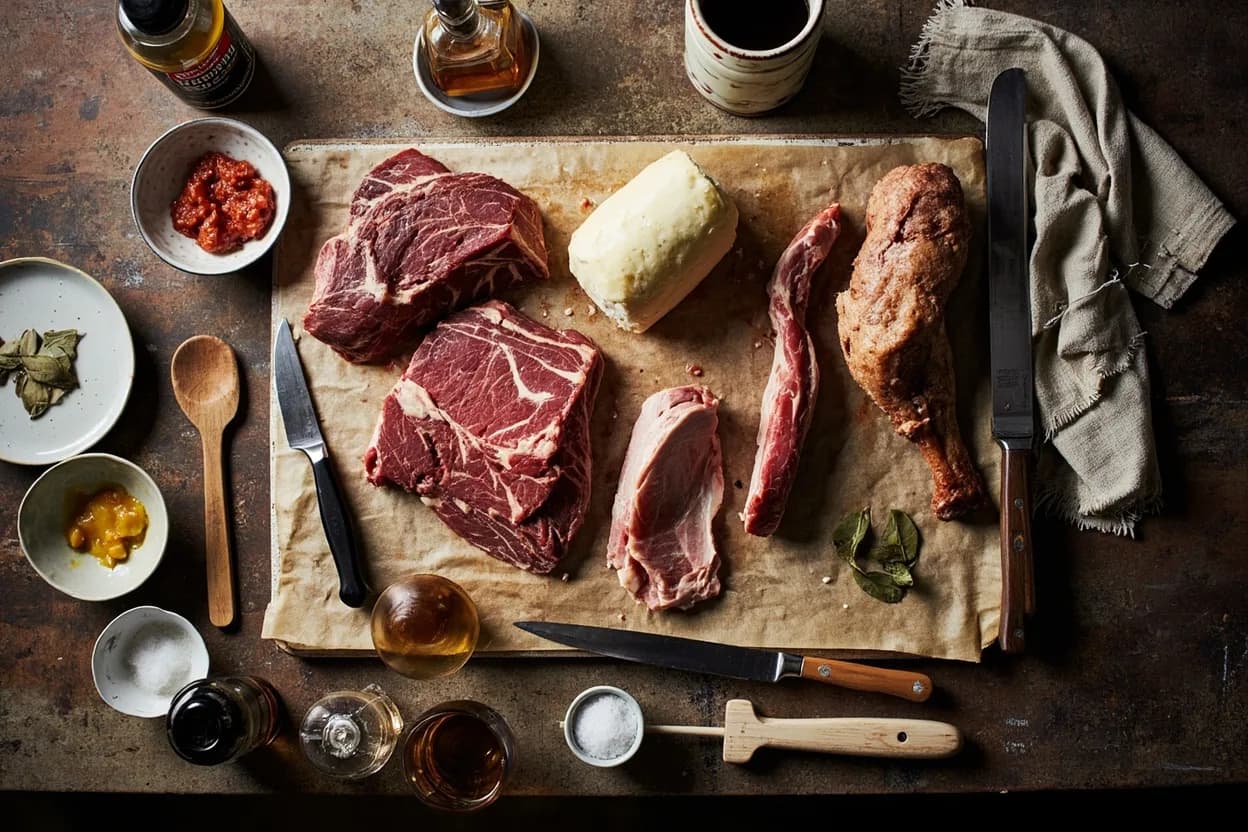
Aromatics are restrained by Mediterranean standards — onion, carrot, celery (mirepoix equivalents), bay leaf, thyme, and parsley underpin most braises and soups. Mustard (English yellow mustard, notably Coleman's) and horseradish are essential condiment pillars. Worcestershire sauce adds deep umami to gravies, pies, and marinades. Malt vinegar and pickled condiments (piccalilli, Branston pickle, pickled onions) provide the acid counterpoint.
Pantry staples
Key ingredients
Signature techniques
Signature dishes
British Farmhouse & Pub Tradition on the table
At the table
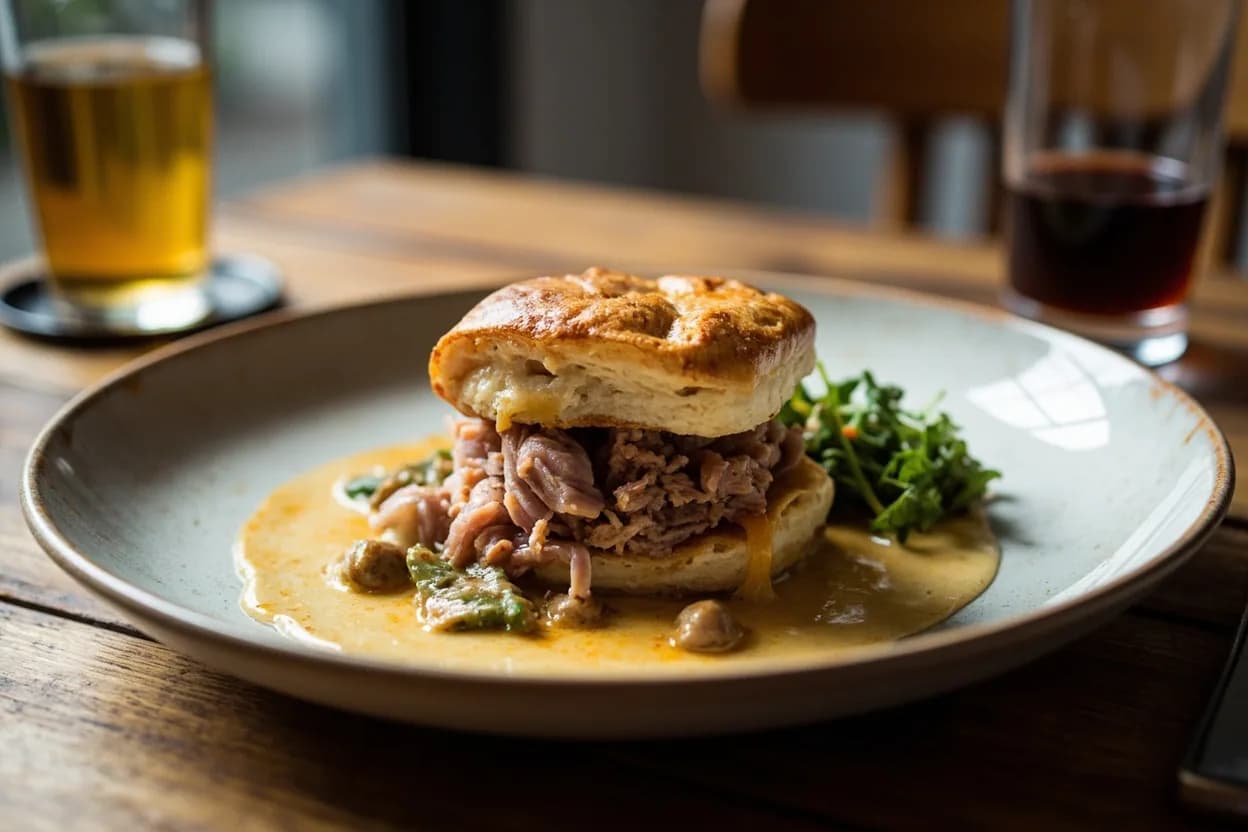
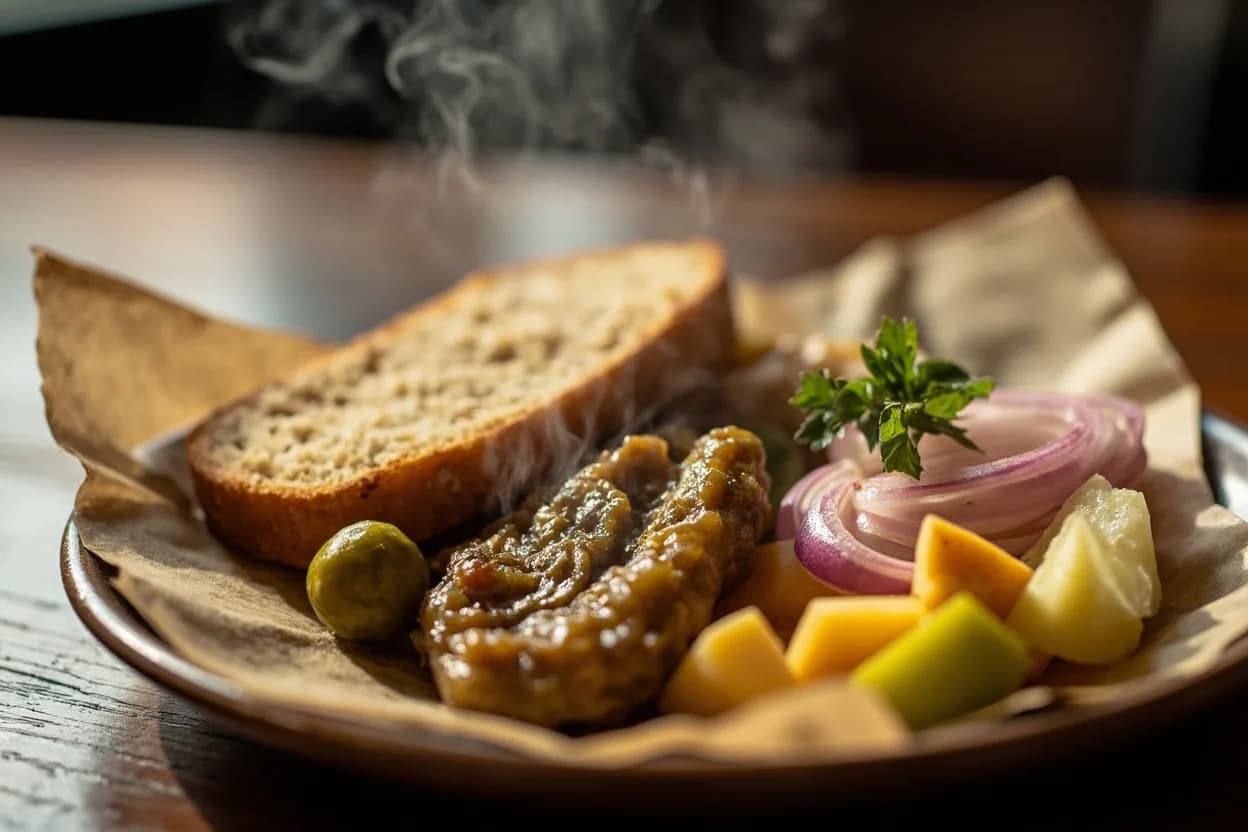
The traditional farmhouse meal structure runs from a hearty breakfast (cooked or porridge), a midday dinner as the main meal (especially for farm workers), and a lighter supper. The pub's contribution was the ploughman's lunch — originally a cold assembled plate of bread, cheese, and pickle eaten by agricultural workers — and later hot bar meals: pies, bangers and mash, fish and chips on Friday. Sunday roast (joint of meat, roast potatoes, Yorkshire pudding, seasonal vegetables, gravy) is the week's ceremonial meal across all classes.
History & context
Medieval English cookery was defined by the spice trade influence on aristocratic tables and the robust pottages of the peasant kitchen. The enclosure of common land from the 16th century onward concentrated food production, shaping a regional farmhouse economy. The 18th century saw the golden age of English cheesemaking — Cheddar, Stilton, Cheshire, and Gloucester all achieved their canonical forms in this period, often tied to specific farming regions. The Industrial Revolution disrupted farmhouse cooking by pulling labor into cities, but the pub tradition expanded correspondingly, becoming the working-class dining room. The 20th century saw post-war food rationing (1940–1954) homogenize British cooking in ways that took decades to undo; the 1980s gastropub movement and later the farm-to-table revival of the 2000s restored respectability to this tradition.
Regional variations
- Cornwall
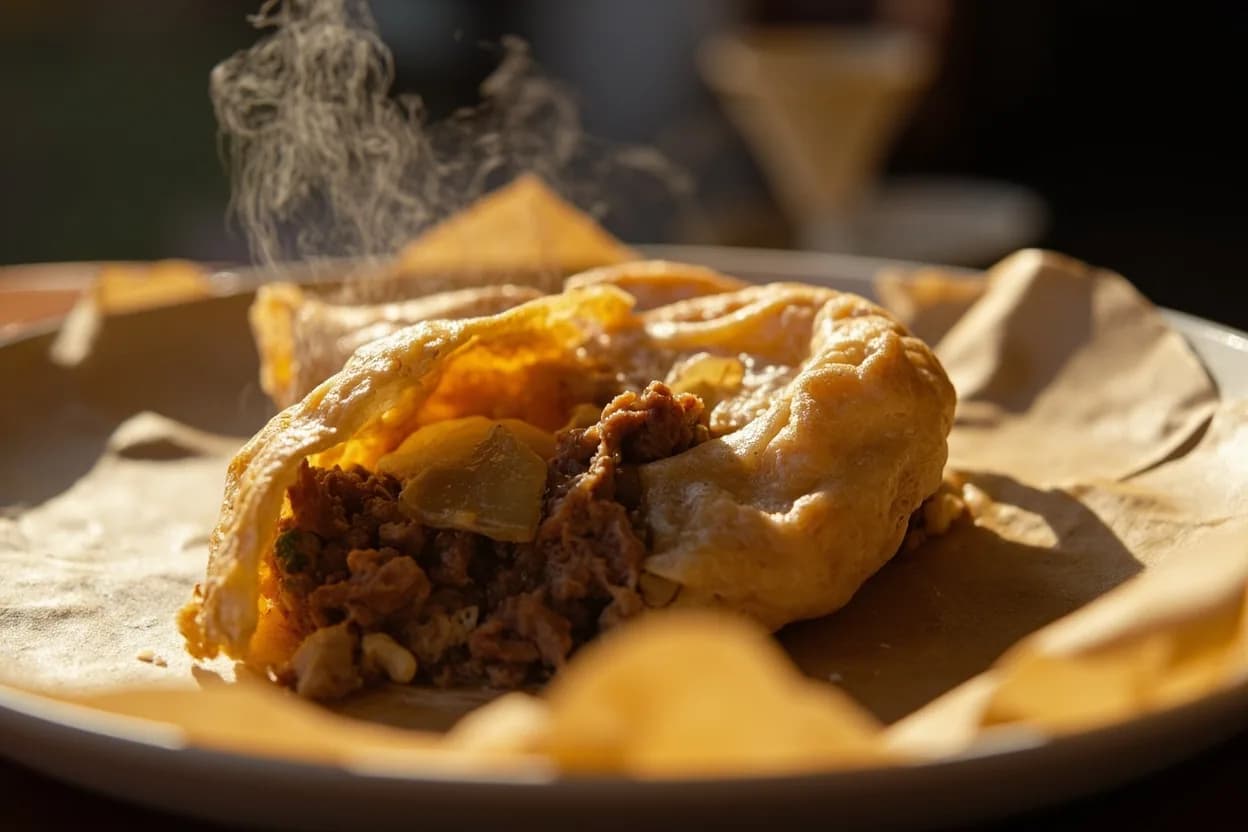
Cornish pasty culture (protected geographical indication since 2011) — crimped on the side, filled with skirt beef, potato, swede, onion, no carrot; the thick crimp was historically a handle for tin miners' dirty hands.
- Lancashire and the North West
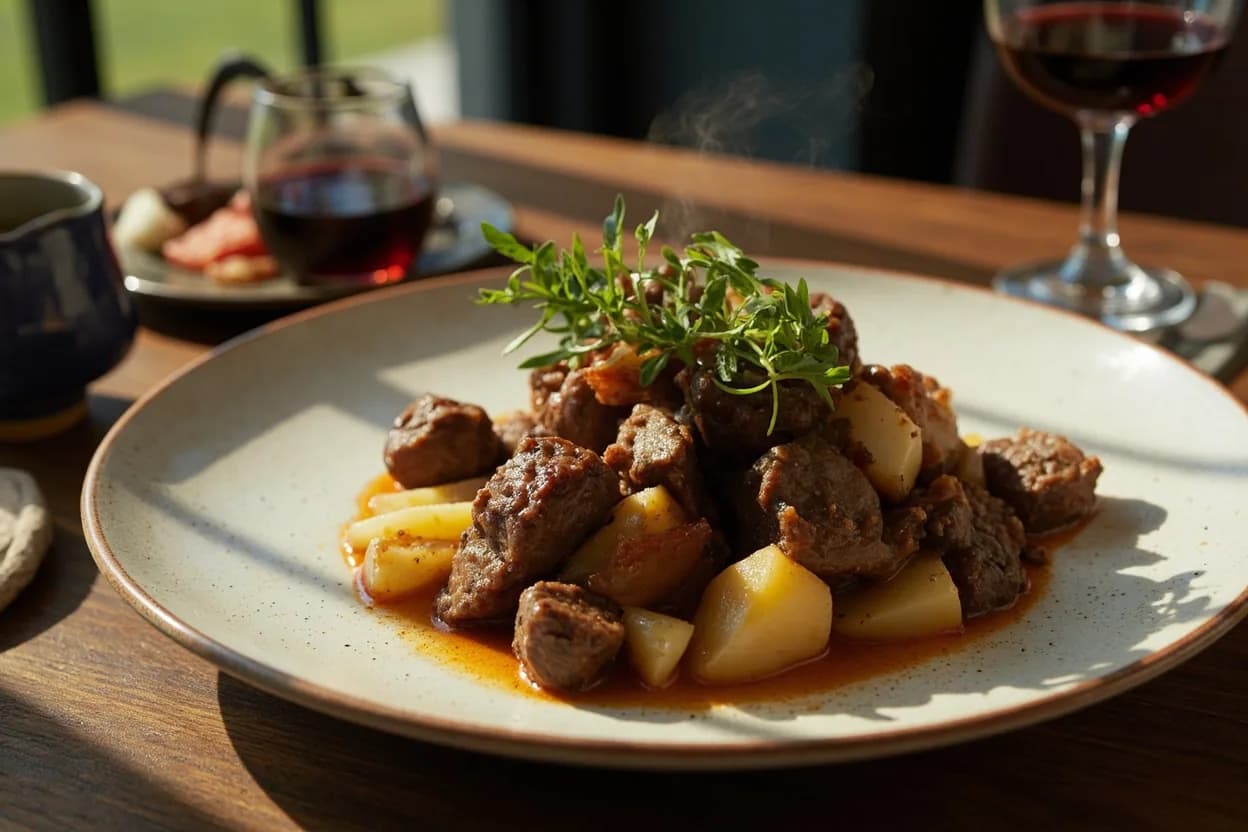
Lancashire hotpot (lamb scrag end under sliced potato crust), black pudding (Bury market), Eccles cakes, and the distinct Lancastrian cheese tradition (crumbly Lancashire cheese).
- Leicestershire (Melton Mowbray)
Home of the Melton Mowbray pork pie — PGI protected, using uncured (pink not grey) pork and a freestanding hot-water crust without a mold.
- Wales
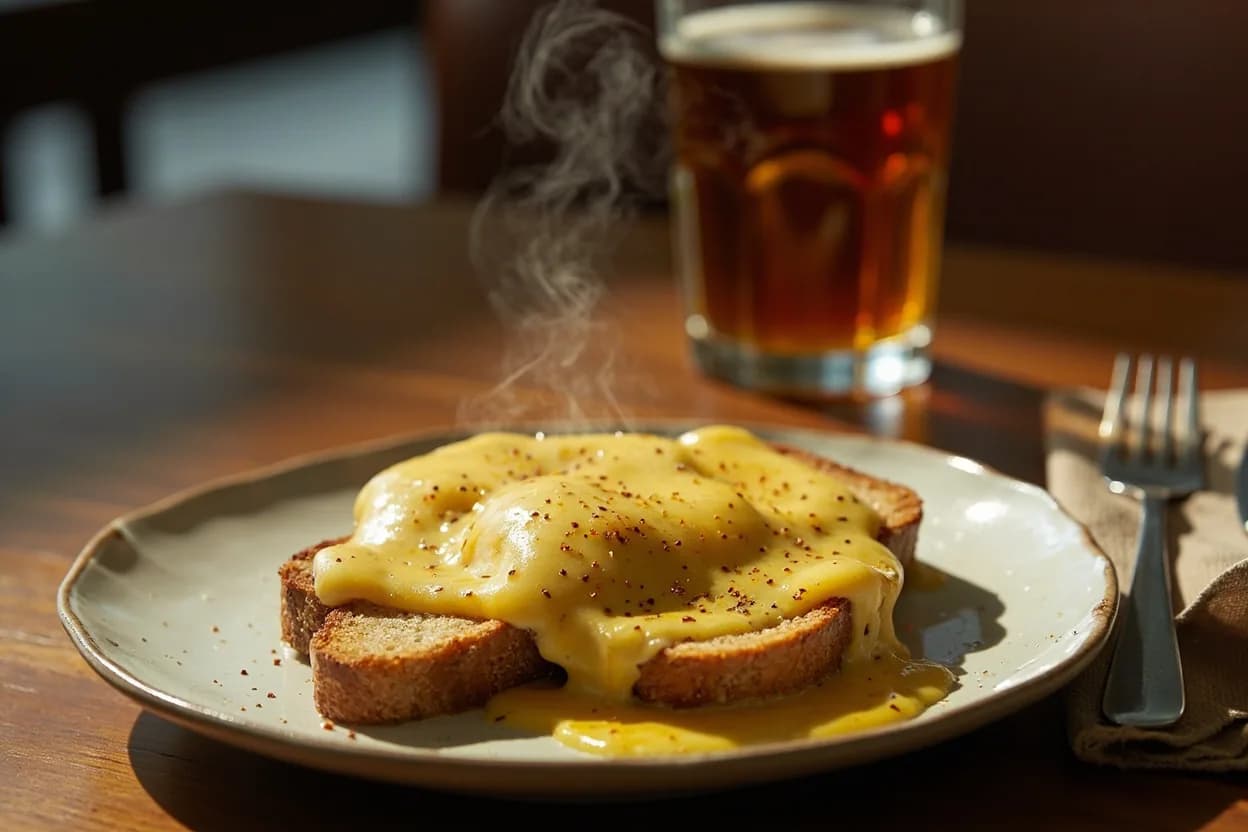
Welsh rarebit, bara brith (currant bread), cawl (lamb and leek broth), laverbread (seaweed purée eaten with bacon and cockles), and distinctive salt marsh lamb.
Related cuisines
- Irish
Shares the British farmhouse staple base (potato, lamb, dairy) with distinct preparations — Irish stew, soda bread, colcannon — and a stronger pork tradition.
- Scottish
Shares the game, oats, and preserved fish traditions but diverges in haggis, Cullen skink (smoked haddock soup), and the distinctive bannock and shortbread baking.
- French Norman
Cross-Channel trade shaped both traditions; cider (Normandy and Kent/Hereford), cream, and apple cookery traditions share common roots; the medieval spice trade reached both.
- Belgian
Pub culture, beer-braised meats, and robust pie traditions connect the two; moules frites vs. fish and chips are parallel street food paradigms.
Canonical recipes
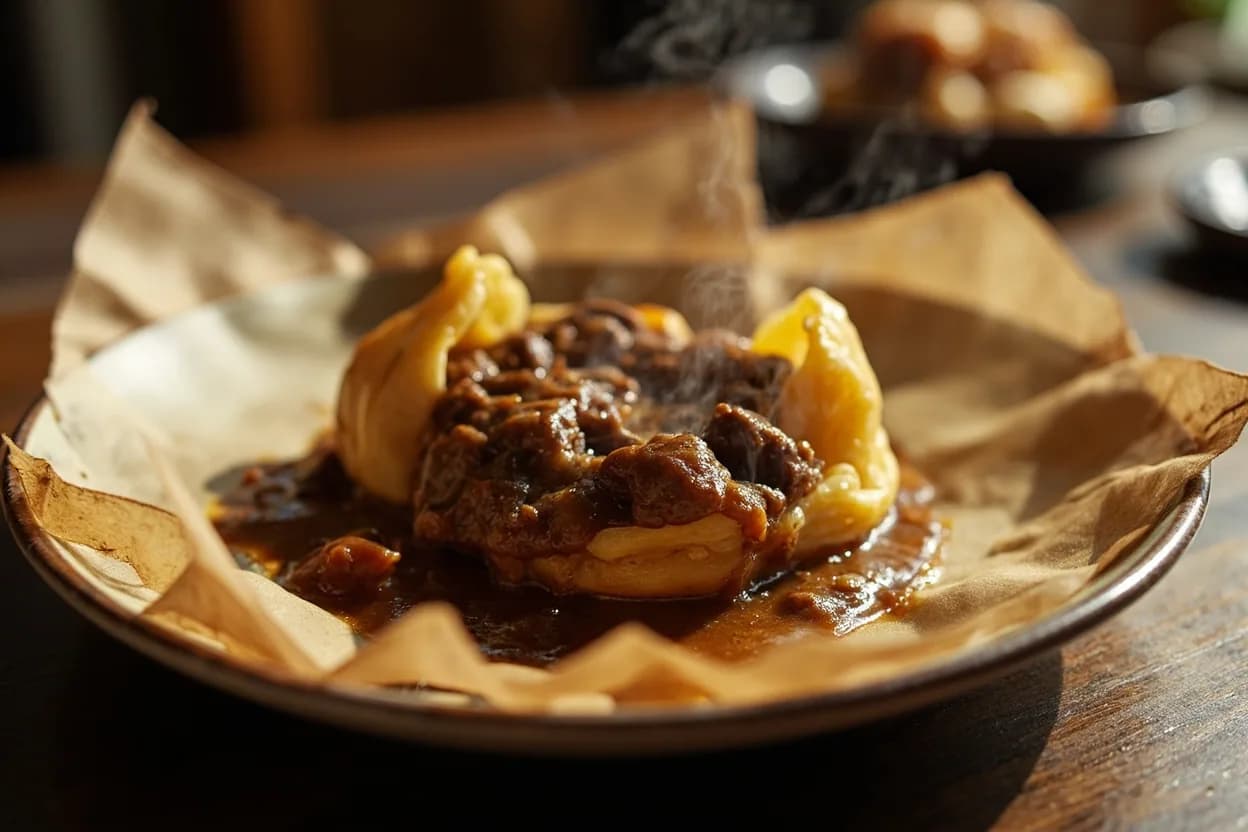
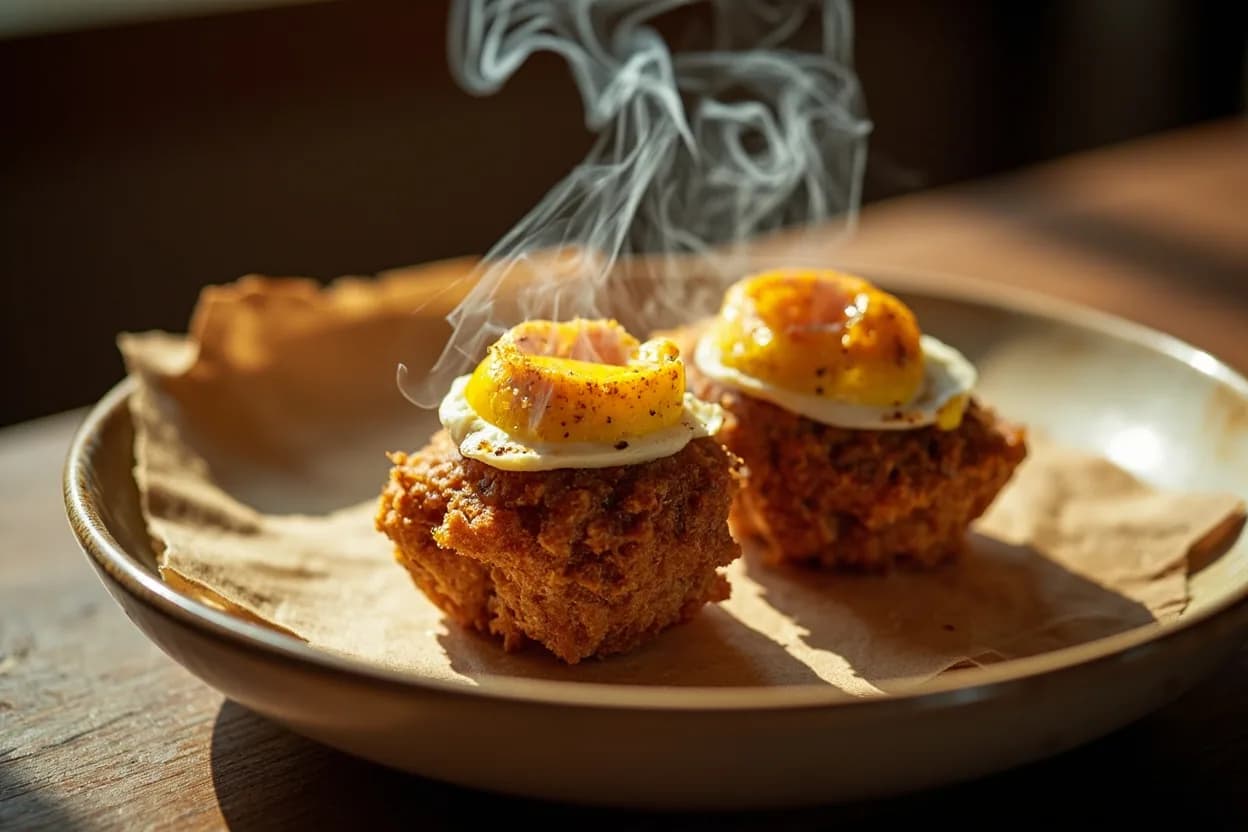
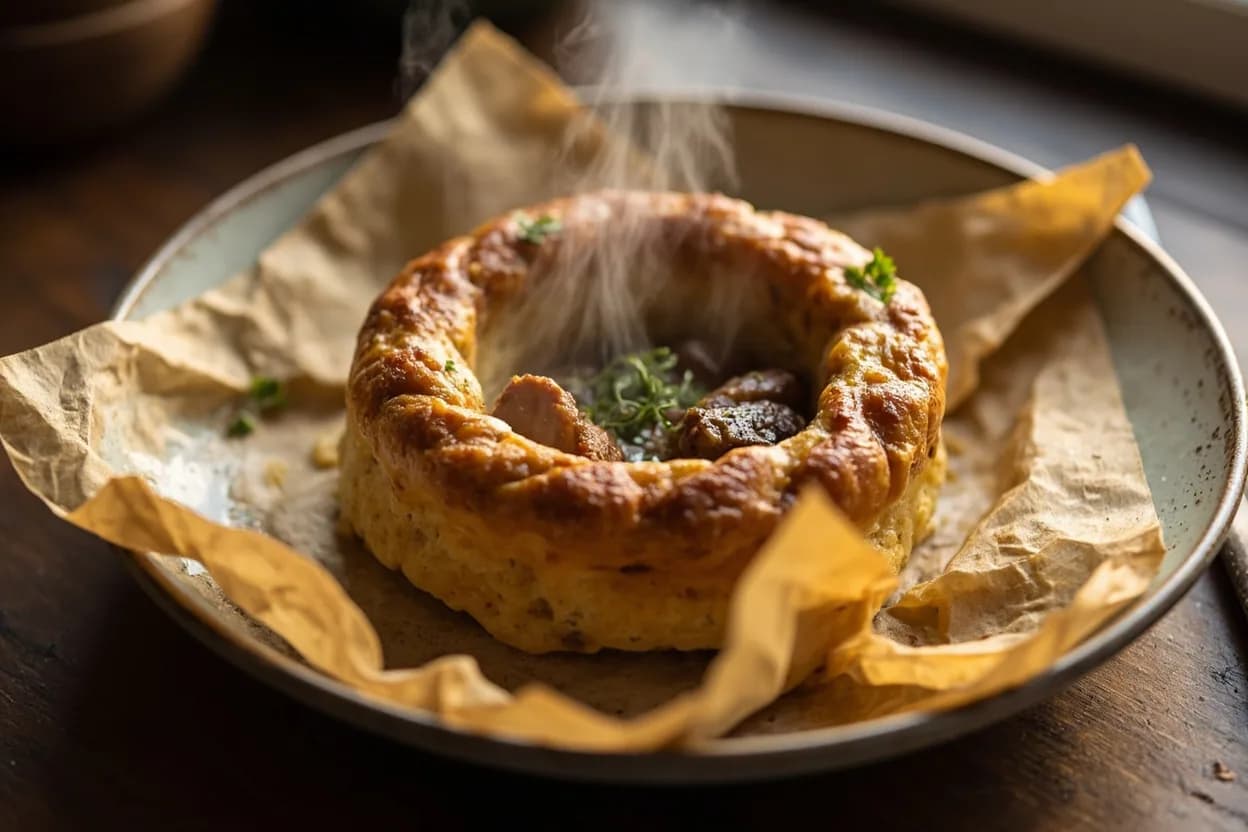
The dishes that define British Farmhouse & Pub Tradition, documented in the Canon.
References
- 1.English Food — Jane Grigson
- 2.The Complete Nose to Tail — Fergus Henderson
- 3.British Food: An Extraordinary Thousand Years of History — Colin Spencer
- 4.Real Pub Food — Mark Hix
- 5.The Oxford Companion to Food — Alan Davidson
Confidence: high
Notes
The ploughman's lunch: invented tradition
The 'ploughman's lunch' has the quality of an ancient rural meal but was partly invented or at least codified by the Cheese Bureau (a trade marketing body) in the 1960s to promote British cheese consumption in pubs. The components — bread, cheese, pickle, apple or tomato — are genuinely old, but the assembled plate as a pub staple was commercially promoted. This does not diminish its cultural reality: it is now one of the most representative expressions of British pub food.
Real ale and food pairing
British cask-conditioned ale ('real ale') has a flavor spectrum — from the biscuity, low-bitterness milds of the Midlands to the hop-forward IPAs of the 18th-century India trade and the roasty stouts of Ireland and London — that maps precisely onto the farmhouse food tradition. Cheddar and a pint of bitter; Stilton and a glass of port; steak and kidney pie with a dark mild: these are not accidental pairings but a long-established material culture of matching. CAMRA (Campaign for Real Ale, founded 1971) has been the institutional guardian of this tradition.