East Asia
Jeju Island Cuisine
Also: 제주 음식, Jeju Food, 제주도 음식
The volcanic island food of Korea's southernmost province — shaped by haenyeo divers, black Berkshire pork, and a maritime isolation that forged a culinary identity unlike anywhere on the mainland.
Jeju Island (Jeju-do) sits 90 kilometers south of the Korean peninsula in the Korea Strait and bears the marks of its volcanic geology, its temperate subtropical climate, and centuries of relative isolation. Jeju cuisine is defined by three pillars: haenyeo (해녀) — the women free-divers who harvest abalone, sea urchin, conch, and sea cucumber from the cold surrounding sea without breathing equipment; Heukdwaeji, the native black Berkshire pork raised on the island and prized for extraordinary fat marbling; and Hallabong, a mandarin-type citrus exclusive to Jeju's volcanic soil. The cuisine is simpler, less banchan-heavy, and more ingredient-focused than mainland Korean styles, reflecting the island's historic poverty and self-reliance.
The flavour base
Seafood-forward: raw abalone, sea urchin roe, and conch provide oceanic salinity; doenjang and ganjang are used but often in lighter quantities; garlic and ginger are present but secondary to ingredient purity. Pork preparations rely on fat rendering and minimal seasoning to honor the meat's quality.
Pantry staples
Key ingredients
Signature techniques
Signature dishes
Jeju Island Cuisine on the table
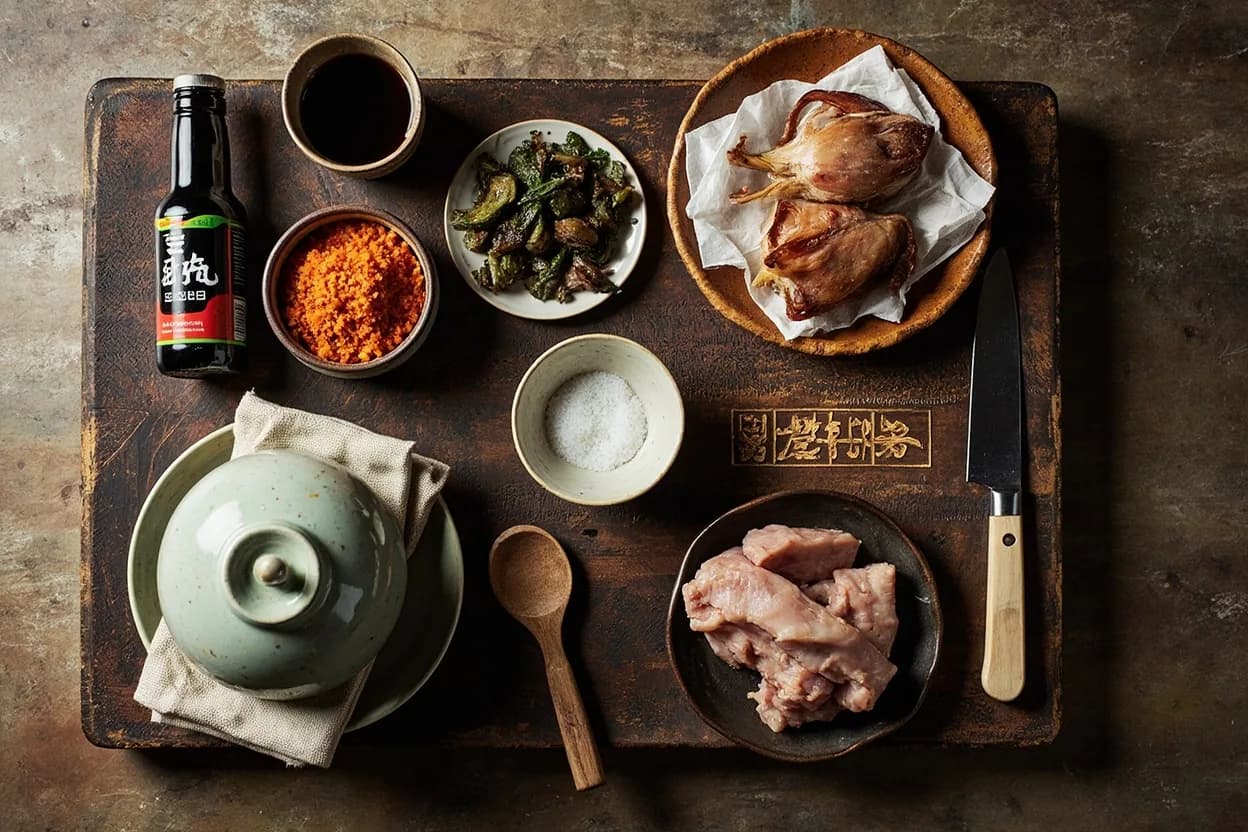
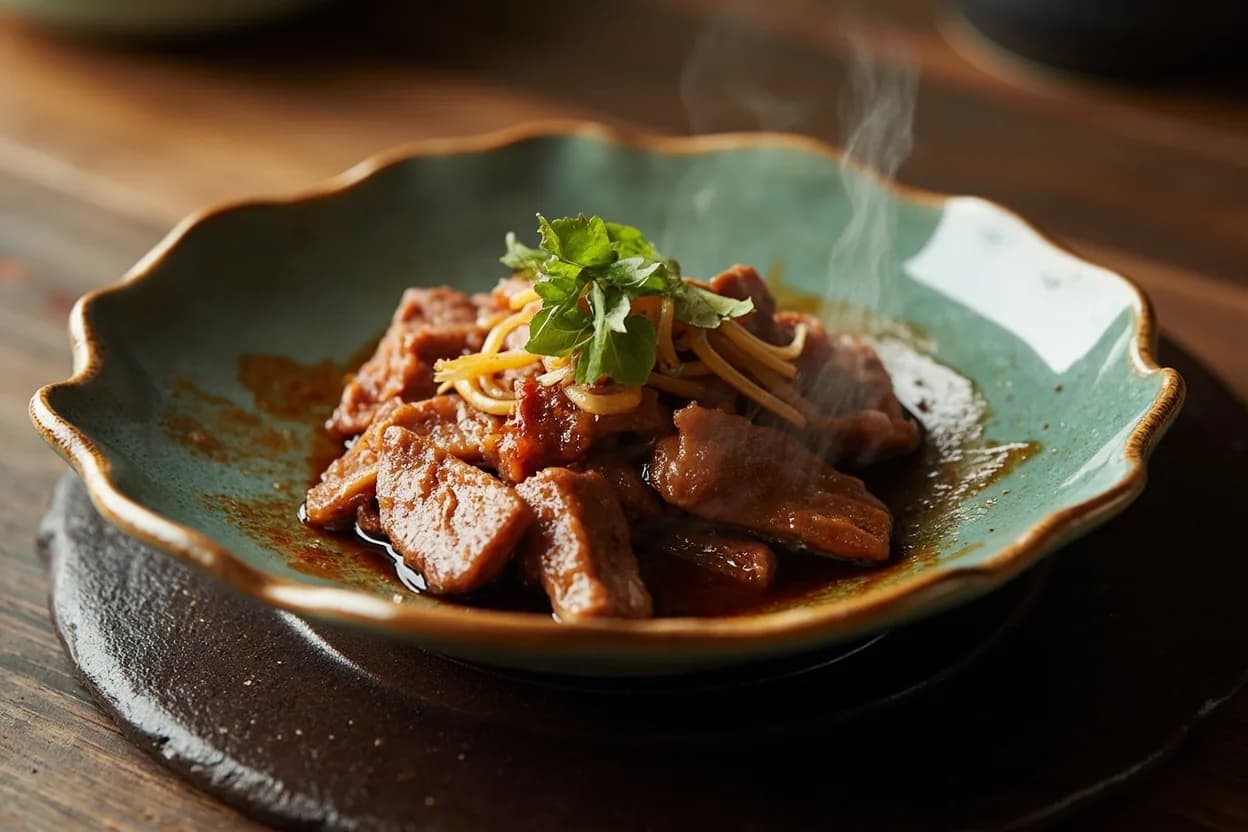
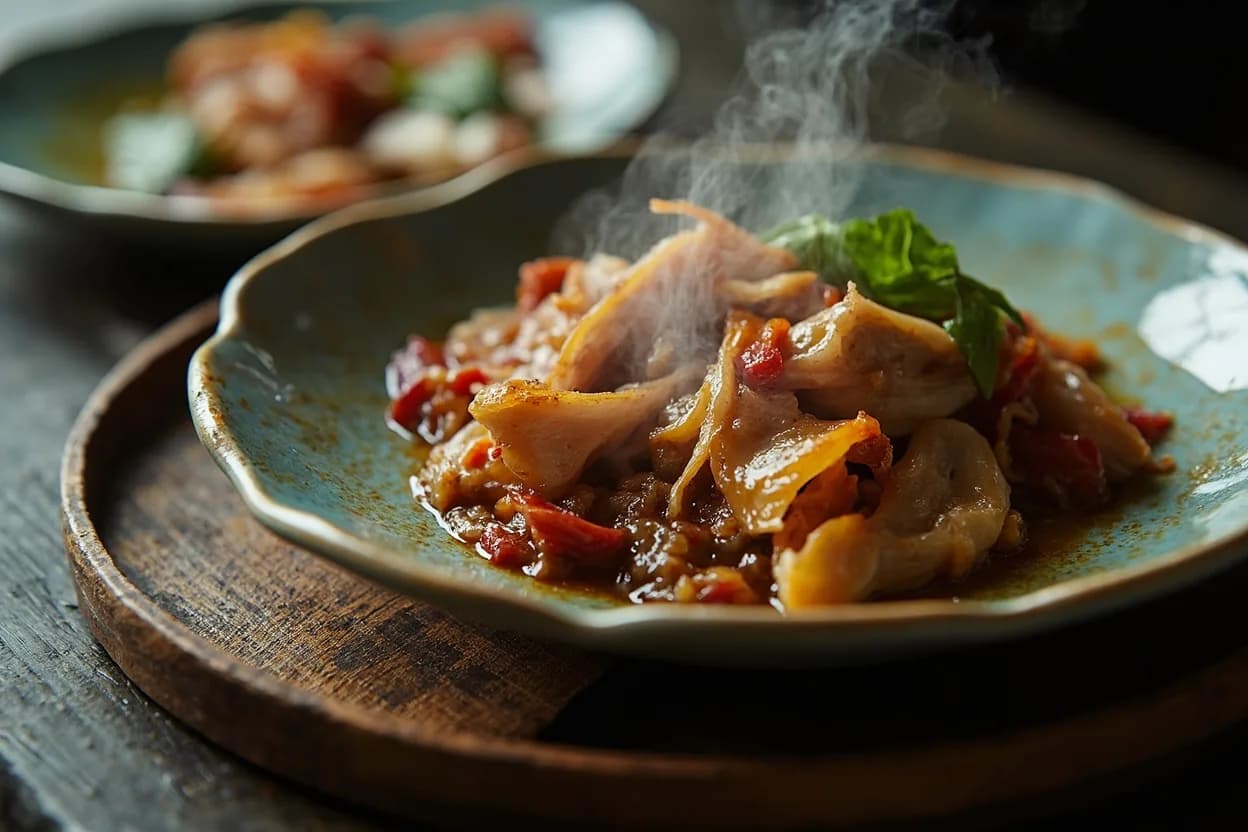
At the table
Jeju meals are traditionally simpler than mainland Korean tables: fewer banchan, more emphasis on the quality of central ingredients. A typical meal centers on a bowl of rice or porridge, a seafood or pork main, and two to three side dishes. Hoe (raw seafood) is eaten as a standalone meal or appetizer course with soju. Haenyeo traditionally eat communally at bulteok (seaside warming huts) after diving sessions, sharing simple meals of raw seafood and doenjang soup.
History & context
Jeju was an independent kingdom (Tamna) from ancient times until its absorption into the Goryeo dynasty in 938 CE and later Joseon rule. The island's relative isolation — it was a place of exile for Korean scholars and officials — meant it developed distinct language (Jeju-eo, now critically endangered), customs, and food traditions. The haenyeo tradition of women divers is ancient, documented from the 17th century, and matriarchal household structures were common since women were the primary seafood earners. Heukdwaeji pigs, introduced from Chinese black pig stock, adapted to the volcanic terrain. Jeju was designated a UNESCO Biosphere Reserve in 2002, and haenyeo culture was inscribed on UNESCO's Intangible Cultural Heritage list in 2016. Tourism since the 1990s has made Jeju cuisine internationally visible, particularly its black pork street restaurants in Jeju City's 'Black Pork Street' (흑돼지 거리).
Regional variations
- Jeju City (north)
Urban hub with concentration of heukdwaeji restaurants and tourist-facing haenyeo seafood markets; galchi jorim is a city staple.
- Seogwipo (south)
More traditional; Hallabong and citrus culture centered here; closer proximity to Cheonjiyeon waterfall and traditional village food.
- Eastern coastal villages
Haenyeo communities strongest here; raw seongge (sea urchin) most prized fresh from the boat.
Related cuisines
Administratively, Jeju was historically linked to Jeolla province; some fermentation traditions overlap, but Jeju's cuisine is distinctly insular and ingredient-purity focused.
- Japanese Cuisine
Haenyeo (called ama in Japan) tradition also exists in coastal Japan; Jeju and Japanese maritime food cultures share raw seafood emphasis and seaweed use, though with distinct culinary traditions.
- Korean Royal Court Cuisine
Jeju abalone was a prized tribute item to the Joseon royal court; the island's primary export was dried abalone and horses.
References
- 1.Jeju Island Food Culture — Jeju Development Institute research series
- 2.Haenyeo: Women of the Sea — Underwater photography documentary research (Sejong Books)
- 3.UNESCO Intangible Cultural Heritage — Culture of Jeju Haenyeo (women divers), 2016
- 4.The Food of Korea — David Clive Price
Confidence: high
Notes
Haenyeo and food sovereignty
The haenyeo are among the oldest examples of sustainable seafood harvesting in the world. They dive without tanks (up to 10 meters, 30+ meter dives for elite divers), set quotas by season and location, and historically managed Jeju's marine commons collectively. Their catch — abalone, sea urchin, conch, sea cucumber — goes directly to markets or consumed fresh. The youngest haenyeo today are typically in their 50s; the tradition faces demographic collapse.
Heukdwaeji: why it tastes different
Jeju black pork (Heukdwaeji) is a heritage breed distinct from commercial Korean pork. The pigs are raised outdoors and traditionally fed citrus pulp and barley. The intramuscular fat is unusually fine-grained, giving a sweeter, richer flavor than standard samgyeopsal. Authentic heukdwaeji from Jeju cannot be replicated with mainland pork — the combination of breed genetics, feed, and volcanic-mineral water is considered non-transferable.