East Asia
Japanese Nabemono (Hot Pot Traditions)
Also: nabe, naberyori, Japanese hot pot
Japan's communal one-pot tradition, simmered at the table and shared across generations from sumo stables to snow-country farmhouses.
Nabemono — literally 'things in a pot' — encompasses all Japanese dishes cooked communally in a single ceramic or cast-iron vessel set over a portable burner at the dining table. Far more than a cooking method, nabemono is a social ritual: each diner adds ingredients to the simmering broth, retrieves them at their preferred doneness, and dips them in personalised sauces. The tradition is anchored in seasonality (winter is nabe season), regional identity, and the philosophy that convivial eating repairs the spirit as surely as it warms the body.
The flavour base
Dashi — broth built from kombu and katsuobushi, or the richer torigara (chicken) or tonkotsu (pork) stocks depending on the variant — is the common denominator. Individual nabe styles then layer in soy sauce, sake, mirin, and miso in different ratios to produce distinct broths (sukiyaki's sweet-soy warishita, shabu-shabu's near-plain konbu dashi, chanko's hearty chicken-soy stock, oden's soy-dashi).
Pantry staples
Key ingredients
Signature techniques
Signature dishes
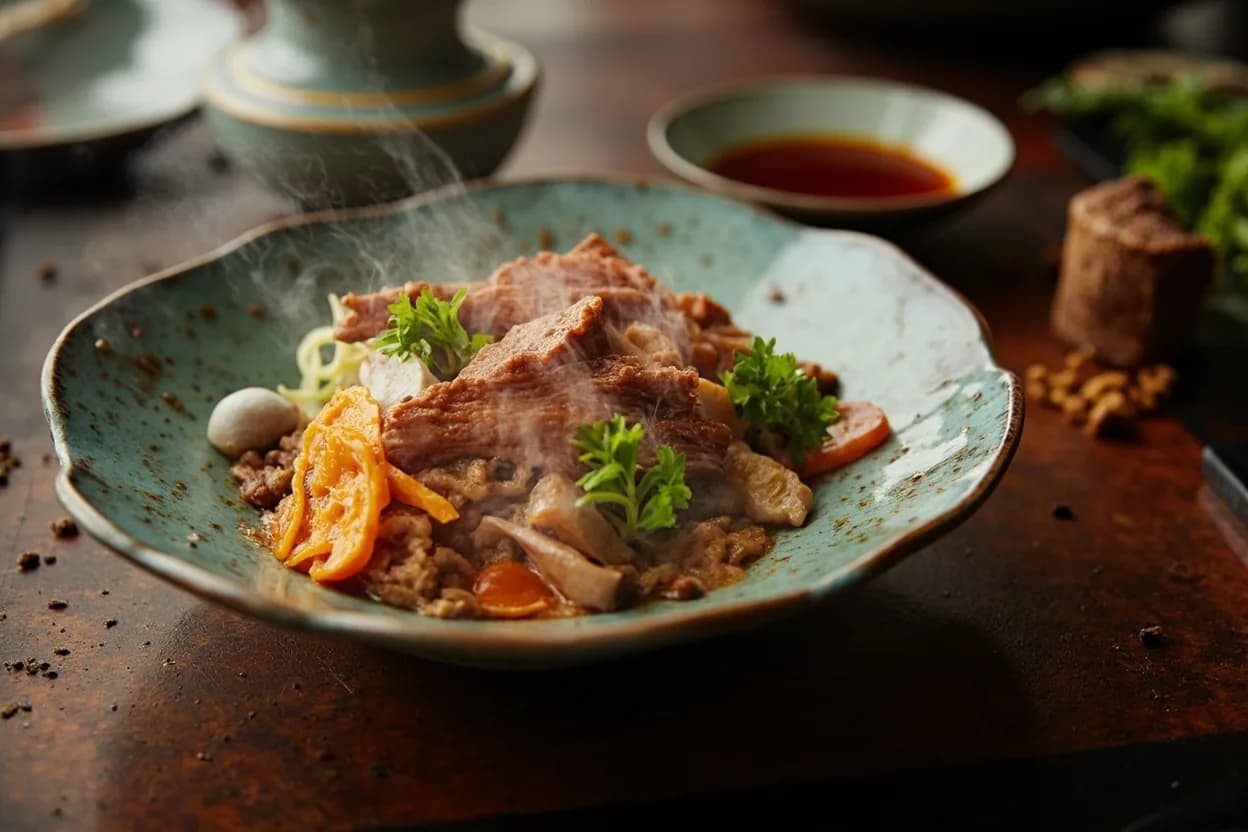
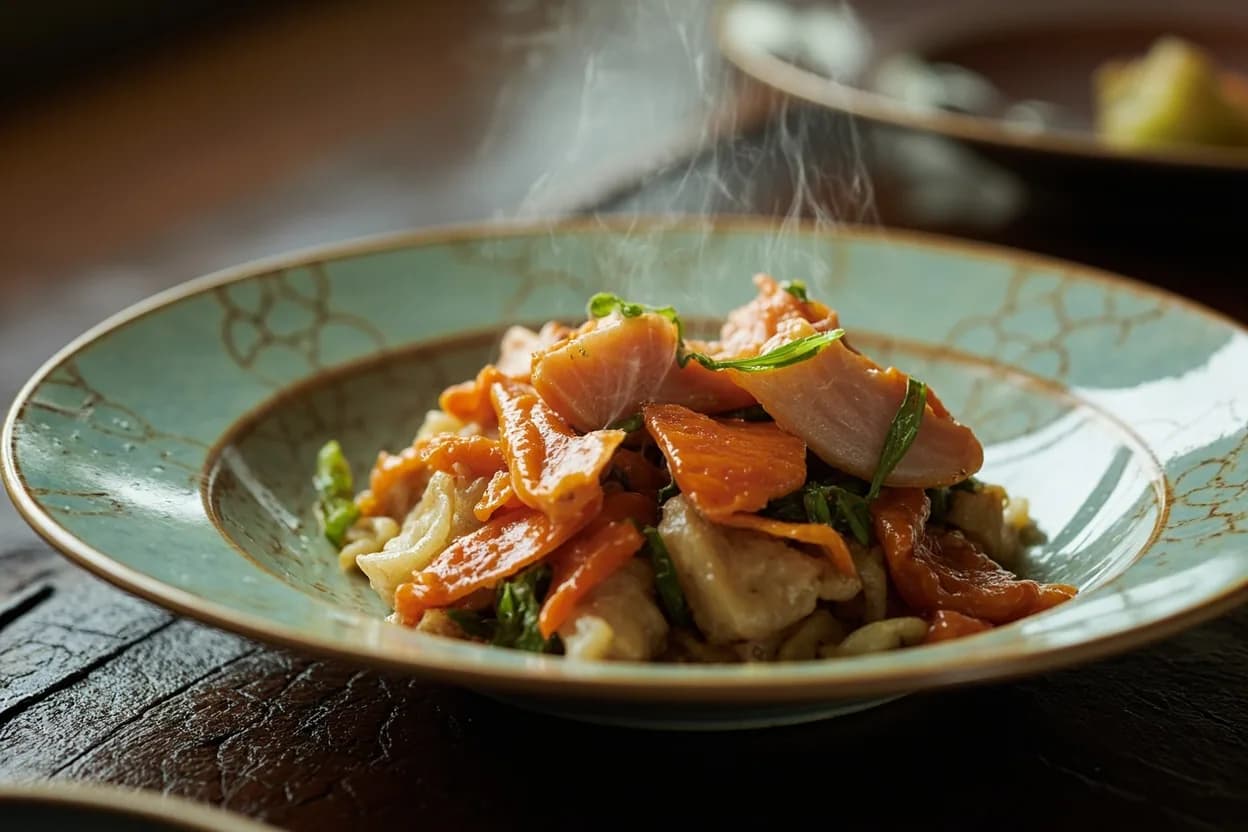
Japanese Nabemono (Hot Pot Traditions) on the table

At the table
Nabemono is typically the centrepiece of the meal rather than a course within it. A spread of raw ingredients is arranged around the communal pot; a dipping-sauce station (ponzu with grated daikon and momiji oroshi for shabu-shabu; raw egg for sukiyaki) is set per diner. Drinking accompanies the cooking; the meal ends with a締め: leftover broth becomes zosui (rice porridge) or receives udon or ramen noodles to absorb every drop of flavour.
History & context
Nabemono's roots lie in the Heian-period practice of boiling food over charcoal in iron pots. By the Edo period, roadside nabe stalls (nakamise nabe-ya) served labourers tofu and offal nabe, making hot-pot eating a cross-class pleasure. Sukiyaki spread widely after the Meiji restoration normalised beef consumption; shabu-shabu, popularised mid-20th century in Osaka's Suehiro restaurant, derives from a Chinese rinsed-mutton tradition (shuàn yángròu). Chanko nabe, the high-calorie stew of sumo stables, entered civilian restaurants in the Showa era as retired rikishi opened eating houses. Oden — long-simmered fish cakes and root vegetables — is now as common from convenience-store counter warmers as from specialist restaurants.
Regional variations
- Hokkaido (Ishikari)
Miso-based broth with salmon, potatoes, and butter — reflecting Ainu land ingredients and the dairy farming of the north.
- Akita (Kiritanpo)
Pounded rice shaped onto skewers, grilled, then simmered with gobo burdock and Hinai jidori chicken in a clear soy broth.
- Fukuoka (Motsu Nabe)
Offal (beef or pork intestine) simmered in a garlic-soy or miso broth with garlic chives and cabbage; a post-war yatai staple turned city icon.
- Kyoto (Yudofu)
Austere temple-cuisine nabe: silken tofu barely simmered in kombu broth, eaten with a delicate ponzu — purity over richness.
- Tokyo / Kanto (Oden)
Long-simmered fish cakes, daikon, konnyaku, and eggs in a pale soy-dashi; seasoning is lighter than Kansai-style oden, which uses sweeter soy.
Related cuisines
- Chinese Hot Pot (Huǒguō)
The ancestor of the rinse-in-broth technique; Sichuan málà and Mongolian copper-pot variants directly influenced shabu-shabu's origins.
- Korean Jeongol
Communal Korean hot pot traditions share the doneness-on-demand table cooking of nabemono.
- Taiwanese Shabu-Shabu
Heavily influenced by Japanese occupation-era nabemono; remains a widespread dining format in Taiwan.
Canonical recipes
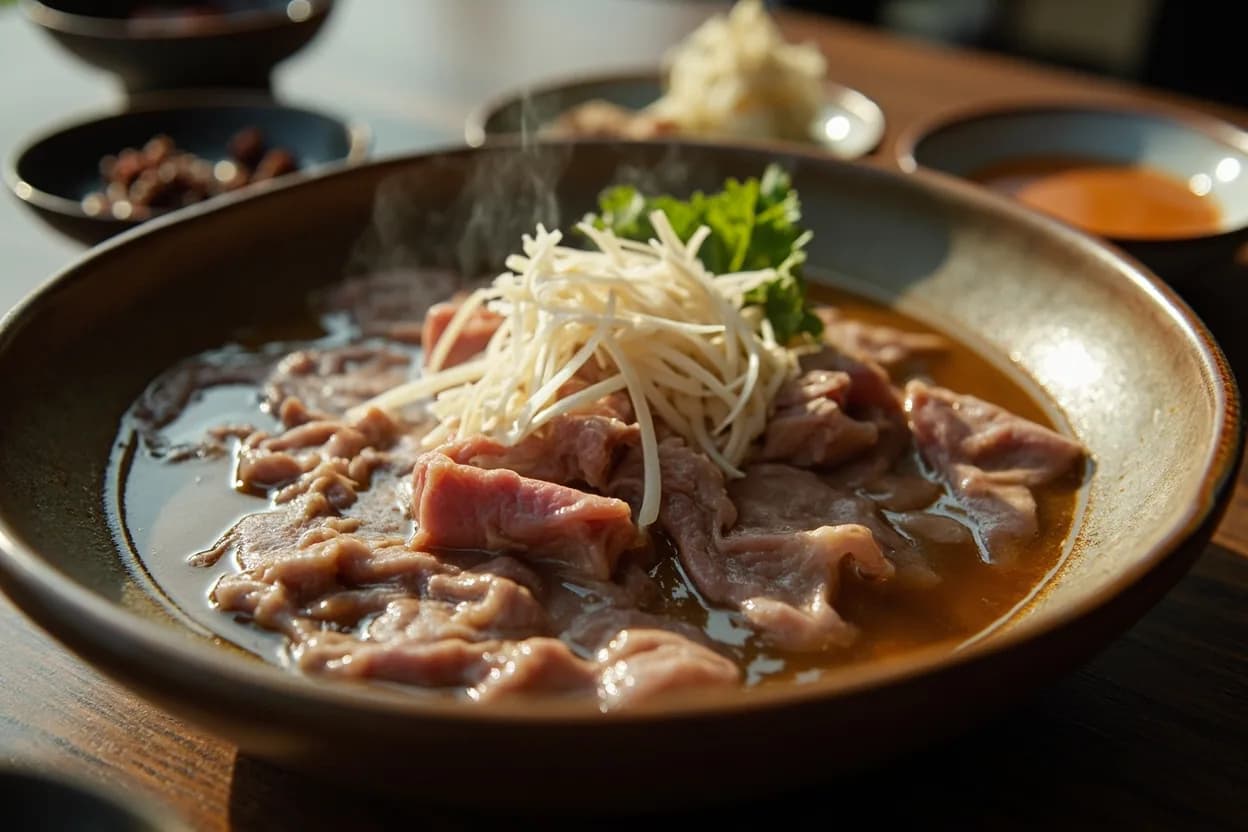
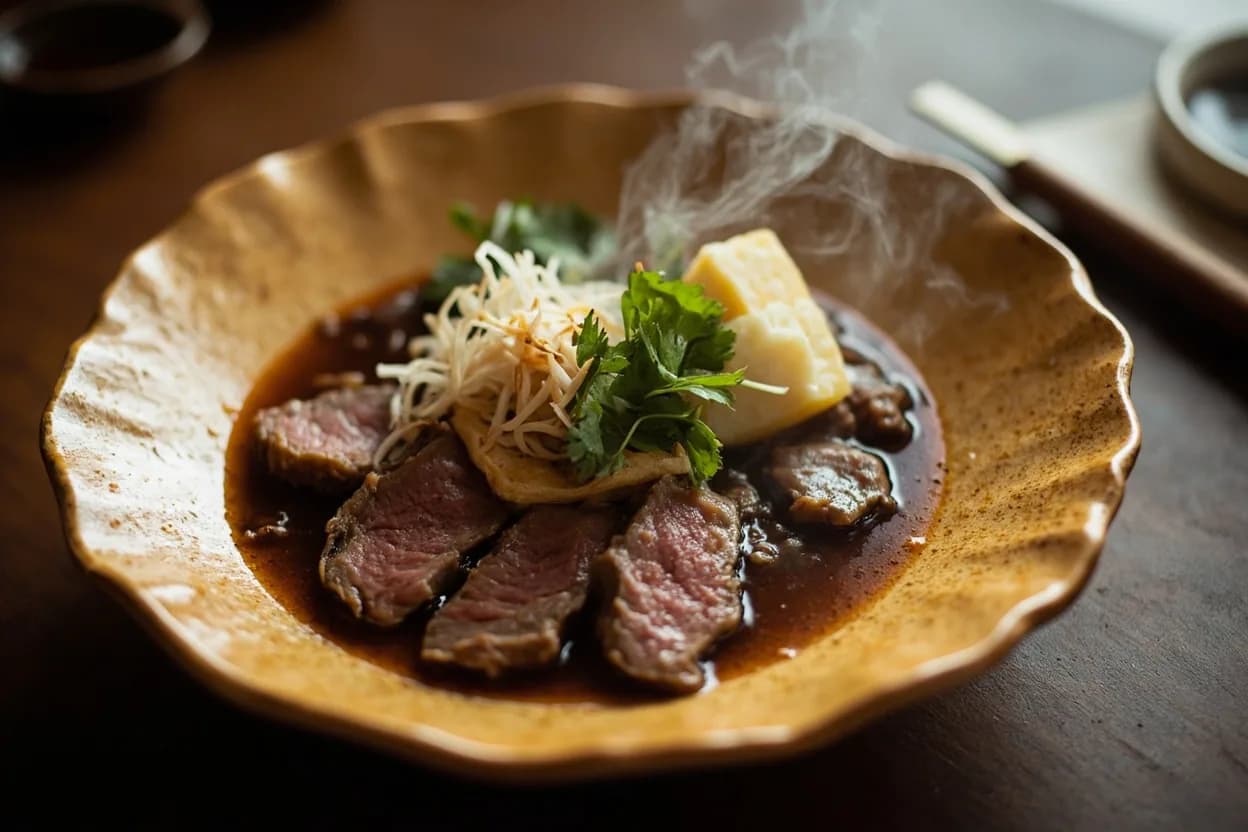
The dishes that define Japanese Nabemono (Hot Pot Traditions), documented in the Canon.
References
- 1.Japanese Farm Food — Nancy Singleton Hachisu
- 2.The Japanese Kitchen — Hiroko Shimbo
- 3.Washoku: Recipes from the Japanese Home Kitchen — Elizabeth Andoh
- 4.Nabe: The Ultimate Guide to Japanese Hot Pot — Makiko Itoh
Confidence: high
Notes
The締め (Shime) Principle
No nabe meal is considered complete without consuming the enriched residual broth. Adding rice and egg to make zosui, or dropping in fresh udon, transforms what would be waste into the meal's most flavourful course — an embedded sustainability ethic disguised as comfort food.
Seasonal Anchoring
Nabemono is so firmly associated with cold weather that the phrase 'nabe no kisetsu' (nabe season) is used without irony in Japanese media to announce autumn's arrival. The summer nabe (hiyashi shabu-shabu — chilled shabu with sesame sauce) exists but is decidedly niche.