Southeast Asia
Mon Cuisine (Myanmar-Thailand Borderlands)
Also: Mon cooking, Raman cuisine, Peguan cuisine, food of the Mon people
One of mainland Southeast Asia's oldest culinary foundations — the Mon people's rice, fermented fish, and herb-driven cooking that seeded both Thai and Burmese traditions.
Mon cuisine is the cooking of the Mon people, an Austroasiatic ethnic group who were among the earliest inhabitants of the Southeast Asian lowlands and whose kingdoms (Dvaravati in Thailand, Thaton and Pegu in Burma) dominated the region before the rise of the Bamar and Tai peoples. Mon cooking is technically ancestral to large segments of both Thai and Burmese cuisine — fermented fish sauce (ngapi/nam pla tradition), sticky rice usage, herb-intensive cooking, and betel leaf wrapping all trace through Mon culture. Today Mon communities are concentrated in Mon State (Myanmar) around Mawlamyine, and in Kanchanaburi and Ratchaburi provinces of western Thailand, where they maintain distinct cooking traditions. The cuisine is defined by restraint, freshness, and fermentation — less chili-forward than neighboring Burmese or Thai cooking, more herb-driven and sour.
The flavour base
Fermented fish paste (ngapi for Mon-Burmese communities, pla ra for Mon-Thai communities) forms the foundational umami base; galangal, lemongrass, and fresh turmeric provide aromatic structure; tamarind and raw lime bring acidity; fresh herbs (mint, sawtooth coriander, basil) are applied abundantly at service.
Pantry staples
Key ingredients
Signature techniques
Signature dishes
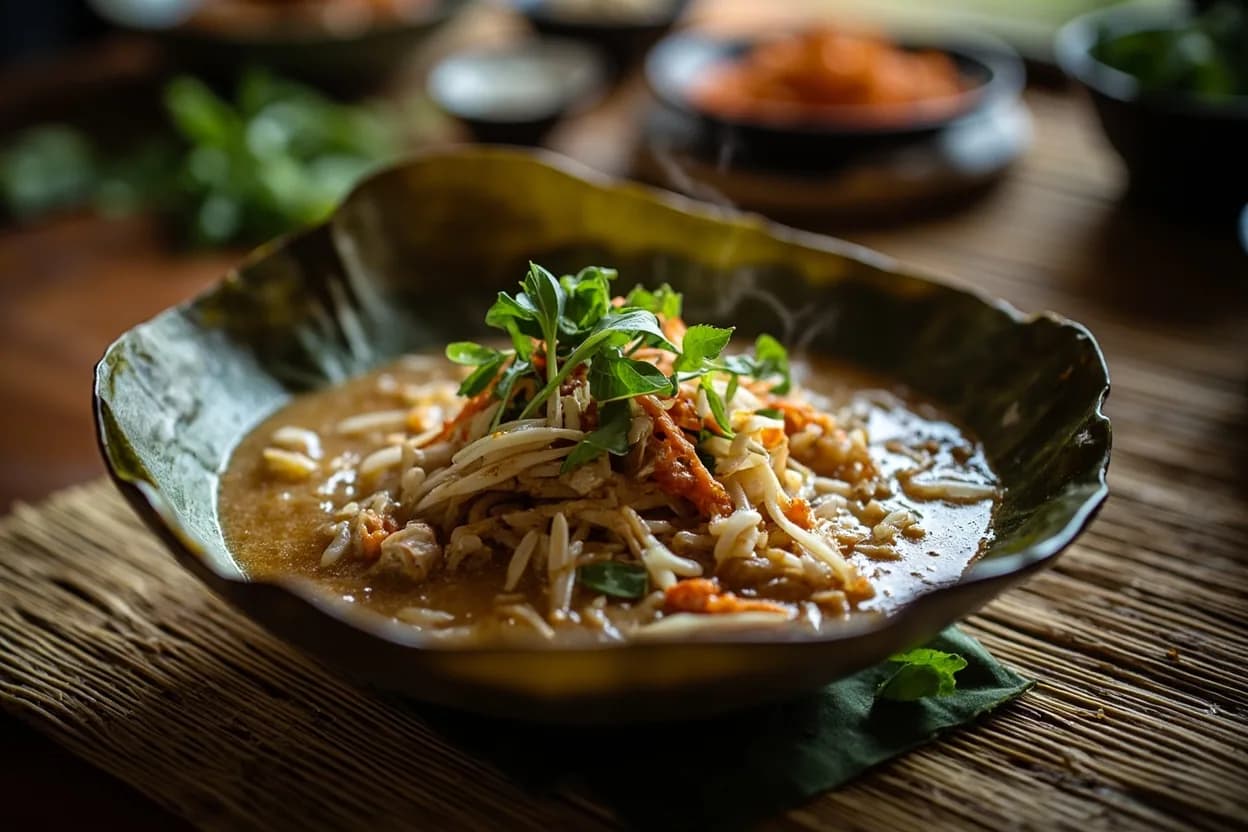
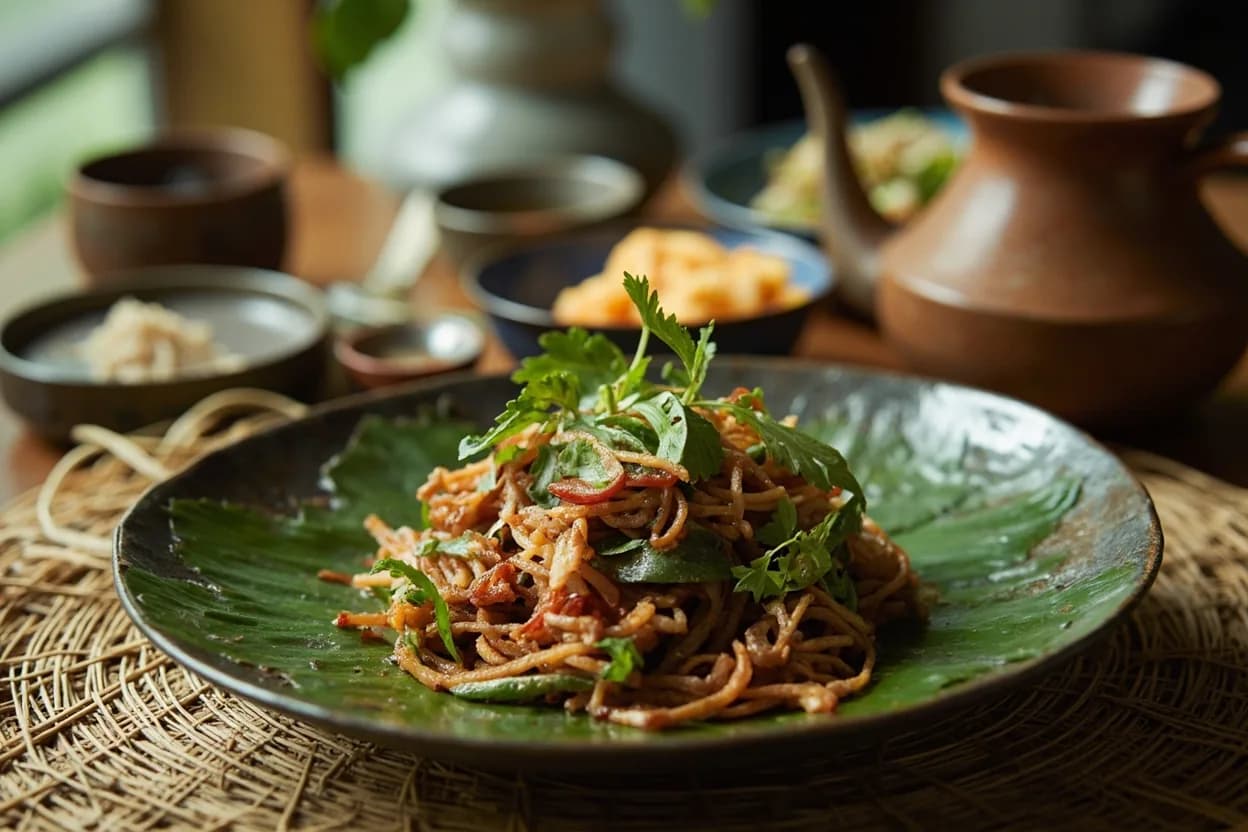
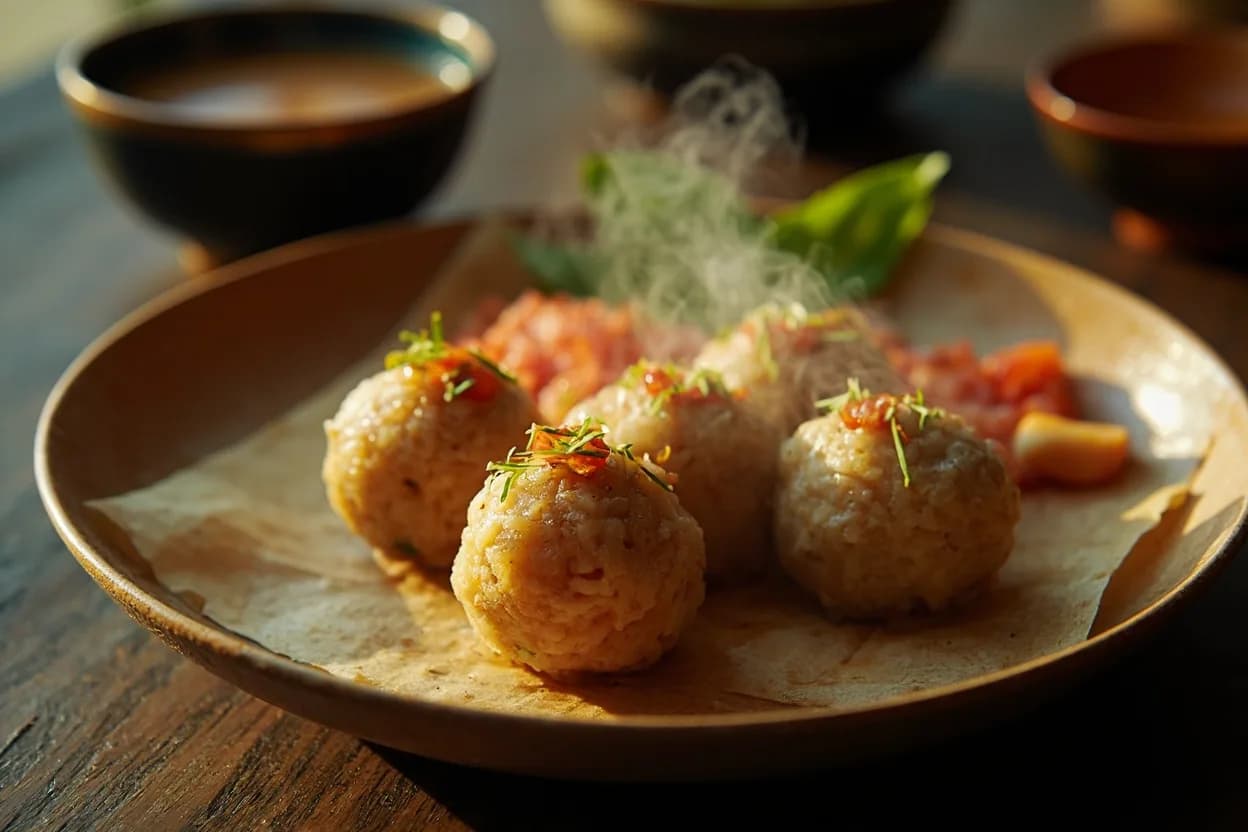
Mon Cuisine (Myanmar-Thailand Borderlands) on the table

At the table
Mon meals are rice-centered and communal, eaten with shared dishes at the center — a model consistent with broader mainland Southeast Asian practice. Freshness and balance are prioritized: a meal typically pairs a cooked fish or meat dish with raw herb salads, a relish (ngapi yay for dipping raw vegetables), and a clear soup. Fermented rice (htamin jin) eaten at room temperature with condiments is a common Mon-specific format. Snacks of glutinous rice wrapped in leaves are widely eaten between meals.
History & context
The Mon (also called Raman) people built Dvaravati, a Buddhist kingdom centered in the Chao Phraya basin of modern Thailand (6th–11th centuries CE), and the kingdoms of Thaton and Pegu in modern Myanmar. Mon culture — their writing system, Theravada Buddhism, and their culinary traditions — was absorbed by the incoming Bamar (Burman) and Tai peoples who displaced them politically. The adoption was not total erasure: Mon rice techniques, fermented fish traditions, and herb-intensive cooking practices persist visibly in both modern Thai and Burmese cuisines. After military defeats (Pegu fell to King Alaungpaya in 1757, resulting in mass migration of Mon to Siam), significant Mon diaspora communities formed in western Thailand. Today Mon cuisine survives as a living tradition in Mon State, Myanmar, and in Thai border communities, though it lacks the institutional preservation of dominant national cuisines. It is substantially under-documented in English-language food literature.
Regional variations
- Mon State (Myanmar, Mawlamyine area)
Closest to the historical Pegu Mon tradition; cooking shows stronger Burmese influence over generations (use of mohinga, burmese curry styles) while retaining distinctively Mon herb salads and fermented fish condiments.
- Kanchanaburi / Ratchaburi (Thailand)
Mon diaspora communities in western Thailand have cooking that has been partially Thaified over generations but maintains distinct fermented fish preparations, glutinous rice formats, and betel leaf usage not common in mainstream Thai cooking.
- Mawlamyine coastal Mon
Strong seafood influence from the Gulf of Martaban; fresh and fermented fish preparations dominate; the market food of Mawlamyine city is often cited as the most authentic surviving Mon urban food culture.
Related cuisines
- Burmese
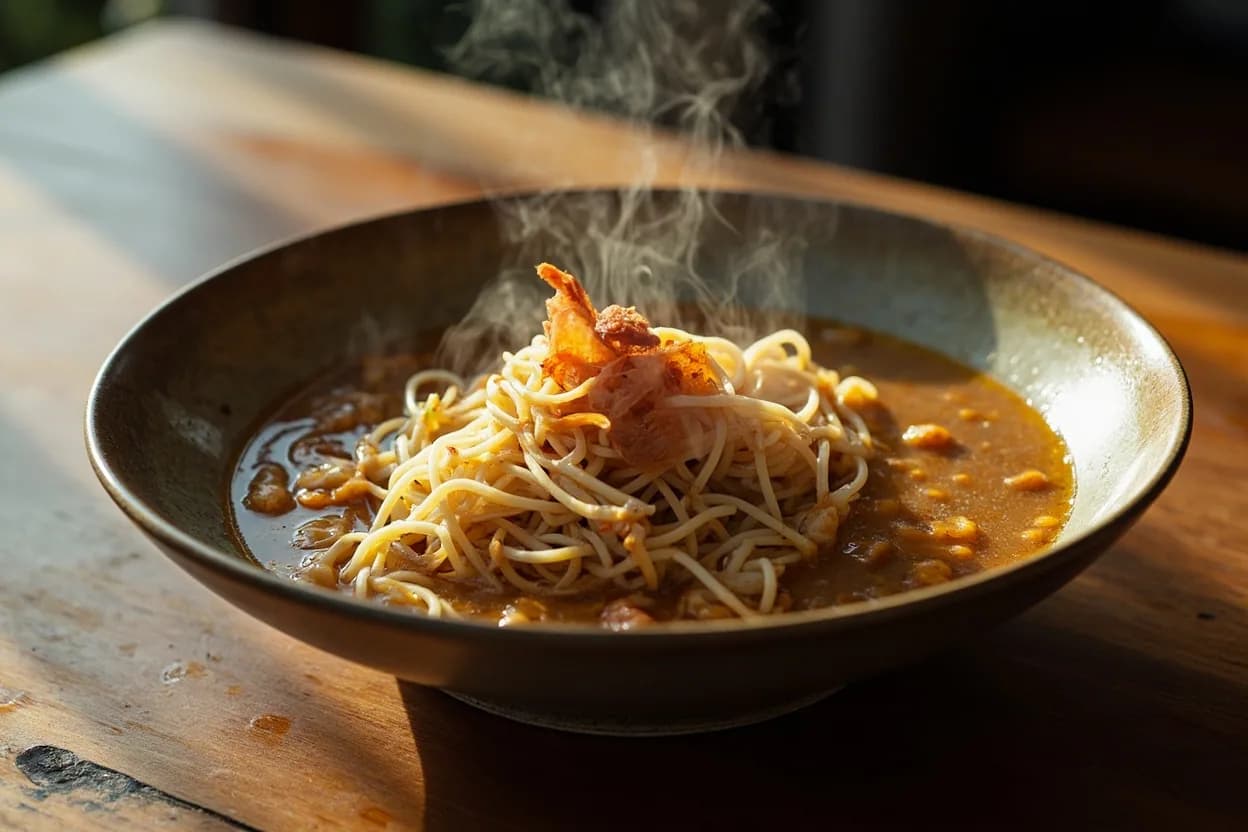
The most heavily Mon-influenced major national cuisine; mohinga (often called Burma's national dish) is traceable to Mon fish-noodle soup traditions; ngapi usage is directly inherited.
- Thai (Central and Northern)
Mon Dvaravati influence on early Thai food culture includes fermented fish paste dressings, herb relishes, and betel leaf wrapping — all traceable to Mon cooking.
- Khmer
Austroasiatic parallel tradition sharing fermented fish paste (prahok) as a base, rice-centrism, and fresh herb salad structures.
- Karen (Myanmar-Thailand)
Neighboring highland minority cuisine; Karen and Mon communities in the border region share fermentation traditions and wild-herb usage.
Canonical recipes
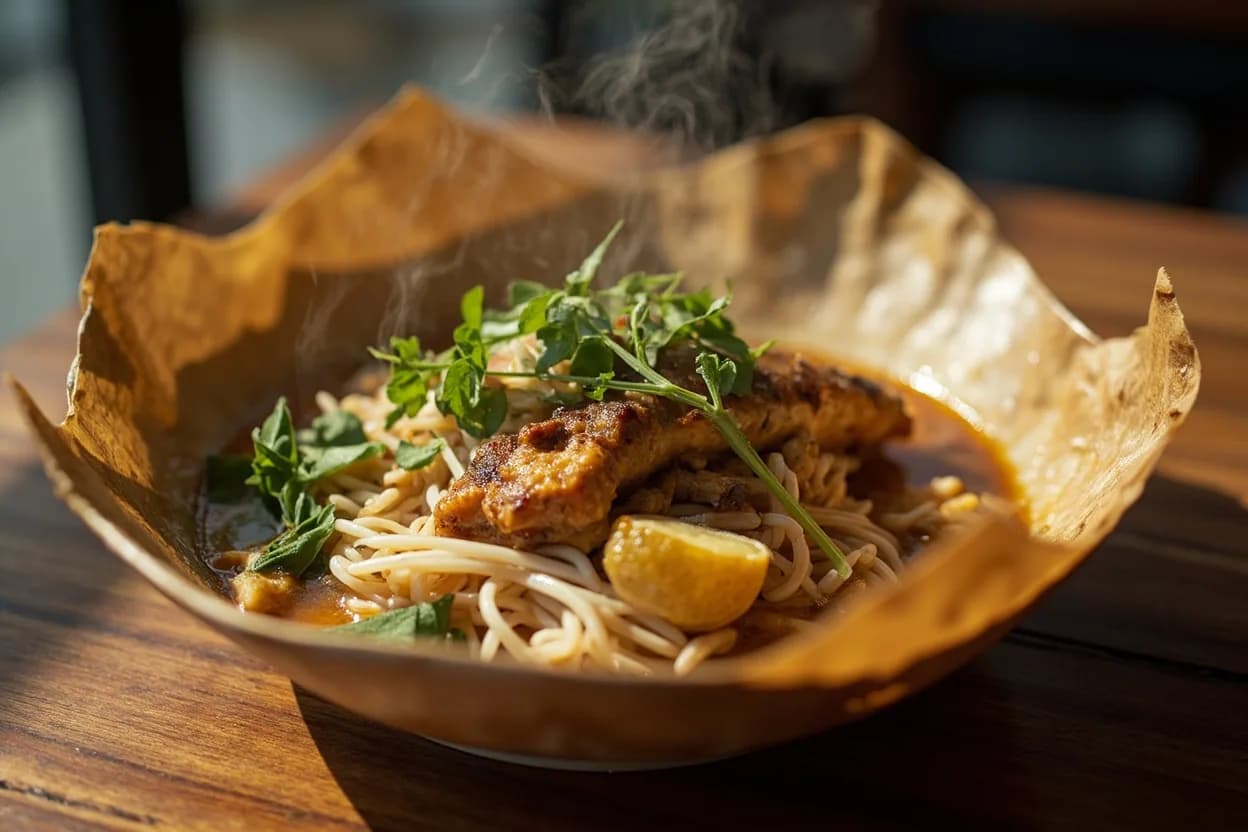
The dishes that define Mon Cuisine (Myanmar-Thailand Borderlands), documented in the Canon.
References
- 1.Food in Thailand: History, Culture, Society — Penny Van Esterik
- 2.Burma: Rivers of Flavor — Naomi Duguid
- 3.The Peoples of the Golden Triangle — Paul and Elaine Lewis
- 4.Mon Studies: Language and History — A.L. Becker & Harry L. Shorto (eds.)
Confidence: medium
Notes
Mon cuisine as a foundational layer
Food historians working in mainland Southeast Asia treat Mon cooking less as a distinct cuisine to be documented and more as a substrate that was absorbed — partially visibly, partially invisibly — into Thai and Burmese culinary practice. Mohinga, kanom jeen (Thai fermented rice noodles), and the ngapi/nam pla condiment tradition all have Mon-culture antecedents. Reconstructing Mon cuisine as it exists today requires separating those absorbed elements from what Mon communities still practice distinctly.
Under-documentation
Mon cuisine has no major English-language cookbook and receives only scattered treatment in regional food scholarship. Most documentation is in Burmese or Mon-language sources, or embedded in broader Burma/Thailand food books. This reflects the broader erasure of Mon political and cultural history — a people who built the first significant Buddhist kingdoms of mainland Southeast Asia and whose traditions shaped the region's dominant cuisines, but who do not have a nation-state to promote their food culture internationally.