East Asia
Okinawan (Ryukyuan)
Also: Ryukyuan cuisine, Uchinaa cuisine, 沖縄料理
The food of the former Ryukyu Kingdom — a longevity-linked island cuisine built on bitter melon, fermented tofu, braised pork, and sweet potato, shaped by centuries of trade between China, Japan, and Southeast Asia.
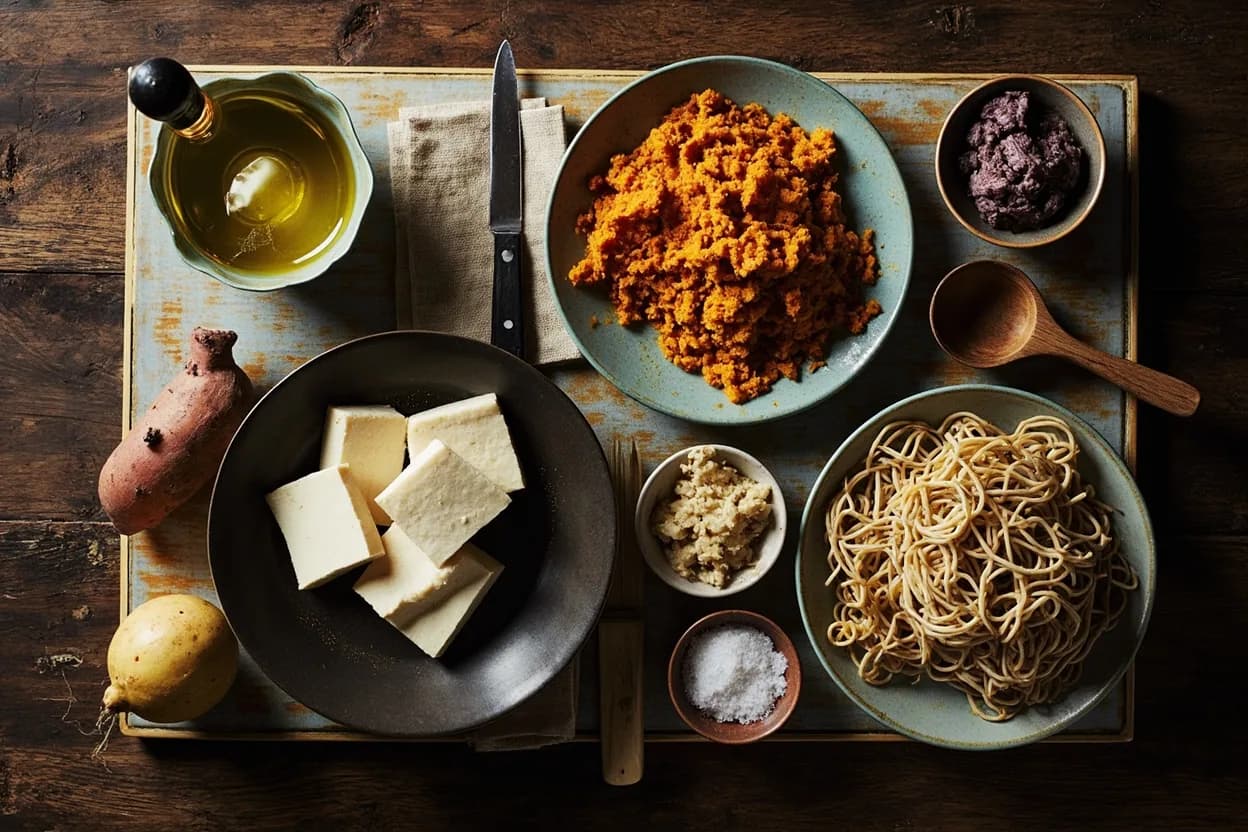
Okinawan cuisine is the distinct culinary tradition of the Ryukyu Islands (Okinawa prefecture), which formed an independent maritime kingdom until 1879 and maintained active trade relations with China, Japan, Korea, and Southeast Asia for centuries. The food is meaningfully different from mainland Japanese cooking: it makes extensive use of pork (including ears, feet, and offal), bitter melon (goya), peanuts, sweet potato (beni-imo), fermented tofu (tofuyo), and lard rather than oil, and it has traditionally avoided raw fish sashimi. The Ryukyuan court cuisine (Ryukyu Ryori) was a sophisticated diplomatic tradition; the everyday cooking of islanders — champuru (stir-fry) culture — is earthy, nutritionally dense, and deeply pragmatic. Okinawa's status as one of the original 'Blue Zones' (regions of exceptional longevity) has attracted global attention to its dietary patterns.
The flavour base
Pork-based stock (ashitibichi broth) and lard form the fat-and-umami foundation. Bonito dashi and konbu are used but with a lighter hand than in mainland Japan. Awamori (rice spirit distilled from long-grain Indica rice) appears both as a beverage and a cooking wine, particularly in braising. Miso and light soy flavor dishes; turmeric (ukon) is a frequent health-minded addition.
Pantry staples
Key ingredients
Signature techniques
Signature dishes
Okinawan (Ryukyuan) on the table

At the table
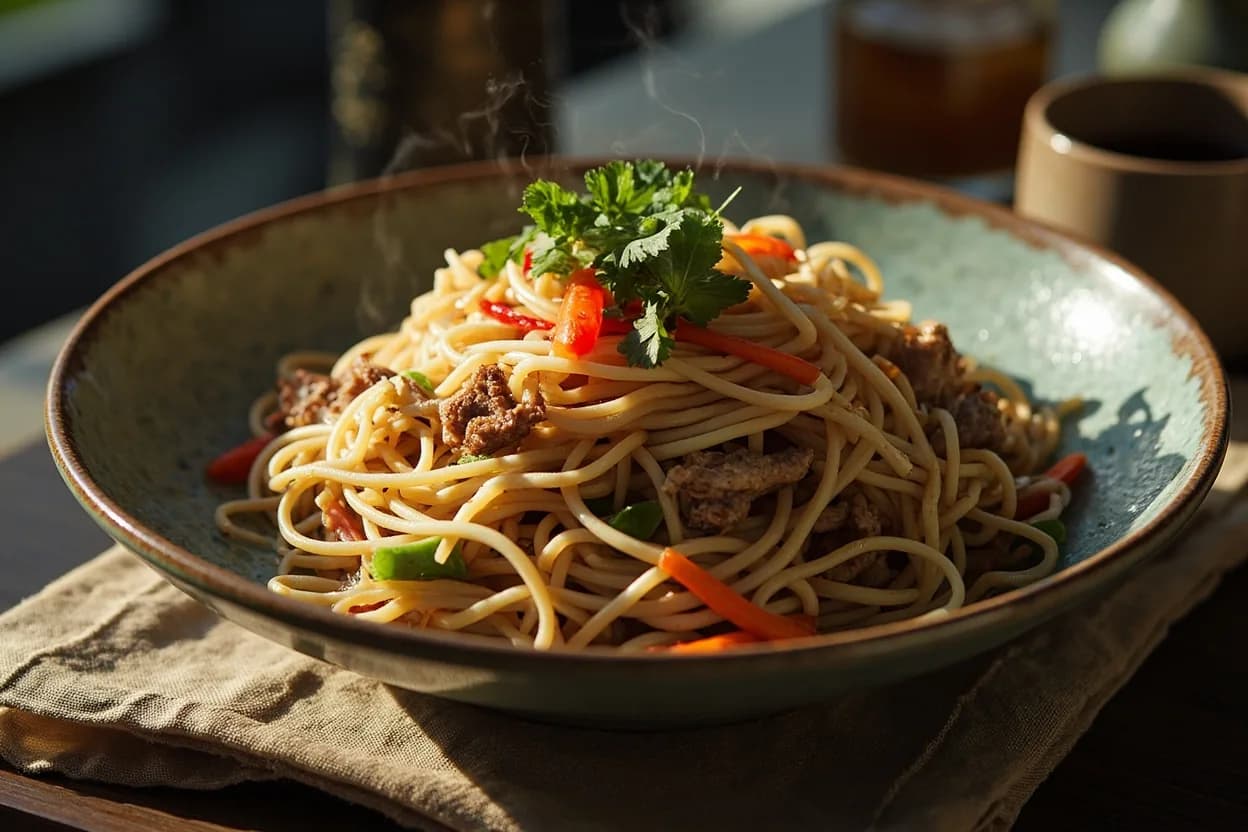
Traditional Ryukyuan meals are structured around rice and one or two protein or vegetable dishes eaten communally. The champuru (everything mixed together) philosophy means a single stir-fried dish combines protein, vegetable, and starch. Awamori is poured at communal tables; dishes come out in loose succession rather than formal courses. Ceremonial cooking (for festivals, funerals, and new year) uses the full range of pork preparation — ears, feet, belly, intestines — and is more elaborate. Modern Okinawan restaurant meals often present a spread of small dishes (izakaya-style) centered on a champuru centerpiece.
History & context
The Ryukyu Kingdom (1429–1879) occupied a strategic maritime position in the East China Sea and functioned as an active trading hub connecting China, Japan, Korea, and Southeast Asia. This commerce directly shaped the cuisine: pork preparation from China (particularly the Fujian coast), rice cultivation, and tofu fermentation techniques arrived via the frequent diplomatic missions known as sakimori embassies. The kingdom's fall to Japanese annexation in 1879 (and later U.S. occupation from 1945 to 1972) introduced further hybridization — notably the entry of canned luncheon meat (SPAM) into champuru cooking during the American occupation, when pork supplies were rationed. The longevity literature on Okinawa (generated by the Blue Zones research of Buettner et al.) focuses on the pre-1960s traditional diet and raises questions about dietary Westernization's effect on younger generations.
Regional variations
- Northern Okinawa (Yanbaru)
Heavier reliance on forest vegetables, ferns, and wild pig; historically more isolated from trading port influence.
- Miyako Islands
Distinct Miyako-jima sub-tradition: stronger Southeast Asian flavor traces, use of the local passionfruit and breadfruit, and a distinct liquor tradition (hanazake).
- Yaeyama Islands (Ishigaki, Iriomote)
Southernmost cluster, closest to Taiwan; Taiwanese-influenced pork and rice preparations, yaeyama soba with lighter broth, and native stone-pot rice dishes.
Related cuisines
- Fujian (Hokkien) cuisine
Strong historical relationship — Ryukyuan diplomatic delegations spent time in Fuzhou, and Fujianese pork braising and tofu fermentation techniques are direct ancestors of several Okinawan preparations.
- Taiwan Hakka cuisine
Shares the emphasis on pork offal, fermented tofu, and sweet potato; geographic proximity and trade routes created parallel culinary evolution.
- Mainland Japanese cuisine
Diverges significantly from Tokyo or Osaka norms in the primacy of pork over seafood, use of lard, avoidance of raw fish traditions, and sweet-potato staple culture.
References
- 1.The Blue Zones — Dan Buettner (longevity context)
- 2.Japanese Farm Food — Nancy Singleton Hachisu
- 3.Okinawa: The Last Paradise — Donald Richie (cultural context)
- 4.Ryukyuan Food Culture — Okinawa Prefectural Government archives
- 5.Food and Identity in Okinawa — Kishaba Eijun
Confidence: high
Notes
SPAM and champuru
The presence of Hormel SPAM in goya champuru is not an imported novelty — it is a historically embedded ingredient resulting from the U.S. military occupation (1945–1972), during which Okinawa had the highest per-capita SPAM consumption in Japan. The canned luncheon meat filled the role that fresh pork played before wartime destruction depleted livestock. Today SPAM champuru is as traditional as any ancestral preparation, a factual record of Okinawa's 20th-century history.
Tofuyo intensity
Tofuyo — hard tofu cured in red koji mold, awamori, and salt for months or years — is one of the most pungent fermented foods in the Japanese pantry. A cube the size of a fingertip, nibbled slowly while drinking awamori, delivers an intensity comparable to blue cheese or fish sauce paste. Its umami concentration is so high that it functions as a condiment, not a protein source.