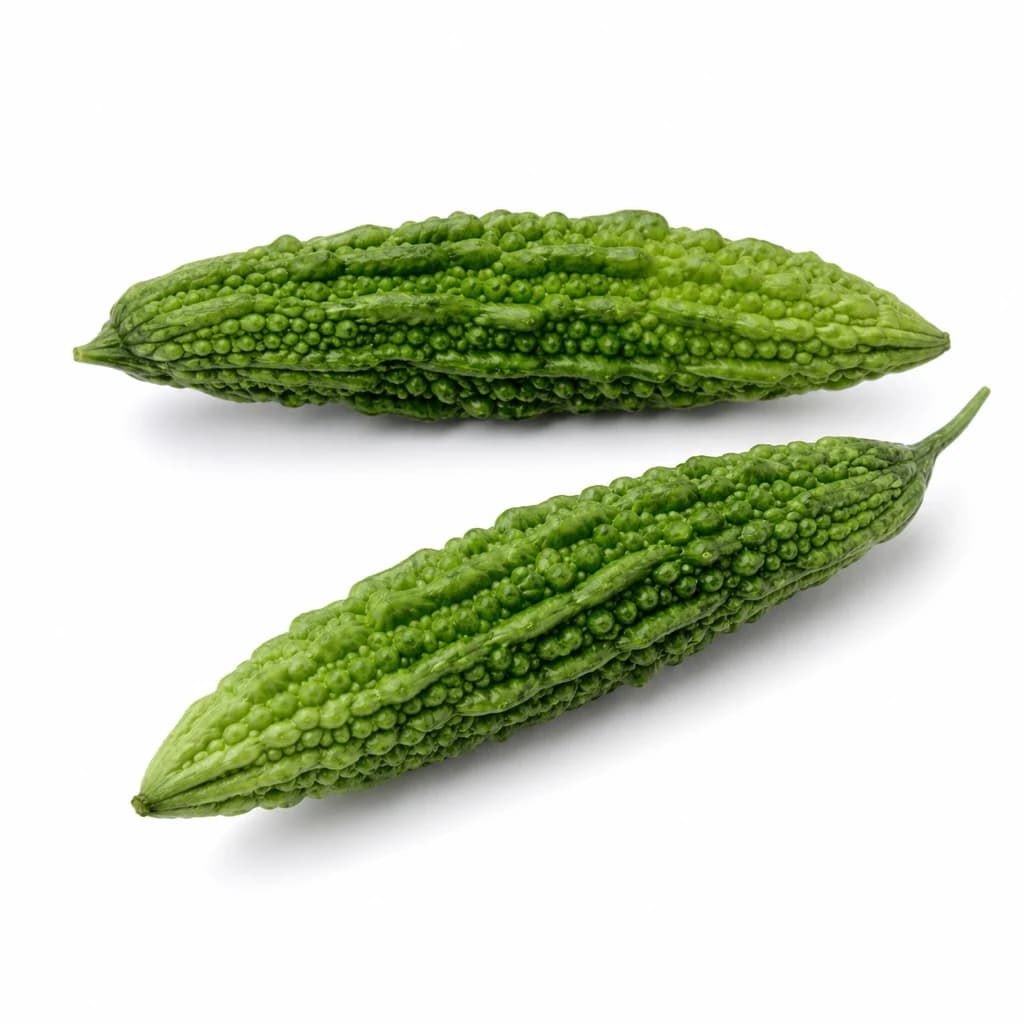
Natural form
Two whole bitter gourds showing the distinctive knobbly green exterior and elongated shape.
Establishes the unmistakable warty, ridged surface and cucumber-like form that distinguishes bitter gourd from other vegetables.
Produce
Bitter Gourd (Bitter Melon)
Knobbly green gourd with a pronounced bitter taste, stir-fried or stuffed across South and Southeast Asia.
Bitter gourd is a warty, cucumber-shaped vegetable with a distinctly bitter flavor that mellows with cooking and salting. It is stir-fried, stuffed, curried, or added to soups throughout South Asia, China, and Southeast Asia, and is valued for its reputed blood-sugar benefits. Salting and brief blanching before cooking are common ways to tame its bitterness.
Bitter gourd, known as karela across South Asia and goya in Okinawa, is one of the most distinctive vegetables in the tropical and subtropical pantry. Its knobbly, warted exterior gives way to a crisp, juicy flesh that delivers an assertive, clean bitterness unlike any other common vegetable—this is not a flavor to mask but to respect and harness. The bitterness comes from cucurbitane-type triterpenoids, compounds that develop as the fruit matures and concentrate in the ridges and membrane surrounding the seeds. Used for centuries in Ayurvedic, Traditional Chinese Medicine, and across Southeast Asian and Caribbean cuisines, bitter gourd occupies a unique culinary niche: it demands technique. Master the preparation—salt-curing, soaking, blanching—and you unlock a vegetable with texture and depth that elevates simple stir-fries, stuffings, and curries. The fruit is dioecious (separate male and female plants), and the female flowers produce the characteristic ridged fruit. As it ripens from green to orange-yellow, the flesh sweetens and the bright red seeds become edible—though most culinary use targets the unripe green stage.
- Measured in
- piece
- Storage
- Fridge
Types & varieties
Narrow, pointed ends; heavily ridged with sharp warts and spines; most intensely bitter; dominant in South Asian cuisines from Pakistan to Bangladesh
Longer, straighter, smoother surface; lighter green; milder bitterness; standard in Cantonese and stir-fry cooking
Small, round to oval, intensely bitter; bright green; widely used in Thai curries, salads, and stuffings
Small, pale green, slightly bumpy; cultivated for minimal bitterness; iconic in Okinawan cuisine and Goya chanpuru
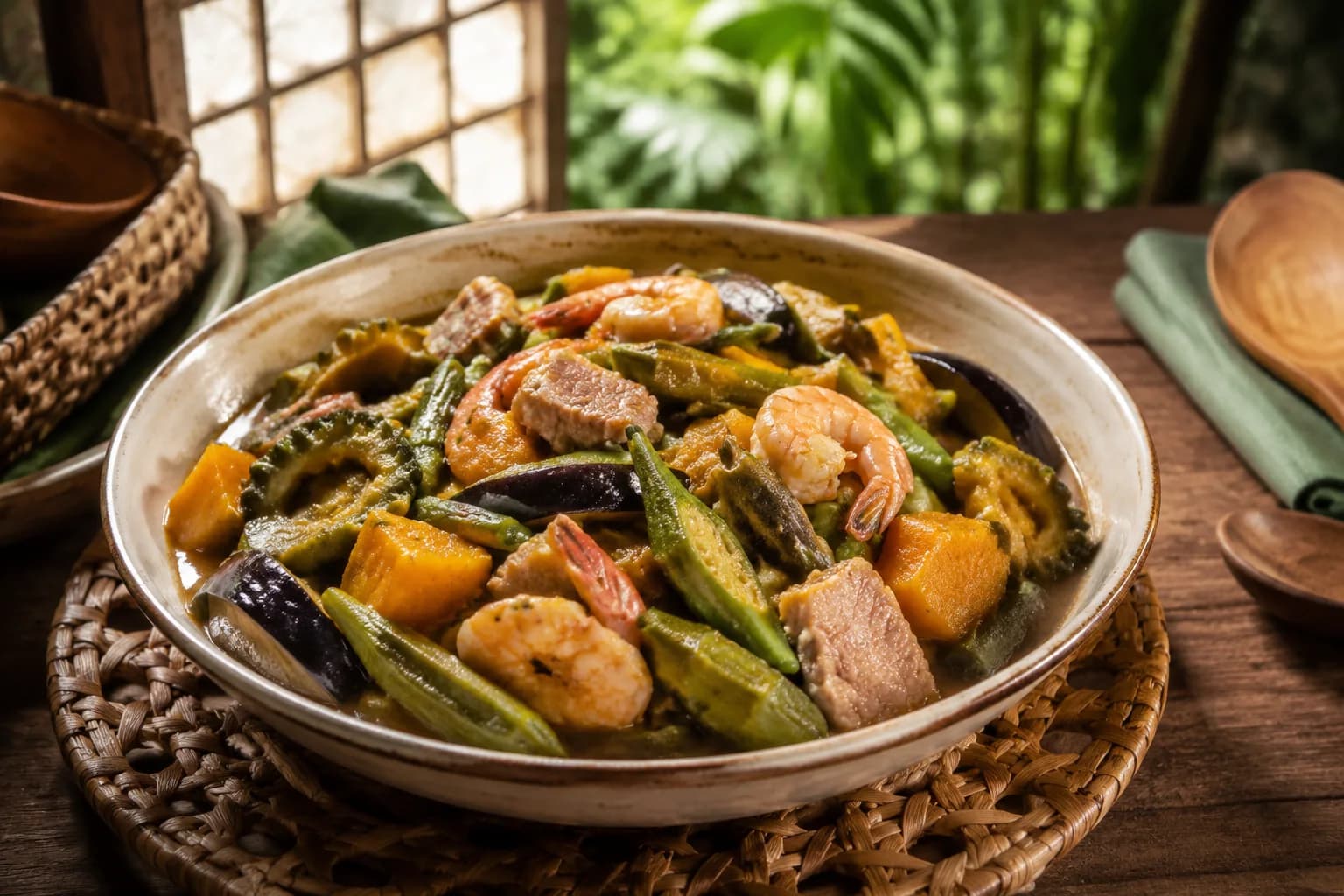
Similar to Chinese type but slightly smaller; popular in sinigang, pinakbet, and ampalaya with egg dishes
Intermediate between Indian and Chinese types; used in callaloo, pepper pot, and Yoruba preparations
Understanding and Managing Bitterness
The bitterness in bitter gourd is not a flaw to eliminate entirely but a defining characteristic that skilled preparation modulates to achieve balance. In Chinese cuisine, the goal is typically a 70% reduction—enough to create complexity without overwhelming the dish. In Indian cuisine, bitterness is often welcomed more fully, balanced by sour elements like tamarind or amchur, or sweet components like sugar and jaggery. The white pith surrounding ripe seeds is the only naturally sweet part of the fruit; some cooks preserve and use it when the gourd is fully ripe. Avoid aluminum cookware when cooking bitter gourd—the bitter compounds can react with the metal and intensify both the flavor and any metallic taste.
- Salt-curing is the most effective method: slice, toss with coarse salt, rest 20–30 minutes, then squeeze out released liquid
- Ice water soaking (30–60 minutes) after salting provides additional bitterness removal
- Scraping the raised ridges with a spoon edge removes concentrated bitter areas before slicing
- Always scoop out the spongy center and seeds with a spoon—these hold the most intense bitterness
- Blanching salted pieces in boiling water for 1–2 minutes before cooking softens and mellows
- Do not peel—the bumpy skin is edible and the inner flesh is what is prized
Common uses
Tips & pitfalls
- Salt-curing is essential: slice, toss with coarse salt, let rest 20–30 minutes, then squeeze out liquid before cooking—this draws out the bulk of bitter compounds
- Scrape the raised ridges and bumps with a spoon edge or blunt knife before slicing—this removes concentrated bitter areas
- Always scrape out the spongy center and scoop out seeds with a spoon, especially when the fruit is fully ripe
- High heat, short cooking time preserves the slight crunch; overcooking makes it mushy and intensifies bitterness
- Pair with strongly flavored partners: fermented black beans, dried shrimp, pork belly, garlic, onion, and chili bean paste
- A pinch of sugar or sweet sauce (hoisin, oyster sauce) balances residual bitterness in the finished dish
- Do not peel—unlike cucumber, the bumpy skin is edible and the inner flesh is what is prized
- Avoid aluminum cookware; bitter compounds can react with the metal and intensify both bitterness and metallic taste
Nutrition
Energy
84 kJ · per 100 g
Where the calories come from
Protein
1.2g
2% DV
Carbs
4.4g
2% DV
Fat
0.2g
0% DV
Fiber
1.1g
4% DV
Sugars
2g
of which
Sodium
3mg
0% DV
Source · USDA FoodData Central · approx. Gourd, dishcloth (towelgourd), raw
View on FDC →In the shops
Matched grocery products
No matched grocery products for Bitter Gourd (Bitter Melon) yet.
Good to know
- Family
- Cucurbitaceae (cucumber, melon, squash)
- Scientific Name
- Momordica charantia
- Origin
- South Asia (India, Sri Lanka) and Southeast Asia
- Peak Season
- Year-round in tropical climates; summer through early fall in temperate zones
- Flavor Compound
- Cucurbitane-type triterpenoids (charantin, momordicin, momordicosides)
- Typical Size
- Indian type: 15–30 cm; Chinese type: 20–35 cm; Thai/Japanese type: 5–12 cm
- Yield
- Approximately 70–75% edible after trimming seeds and membrane
- Shelf Life
- Refrigerated, unwashed: 4–5 days; do not freeze raw
Substitutes
- Zucchini or Courgette — Closest texture; lacks bitterness but works in stir-fries; add dried fenugreek leaves or bitter herbs to approximate flavor
- Bitter Greens (Dandelion, Radicchio) — Provide similar bitter notes in salads or quick cooking; different texture but useful for juice or sauté
- Green Amaranth (Hagalcog) — Similar bitterness profile; works in South Asian preparations where slight bitterness is desired
- Unripe Melon (Winter Melon Rind) — Mild vegetable with comparable texture; will not replicate bitter flavor but serves as visual and textural substitute
Pairs with
Also called
Korola · Bitter Melon · Caraili · Goya · Bitter Gourd · Karela
Appears in these dishes
Related
Tomato
Juicy, sun-sweet fruit for sauces, salads, and slow-cooked depth
Yellow Onion
The aromatic backbone of soups, sofritos, and braises
Garlic
Pungent cloves that perfume nearly every savory dish
Lemon
Bright, acidic citrus that wakes up almost any dish
Potato
Humble, hearty staple — roast, mash, fry, or boil
Carrot
Sweet, crunchy root — raw, roasted, or the base of a sofrito
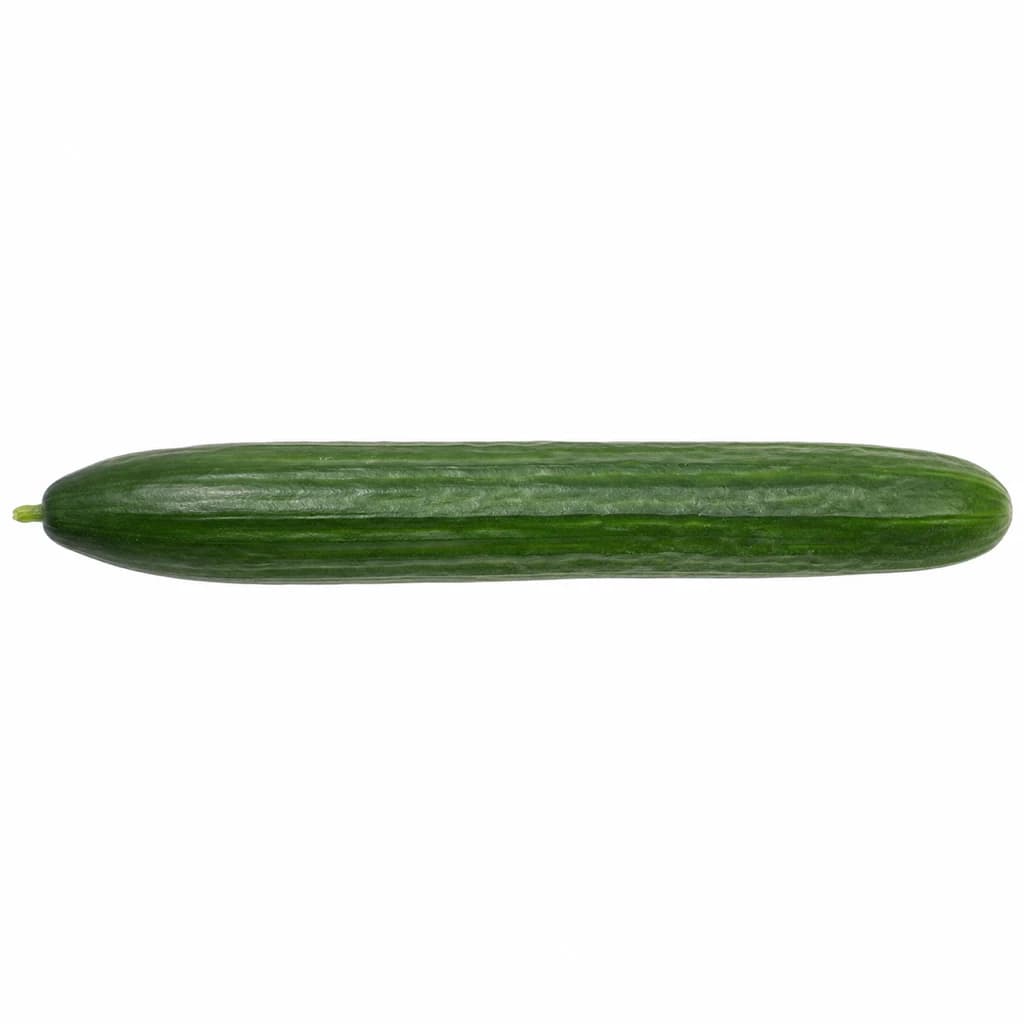
Cucumber
Cool, crisp, and watery — for salads, pickles, and tzatziki

Lettuce
Crisp leaves for salads, wraps, and a fresh crunch