North America
Pacific Northwest (Indigenous Salmon Tradition)
Also: Coast Salish cuisine, Chinook foodways, Pacific Northwest Indigenous cuisine, Salmon Nation cooking
One of the world's great salmon civilizations, where cedar-plank fire cookery, dried fish, and forest forage sustained Coast Salish, Chinook, and dozens of other nations for ten millennia.
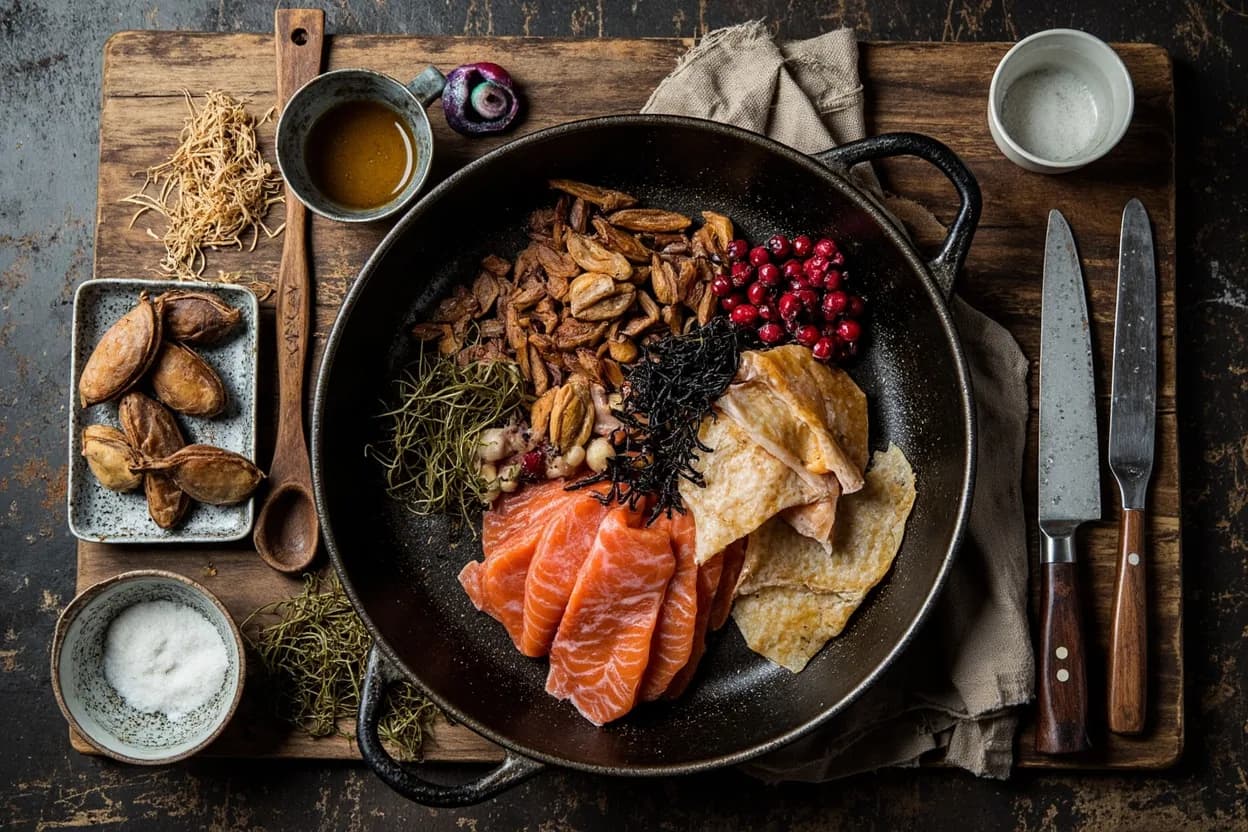
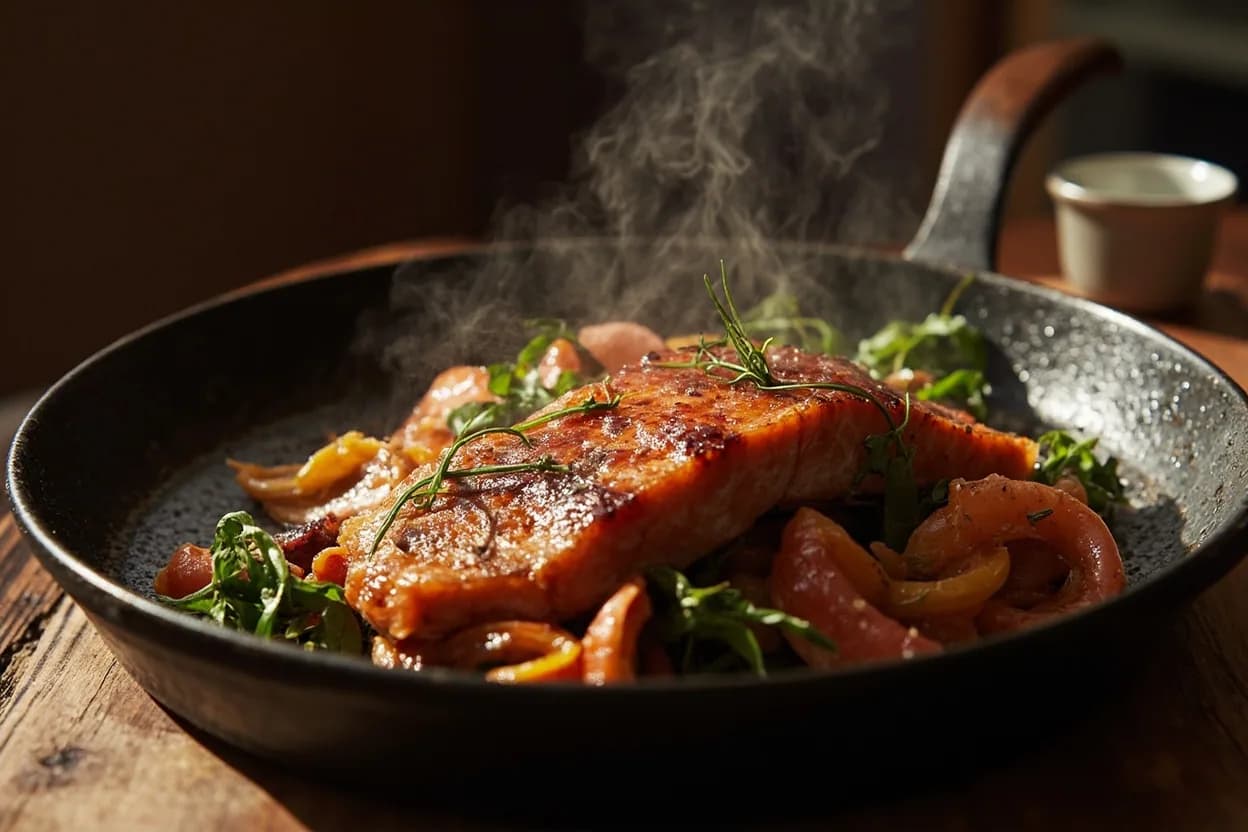
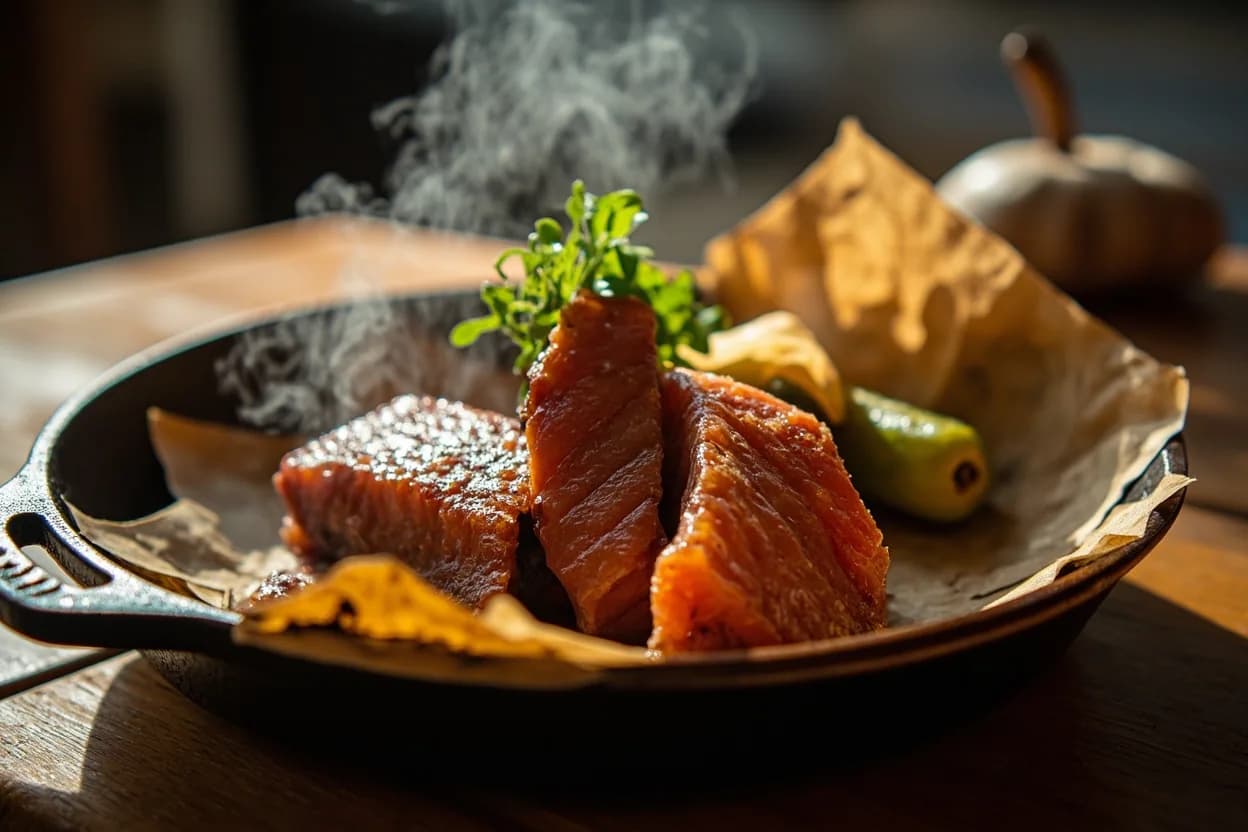
The Indigenous salmon tradition of the Pacific Northwest encompasses the food cultures of coastal and riverine nations from northern California through British Columbia and into Southeast Alaska — among them the Coast Salish, Chinook, Tillamook, Makah, Lummi, Quinault, and Haida peoples. Salmon is the organizing axis: chinook, coho, sockeye, pink, and chum are caught at river weirs and tidal traps, then eaten fresh, roasted on cedar or alder stakes beside the fire, or smoke-dried into dense, shelf-stable fillets for winter. This is not a cuisine of scarcity — the annual salmon runs historically delivered extraordinary abundance, and Indigenous nations developed sophisticated systems of harvest, preservation, trade, and redistribution. Camas bulbs, wapato, fiddlehead ferns, stinging nettles, eulachon grease, Dungeness crab, geoduck, razor clams, elk, deer, and dozens of wild berries complete the larder.
The flavour base
Smoke is the dominant flavor transformer — alder and cedar wood impart the defining character to salmon and other foods. Eulachon grease (rendered from oolichan fish) serves as the cooking fat and flavor amplifier of coastal nations, analogous to butter in European cooking. Dried salmon provides an intensely savory, slightly funky depth when reconstituted.
Pantry staples
Key ingredients
Signature techniques
Signature dishes
Pacific Northwest (Indigenous Salmon Tradition) on the table
At the table
Traditional meal structures were seasonal and communal rather than individualized. The potlatch feast (among Northwest Coast nations) was the high ceremony of food culture — redistributing the season's abundance through elaborate multi-day celebrations. Daily meals centered on salmon in its varied preparations, accompanied by root vegetables, greens, and dried berries. The winter period relied heavily on preserved and dried foods accumulated during summer runs. Contemporary Indigenous chefs have reclaimed and reimagined these traditions in restaurant contexts.
History & context
Archaeological evidence of salmon utilization in the Pacific Northwest dates to at least 10,000 BCE. Nations developed some of the most complex hunter-gatherer societies in the world precisely because the salmon runs provided surplus enough to support social stratification, art, architecture, and long-distance trade networks. The Grease Trails — routes along which eulachon grease was traded inland — were highways of exchange long before European contact. Colonial disruption after the 1790s was catastrophic: commercial fishing canneries in the 19th century depleted runs, dam construction in the 20th century eliminated entire river systems, and forced relocation and boarding schools severed the transmission of food knowledge. Since the 1970s — accelerated by the 1974 Boldt Decision restoring treaty fishing rights in Washington State — Indigenous communities have led a revival of traditional foodways. Contemporary chefs such as Freddie Bitsoie and Brian Yazzie draw on this heritage while developing new forms.
Regional variations
- Coast Salish (Puget Sound, British Columbia)
Dense camas prairies and sheltered inlets; particularly rich shellfish and eulachon tradition; sockeye the prized salmon.
- Chinook (Columbia River)
Columbia River chinook (king salmon) is the largest and fattiest; trade networks reached deep inland to the Plateau people; wapato from Columbia sloughs was a major starch.
- Makah (Olympic Peninsula)
Open-ocean whale and halibut hunting tradition in addition to salmon; among the few nations with a treaty-protected right to whale hunt today.
- Haida (Haida Gwaii)
Offshore island position; strong halibut and sea mammal tradition alongside salmon; herring eggs on kelp (spawn-on-kelp) a prized seasonal delicacy.
Related cuisines
- Northwest Coast Contemporary
Modern Indigenous and settler chefs building on traditional ingredients with contemporary technique in Portland, Seattle, and Vancouver.
- Alaska Native Cuisine
Overlapping salmon, eulachon, and marine mammal traditions among Tlingit, Haida, and Tsimshian peoples in Southeast Alaska.
- Pacific Northwest (Settler)
The dominant 20th-century settler food culture adopted cedar-plank salmon, Dungeness crab, and Walla Walla onions from Indigenous contexts.
Canonical recipes
The dishes that define Pacific Northwest (Indigenous Salmon Tradition), documented in the Canon.
References
- 1.Spirit of the Harvest: North American Indian Cooking — Beverly Cox & Martin Jacobs (1991)
- 2.Salmon and His People: Fish and Fishing in Nez Perce Culture — Allen P. Slickpoo Sr. & Deward E. Walker Jr.
- 3.The Oxford Companion to Food — Alan Davidson (3rd ed., 2014)
- 4.Raven Steals the Light: Traditional Coast Salish Foods — various, Northwest Indian College
- 5.Braiding Sweetgrass — Robin Wall Kimmerer (2013)
Confidence: high
Notes
Eulachon grease: the butter of the Northwest
Eulachon (Thaleichthys pacificus), also called oolichan or candlefish, are small, intensely oily smelt that run in brief winter and spring bursts. Coast Salish, Tsimshian, and Nisga'a peoples rendered the fish by boiling and skimming, producing a clear golden grease with a distinctive, pungent flavor. It was applied to dried salmon, berries, and root vegetables — functioning as the flavor medium that unified the cuisine. Trade in eulachon grease shaped the political geography of the entire Northwest Coast.
Salmon runs and cultural continuity
Among Northwest Coast nations, each of the five Pacific salmon species carried distinct cultural protocols around first catch, ceremony, and butchering. The First Salmon Ceremony — practiced across dozens of nations — honored the salmon as a being who returned willingly if treated with respect, ensuring future runs. Ecologists now recognize that this ritual restraint likely functioned as a conservation mechanism, maintaining sustainable harvest levels for millennia.