Proteins
Razor Clam
Long narrow clam with sweet, meaty flesh that toughens if overcooked; flash-grilled, sauteed in garlic and wine, or sliced raw, cooking in just a minute or two.
Razor clams are saltwater bivalves named for their long, narrow, rectangular shells — the shape of an old straight razor or a closed jackknife. They live buried vertically in sandy intertidal beaches, where their powerful foot lets them dig faster than a person can dig after them; this is why recreational "razor clamming" with a specialized shovel is a tradition from the Pacific Northwest to the Atlantic coast and across northern Europe, and several species — most importantly the Chinese razor clam — are farmed in large volumes in Asia.
In the kitchen, razor clams are prized for one overriding reason: sweetness. The meat is cleaner and more delicately briny than that of round clams, with a tender, almost silky texture when just cooked. That delicacy is also their biggest liability: the meat toughens within seconds of overcooking, going from silky to rubbery in a heartbeat. This makes razor clams a high-reward ingredient for cooks who respect timing — flash-grilled on a plancha, briefly sautéed with garlic and wine, or sliced thin for crudo — and a disappointment in anything that simmers for long.
The edible portion is a single elongated neck and foot that runs the length of the shell, plus a smaller mass of body meat. Yield is modest — typically 1 to 2 ounces per medium clam — which is part of why razor clams carry a premium price in many markets. They are highly perishable and are best used within a day or two of purchase; a fresh, live razor clam smells like the sea and nothing more.
- Measured in
- g
- Storage
- Keep Live In The Fridge Under A Damp Cloth, Never Sealed In Water; Cook Same Day.
Allergens
Find it in
Types & varieties
West coast of North America from Alaska to California; the most prized recreational and commercial razor clam, especially in Washington and Oregon
East coast of North America; originally European, now an established invasive; sweet flavor, common in Atlantic markets
North Atlantic Europe (UK, Ireland, Channel coasts); the common razor clam in European seafood markets
Smaller, more sharply curved European species; mostly a foraged or specialty item
Found along Mediterranean coasts; the basis for Spanish navaja and Italian cannolicchio
Major aquaculture species in China and southeast Asia; commonly stir-fried with garlic, black beans, or ginger
Japanese species; used in sushi, grilled, and simmered dishes (nimono)
Anatomy and trimming
A razor clam is mostly one long piece of meat, but it isn't uniform. The thick, muscular neck and foot is the prime cut — the part you want to highlight in any quick-cook preparation. Running along one side of the neck is a dark intestinal thread that often holds grit and has a stronger, sometimes sulfurous flavor; it should be pulled or sliced off before cooking. The tip of the neck can be tough and is often trimmed. Inside the shell you'll also find a small mound of body meat, the mantle, and a dark stomach sac — discard the stomach and any broken shell fragments. The natural liquor inside a freshly opened clam is intensely flavorful and worth reserving for pan sauces or for stirring into pasta water.
- Pull the dark intestinal strip from the neck before cooking
- Trim the very tip of the foot if it feels tough
- Reserve the clam's own liquor to finish sauces and pasta
- Score the thick neck lightly so it cooks evenly and lies flat on the plancha
Cooking principles across cuisines
What looks like half a dozen very different razor clam dishes — Spanish navajas a la plancha, Cantonese chēng zhèng with black beans, Italian spaghetti with garlic and chile, Japanese mate-gai nigiri — are all built on the same three rules: high heat, very short time, and minimal seasoning that lets the clam's natural sweetness carry. In Spain and Italy, the clam meets a smoking-hot plancha or pan for 30 to 90 seconds per side, then is dressed with olive oil, lemon, and parsley. In coastal China, razor clams are often stir-fried in a fiercely hot wok for under a minute, then finished with fermented black beans, ginger, and scallion. In Japan, the meat is most prized raw as sushi, or gently simmered in dashi and sake for nimono. The unifying theme is restraint: any cooking method that holds the clam over heat for more than two minutes will turn it into bouncy rubber.
- Spanish and Italian methods: plancha, grill, or sauté, 30–90 seconds per side
- Cantonese method: wok stir-fry, under 60 seconds, with black bean and ginger
- Japanese method: often raw (nigiri, aemono) or briefly simmered in dashi
- French method: open raw, brush with herb butter, and grill in the shell for 1–2 minutes
Common uses
Tips & pitfalls
- Cook razor clams for the shortest time that still produces opaque, just-set flesh — typically 30 to 90 seconds per side on a hot plancha, or 30 to 45 seconds in a hot pan; pull them off the heat the moment the siphon firms up, because carryover heat will finish them
- Cut off the dark intestinal strip running along the neck; it can hold grit and has a stronger, less pleasant flavor
- Never microwave — uneven heating virtually guarantees overcooking
- Purge only in cold salt water (about 3%), never fresh; freshwater shocks the clams and can make the meat watery
- If grilling in the shell, leave the hinge intact and open just before serving so the natural juices stay inside
- Score the thick neck lightly with a sharp knife so it cooks evenly and doesn't curl into a ball on the plancha
- For raw or cured use, start with very fresh, live, undamaged clams and serve the same day
- Avoid heavy, long-simmered sauces — they overpower the sweetness and turn the meat rubbery
- Buy clams that smell clean and oceanic; a strong fishy or sulfurous odor means they are past their prime
- Keep live clams flat in a single layer on a damp cloth in the fridge; do not seal them in plastic or submerge in water, either of which will suffocate them
Nutrition
Nutrition
No USDA FoodData Central match for Razor Clam yet. We surface a per-100 g profile once a generic whole-food entry is matched and verified.
In the shops
Matched grocery products
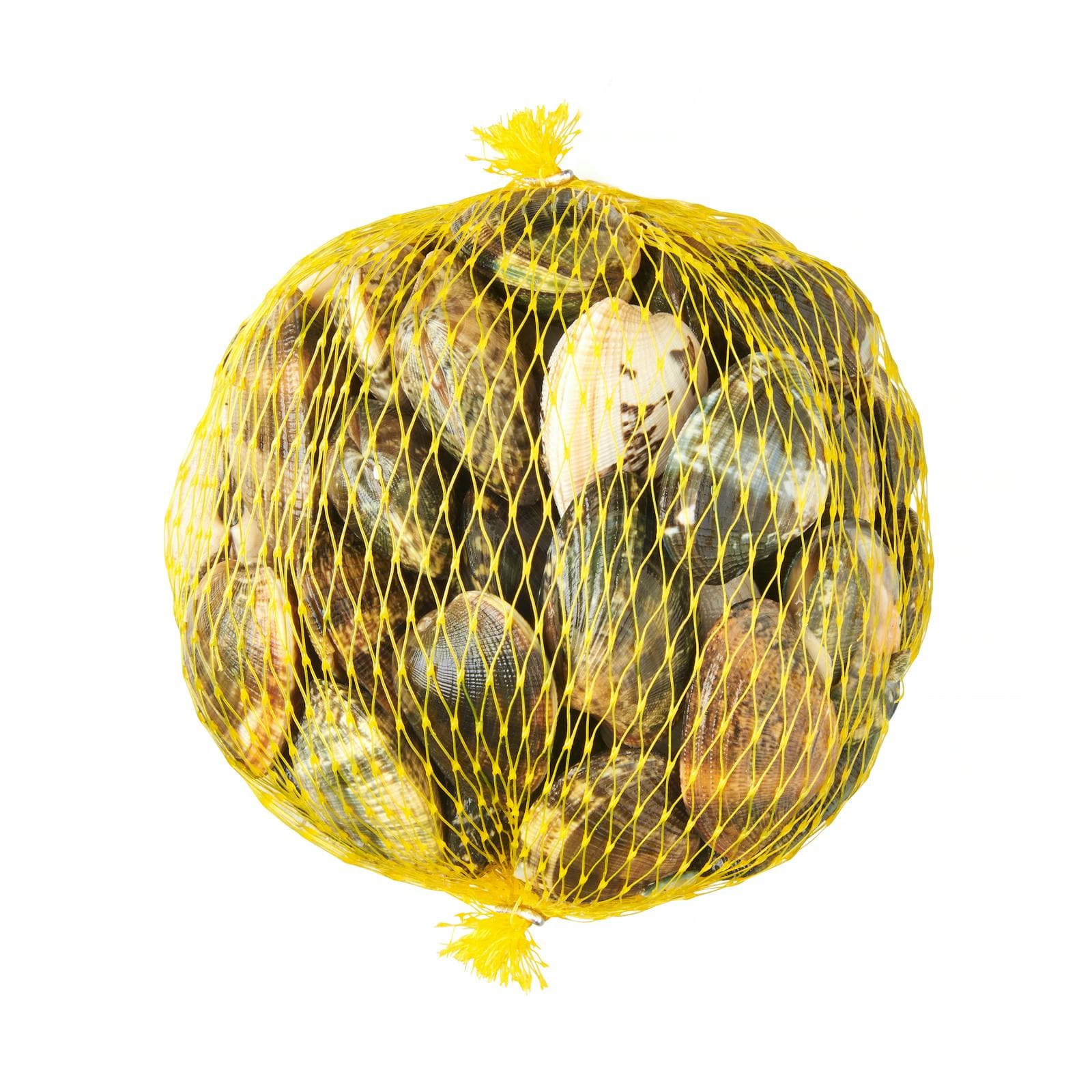 €10.70
Japanese Clam
500 g · Mercadona
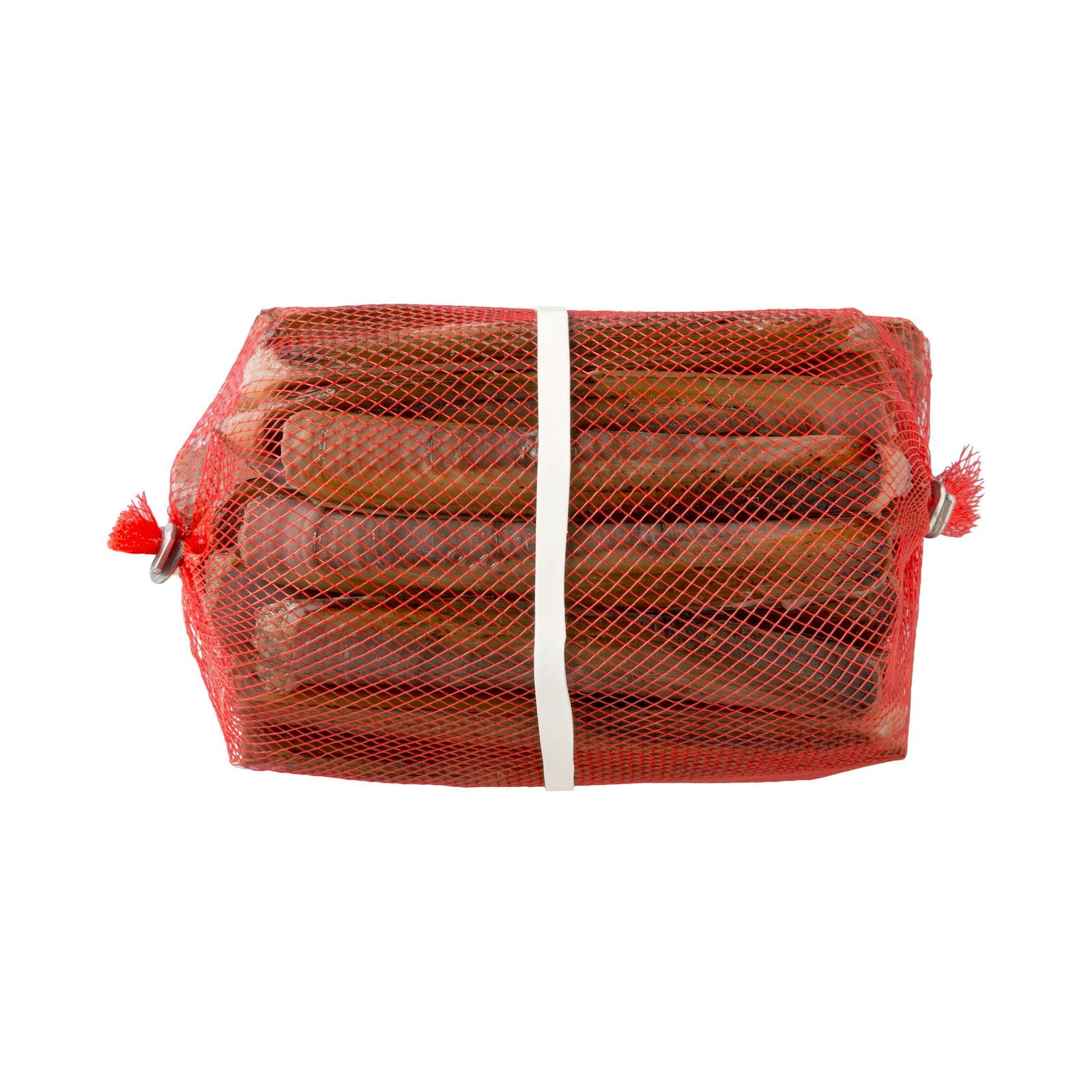 €4.50
€4.50Razor Clams
500 g · Mercadona
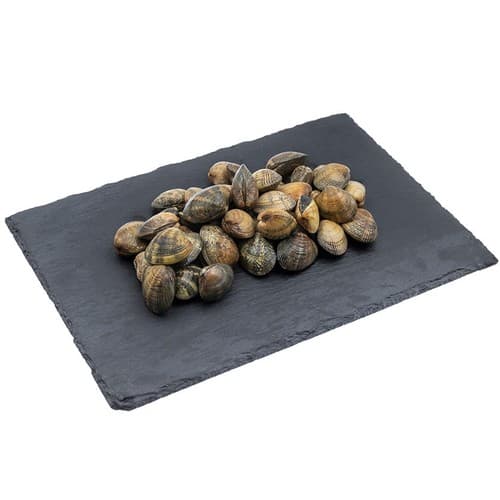 €7.50
€7.50Japanese Clam
ud · Bonpreu
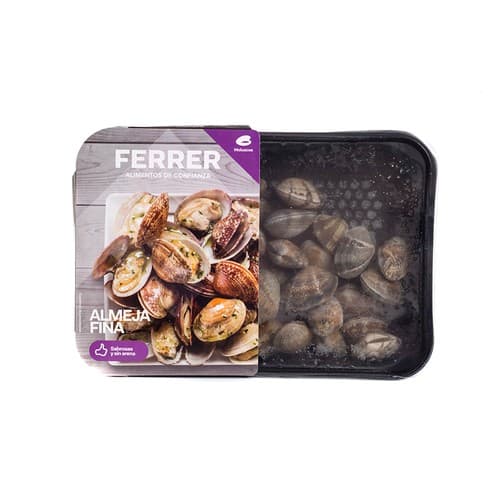 €8.65
€8.65Fine Clams Ferrer
FERRER · kg · Bonpreu
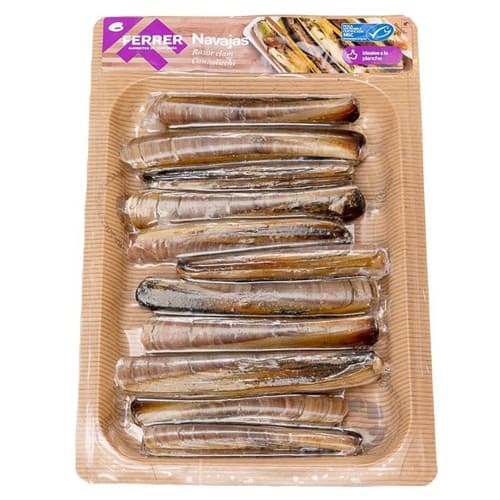 €3.35
€3.35FERRER Razor Clams
FERRER · kg · Bonpreu
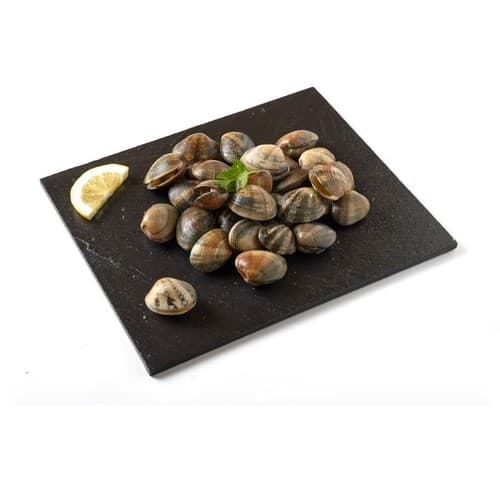 €14.99
Japanese Clam (unit)
Bonpreu
Good to know
- Type
- Bivalve mollusk (saltwater clam)
- Shape
- Long, narrow, rectangular shell resembling a straight razor or closed jackknife
- Habitat
- Sandy intertidal and subtidal beaches, where they burrow vertically
- Length at harvest
- Typically 10–20 cm (4–8 in); Atlantic jackknife can reach 25 cm
- Edible yield
- Roughly 1–2 oz of meat per medium clam (neck/foot and smaller body meat)
- Season
- Generally fall through early spring; many Pacific beaches have regulated open seasons
- Flavor profile
- Sweet, briny, slightly oceanic; cleaner and more delicate than most round clams
- Texture
- Tender, almost silky when just cooked; becomes notably rubbery and tough within seconds of overcooking
- Storage
- Highly perishable; best alive on a damp cloth in the refrigerator, used within 1–2 days
- Purging
- Soak in cold seawater or 3% salt water for 1–2 hours; freshwater kills them and can affect texture
Substitutes
- Manila clam — Closest substitute in sweetness; smaller and rounder, but cooking time and brine note are similar
- Littleneck or small cherrystone clam — Works in pasta and sautéed dishes; slightly chewier and a touch more assertive in flavor
- Atlantic surf clam (hen clam) — Meaty and affordable; trim the tough foot and slice thin for crudo to mimic razor clam texture
- Geoduck siphon — Crunchy, sweet, and similarly shaped when sliced; excellent raw or very lightly seared
- Mussel — Only a stand-in when budget forces it; much softer and less sweet, so use a shorter cook and lighter seasoning
- Squid (calamari) — Useful texture proxy in pasta dishes when cooked for under 60 seconds; flavor differs but the sweet, tender snap is similar
Pairs with
Also called
razor clams · navajas · jackknife clam