East Asia
Shaanxi Muslim (Hui Cuisine)
Also: Xi'an Muslim Street Food, Huimin Quarter Cuisine, Shaanxi Hui Food, 回族菜
The halal crossroads of the Silk Road, where Central Asian spice routes and Tang Dynasty cosmopolitanism shaped Xi'an's iconic noodles, meat sandwiches, and lamb soups.
Shaanxi Muslim cuisine is the culinary tradition of the Hui ethnic minority concentrated in Xi'an's Muslim Quarter (Huimin Jie) and surrounding Shaanxi province. It sits at the intersection of Chinese Han cooking techniques and Islamic dietary law, producing a cuisine that is entirely pork-free but rich in lamb, beef, cumin, and chili. The Hui, descendants of Central Asian and Persian merchants who traveled the Silk Road, synthesized local Guanzhong grain culture with the flavors of Samarkand, Persia, and the Arab world. The result is one of China's most distinctively seasoned regional traditions — heavy with cumin and warming spices in ways unusual for inland China, shaped by a millennium of trading contact.
The flavour base
Cumin-lamb fat rendered in a wok or over charcoal, spiked with dried chilies, garlic, and the fermented heat of doubanjiang-adjacent pastes; lamb bone broth forms the liquid backbone for soups and stewing
Pantry staples
Key ingredients
Signature techniques
Signature dishes
Shaanxi Muslim (Hui Cuisine) on the table
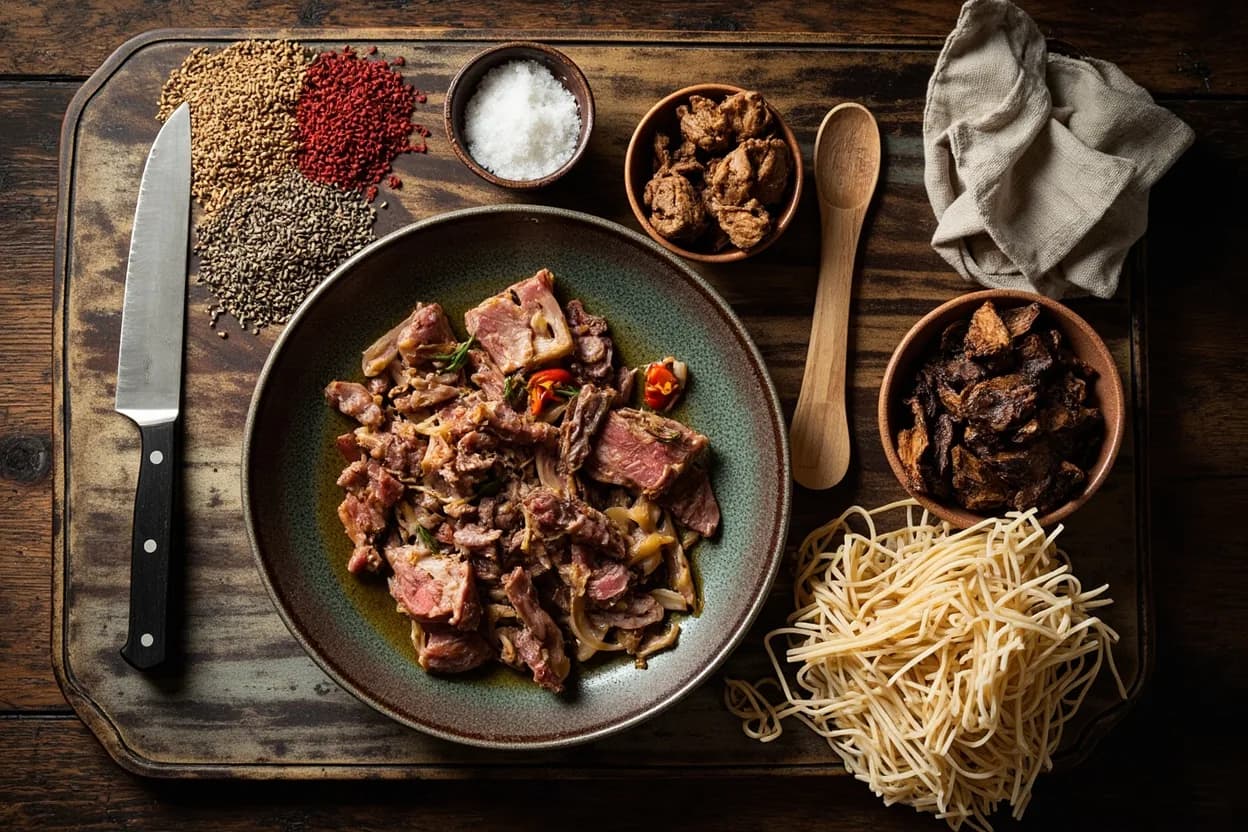
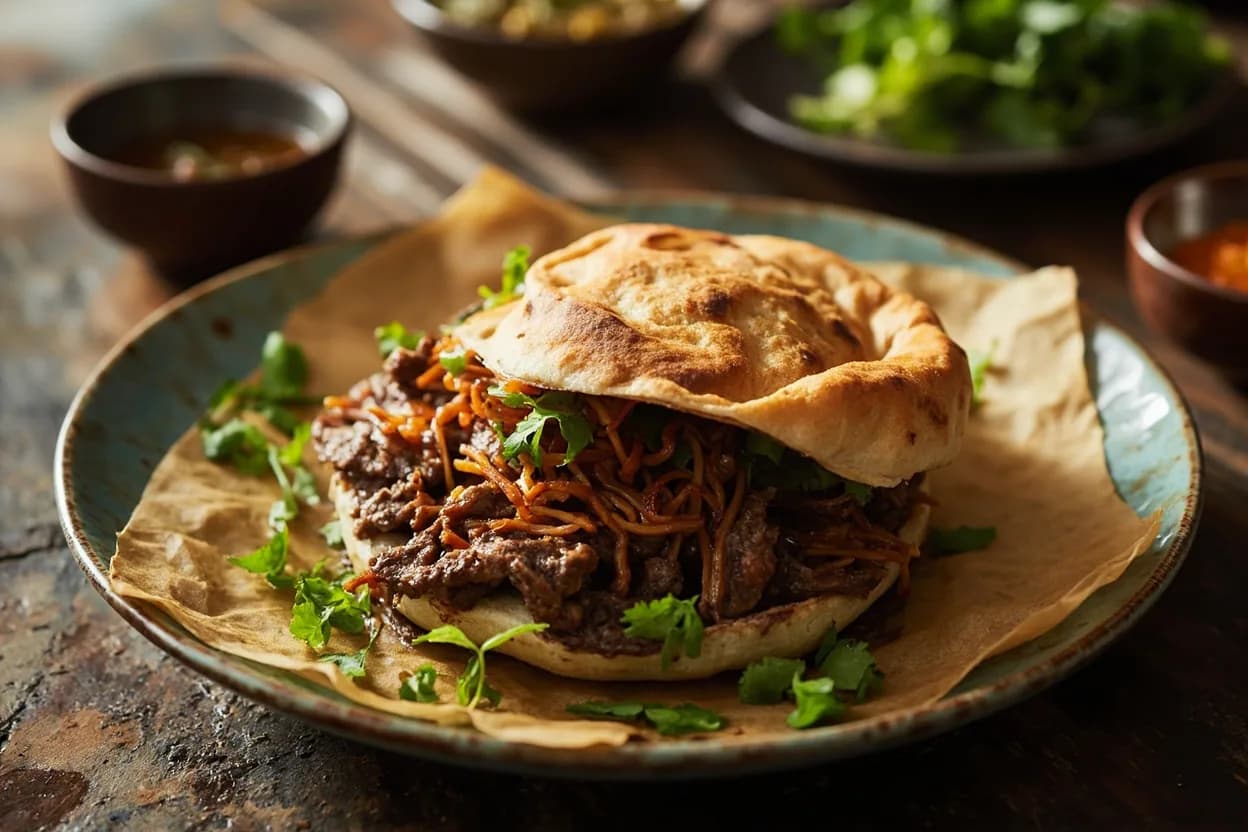

At the table
Street food and casual restaurant formats dominate. Breakfast is typically paomo or noodles; midday and evening center on a main noodle or bread dish with side pickles and perhaps a soup. Lamb skewers are eaten as snacks or late-night street food. The Muslim Quarter functions as an open market where individual stalls specialize in single dishes.
History & context
The Hui of Shaanxi trace their ancestry to Muslim merchants, soldiers, and envoys who arrived in Xi'an (then Chang'an, the Tang Dynasty capital) along the Silk Road from the 7th century onward. Tang cosmopolitanism allowed communities from Persia, Central Asia, and the Arab world to settle and intermarry with local Han populations, producing a syncretic culture that maintained Islamic practice while adopting Chinese language, dress, and many culinary techniques. The cuisine crystallized through the Song and Ming dynasties as Hui communities became grain traders and butchers — the only halal meat suppliers in many Chinese cities. Cumin, a Silk Road spice, became so embedded in Shaanxi Hui cooking that it now reads as quintessentially local to outsiders.
Regional variations
- Xi'an Huimin Quarter
The most concentrated and commercialized expression; biang biang mian and roujiamo are street staples, heavily tourist-visible but rooted in authentic Hui cooking
- Gansu Hui Corridor
Moving northwest toward Lanzhou, cumin and lamb remain central but hand-pulled noodles (lamian) become the prestige form, and broth is clearer and more delicate
- Ningxia Hui Autonomous Region
The heartland of Chinese Hui culture; lamb from local Tan sheep is prized, and rice (unusual for northwest China) appears alongside wheat dishes
Related cuisines
- Lanzhou Beef Noodle
Closely related Hui tradition built around clear beef broth and hand-pulled noodles; shares halal framework and lamb-fat seasoning
- Uyghur
Shares cumin-lamb emphasis and Silk Road origins, but Uyghur cuisine is Turkic-inflected with pilaf (polo) and nan as central; distinct ethnicity and language
- Xinjiang
Overlapping spice vocabulary (cumin, star anise) and lamb-centeredness, but Xinjiang cuisines span multiple ethnicities and include dairy in ways Hui cuisine does not
References
- 1.Every Grain of Rice — Fuchsia Dunlop
- 2.The Food of China — E.N. Anderson
- 3.Land of Fish and Rice — Fuchsia Dunlop
- 4.China: A History of Food — Endymion Wilkinson
Confidence: high
Notes
Halal authenticity
Hui halal (清真, qingzhen) is one of the oldest continuously practiced Islamic food traditions in East Asia. In Xi'an's Muslim Quarter, the qingzhen certification is culturally enforced by community norms as much as by official channels — pork is genuinely absent, not merely claimed absent.
Biang biang — the untypeable character
The character for 'biang' (biáng) is famously absent from Unicode; it requires around 58 strokes and appears hand-painted above noodle stalls. The dish name itself is onomatopoeic — the sound the thick dough makes when slapped against the board during hand-pulling.