Southeast Asia
Vietnamese (Northern / Hanoi)
Also: Bắc Bộ cuisine, Red River Delta cooking, Ha Noi cooking
Hanoi's restrained, herb-fragrant cooking where clarity of broth and purity of seasoning define the northern canon.
Northern Vietnamese cuisine is defined by its preference for subtle seasoning, minimal sweetness, and a disciplined reliance on fresh herbs and dipping sauces rather than coconut milk or sugar. Anchored in the Red River Delta, this tradition prizes nuôc mắm (fish sauce) balanced with vinegar and lime over sugar, yielding cleaner, more austere flavors than southern styles. The cuisine reflects centuries of Chinese influence filtered through Viet sensibility — abundant rice, river fish, and pork cooked with great economy. Hanoi in particular carries the prestige of being the imperial administrative center of the north, and its street food culture is among the most coherent and historically layered in all of Southeast Asia.
The flavour base
Nuoc mắm (fish sauce), shallots, ginger, and star anise form the foundational seasoning grammar; bone broth slow-cooked to transparency is the prestige medium.
Pantry staples
Key ingredients
Signature techniques
Signature dishes
Vietnamese (Northern / Hanoi) on the table
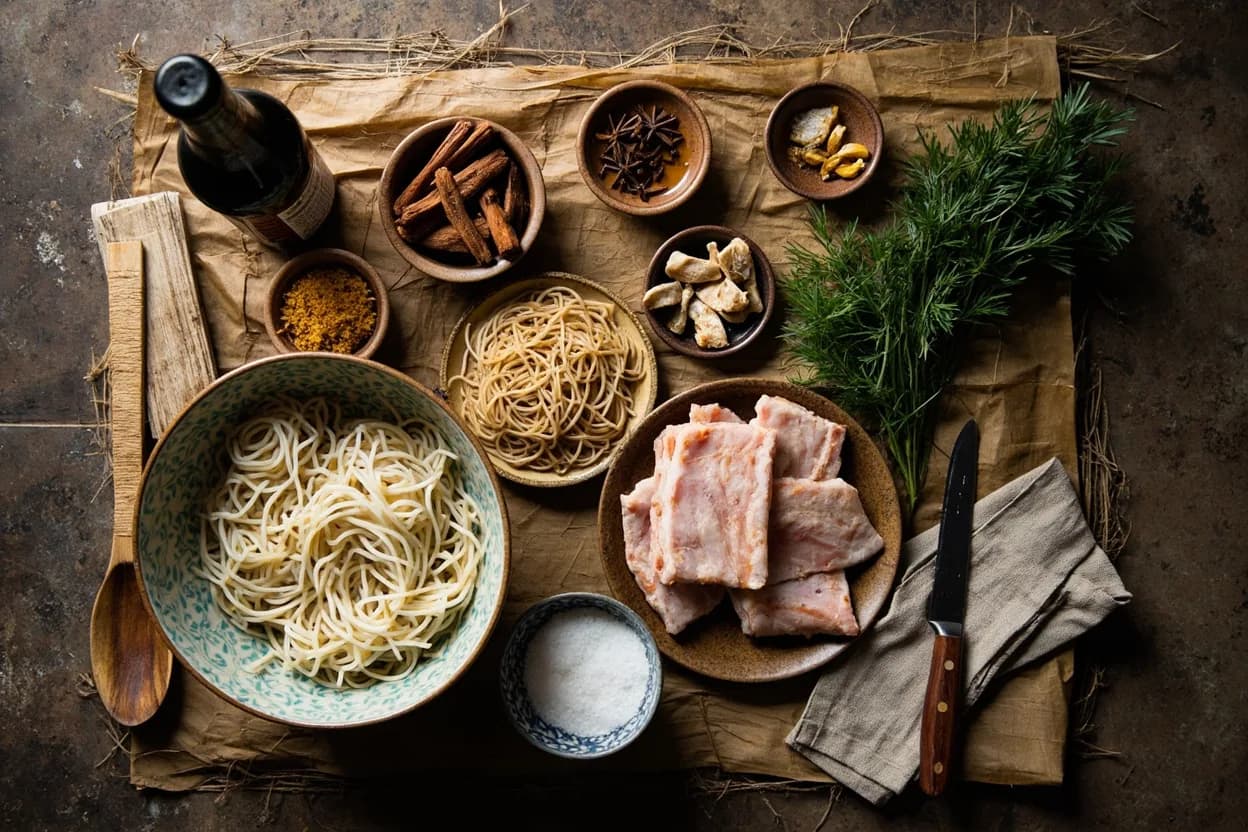
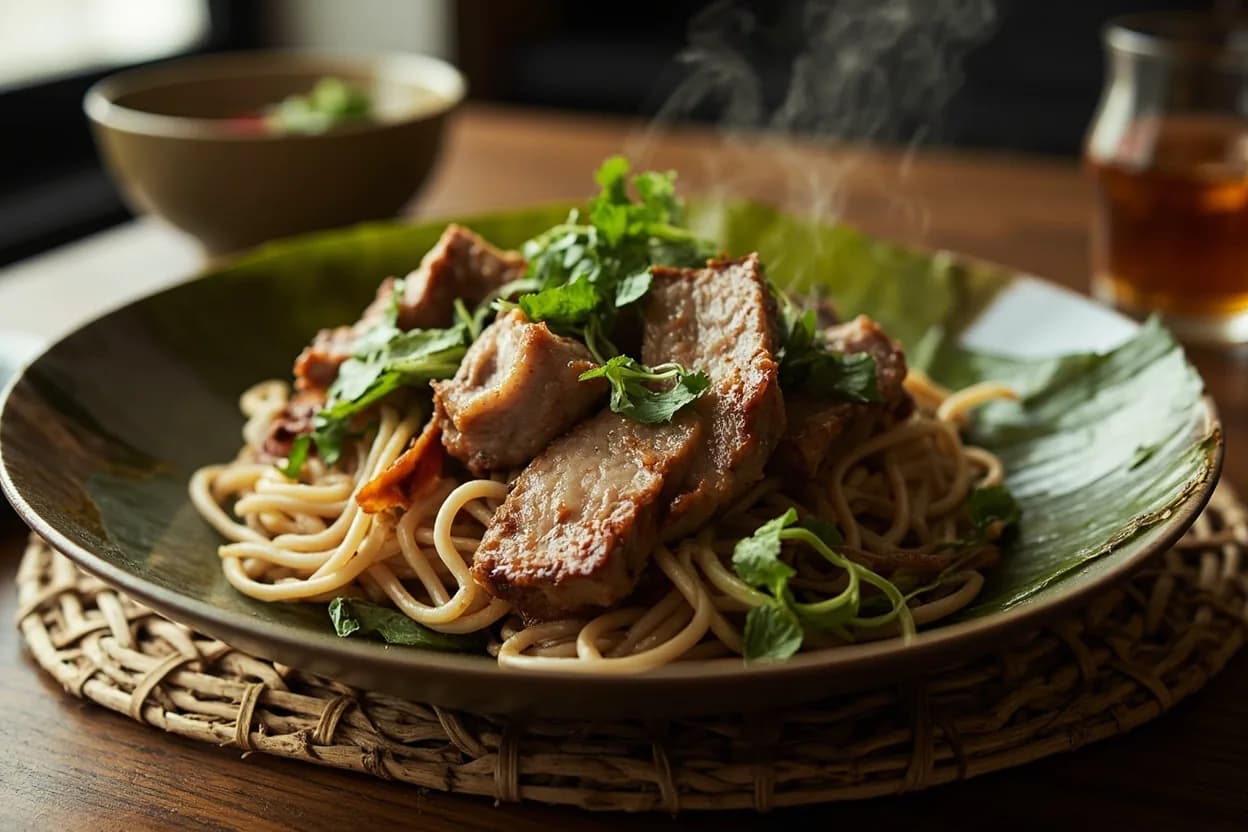

At the table
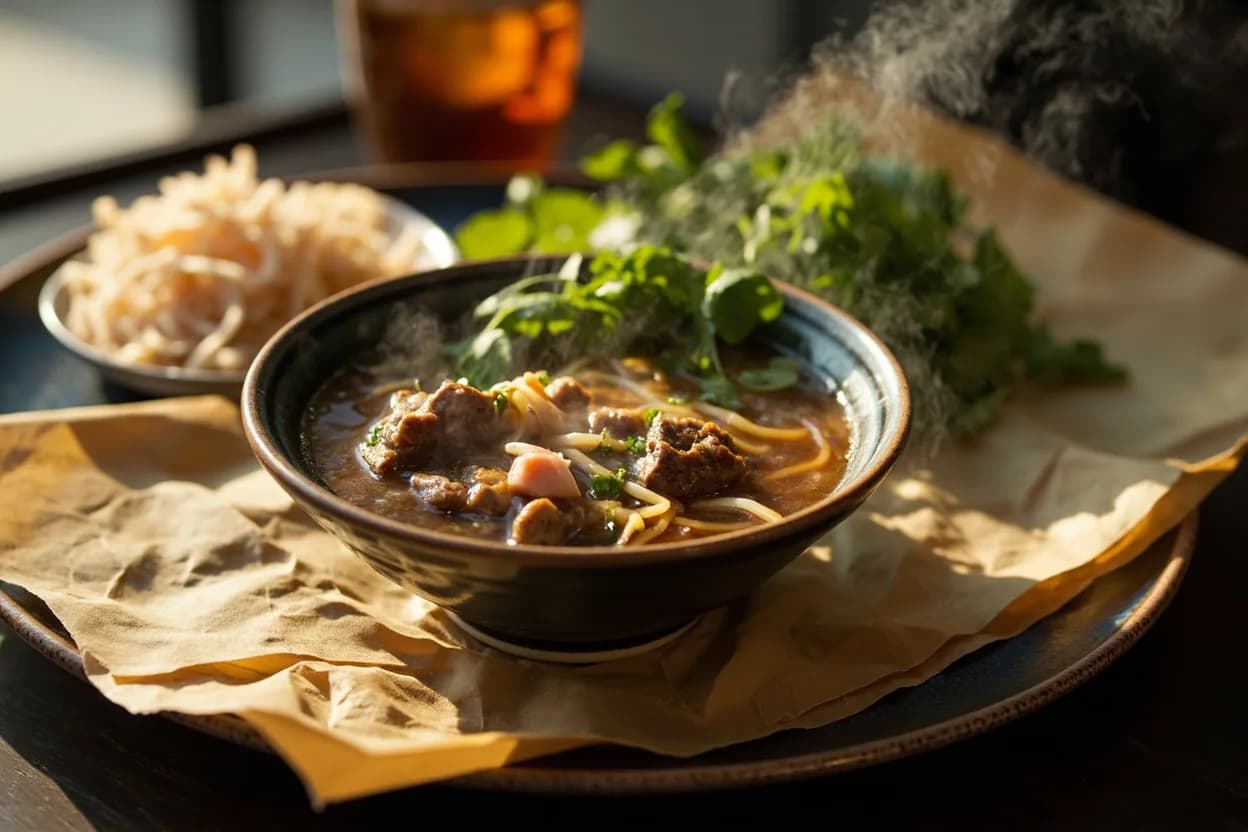
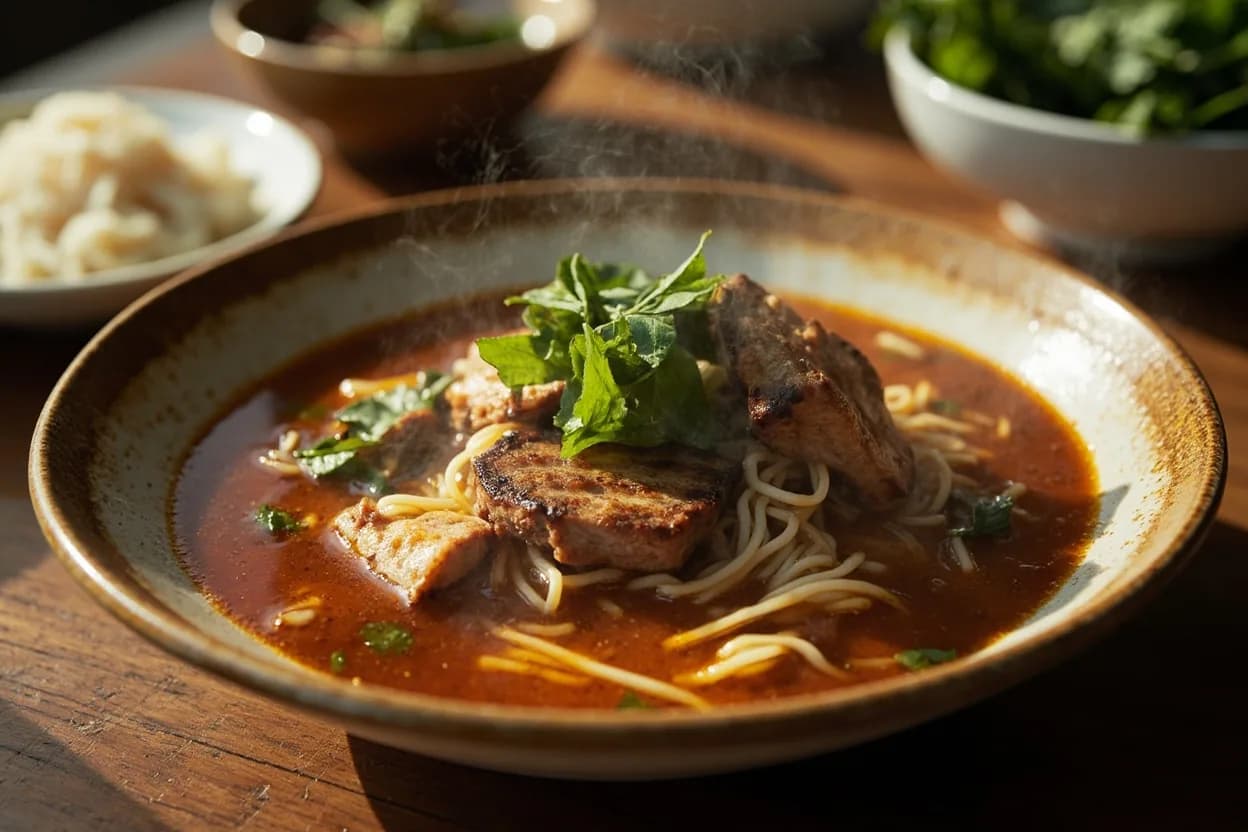
Meals center on a shared table of rice (cơm), a broth-based dish (canh), a protein, and pickled or braised vegetables. Street breakfasts are a distinct institution — pho, bun rieu, or banh cuon eaten standing or at low plastic stools. Dipping sauces (nuoc chấm) are individual and always present. Dessert is minimal; sweet che soups are a separate snack.
History & context
The Red River Delta has been the heartland of Viet civilization for over two millennia, with Chinese imperial rule (111 BCE–938 CE) leaving permanent marks on ingredients (tofu, soy, five-spice) while Viet cooks consistently transformed borrowed elements. Hanoi served as the capital of successive Vietnamese kingdoms, French Indochina's administrative heart, and later the capital of the Democratic Republic of Vietnam — each era compressing new ingredients and techniques into a city street-food culture of extraordinary density. Phở itself emerged in the late 19th–early 20th century around Nam Dinh and Hanoi, shaped by French bouillon traditions intersecting with Chinese beef broth and Vietnamese herb habits.
Regional variations
- Nam Định province
Birthplace of phở; local versions use wider noodles and darker broth.
- Hải Phòng
More seafood-centric; renowned for bánh đa cua, a crab noodle soup with broad purple rice noodles.
- Ninh Bình
Famous for goat meat preparations and com chay (scorched-rice crust), distinct from the capital's style.
Related cuisines
Southern cousin uses more sugar, coconut milk, and fresh chiles; pho broth is sweeter and richer.
- Vietnamese (Central / Hue)
Former imperial court cuisine; spicier, with more shrimp paste and elaborate presentation.
Centuries of influence visible in roast meats, dim-sum-adjacent items, and clear broth technique.
Canonical recipes
The dishes that define Vietnamese (Northern / Hanoi), documented in the Canon.
References
- 1.Into the Vietnamese Kitchen — Andrea Nguyen (Ten Speed Press, 2006)
- 2.The Food of Vietnam — Luke Nguyen (Murdoch Books, 2009)
- 3.Phở: A Documentary History — Vu Hong Lien (University of Hawaii Press, 2019)
- 4.Street Food of Vietnam — Vu Hong Lien (New Holland, 2016)
Confidence: high
Notes
The sweetness divide
The defining distinction between northern and southern Vietnamese cooking is sugar. Hanoians traditionally add none to phở broth or nuoc chấm; Saigonese add it freely. This is not just taste preference — it encodes a historical and cultural identity marker that northern cooks defend vigorously.
Dill: a northern signature
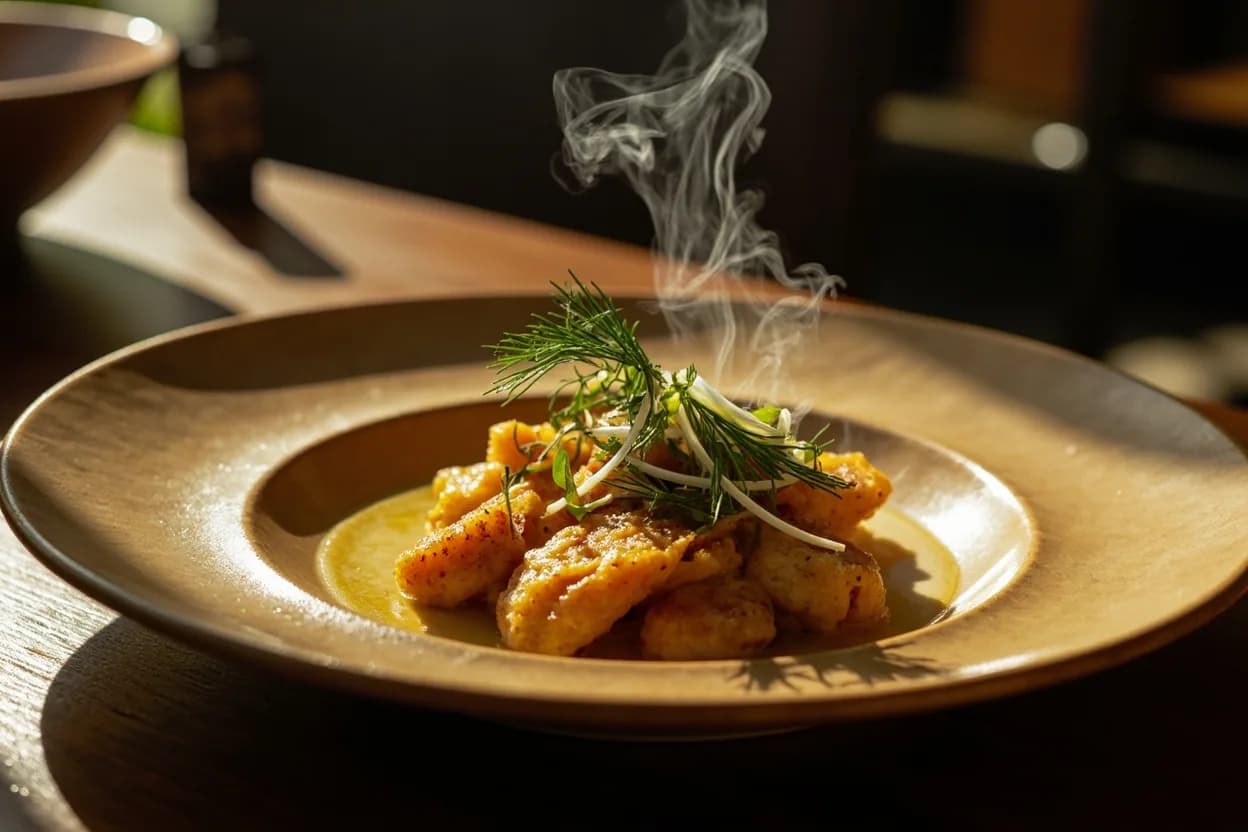
Dill is almost invisible in southern Vietnamese cooking but appears prominently in the north, most famously in chả cá Lã Vọng. Its presence may trace to French or northern Chinese culinary exchange during the colonial period.