Proteins
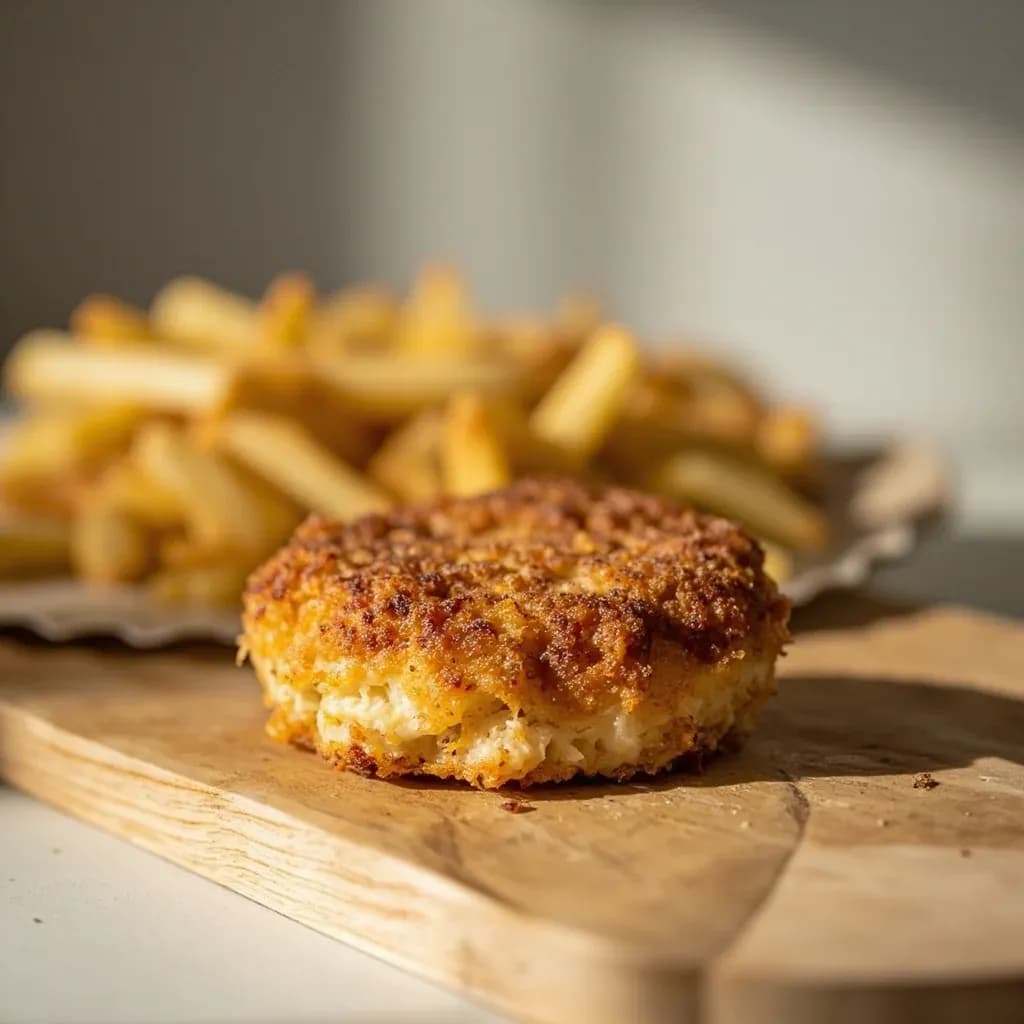
Breaded Chicken Patty
Pre-formed breaded chicken patty, fried or baked for sandwiches and quick meals.
A breaded chicken patty is a flat, pre-formed portion of ground or whole-muscle chicken coated in seasoned breadcrumbs. It is fried or oven-baked until crisp and most often served on a bun as a chicken sandwich. Convenient and freezer-friendly, it is a staple of cafeteria and home quick meals.
The breaded chicken patty occupies a practical middle ground in the protein landscape—distinct from whole-muscle cutlets because it is made from ground, chopped, or mechanically separated chicken, and distinct from nuggets because it is sold as a single flat patty rather than small irregular pieces. Commercial varieties typically use chicken breast or thigh meat combined with binders such as modified food starch, sodium phosphates, or whey protein concentrate, which help the patty hold together during cooking and retain moisture. The standard breading system follows the classic three-dip method: flour first, then egg wash, then breadcrumbs—usually standard fine breadcrumbs, Japanese panko for extra crunch, or Italian-seasoned varieties. For home cooks, a cast-iron skillet with a few tablespoons of oil heated to 350°F produces results equivalent to restaurant flat-top cooking. The patty's uniform shape and pre-formed coating make it uniquely suited to high-volume applications where consistency matters more than presentation—school cafeterias, fast-casual chains, and anywhere a reliable 4-ounce protein portion is needed in under ten minutes. When selecting frozen commercial varieties, check sodium content carefully: brands range from 300–700 mg per patty, and those with excessive extenders sacrifice chicken flavor for volume.
- Measured in
- piece
- Storage
- Freezer
Allergens
Types & varieties
Standard crumb coating, mild seasoning; versatile for sandwiches and quick meals
Thicker, crunchier breading using panko or double-battered coating; popular for sandwiches and a la carte service
Seasoned with oregano, garlic powder, and Romano or Parmesan in the breading; suited for Italian sandwiches and wraps
Contains ham and Swiss cheese inside the patty; available as fully cooked or ready-to-cook versions
Not breaded but often grouped here for sandwich applications; different preparation entirely
Made from chunked chicken rather than formed patty; irregular shape, same breading process
Breading includes cayenne, paprika, or Cajun seasoning blend for heat-forward applications
Uses rice flour, cornmeal, or gluten-free breadcrumbs; same form factor and usage
Commercial vs. Homemade
Commercial frozen breaded chicken patties contain functional additives—sodium phosphates for moisture retention, modified food starch for binding, and whey protein for texture stability—that allow them to hold together during high-heat cooking and reheating. Homemade versions using ground chicken can skip these but should include a small amount of binder (1–2 tablespoons of breadcrumbs or a lightly beaten egg per pound of meat) to prevent crumbling on the griddle. The trade-off is that commercial patties often taste processed compared to fresh-ground chicken seasoned and breaded at home, and sodium levels warrant attention for health-conscious cooks.
- Commercial varieties: check ingredient lists for sodium content and avoid those with excessive extenders if chicken flavor is the priority
- Homemade versions: season the ground meat directly with salt, garlic powder, and a touch of paprika before breading for flavor that penetrates the patty
The Three-Dip Breading Method
The flour-egg-breadcrumb system works because each layer serves a specific purpose. Flour provides a dry surface for the egg to adhere to and creates a barrier that prevents the meat from steaming in its own moisture. The egg wash acts as the adhesive, its protein forming a bond with both the flour beneath and the breadcrumbs above. The breadcrumbs provide the visible crunch and color. Skipping the flour dip or not allowing the egg to drain slightly before breading are the two most common home-cooking mistakes that cause breading to fall off during cooking.
- Let breaded patties rest on a wire rack for 5 minutes after coating to allow the breading to set before cooking
- For extra crispy results, use panko breadcrumbs and mist the breaded surface lightly with cooking spray or oil before cooking
- Double-battering (flour-egg-breadcrumbs-egg-breadcrumbs) creates an exceptionally thick, crunchy crust
Common uses
Tips & pitfalls
- Bring frozen patties to refrigerator overnight for even cooking; if cooking from frozen, add 2–3 minutes per side and verify center temperature
- Do not crowd the pan or cooking surface—overlapping causes uneven browning and steaming instead of crisping
- Season the meat itself before breading, not just the coating; salt and a touch of paprika or garlic powder in the chicken blend builds flavor through the patty
- For extra crispy results, use panko breadcrumbs and a light misting of cooking spray or oil on the breading before cooking
- Let breaded patties rest on a wire rack for 5 minutes after coating to allow the breading to adhere before hitting the heat
- Flip only once; frequent flipping breaks the crust and releases the breading into the oil
- Use a heavy-bottomed skillet or cast iron to maintain consistent temperature across the cooking surface
- After cooking, rest for 1–2 minutes on a wire rack (not paper towels) to prevent the breading from steaming and losing crunch
- For oven baking, place patties directly on a parchment-lined baking sheet at 400–425°F; flipping halfway through is essential for even browning
- Air fryers work well at 375°F for 10–12 minutes, flipping at the 6-minute mark; no oil spray needed for most frozen commercial varieties
- Press gently when forming homemade patties to eliminate air pockets that cause crumbling during cooking
- Verify internal temperature with an instant-read thermometer inserted sideways into the center—165°F is the USDA minimum for poultry
Nutrition
Energy
1222 kJ · per 100 g
Where the calories come from
Protein
14.3g
29% DV
Carbs
13.6g
5% DV
Fat
20g
26% DV
Fiber
1.2g
4% DV
Sugars
0g
of which
Sodium
518mg
23% DV
Source · USDA FoodData Central · approx. Chicken patty, frozen, uncooked
View on FDC →In the shops
Matched grocery products
No matched grocery products for Breaded Chicken Patty yet.
Good to know
- Primary protein source
- Chicken breast or thigh meat, often mechanically separated or finely ground
- Typical dimensions
- 4–5 inches diameter, ½–¾ inch thick; roughly 4 oz (113 g) per patty
- Protein content
- 15–22 g per patty, depending on formulation and size
- Breading system
- Flour dip, egg wash, then breadcrumbs (panko, Italian-style, or standard fine)
- Cooking methods
- Pan-frying, deep-frying, oven-baking, air-frying, griddle cooking
- Safe internal temperature
- 165°F (74°C) minimum, measured at center with instant-read thermometer
- Frozen shelf life
- 6–12 months at 0°F (-18°C) or below
- Refrigerated shelf life
- 1–2 days raw; 3–4 days cooked
- Commercial availability
- Ubiquitous frozen in grocery stores; fresh refrigerated versions at some deli counters
- Typical fat content
- 8–15 g per patty in commercial varieties; varies widely by brand
Substitutes
- Turkey Patty — Similar protein-to-weight ratio; slightly leaner; works in sandwiches and for breading using same method
- Pork Schnitzel — Different protein but same breaded, pan-fried format; notably different flavor but interchangeable in technique
- Breaded Cod or Tilapia Fillet — For fish sandwich applications; similar texture profile but distinct flavor; cooks faster due to thinner profile
- Plant-Based Chicken Patty — Made from soy, wheat gluten, or pea protein; similar breading and cooking technique; different mouthfeel
- Breaded Eggplant Patty — Vegetarian option for sandwich format; must be cooked at lower temperature to avoid burning the breading before eggplant softens
- Chicken Fried Steak Patty — Beef instead of chicken; identical technique and sandwich usage; common in Southern and diner cuisine
Pairs with
Also called
Chicken Patty · Breaded Chicken Fillet
Related
Egg
The kitchen's everything ingredient — bind, leaven, enrich, or fry
Chicken Breast
Lean, quick-cooking white meat for everyday dinners

Ground Beef
Versatile minced beef for burgers, ragù, tacos, and meatballs
Pork Loin
Lean, tender roasting cut that stays juicy with care
Salmon
Rich, rosy fish that roasts, grills, or cures beautifully

Egg White
Pure protein that whips to airy peaks for meringue and more
Egg Yolk
Rich, golden yolk for custards, mayonnaise, and pasta

Quail Egg
Tiny, speckled eggs for garnishing and elegant bites