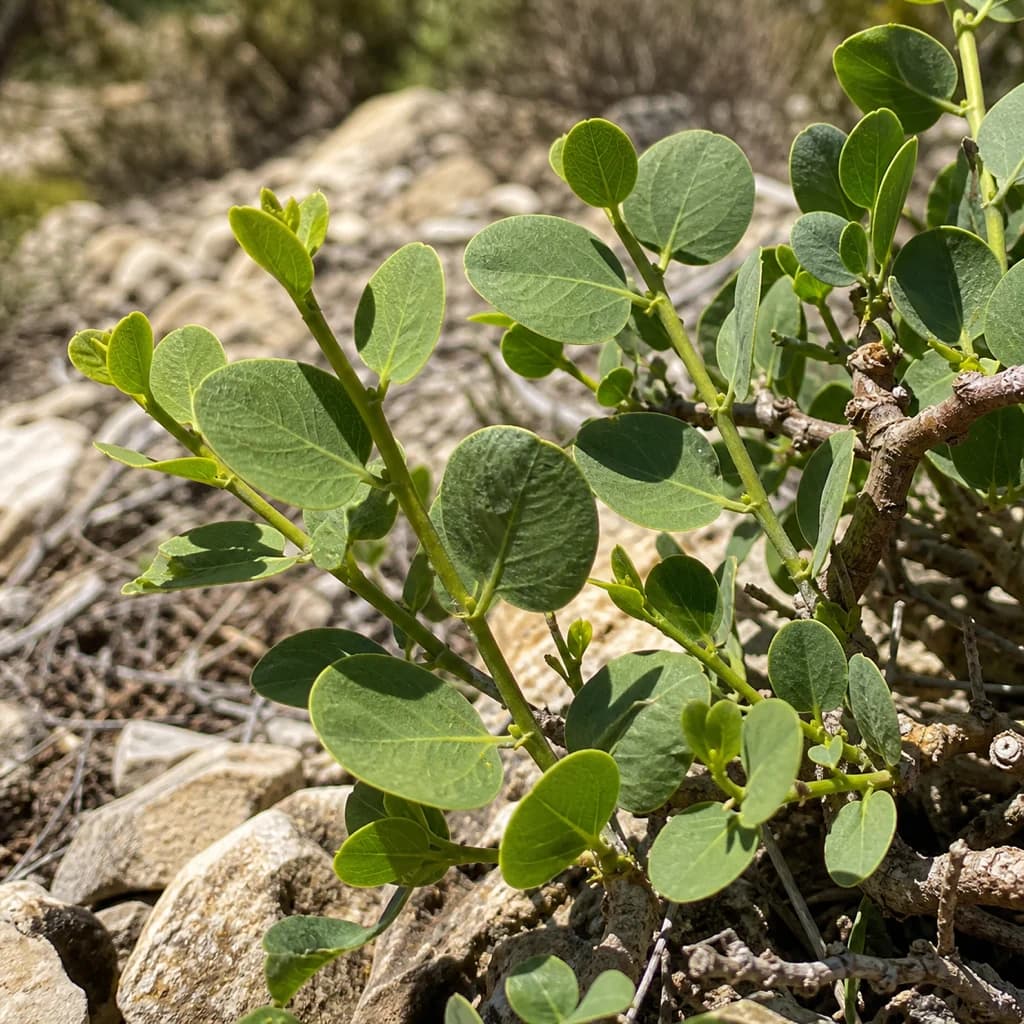
Natural form
Fresh young caper leaves and stems on the caper bush, showing their oval shape and waxy texture.
Shows the ingredient in its living plant context so readers can identify the caper bush and its leaves before processing.
Produce
Caper Leaf
Tender leaves of the caper plant, brined and used like capers in Greek cooking.
Caper leaves (kappari) are the young leaves and tender stems of the caper bush, pickled in brine like the more familiar caper buds. Common in Greek and Mediterranean cooking, they are tossed into salads, mezze, and fish dishes for a tangy, herbaceous, slightly briny bite. They are softer than caper buds but share the same salty-sour profile.
Caper leaves are the tender young foliage of Capparis spinosa, the same Mediterranean shrub that yields caper buds. Where capers are prized for their intensely briny, floral bite, the leaves deliver a different character: more vegetal, with a clean lemony bitterness and a soft, yielding texture that holds up well in cooked dishes but wilts quickly when dressed. They occupy an overlooked niche in the pantry—more assertive than most salad greens yet milder and more herbal than their botanical siblings. Brined caper leaves are the most accessible form outside specialty markets; they arrive in jars with a vinegar-sour brine that tames their bitterness and adds a pleasant acidic edge. Salted leaves, packed in coarse salt, require a quick rinse but offer a more direct, concentrated flavor. In Greek rural and agricultural cooking, caper leaves have long been gathered from hedgerows and treated as a wild green: blanched, sautéed with garlic and lemon, and served alongside roasted meats or as part of a meze spread. Their versatility is their strength—they can step in for caper buds at table, play the role of an assertive salad green, or function as a flavor base for braises and sauces. Outside traditional regions, they remain genuinely underused, which is a missed opportunity for cooks building a pantry rooted in Mediterranean technique.
- Measured in
- g
- Storage
- Fridge
Types & varieties
Seasonal; used in Greek rural cooking, blanched or sautéed like wild greens (horta)
Most common commercial form; sold in jars submerged in vinegar brine; ready to use with a brief rinse
Packed in coarse salt; require rinsing before use; more concentrated flavor
From Shrub to Pantry
The caper bush is a tough, sprawling Mediterranean perennial that thrives in rocky, dry conditions—often sprouting from old walls and limestone cliffs. Its new spring growth produces the most tender leaves, which is when foragers and farmers harvest them for immediate use or preservation. The leaves are larger and flatter than many herb leaves, with a slightly leathery surface that becomes silkier once cooked. Unlike caper buds, which are picked before they open, leaves are harvested over a longer window, which means the quality varies: young shoot leaves are supple and mild; leaves from older, woody stems are tougher and more astringent. This is why provenance matters—when buying fresh or brined, seek out suppliers who specify the source region and season.
- Young shoot leaves are noticeably more tender than those from mature woody stems
- Brined leaves in jars should have bright olive-green color; avoid any with dull or brownish hues
- Salted leaves often have stronger flavor than brined—taste and adjust before using
How They Differ from Caper Buds
Caper buds and caper leaves come from the same plant, but they behave very differently in a dish. Caper buds deliver an immediate, punchy briny acidity that punctuates a sauce or garnish—they are used in small quantities for sharp punctuation. Caper leaves are volumetric: larger, softer, and more subdued in saltiness, requiring roughly twice the volume to achieve comparable impact. Their flavor base is broader—citrusy, herbal, mildly bitter—and their texture is that of a tender green rather than a garnish. This makes them suitable for applications where caper buds would be lost or unwelcome: mixed into salads, folded into egg dishes, or layered into braises where you want the flavor woven through the dish rather than spotted on top.
- Use roughly twice as many leaves as you would caper buds when substituting
- Leaves integrate into dishes; caper buds add punctuation; choose based on the role you need them to play
- The slightly bitter edge of leaves is an asset in balancing rich or fatty dishes; caper buds lack this depth
Common uses
Tips & pitfalls
- Rinse brined leaves briefly under cold water to control saltiness, especially if the brine is the dominant flavor on the palate
- Add brined or salted leaves to cooked dishes in the last 2–3 minutes of cooking to preserve their bright green color and tender texture
- Fresh leaves wilt rapidly—buy from sources with fast turnover, or grow your own plant if you have a sunny, well-drained spot
- For salads, dress simply with good olive oil and lemon; the leaves don't need heavy seasoning to shine
- If substituting for caper buds, use roughly twice the volume since leaves are larger and milder per piece
- Caper leaves from young shoots are noticeably more tender than those harvested from older woody stems—ask your supplier if possible
- In Greek rural tradition, they are often blanched briefly, sautéed with garlic and onion, and finished with lemon juice; this is one of the most reliable preparations
- Common mistake: overcooking—treat them like spinach or chard, not like a sturdy vegetable that benefits from long cooking
- Salted leaves can be too intense straight from the jar; a brief rinse and short soak reduces both salt and bitterness
- When buying brined leaves, check that they are fully submerged in brine with no floating or discolored pieces
Nutrition
Energy
96 kJ · per 100 g
Where the calories come from
Protein
2.5g
5% DV
Carbs
4g
1% DV
Fat
0.3g
0% DV
Sodium
20mg
1% DV
Source · USDA FoodData Central · approx. Amaranth leaves, raw
View on FDC →In the shops
Matched grocery products
No matched grocery products for Caper Leaf yet.
Good to know
- Source plant
- Capparis spinosa, the same shrub that produces caper buds
- Origin
- Mediterranean basin, Middle East, and Central Asia
- Harvest
- Young, tender leaves collected in spring and early summer before they become tough and fibrous
- Typical preservation
- Brined in vinegar or packed in coarse salt; brined is most common commercially
- Flavor
- Lemony, slightly bitter, herbaceous; more vegetal and less assertive than caper buds
- Color
- Bright green when fresh; olive-green when brined or salted
- Shelf life
- Brined: 6–12 months refrigerated; salted: 9–12 months refrigerated; fresh: use within 1–2 days
- Primary cuisines
- Greek, Italian (Sicilian and Calabrian), Lebanese, Turkish
Substitutes
- Caper buds (capers) — More pungent and briny; use roughly half the volume of leaves called for
- Pickled small olives — Provide salt and brine flavor but lack the lemony, herbaceous quality of caper leaves
- Fresh lemon verbena leaves — Offer a similar clean lemony, herbaceous note when chopped; softer texture, so add at the end of cooking
- Young nasturtium leaves — Comparable tender texture and slight peppery bite; less citrus, more green
Pairs with
Also called
Kappari · Caper Leaves · Caper Leaf
Related

Tomato
Juicy, sun-sweet fruit for sauces, salads, and slow-cooked depth

Yellow Onion
The aromatic backbone of soups, sofritos, and braises

Garlic
Pungent cloves that perfume nearly every savory dish

Lemon
Bright, acidic citrus that wakes up almost any dish

Potato
Humble, hearty staple — roast, mash, fry, or boil

Carrot
Sweet, crunchy root — raw, roasted, or the base of a sofrito

Cucumber
Cool, crisp, and watery — for salads, pickles, and tzatziki

Lettuce
Crisp leaves for salads, wraps, and a fresh crunch