Proteins
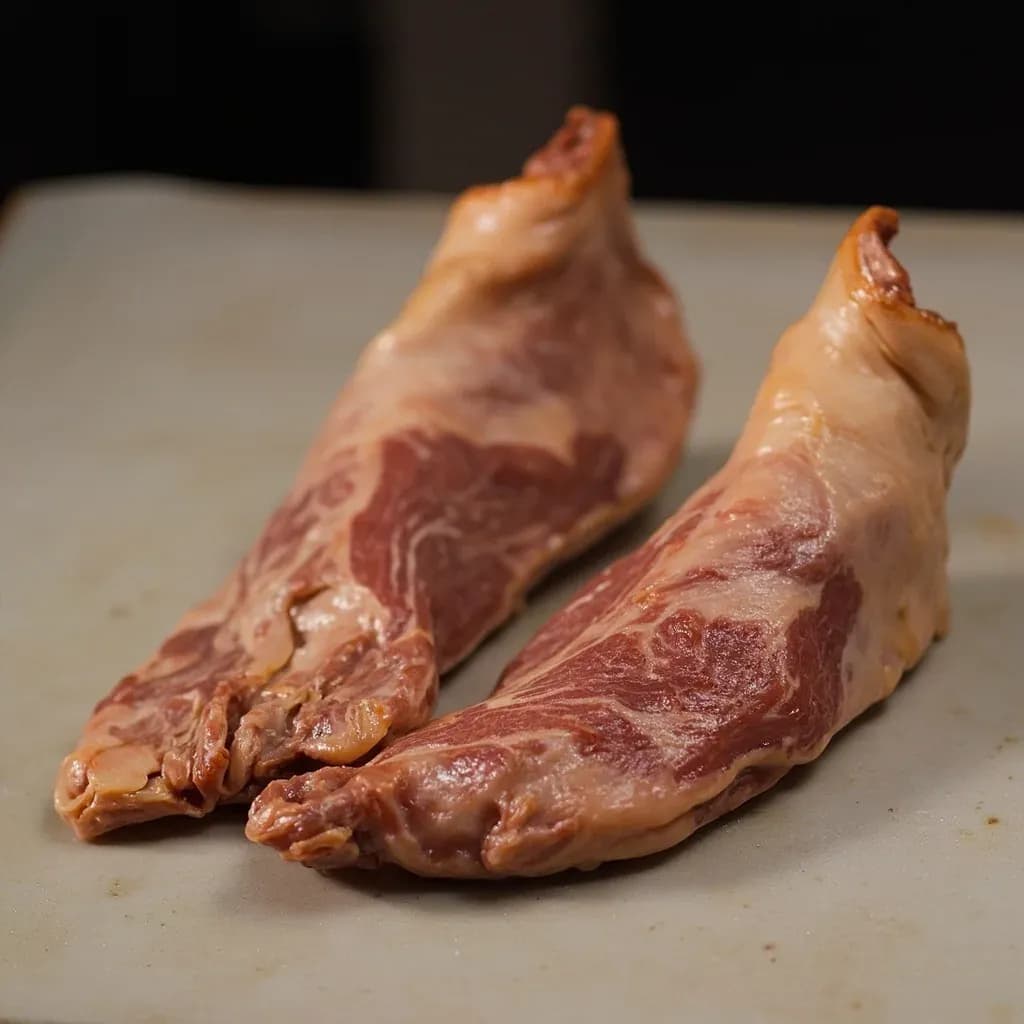
Cow Feet
Gelatin-rich bovine feet simmered low and slow for sticky soups and stews.
Cow feet are the lower leg and hoof of cattle, prized for the collagen and gelatin they release during long cooking. They are central to dishes like Jamaican cow foot stew, Filipino kansi, and various braises across Africa and the Caribbean. Hours of simmering turn the cartilage soft and the broth silky.
Cow feet are a nose-to-tail pantry staple prized almost entirely for their extraordinary collagen content. The feet consist primarily of cartilage, skin, connective tissue, and bone—all wrapped in a thin layer of fat on the exterior. When subjected to prolonged moist heat, this collagen hydrolyzes into gelatin, enriching and bodying-up liquids to a degree that surpasses even beef bones. A single pound of cow feet yields two to three times the gelatin of an equivalent weight of beef bones, making them extraordinarily efficient for building stocks, soups, and sauces with a silky, viscous texture.
Flavor is not their forte. Cow feet contribute almost no taste of their own; the cooking liquid defines the finished dish entirely. This neutrality is both their limitation and their strength—they absorb and amplify whatever aromatics, spices, and seasonings you build around them. In Vietnamese phở, they produce a clear, clean-tasting broth. In West African cow foot soup, they carry the weight of palm oil, crayfish, and scotch bonnet. In Appalachian souse, they set into a firm, jelly-like aspics. The feet themselves, when cooked through, become texturally distinct: tender-crisp cartilage, silky skin, and meat that clings to the bone in small, satisfying portions.
Availability varies by region. Butcher shops are the most reliable source in the US; request split feet if possible for easier handling. Latin American mercados, African and Caribbean markets, and some Asian grocers also carry them regularly. They are typically sold pre-split lengthwise, precooked and vacuum-sealed, or frozen. Fresh feet should be pale with clean-cut surfaces and no sour or gamy odor. Frozen feet keep up to six months; refrigerated raw feet should be used within two to three days.
- Measured in
- g
- Storage
- Fridge
Types & varieties
Smaller, thinner bones with less tissue; preferred for delicate stocks and refined soups
Larger, meatier sections with more cartilage; chosen for hearty stews and generous portions
Halved lengthwise by the butcher; the most common retail form and the easiest to clean and cook evenly
Left intact; used primarily for decorative aspics or traditional whole preparations
Common uses
Tips & pitfalls
- Blanch before the main simmer: submerge in cold water, bring to a full boil for 5 minutes, then drain and rinse thoroughly. This removes blood, impurities, and residual debris that would cloud the liquid and introduce off-flavors.
- Use a pressure cooker. One hour at high pressure replaces six to eight hours of conventional simmering and produces a cleaner, clearer result with no loss of gelatin extraction.
- Cook until the cartilage is completely dissolved or very soft. The feet are done when you can pull the bone away from the joint with minimal resistance—if there is still firm resistance, keep cooking.
- Strain and chill the cooking liquid separately. If it sets firmly into a jiggle when cold, the gelatin has fully extracted. Use this as a base for any soup, sauce, or braising liquid.
- Never cook on high heat. A vigorous boil turbids the liquid and can toughen the connective tissue. Maintain a gentle bare simmer throughout—small bubbles rising infrequently.
- Season at the end, not the beginning. Long simmering dulls delicate aromatics added too early. Build the broth in stages: add sturdy aromatics early, finish with fresh herbs and finishing salt.
- Add acidic ingredients only in the final hour of cooking. Tomatoes, vinegar, citrus, and fermented condiments added early will inhibit collagen from fully dissolving into gelatin.
- Serve the feet themselves. After cooking, the pieces become a textural element in the soup—skin, cartilage, and small meat fragments are meant to be eaten, not discarded. Slice or portion them before serving.
- Do not discard the feet when making stock. The single most common mistake is removing the feet too early, thinking the stock is finished. Retain them for the entire cooking time to maximize gelatin yield.
Nutrition
Nutrition
No USDA FoodData Central match for Cow Feet yet. We surface a per-100 g profile once a generic whole-food entry is matched and verified.
In the shops
Matched grocery products
No matched grocery products for Cow Feet yet.
Good to know
- Type
- Bovine (cattle) feet, split and cleaned
- Primary Component
- Collagen-rich connective tissue, cartilage, skin, and bone
- Collagen Content
- Extremely high; yields 2–3× more gelatin per pound than beef bones
- Fat Content
- Very low; most fat renders out during cooking and is discarded
- Flavor Contribution
- Neutral; the cooking liquid and aromatics define all flavor
- Yield
- 1 lb raw feet → 3–4 cups cooked pieces or 2–3 cups strained stock
- Form Sold
- Split lengthwise, whole, or in sections; usually precooked, vacuum-packed, or frozen
- Cooking Time
- 3–8 hours conventional; 45–90 minutes pressure cooker
- Shelf Life
- Refrigerated 2–3 days; frozen up to 6 months
- Cultural Origin
- Used across West Africa, Caribbean, Latin America, Southeast Asia, and Southern US
Substitutes
- Beef Knuckles — Similar gelatin yield but with more meaty flavor; requires longer cooking to fully extract collagen
- Beef Neck Bones — Good gelatin content with more meat attached; widely available at butcher counters and standard grocery stores
- Pork Feet — Nearly equivalent collagen content; common substitute in European and Asian cuisines; the fat has a slightly sweeter profile
Pairs with
Also called
Cow Foot · Beef Feet
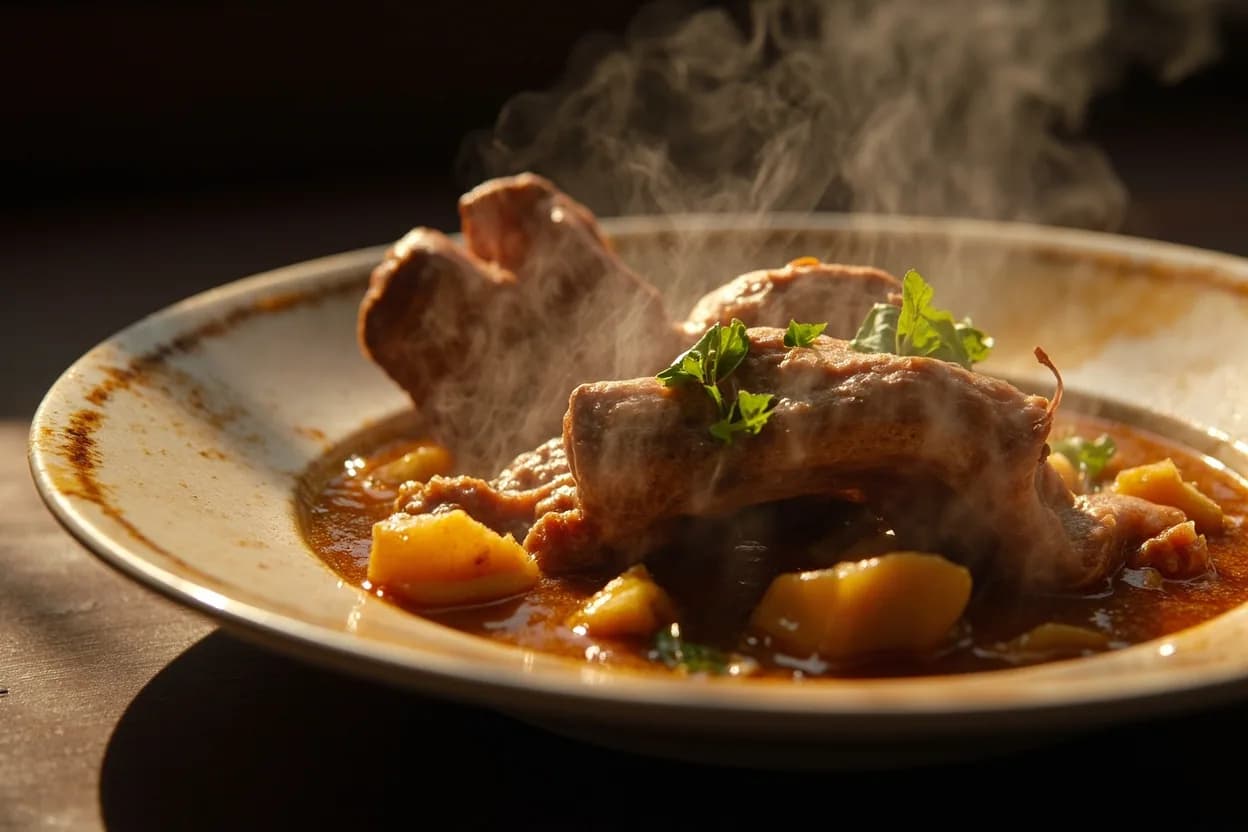
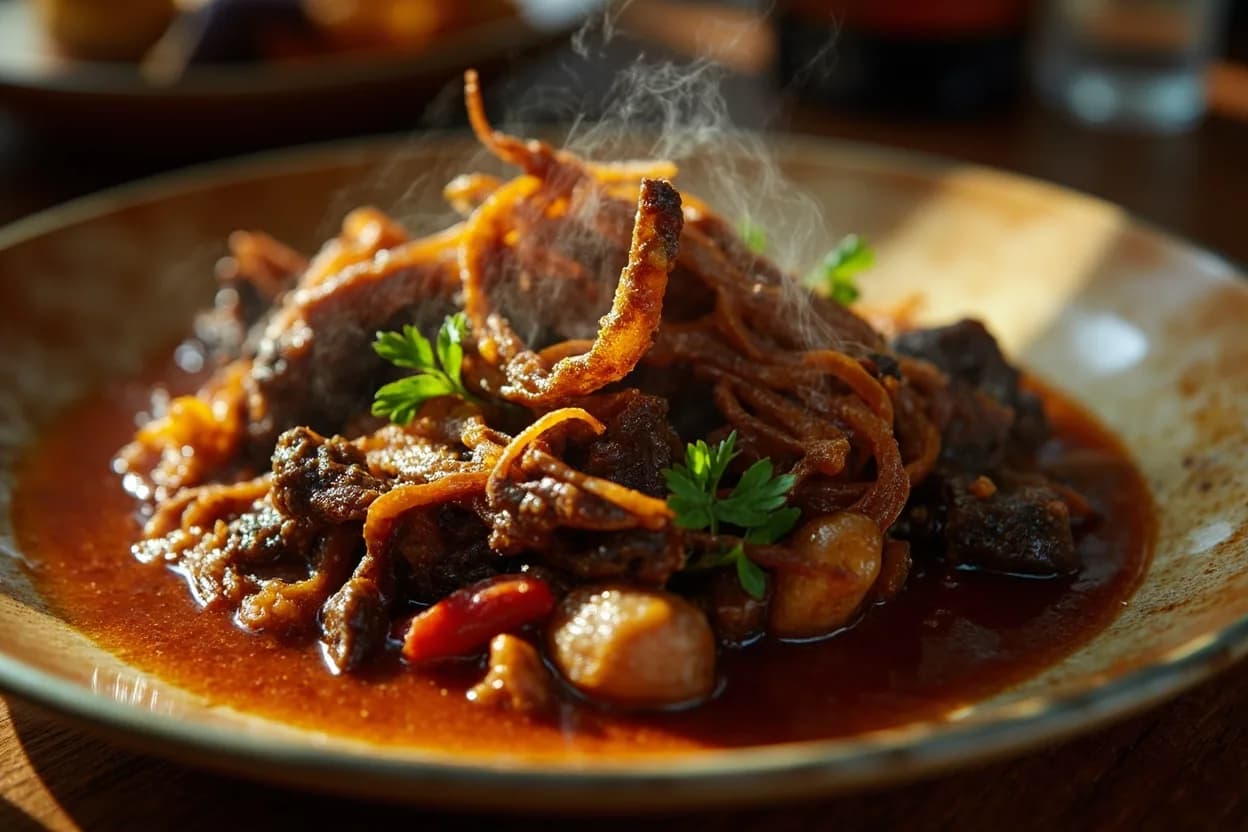
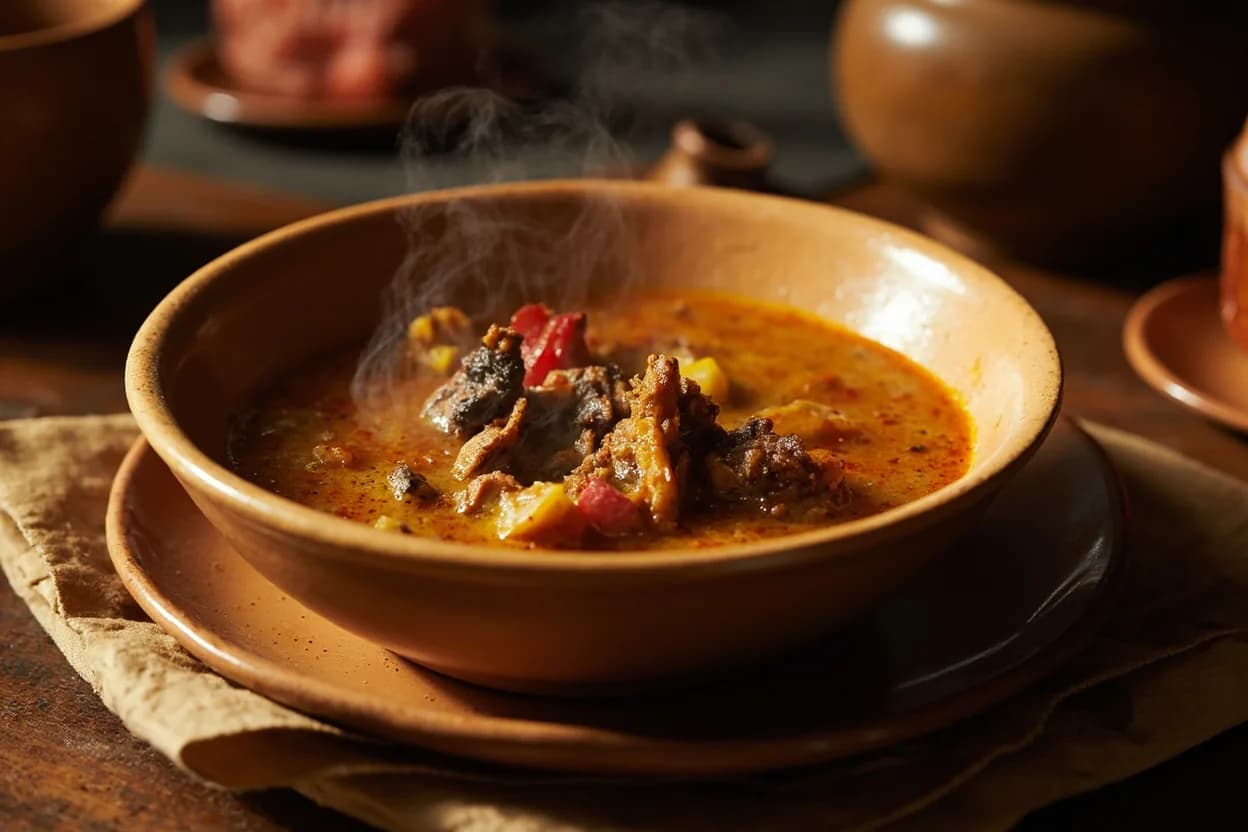
Appears in these dishes

Related

Egg
The kitchen's everything ingredient — bind, leaven, enrich, or fry

Chicken Breast
Lean, quick-cooking white meat for everyday dinners

Ground Beef
Versatile minced beef for burgers, ragù, tacos, and meatballs

Pork Loin
Lean, tender roasting cut that stays juicy with care

Salmon
Rich, rosy fish that roasts, grills, or cures beautifully

Egg White
Pure protein that whips to airy peaks for meringue and more

Egg Yolk
Rich, golden yolk for custards, mayonnaise, and pasta

Quail Egg
Tiny, speckled eggs for garnishing and elegant bites