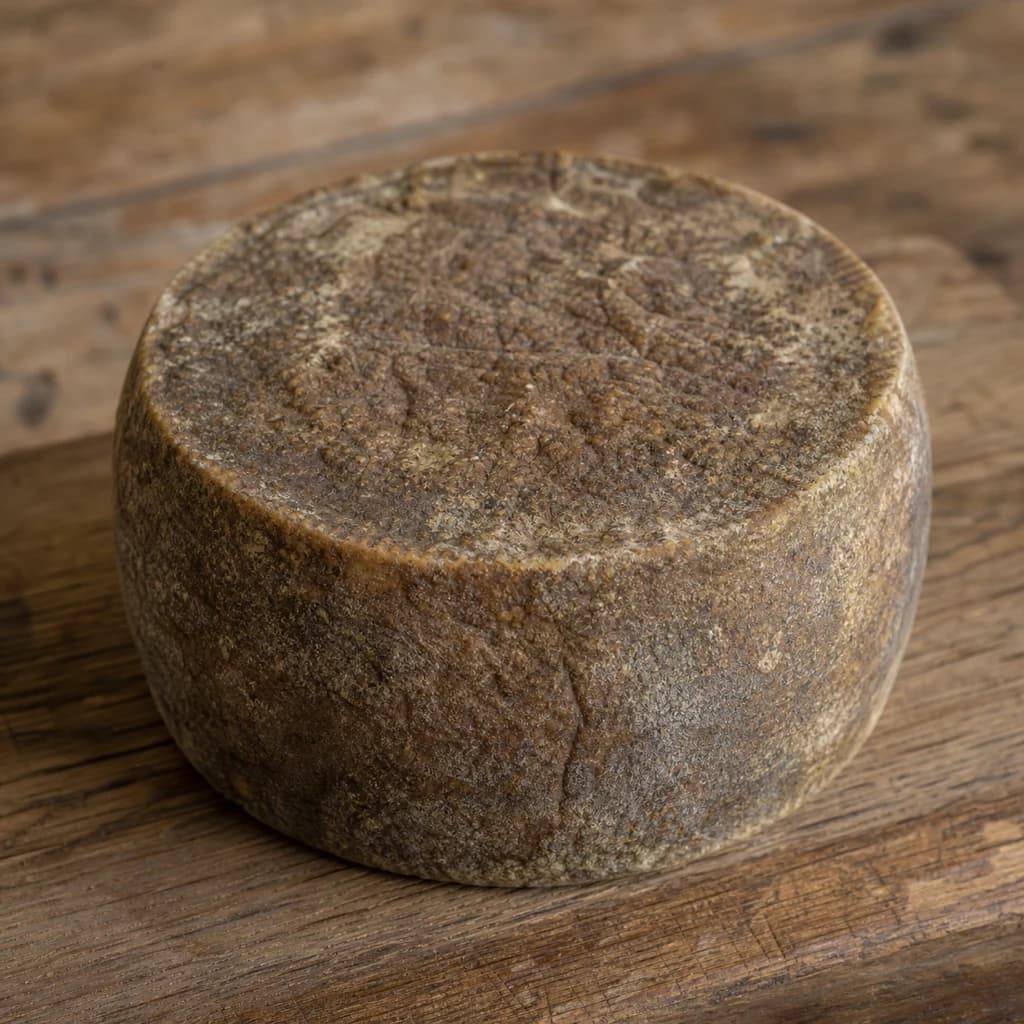
Natural form
A whole aged Fiore Sardo wheel showing its dark, wrinkled rind and compact form.
Shows readers the intact cheese wheel with its distinctive smoked, darkened exterior so they can recognize it at a market or cheese counter.
Dairy & Eggs
Fiore Sardo (Smoked Sheep Cheese)
Sardinian raw sheep's-milk cheese, lightly smoked and aged to a sharp, gamey bite.
Fiore Sardo is a traditional Sardinian cheese made from raw sheep's milk, often lightly smoked over open fires and aged for several months. It develops a hard, crumbly texture with a sharp, salty, slightly gamey flavor. It is grated over pasta, eaten in chunks with bread and honey, or used like Pecorino in Sardinian cooking.
Fiore Sardo is one of Italy's oldest PDO-protected cheeses, produced in Sardinia from raw sheep's milk using methods that have remained largely unchanged for centuries. The cheese is dry-salted by hand and traditionally pressed into cylindrical wheels in esparto grass molds before aging for a minimum of 60 days. Its flavor profile develops distinctly: the unsmoked variant offers a clean, direct expression of aged sheep's milk—sharp, tangy, and mineral-saline with a characteristic barnyard quality—while the smoked version (Fiore Sardo Affumicato), which dominates export markets, adds a gentle wood-fired aroma without overwhelming the underlying sheep's milk character.
What sets Fiore Sardo apart from more common grating cheeses like Pecorino Romano is its complexity and the presence of that distinctly animal, almost gamey edge that intensifies with prolonged aging. The texture is firm, compact, and granular, sometimes slightly crumbly, making it excellent for both table service and fine grating. Because it is made with traditional lamb or kid rennet, authentic Fiore Sardo carries the full, robust character of animal-based coagulation—a point of distinction that also means it is unsuitable for vegetarians. When purchasing, tap the wheel: a firm, solid sound indicates good density and proper aging, while a dull thud suggests moisture problems within the paste.
- Measured in
- g
- Storage
- Fridge
Allergens
Types & varieties
The smoked variant; more common outside Italy. Traditionally smoked over beech or other local woods, yielding a gentle campfire aroma without overpowering the underlying sheep's milk character.
Unsmoked version; more readily found in Sardinia. Cleaner, more direct expression of aged sheep's milk: sharp, tangy, mineral.
Aging and Flavor Development
The minimum 60-day aging period represents just the beginning of Fiore Sardo's flavor evolution. Young wheels (60–90 days) offer a milder, more approachable tang suitable for table service and light grating. Wheels aged six months or longer develop the sharp, intensely savory quality prized for cooking applications. The rind naturally darkens over time, and slight surface mold is normal and harmless—simply scrape it away before using.
- Young Fiore Sardo (60–90 days): milder, better for slicing
- Aged wheels (6+ months): sharper, better for grating
- Slight surface mold is normal; remove before use
Common uses
Tips & pitfalls
- When substituting in recipes calling for Pecorino Romano: remember Fiore Sardo is milder and less salty — adjust seasoning accordingly.
- Grate or crumble directly from cold refrigerator; the firm, aged texture makes room-temperature grating cleaner and produces less mushy shreds.
- If the smoked variety is too assertive for a dish, balance with a touch of honey or a squeeze of lemon to round the smoky-salt edge.
- Store in the vegetable drawer, wrapped in wax paper inside a partially closed plastic bag — cheese needs humidity but not saturation.
- Older wheels with slight surface mold are still fine; scrape off mold, the interior is unimpaired.
- When buying, tap the wheel: a firm, solid sound indicates good density; a dull thud suggests moisture issues.
- Avoid using in dishes requiring smooth melting—Fiore Sardo browns before it melts evenly due to low moisture content.
Nutrition
Nutrition
No USDA FoodData Central match for Fiore Sardo (Smoked Sheep Cheese) yet. We surface a per-100 g profile once a generic whole-food entry is matched and verified.
In the shops
Matched grocery products
No matched grocery products for Fiore Sardo (Smoked Sheep Cheese) yet.
Good to know
- Origin
- Sardinia, Italy (PDO protected)
- Milk
- Raw sheep's milk (Sardinian breed)
- Type
- Hard, aged table and grating cheese; available smoked or unsmoked
- Texture
- Firm, compact, granular, sometimes slightly crumbly
- Aging
- Minimum 60 days; longer aging yields sharper, more pungent flavor
- Coagulant
- Traditional lamb or kid rennet (required for PDO)
- Rind
- Natural, thin, darkening with age
- Shelf life
- Refrigerated, wrapped in wax paper: 4–6 weeks
Substitutes
- Pecorino Romano — Harder and saltier; reduce salt in the dish when using as a direct swap.
- Pecorino Sardo (Pecorino di Mogoro) — Another Sardinian sheep cheese; similar flavor profile, though typically less complex than aged Fiore Sardo.
- Aged Manchego — Spanish sheep's milk cheese; similar texture and tangy depth, though distinct terroir and grass notes.
- Pecorino Toscano (aged) — Milder than Fiore Sardo but workable in pasta and salad applications where a subtler sheep's milk note is acceptable.
Pairs with
Also called
Casu Axedu (Sour Sheep Cheese)
Related

Whole Milk
Rich, full-fat milk for drinking, coffee, sauces, and baking
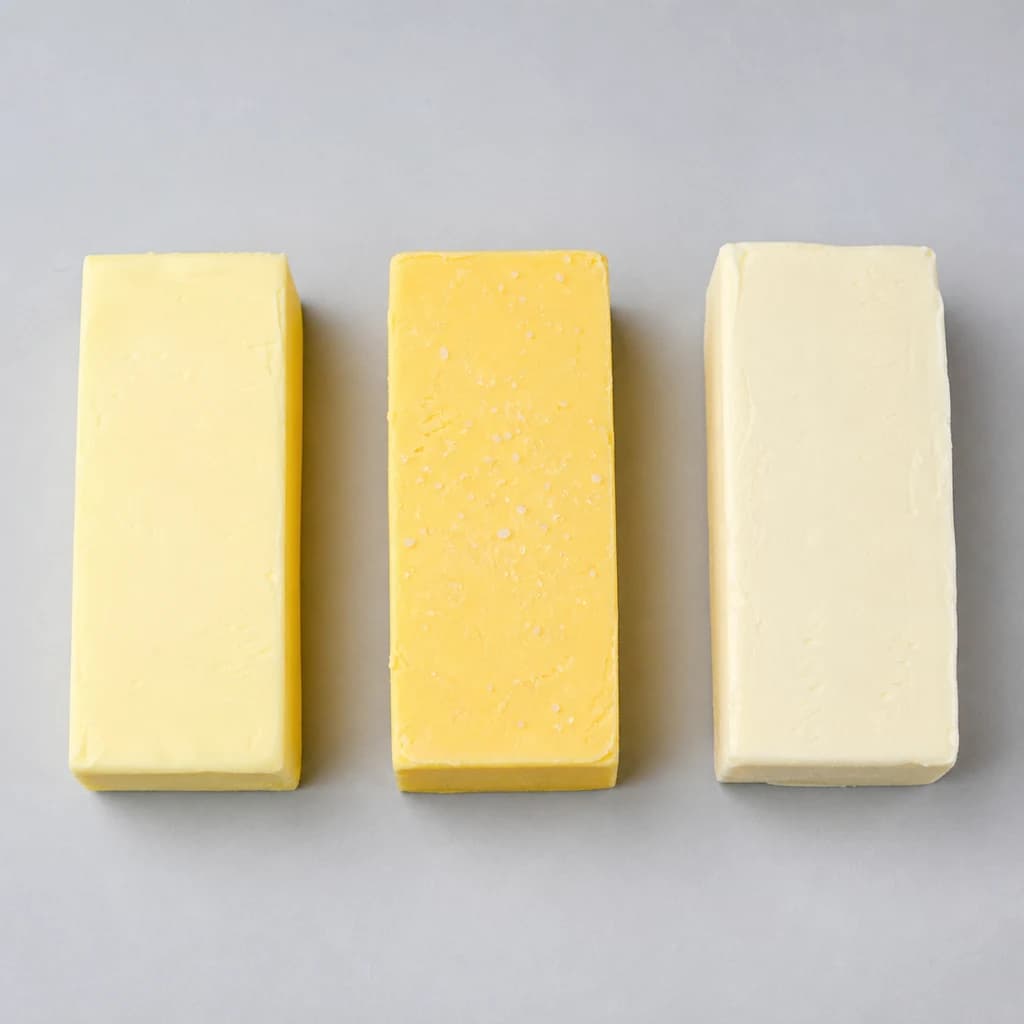
Butter
Golden fat for searing, baking, and finishing a sauce
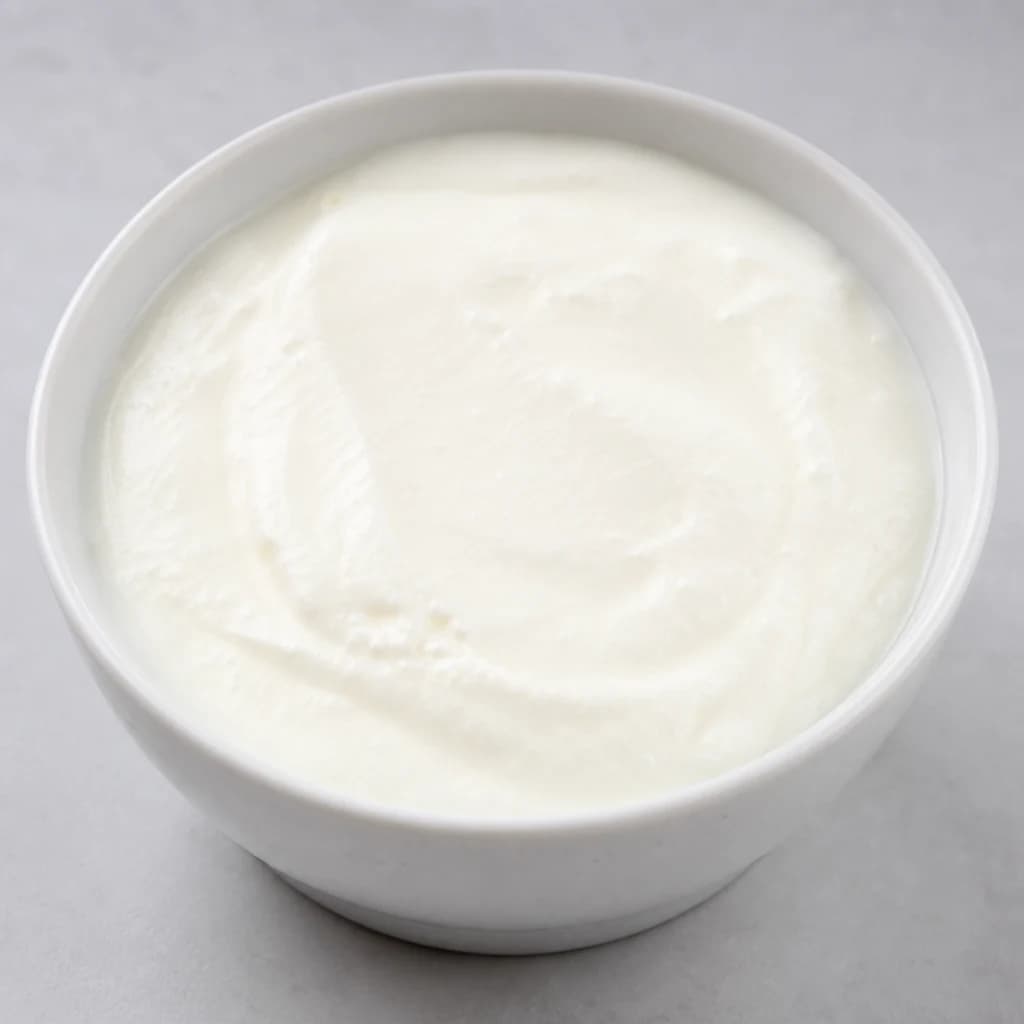
Yogurt
Tangy, creamy culture for breakfast, sauces, and marinades
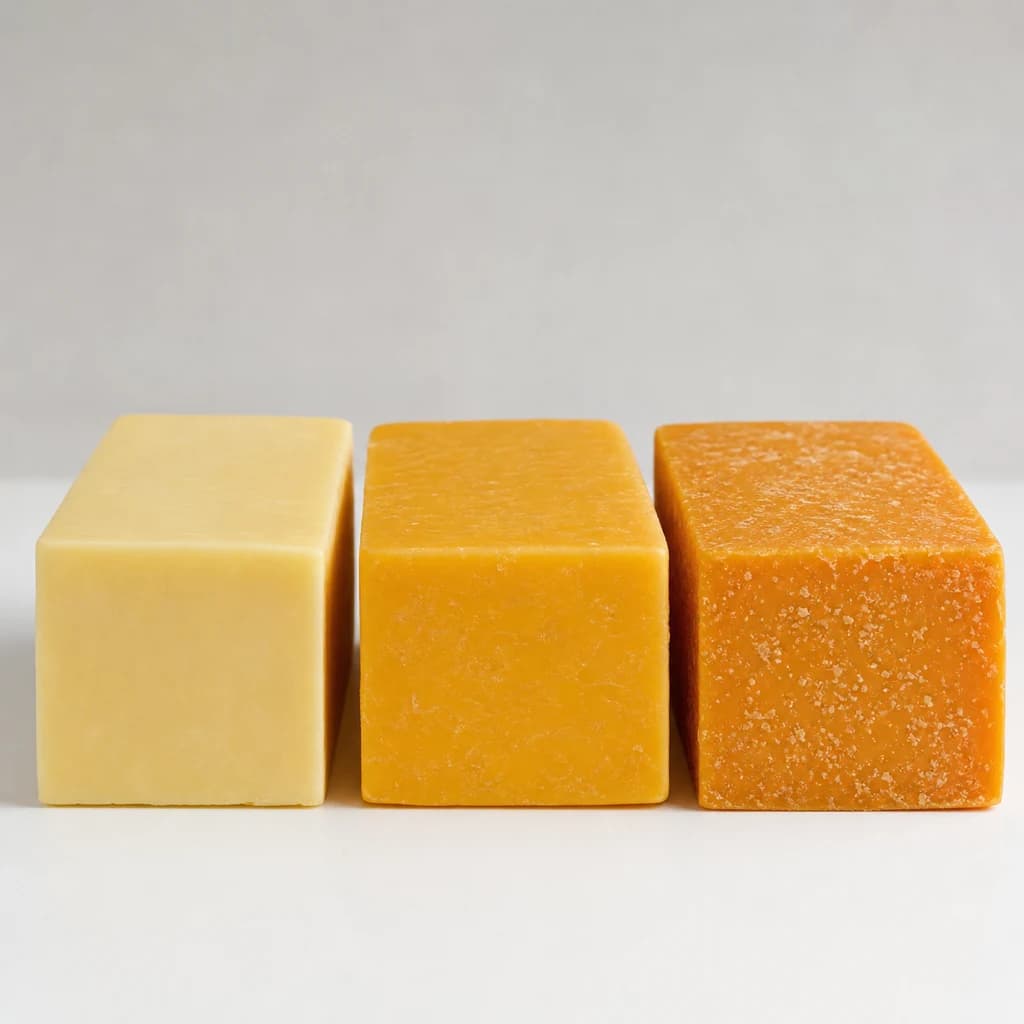
Cheddar Cheese
Sharp, melty cheese for sandwiches, gratins, and grating

Skim Milk
Fat-free milk for lighter drinking, coffee, and cooking
Heavy Cream
Rich cream that whips, enriches sauces, and sets ganache

Sour Cream
Tangy, thick cream for dolloping, baking, and dips
Mozzarella
Soft, milky cheese that melts into stretchy pizza pulls