Sweeteners
Glucose Syrup
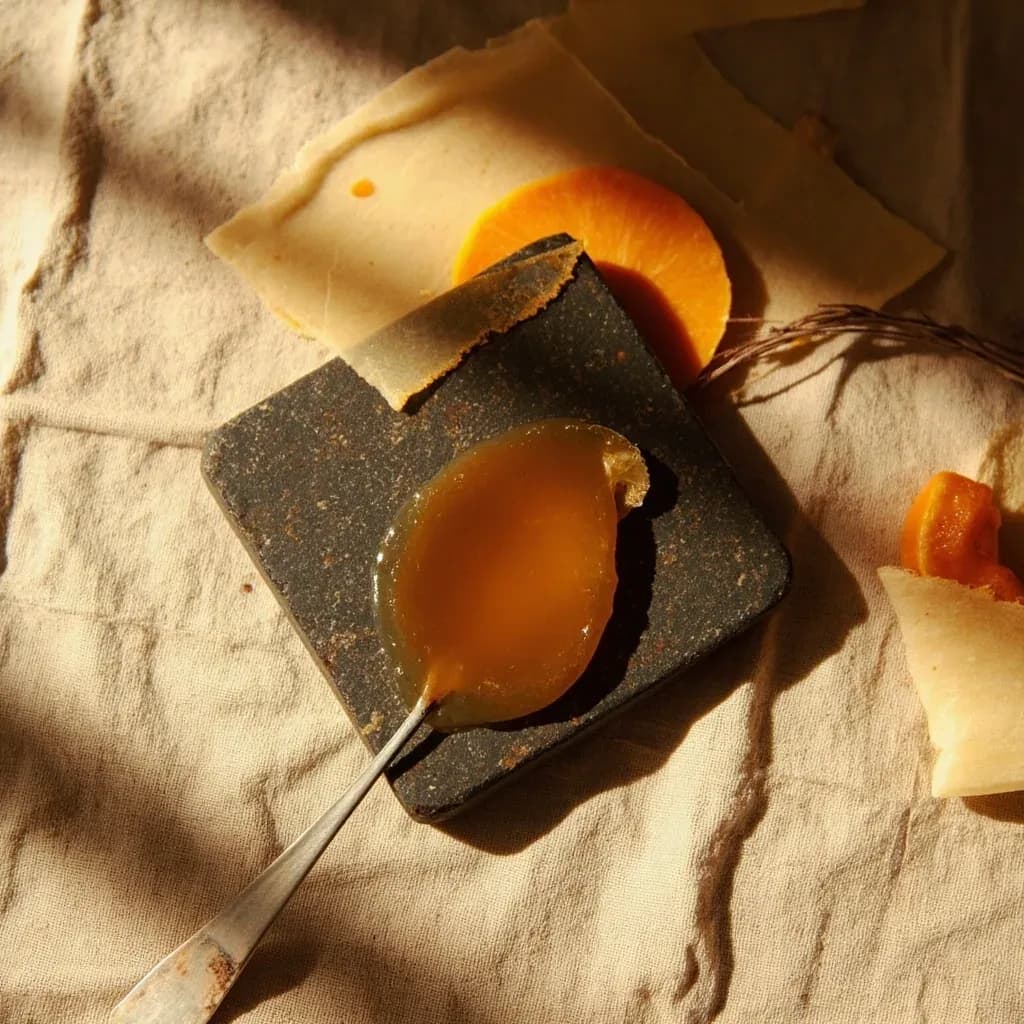
Clear, viscous invert syrup that blocks crystallization, keeping caramels chewy, sorbets scoopable, and fondant smooth.
Glucose syrup is a viscous, water-clear sweetener made by the controlled hydrolysis of starch, yielding a mixture of glucose, maltose, and longer-chain saccharides rather than a single sugar. Its real value in the kitchen lies less in sweetness than in behavior: the long sugar chains physically interfere with sucrose's ability to form crystals, which is why a few spoonfuls in a boiling caramel or fondant pot keeps the finished product smooth instead of grainy. Because those same chains bind water strongly, the syrup also acts as a humectant, holding moisture in cakes and cookies, and depresses the freezing point of ice cream and sorbet enough to make them scoopable straight from a home freezer.
The syrup is graded by Dextrose Equivalent (DE) — a measure of how far hydrolysis has proceeded — and that number drives most of its kitchen behavior. Low-DE syrups (around 28–38) are thick and are the serious candy-maker's tool for controlling crystallization; medium-DE syrups (38–58) are versatile all-rounders for pastry and confectionery; high-DE syrups (58–90) run thinner and taste sweeter, closer to liquid sugar. Most home cooks encounter it as American "corn syrup" or British "liquid glucose," and while those labels usually refer to a low- to medium-DE corn-based product, the syrup can equally well be derived from wheat, tapioca, potato, or rice starch depending on market and dietary need.
It is worth distinguishing glucose syrup from its sweeter cousin high-fructose corn syrup. The two start from the same starch hydrolysis, but HFCS is then enzymatically isomerized so that a large share of the glucose becomes fructose, giving a thinner, sweeter product with very different behavior in candy work. For the structural roles described here — anti-crystallization, humectancy, freezing-point depression — straight glucose syrup is the ingredient you want.
- Measured in
- g
- Storage
- Pantry
Find it in
Suits
Types & varieties
Highly viscous; the gold standard for controlling crystallization in caramels, toffees, fondant, and hard candy
Balanced viscosity and sweetness; the general-purpose workhorse in pastry and confectionery
Sweeter and thinner; used where sweetness and humectancy are wanted but viscosity is not critical
Traditional American "corn syrup"; produces a slightly stronger, maltose-forward flavor
Cleaner, more neutral flavor; the modern commercial standard
Powdered form used in dry mixes, seasoning blends, and as a humectant in dry products
Neutral flavor; common in Asian confectionery and in allergen-free applications
Common in Europe; unsuitable for those with wheat or gluten sensitivities
Related family member; very low sweetness, used as a bulking and texture agent rather than a sweetener
Different product — glucose enzymatically isomerized to fructose; not a direct substitute when structure, not sweetness, is the goal
Choosing the right DE
The DE number on a technical datasheet tells you almost everything you need to predict how the syrup will behave. For most home confectionery work, look for a low-DE product (roughly DE 28–38). This is the syrup that gives fondant its plasticity, keeps a caramel chewy rather than grainy, and stops hard candy from seeding into a sugary crust on the cooling table. Medium-DE grades (38–58) are useful when you want some body and some sweetness — a softer caramel, a glaze, a sorbet base where a touch of sweetness helps. High-DE grades (58–90) behave more like a liquid sugar: thinner, sweeter, and less able to interfere with crystal growth, so they are poor substitutes in any recipe that depends on the syrup for texture.
- DE 28–38: fondant, hard candy, toffee, chewy caramel — pick this unless the recipe says otherwise
- DE 38–58: ice cream and sorbet bases, soft caramels, glazes, general pastry use
- DE 58–90: beverages, baking where sweetness matters more than body, some confectionery fillings
- If your package does not state DE, it is almost certainly a low- to medium-DE corn-derived syrup — safe for most anti-crystallization work
Why it stops crystallization
Sucrose crystals grow because sucrose molecules, in a concentrated syrup, find each other and lock into an ordered lattice. Glucose syrup disrupts that process in two ways: the long-chain oligosaccharides it contains cannot be incorporated into the sucrose crystal lattice, so they get in the way of crystal growth, and the same long chains raise the syrup's overall viscosity, slowing the molecular movement needed for crystals to build. The result is that a caramel cooked with 10–30% glucose syrup replacing some of its sucrose stays in a stable, amorphous, glassy state on cooling rather than recrystallizing into a sandy, grained mass. The same mechanism keeps fondant workable on the bench, prevents sugar bloom in filled chocolates, and keeps ice cream smooth by limiting lactose and sucrose crystal size in the frozen matrix.
Common uses
Tips & pitfalls
- Reach for low-DE (DE 28–38) glucose syrup whenever the goal is to stop sucrose from crystallizing — this is its single most useful job
- Replace 10–30% of the sucrose in a caramel with glucose syrup to keep the cooled candy chewy instead of grainy
- In ice cream, replacing 2–4% of the sucrose with glucose syrup solids noticeably improves scoopability at freezer temperatures
- Glucose syrup is hygroscopic — store in a tightly sealed container or the surface will crust over and the rest will gradually lose moisture
- Use a clean, dry utensil every time you scoop; the syrup itself resists spoilage, but introduced water or food particles can support mold
- Do not substitute high-fructose corn syrup one-for-one when a recipe calls for glucose syrup — the sugar profiles and behaviors differ enough to ruin texture
- A small addition (1–2% of flour weight) in bread or brioche dough extends freshness and keeps the crumb softer for longer
- When making fondant or pastillage, glucose syrup slows re-crystallization so the icing stays workable on the bench for hours
- If a recipe calls for "liquid glucose," it almost always means low-DE corn-derived glucose syrup — check the label rather than guessing
- High-DE syrups add sweetness without much body, so do not swap them 1:1 for low-DE when viscosity matters
- Overuse can leave candy too soft or sticky; respect recipe ratios in hard candy and toffee work
- Honey or invert sugar can stand in for glucose syrup in a pinch, but both bring distinct flavors and a different sweetness — recalculate the recipe rather than just weighing equal amounts
Nutrition
Energy
1197 kJ · per 100 g
Where the calories come from
Protein
0g
0% DV
Carbs
77.6g
28% DV
Fat
0g
0% DV
Fiber
0g
0% DV
Sugars
77.6g
of which
Sodium
155mg
7% DV
Source · USDA FoodData Central · Syrups, corn, dark
View on FDC →In the shops
Matched grocery products
No matched grocery products for Glucose Syrup yet.
Good to know
- Composition
- Mixture of glucose, maltose, and higher saccharides (oligosaccharides) produced by partial hydrolysis of starch
- Dextrose Equivalent (DE)
- Measure of hydrolysis (0 = pure starch, 100 = pure dextrose). Low (20–38) = thick, best anti-crystallization; medium (38–58) = versatile; high (58–90) = sweeter, thinner
- Sweetness vs. sucrose
- Roughly 30–60% as sweet as sucrose, depending on DE
- Common starch sources
- Corn (most common), wheat, potato, rice, tapioca
- Color and texture
- Clear to pale straw; thick, viscous, hygroscopic liquid. Refined grades are nearly colorless
- Water activity
- Lowers aW in finished products, extending shelf life and inhibiting microbial growth
- Freezing point depression
- Strong — used in ice cream and sorbets to keep them scoopable at home freezer temperatures
- Shelf life
- Indefinite if sealed and uncontaminated; the low water activity resists microbial spoilage
- UK terminology
- Often sold as "liquid glucose" or, for low-DE confectionery grades, "confectioner's glucose"
Substitutes
- Corn syrup (US) — The closest everyday equivalent in American kitchens; mostly acid-converted corn glucose syrup, slightly stronger flavor
- Invert sugar syrup — Sucrose split into glucose and fructose; similar anti-crystallization function but sweeter and slightly different texture
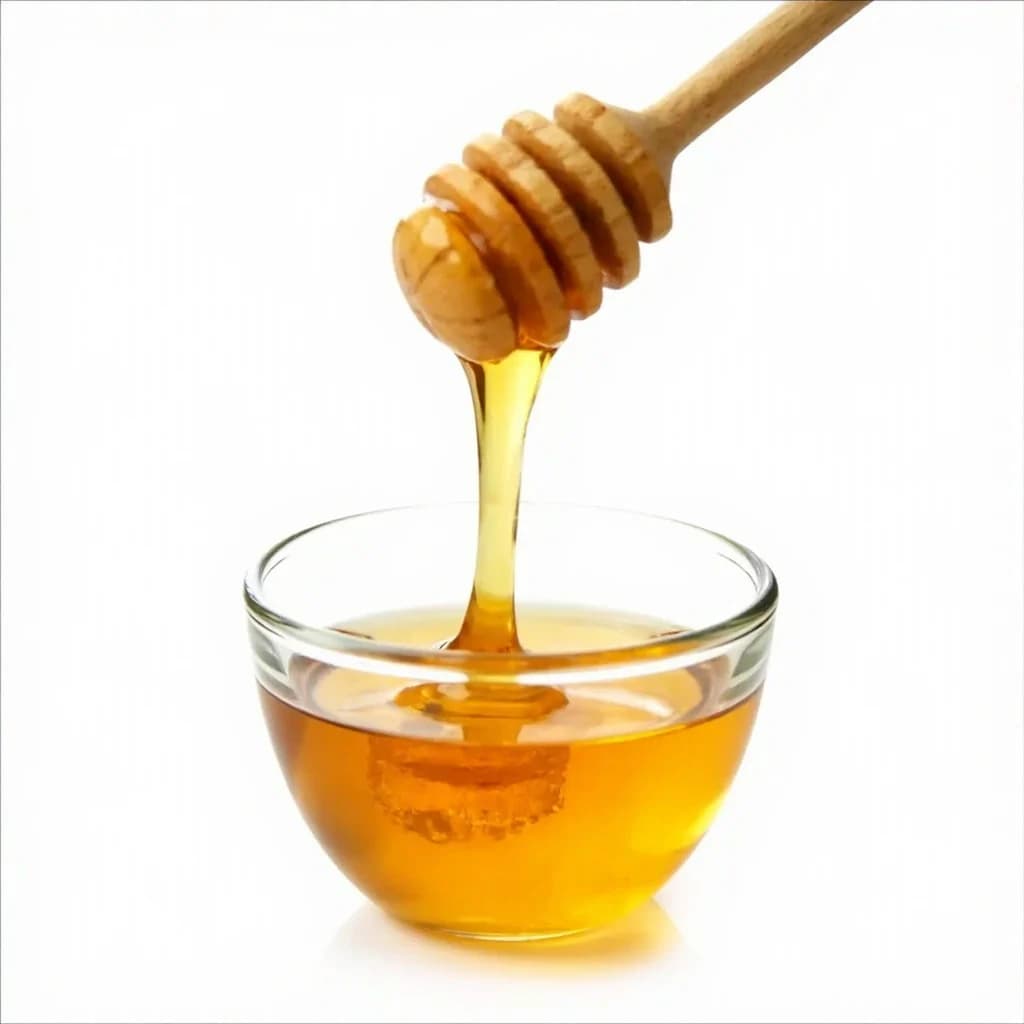
- Honey — Adds floral or varietal flavor and a little acidity; substitute 1:1 by weight but expect a noticeable flavor change
- Golden syrup (Lyle's) — A British cane-sugar invert syrup with similar humectant behavior and a distinct caramelly flavor
- Brown rice syrup — Gluten-free, mild flavor, higher viscosity; works in most applications but is less neutral than corn glucose syrup
- Agave nectar — Very high in fructose; sweeter and thinner, so it is not a structural analog but works in soft baked goods
- Glucose syrup solids (powdered) — The dried form works as a dry substitute where humectancy is the goal, such as in spice blends and dry mixes
Also called
liquid glucose · corn syrup · confectioner's glucose · jarabe de glucosa · glucose
Appears in these dishes
Related

White Sugar
Clean, granulated sweetness for baking, drinks, and beyond
Honey
Floral, golden sweetener for drizzling, glazing, and baking
Brown Sugar
Moist, molasses-rich sugar for chewy cookies and glazes

Maple Syrup
Rich, woodsy syrup for pancakes, glazes, and baking
Powdered Sugar
Fine, dissolvable sugar for icing, dusting, and frosting
Agave Syrup
Mild, pourable sweetener that dissolves easily into drinks
Molasses
Dark, bittersweet syrup for gingerbread, beans, and rubs
Simple Syrup
Dissolved sugar syrup for sweetening drinks and cocktails