Baking
Gelatin
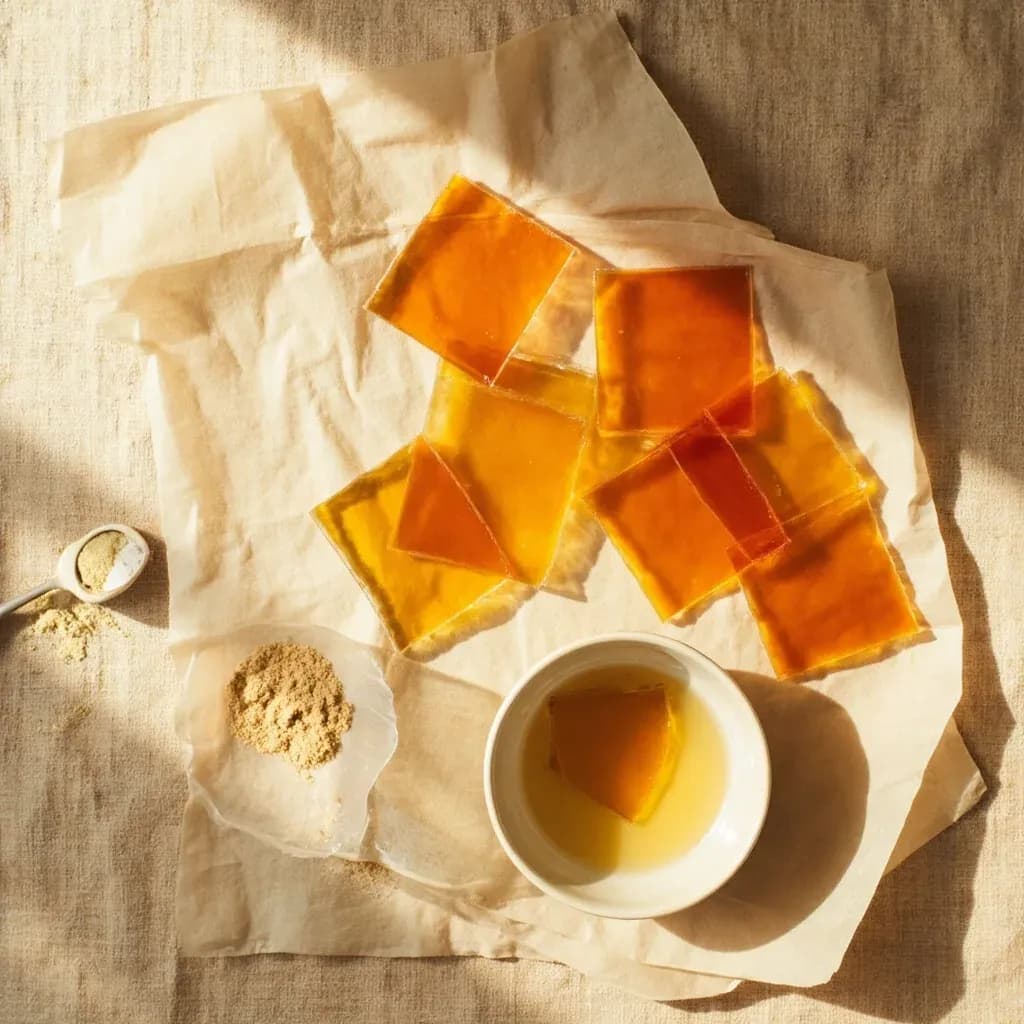
Animal-collagen setting agent in sheets or powder; bloomed in cold water then warmed to set mousses, jellies and panna cotta into a clean wobble. Not vegetarian.
Gelatin is the cleanest gelling agent a pastry cook or charcutier has: pure animal collagen, purified and dried into sheets or powder, that swells in cold water, melts into warm liquid, and sets into a clear, wobbly gel on cooling. Its signature behavior is the body-temperature melt — a properly set gelatin dessert softens on the tongue rather than chewing, which is why panna cotta, Bavarian cream, and aspic feel so different from a pectin jelly or agar gel. Because it is made from bovine, porcine, or fish collagen, it is the traditional setting agent of French patisserie and classical aspic cookery, but it is unsuitable for vegetarians, vegans, and many kosher households.
What you actually control in the kitchen is bloom strength and ratio. A 200-bloom powder sets to a tender, quivering slice; higher bloom grades give the firmer, architectural set needed for layered entremets and terrines that have to hold their shape on the plate. Powder is convenient and pre-measured; chefs reach for leaf sheets for purity, predictability, and a noticeably clearer gel that won't cloud delicate fruit or wine preparations.
- Measured in
- g
- Storage
- Pantry
Find it in
Types & varieties
Granulated and pre-measured; sold in boxes or single ¼ oz (7 g) envelopes; the home-baking workhorse
Preferred by chefs for purity and clarity; graded by bloom — bronze (~125), silver (~160), gold (~200), and platinum (~240); measured in sheets or grams
Made from tilapia or cod skin; sets at slightly lower temperatures; accepted as kosher and pareve by many authorities, useful for kosher kitchens and pescetarians
The most common commercial form; clean flavor; sets firmly
Common in European production; firm set; not kosher
Pre-broken-down form sold as a protein supplement; does not gel and is not interchangeable in recipes
The fresh-fruit problem
Pineapple, kiwi, papaya, mango, figs, and fresh ginger all carry proteolytic enzymes (bromelain, actinidin, papain, ficin) that will chew up the gelatin proteins and prevent any set at all. The fix is straightforward: gently cook the offending fruit or juice for about 5 minutes before combining it with the bloomed gelatin. Canned versions of these fruits are safe because the canning process has already deactivated the enzymes.
- Proteolytic enzymes attack collagen chains; a beautiful panna cotta will weep and collapse if raw pineapple hits the cream
- Simmer the fruit, juice, or grated ginger for 5 minutes, then cool before adding the bloomed gelatin
- Canned pineapple, jarred ginger, and cooked fig jam are all safe to use straight from the container
Reading bloom strength
Bloom strength, named for chemist Oscar Bloom, measures the force in grams a 4 mm gel column supports before depressing 4 mm. The number is the only reliable way to compare products: a 250-bloom powder sets a noticeably firmer gel from the same weight than a 150-bloom one. Lower blooms (bronze, silver) suit delicate quivering jellies and panna cotta; higher blooms (gold, platinum) give the sliceable, architectural set needed for terrines, layered entremets, and pâté en croûte that must hold its shape under a knife.
Common uses
Tips & pitfalls
- Always bloom gelatin in cold water before adding it to anything warm — dropping powder straight into hot liquid produces rubbery clumps that never fully dissolve
- Never boil gelatin after it has been bloomed; sustained high heat permanently destroys its setting power. Stir the bloomed mass into warm (not simmering) liquid and remove the pan from direct heat
- Cook fresh pineapple, kiwi, papaya, mango, fig, or fresh ginger for about 5 minutes before adding — their enzymes will otherwise dissolve the gel and your dessert will weep
- Reduce or balance strong acid (lemon juice, vinegar, sour cream) with a slightly higher gelatin ratio, because acid weakens the set
- Melt bloomed sheets in a splash of water over a bain-marie for the smoothest, lump-free incorporation into a delicate cream
- For clean unmolding, chill the gel until fully set, dip the outside of the mold briefly in warm (not hot) water, then invert onto the plate
- When a gel comes out too firm for serving, whisk in cold cream or fruit purée by hand to break it down to a spoonable texture
- For purées and aspics that must hold at room temperature, replace part of the recipe liquid with ice cubes made from that same liquid — they chill the mixture on contact without watering it down
Nutrition
Energy
1402 kJ · per 100 g
Where the calories come from
Protein
85.6g
171% DV
Carbs
0g
0% DV
Fat
0.1g
0% DV
Fiber
0g
0% DV
Sugars
0g
of which
Sodium
196mg
9% DV
Source · USDA FoodData Central · Gelatins, dry powder, unsweetened
View on FDC →In the shops
Matched grocery products
No matched grocery products for Gelatin yet.
Good to know
- Source
- Collagen extracted from animal skin, bones, and connective tissue — typically bovine hides, porcine skin, or fish skin and bones
- Forms sold
- Powder (granulated) and leaf sheets; sheet gelatin is the professional and European standard
- Bloom strength
- Gel strength rating; kitchen powder is typically 200–250 bloom (sold as 'silver' or 'gold' by some brands)
- Setting ratio
- One envelope (¼ oz / 7 g) or about 4 silver sheets sets roughly 2 cups (480 ml) of liquid to a tender, sliceable gel
- Melting point
- Sets around 40–50°F (4–10°C) and melts at body temperature (~95°F / 35°C), giving the in-mouth softening that defines a good gelatin gel
- Powder-to-sheet equivalence
- 1 envelope (7 g) ≈ 4–5 sheets of silver/gold bloom; a silver sheet weighs about 2 g (brands vary 1.7–2.5 g)
- Heat tolerance
- Damaged by sustained boiling; safe to dissolve into liquids up to about 195°F (90°C) briefly, never simmer once bloomed
- Storage
- Indefinite if kept dry, sealed, and cool; most powder carries a 1–2 year best-by date
Substitutes
- Agar-agar — Vegan seaweed derivative; use roughly half the weight of gelatin; sets firmly at room temperature with a clean, slightly brittle snap that does not melt in the mouth the way gelatin does
- Pectin — Plant-based; works only in high-sugar, high-acid preparations such as jams and jellies — not a drop-in for neutral dairy or savory gels
- Carrageenan — Seaweed extract; good for dairy gels and custards, but produces a softer, more elastic set than gelatin
- Locust bean gum — Often blended with xanthan or agar to mimic the smooth mouthfeel of gelatin in vegan desserts
- Xanthan gum — Adds viscosity and body but does not form a true gel — useful for thickening vegan reductions and sauces
- Konjac (glucomannan) — Strong vegan gelling agent; can turn rubbery if overused, so dose carefully
Pairs with
Also called
gelatine · leaf gelatin · powdered gelatin · gelatin sheets
Appears in these dishes


Related

All-Purpose Flour
The do-anything flour for bread, cakes, sauces, and dredging

Bread Flour
High-protein flour for chewy, well-risen breads
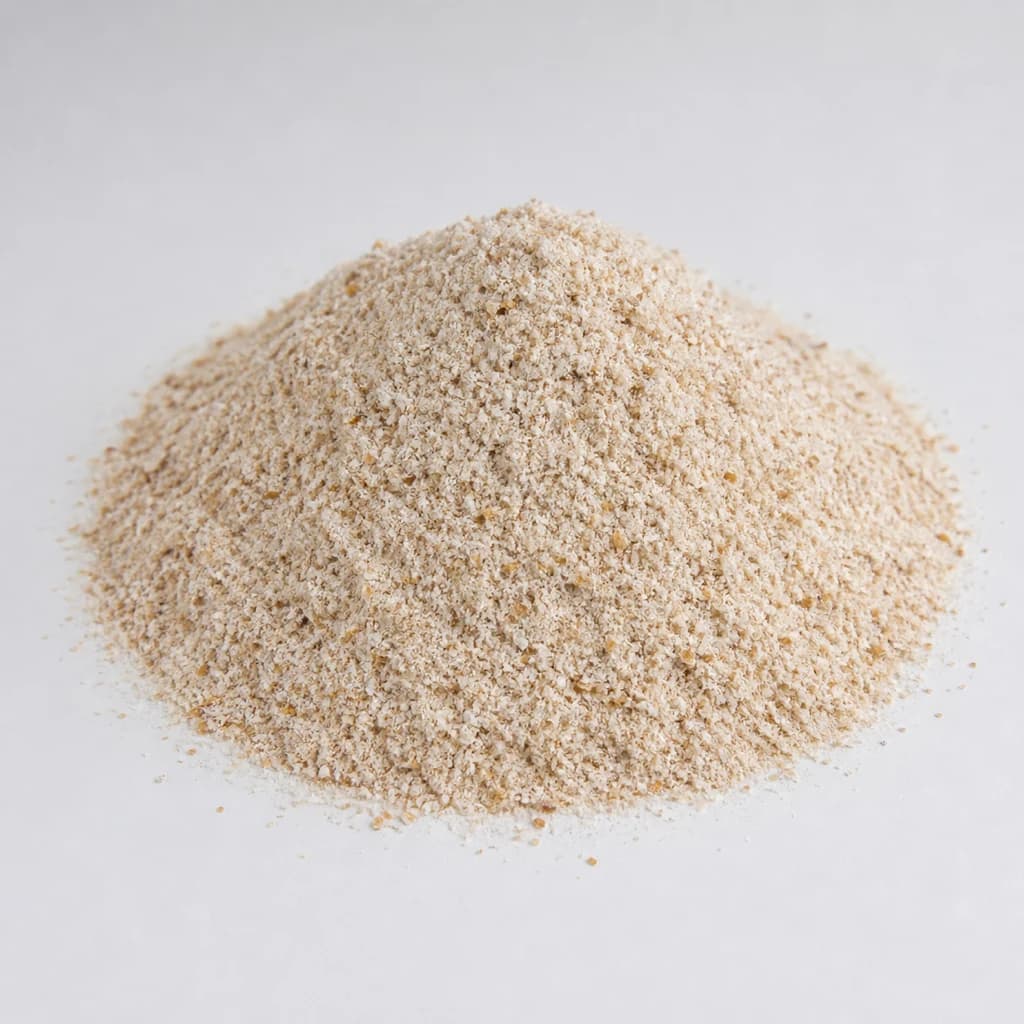
Whole Wheat Flour
Nutty, whole-grain flour for hearty breads and bakes
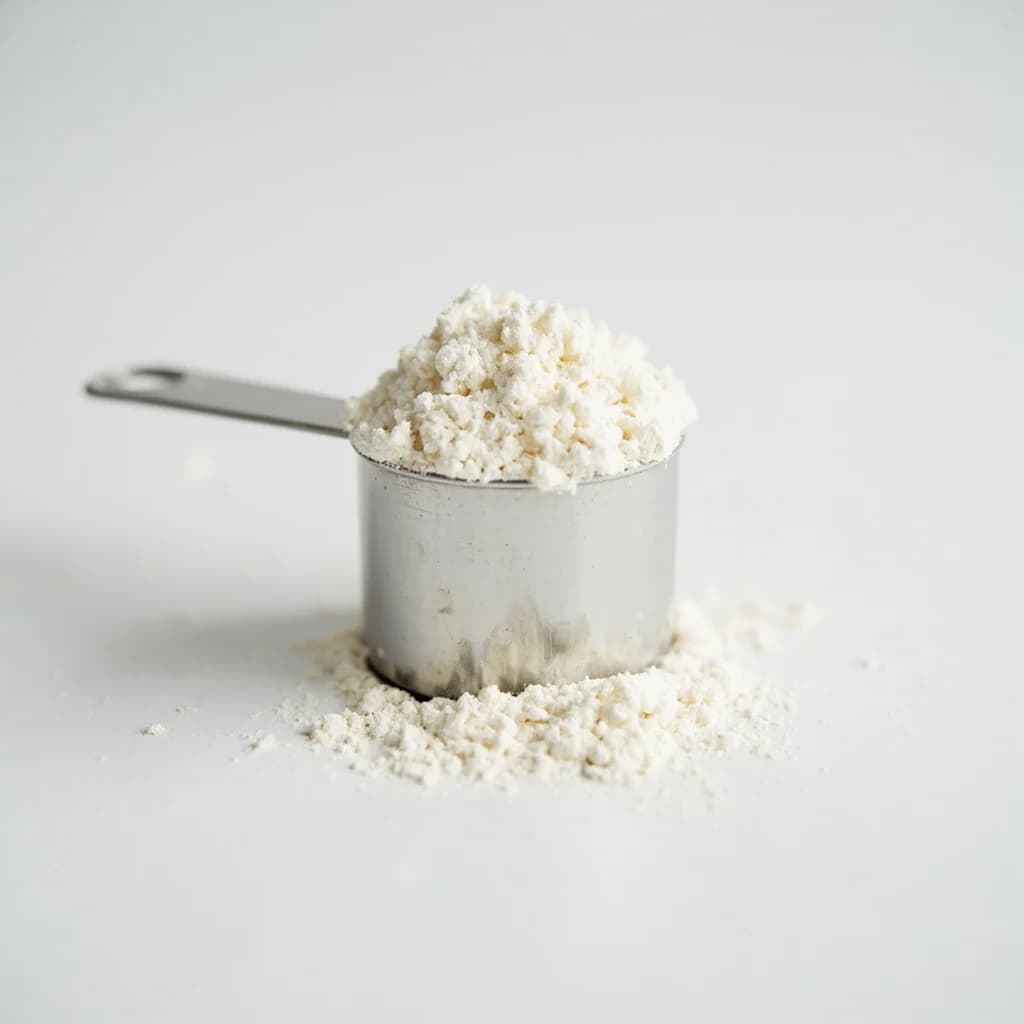
Cake Flour
Fine, low-protein flour for tender, delicate cakes
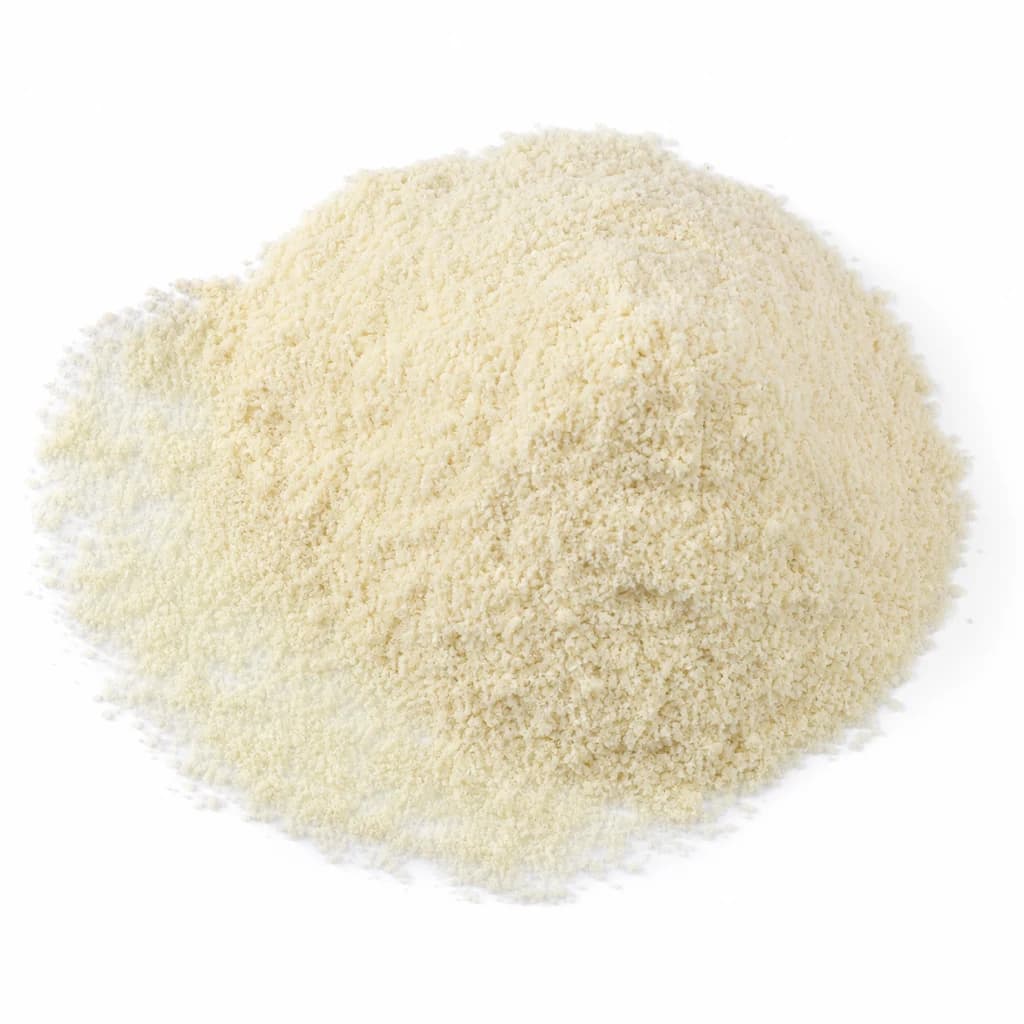
Almond Flour
Nutty, gluten-free flour for macarons and tender bakes

Baking Powder
All-in-one leavener for fluffy cakes, pancakes, and biscuits

Baking Soda
Pure leavener that needs acid to lift — and tenderize
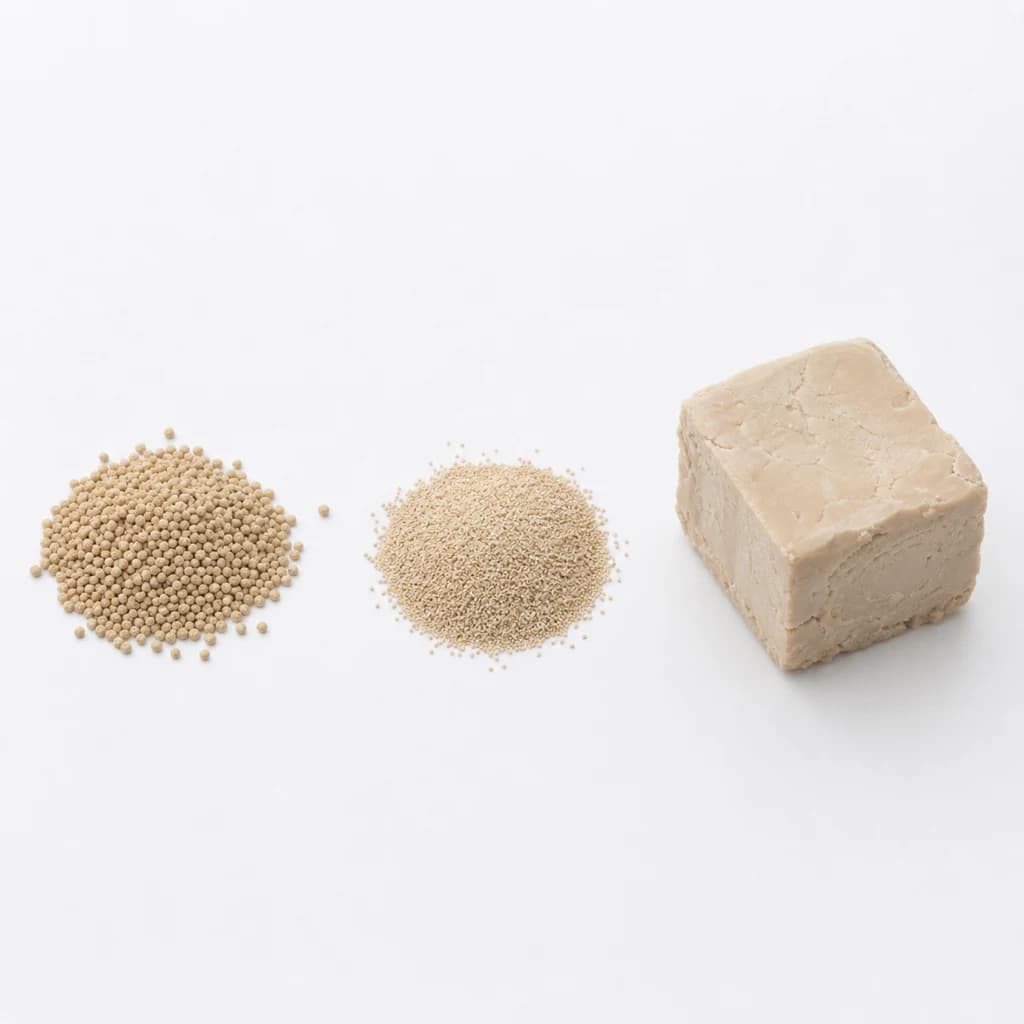
Yeast
Living leaven that makes bread rise and dough come alive