Baking
Pectin
Plant fiber that sets jams and fruit jellies into a clean gel; needs sugar and acid to activate, unlike gelatin which needs only chilling.
Pectin is the structural polysaccharide that gives plant cell walls their firmness — a chain of galacturonic acid units, partly esterified with methyl groups, that, when heated with sugar and acid, cross-links into the clean, sliceable gel we recognize as jam. The cook's working summary is simple: high-methoxyl (HM) pectin sets with sugar and acid; low-methoxyl (LM) pectin sets with calcium ions and works in reduced- or no-sugar preserves. Unlike gelatin, pectin is vegan, sets at boiling temperatures, and tolerates canning; unlike agar, it yields a soft, spoonable set rather than a brittle snap.
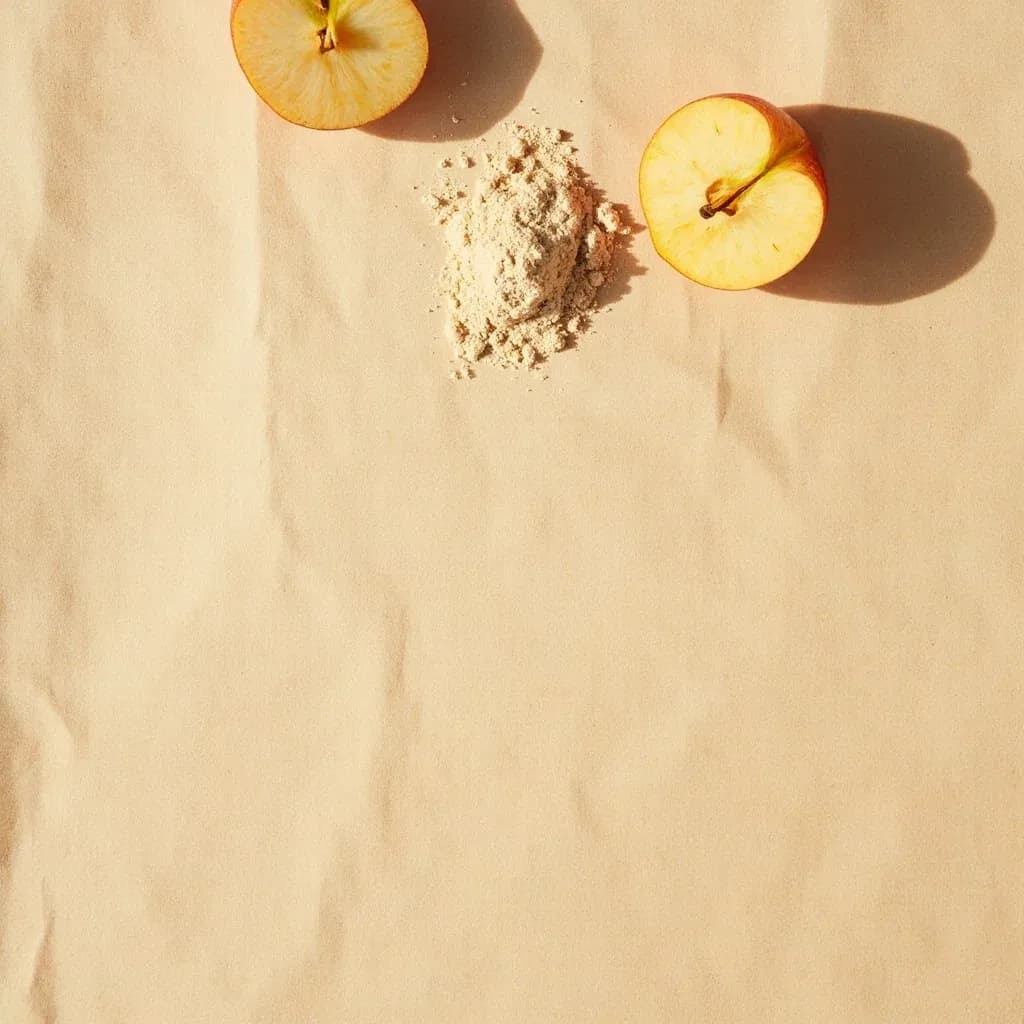
In the kitchen, pectin is what lets a strawberry jam hold its shape on toast and a quince paste slice cleanly under a knife. It was first isolated in 1825 by the French chemist Henri Braconnot, who named it from the Greek *pektos* — congealed, solidified — and today it is manufactured almost entirely from citrus peel and apple pomace, two byproducts of the juice industry. Understanding which type of pectin you are holding, and what it needs to activate, is the single most useful piece of jam-making chemistry a cook can learn.
The practical trap is treating pectin like gelatin, where 'more equals firmer.' Past its optimum ratio, additional pectin actually weakens the gel and turns preserves rubbery. For low-sugar work, change varieties rather than cut the sugar in an HM recipe — switch to an LM or amidated pectin that gels on calcium instead. Pectin rewards precision: measured acid, measured sugar, and a wrinkle test on a chilled saucer rather than guessing by the clock.
- Measured in
- g
- Storage
- Pantry
Find it in
Suits
Types & varieties
Standard jam pectin; needs 60–65% sugar and pH 2.8–3.5 to gel. The most common supermarket type.
Gels via calcium ions (added or drawn from the fruit); works with reduced sugar or no sugar; gel network forms without chilling.
Modified LM that gels more reliably across a wider pH range; needs calcium; the basis of most 'no-sugar-needed' home pectins.
Often sold as a finer-set, lighter-color powder; favored in pastry kitchens for clean apple and fruit gels.
Derived from orange, lemon, or lime peel; slightly more tolerant of varied acid levels; classic jam and jelly choice.
Higher-ester HM designed to gel quickly during cooking; can produce a less even texture if over-stirred.
Pre-dissolved in a sugar solution; stirred in at the end of cooking; common for freezer jams and quick-set batches.
Calcium-activated commercial blend; the well-known brand for low- and no-sugar preserves.
The chemistry that matters in the kitchen
Pectin's behavior is governed by one variable above all others: the degree to which its galacturonic acid units are esterified with methyl groups. Highly esterified pectin — HM — needs a high concentration of dissolved sugar (60–65%) and a low pH (2.8–3.5) to form its hydrogen-bonded gel. The acid strips negative charges from the chains so they can approach one another; the sugar, by binding water, pulls that water away from the pectin and forces the chains together. This is why traditional jams are so sweet and why their set is so dependent on the proportion of sugar to fruit, not just the volume of pectin added.
Low-methoxyl pectin — LM — has most of those methyl groups stripped off, exposing free carboxyl groups that bind directly to calcium ions (Ca²⁺). Two chains meet at each calcium, building an egg-carton network that does not need sugar to form. This is what allows reduced-sugar and no-sugar preserves to set, and what lets commercial 'Pomona-style' pectins work: calcium is added as a measured calcium-water solution rather than relying on sugar concentration. Amidated LM goes one step further, replacing some of the methyl esters with amide groups; this widens the pH window for a reliable gel and is why amidated pectin is the most forgiving choice for low-sugar home work.
Pectin vs. gelatin
Both form gels, but the comparison is misleading if taken further than that. Gelatin is an animal protein that blooms in cold water and sets only on chilling, producing a soft, elastic wobble that melts on the tongue. Pectin is a plant fiber that must be boiled to activate, sets at high temperature, and produces a cleaner, slightly brittle gel that holds its shape at room temperature — which is precisely why canned jams work. A 1:1 swap between the two will not behave; a fruit terrine made with gelatin needs hours of chilling, while the same recipe with pectin needs a rolling boil and a set test. Pick the gelling agent that matches your technique, not the one whose name you remembered.
Reading a fruit for its pectin
Fruits fall into three rough pectin groups, and recognizing them prevents most failed batches. High-pectin, high-acid fruits — green apple, quince, red and black currant, gooseberry, Seville orange, lemon — will gel with very little help and are the classic jelly and marmalade base. Mid-pectin fruits — plum, damson, apricot, fig, sour cherry — set reliably with modest added pectin or a long cook. Low-pectin fruits — strawberry, raspberry, blackberry, rhubarb, ripe peach, mango, kiwi, papaya — almost always need added pectin and a generous squeeze of lemon to set cleanly. Very ripe or tropical fruits also carry active pectinase enzymes that chew up pectin mid-cook; a brief boil at the start denatures the enzymes and protects the set.
Common uses
Tips & pitfalls
- Pre-mix powdered pectin with a portion of the sugar before whisking into the fruit — it clumps stubbornly if added dry to liquid, and clumps will not disperse later.
- For HM pectin, add the acid (lemon juice or citric acid) early so the gel network forms evenly. For LM and amidated pectin, add the calcium solution last and off the heat to avoid over-firming.
- Never boil a finished jam for several minutes after it has set — prolonged boiling breaks the gel and you will end up with syrup. Pull the pot the moment the wrinkle test passes.
- Test the set with the wrinkle test on a chilled saucer (a spoon kept in the freezer works in a pinch) rather than guessing by time. Time is a guideline; saucer-set is truth.
- Do not double a pectin recipe by scaling it linearly. Pectin chemistry is sensitive to ratio; treat a doubled batch as a separate trial and recheck acid and calcium amounts.
- Tropical and very ripe fruits (pineapple, ripe strawberry, mango, kiwi, papaya) carry active pectinases that destroy set. Pair them with extra pectin, more acid, or a brief preliminary boil.
- Pre-measure calcium water (½ tsp calcium lactate or calcium chloride dissolved in ½ cup water) for LM pectin; keeping it as a stock solution makes the gel reproducible batch after batch.
- Pectin and gelatin behave as opposites: bloom gelatin in cold water for 5+ minutes, but disperse pectin into hot, near-boiling liquid. Reversing these will ruin both.
- If a jam fails to set, reprocess: bring it back to a full rolling boil, add a teaspoon of lemon juice and another tablespoon of pectin, then re-test on a chilled saucer.
- Store opened pectin in an airtight container with a desiccant packet — moisture is its worst enemy and silently ruins gelling power. Powder keeps about 12 months sealed and dry; liquid pectin keeps about two weeks refrigerated, or frozen in ice cube trays for longer.
Nutrition
Energy
46 kJ · per 100 g
Where the calories come from
Protein
0g
0% DV
Carbs
2.1g
1% DV
Fat
0g
0% DV
Fiber
2.1g
8% DV
Sugars
0g
of which
Sodium
0mg
0% DV
Source · USDA FoodData Central · Pectin, liquid
View on FDC →In the shops
Matched grocery products
No matched grocery products for Pectin yet.
Good to know
- Type
- Structural polysaccharide (heteropolysaccharide) of mainly D-galacturonic acid
- First isolated
- 1825 by French chemist Henri Braconnot
- Name origin
- From Greek 'pektos' (congealed, solidified)
- Commercial sources
- Citrus peel (orange, lemon, lime) and apple pomace
- Solubility
- Soluble in hot water; insoluble in cold water or alcohol
- Setting temperature (HM)
- Around 220°F / 104°C for proper gel
- Optimal pH (HM)
- 2.8–3.5
- Sugar requirement (HM)
- 60–65% soluble solids to set a firm gel
- Gelling mechanism
- HM: sugar + acid (hydrogen bonding). LM: calcium ions cross-link carboxyl groups
- Vegan
- Yes (plant-derived; gelatin is not)
- Storage (powder)
- Cool, dry, sealed; about 12 months
- Storage (liquid)
- Refrigerated after opening, about 2 weeks; or freeze in ice cube trays
- Yield guide
- Standard 1.75 oz / 50 g box sets roughly 8–10 cups of fruit with full sugar
Substitutes
- Agar-agar — Vegan; sets more firmly and snaps rather than spooning. Use roughly one-third the weight of pectin and boil 2 minutes. Texture is brittle, not jammy.
- Gelatin — Animal-based; needs blooming and refrigeration to set, so behaves very differently in cooked jams. Roughly 2 tsp powdered gelatin per cup of liquid for a soft set.
- Chia seed (gel) — Works in raw or quick preserves — about 1 tbsp chia per cup of fruit purée. Yields a seedy, spoonable texture, not a clear gel.
- Cornstarch plus lemon juice — Only for soft spoonable textures such as pie fillings and stir-in thickeners; cannot produce a true jam set and clouds clear jellies.
- High-pectin fruits (green apple, quince, currant, gooseberry) — Cooked down with low-pectin fruit as a natural 'pectin source.' A long cook yields a softer, less predictable gel than commercial pectin.
- Carrageenan or gellan gum — Modernist options that need calcium or specific salts and careful hydration. Useful for plated gels, not home jam-making.
Pairs with
Also called
fruit pectin · powdered pectin · pectina · jam setting powder · gelling agent
Related

All-Purpose Flour
The do-anything flour for bread, cakes, sauces, and dredging

Bread Flour
High-protein flour for chewy, well-risen breads
Whole Wheat Flour
Nutty, whole-grain flour for hearty breads and bakes
Cake Flour
Fine, low-protein flour for tender, delicate cakes
Almond Flour
Nutty, gluten-free flour for macarons and tender bakes

Baking Powder
All-in-one leavener for fluffy cakes, pancakes, and biscuits

Baking Soda
Pure leavener that needs acid to lift — and tenderize
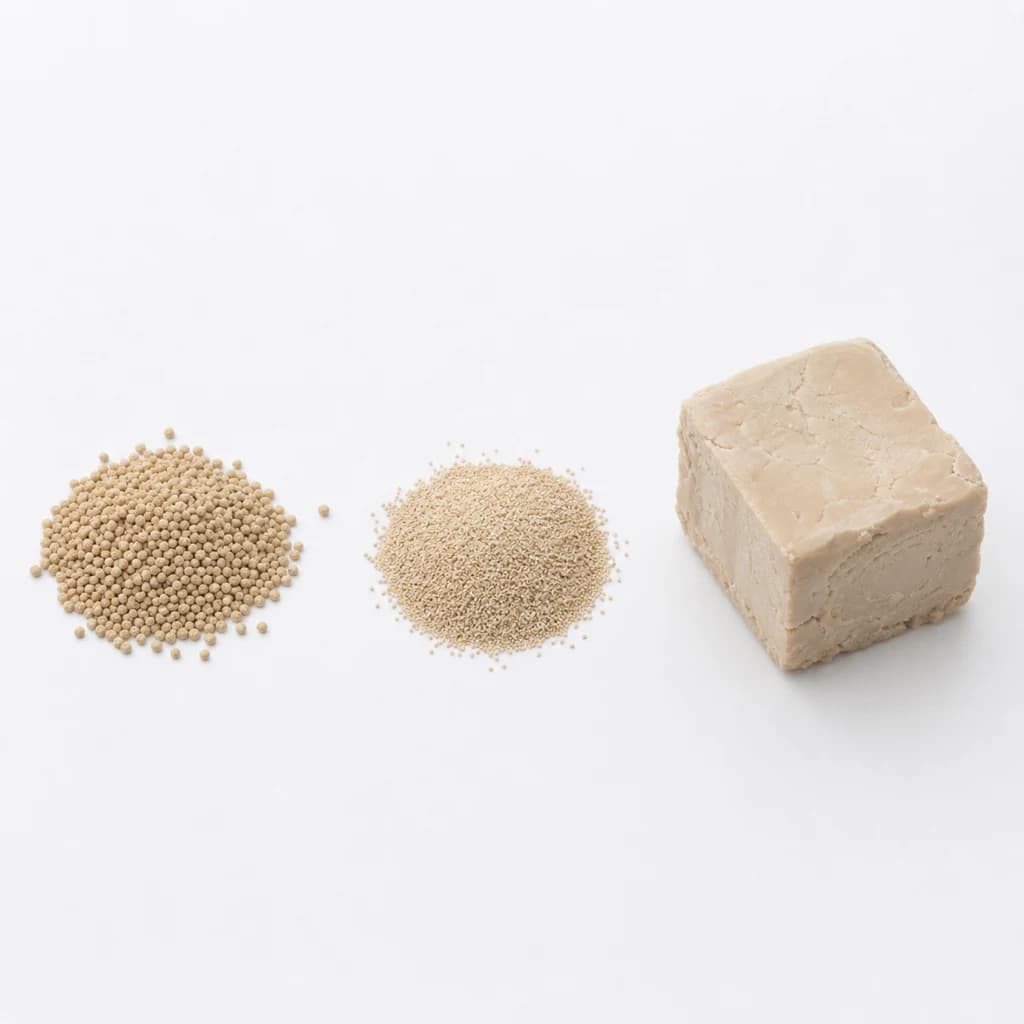
Yeast
Living leaven that makes bread rise and dough come alive