Produce
Holy Trinity (Onion, Bell Pepper, Celery)
Cajun-Creole aromatic base of diced onion, bell pepper, and celery.
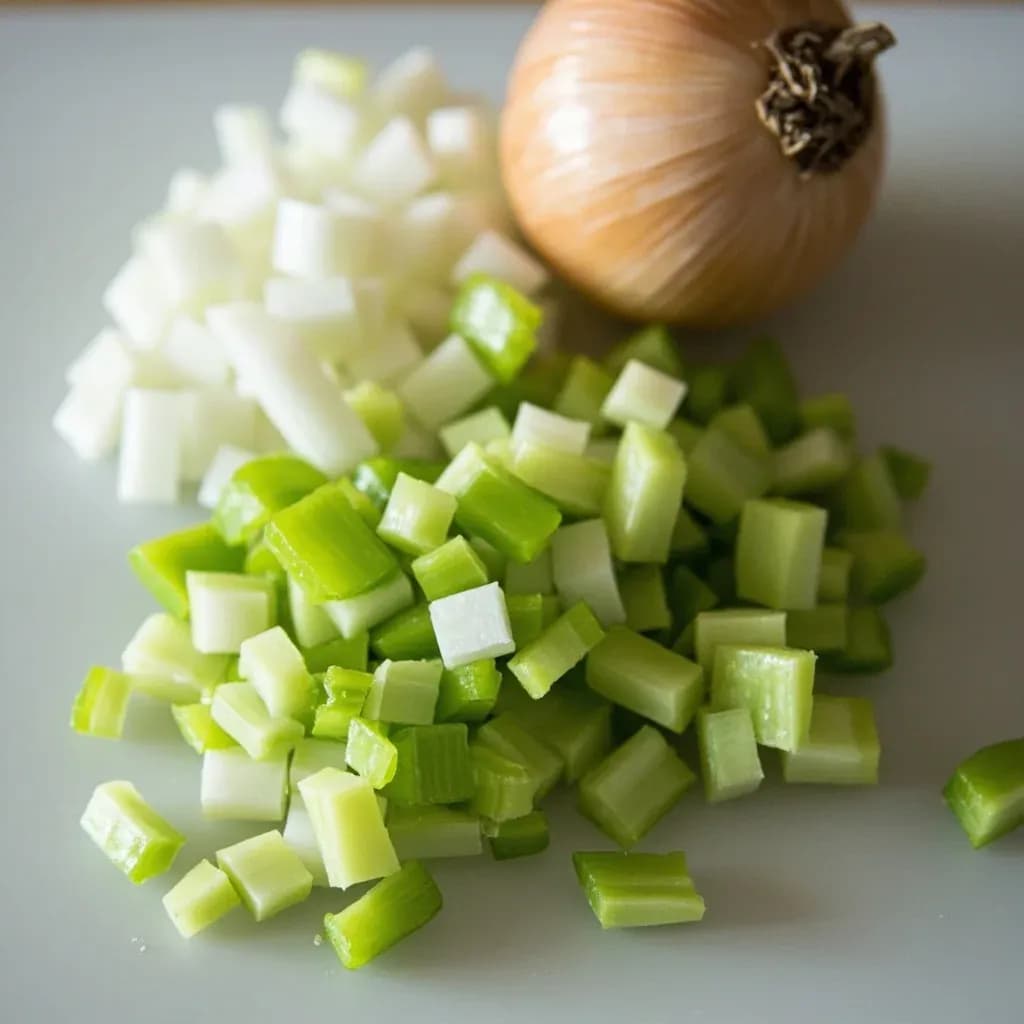
The holy trinity is the foundational aromatic mix of Cajun and Creole cooking, made from roughly equal parts diced onion, green bell pepper, and celery. Sweated in fat at the start of a dish, it builds the savory backbone of gumbo, jambalaya, etouffee, and many stews. It is Louisiana's answer to the French mirepoix, swapping carrot for bell pepper.
The Holy Trinity is the aromatic backbone of Louisiana cooking, the trio of diced onion, bell pepper, and celery that forms the first building block in virtually every Cajun and Creole dish. It serves the same structural purpose that mirepoix does in French cooking—providing a savory, aromatic foundation upon which the entire dish rests. The name itself is a knowing nod to the French original; Louisiana cooks deliberately mirrored mirepoix's structure while substituting bell pepper, which had become ubiquitous in Louisiana gardens, for carrot.
The Holy Trinity differs from its French cousin in character as well as composition. Mirepoix aims for sweetness from cooked carrot and deep savory notes from onion. The Holy Trinity leans toward something brighter and more vegetal—bell pepper brings a mild, slightly sweet edge without the sugar of carrot, and celery contributes its grassy, saline quality. Together they create an aromatic platform that can carry intense flavors like andouille, tasso, Cayenne, and file without being overwhelmed. The vegetables should be diced small and cooked gently in fat until completely soft and translucent, never colored.
Cajun and Creole traditions diverge slightly in how they handle the Holy Trinity. Strict Cajun cooking keeps it simple: onion, bell pepper, celery. Creole cooking, particularly in New Orleans, tends to add garlic earlier in the process and is more likely to include tomato products. In practice, the "Holy Trinity with garlic" has become so universal that most contemporary recipes treat it as default. What matters above all is the method—gentle cooking in fat until yielding and fragrant—because the Holy Trinity is not a garnish or finishing element but the very foundation of the dish.
- Measured in
- g
- Storage
- Fridge
Types & varieties
Onion, green bell pepper, celery in equal proportions—the classic Cajun base
Holy Trinity plus minced garlic added after the vegetables soften; the practical default in most modern recipes
Sometimes includes green onion or parsley added at the end for brightness and color
Cajun cooking tends toward simplicity and historically avoids tomato; Creole cooking is more urban and often includes tomato products
Onion, garlic, jalapeño—a Texas adaptation, not traditional Cajun-Creole
Onion, carrot, celery
Onion, celery, carrot, cooked slowly in oil until deeply softened
Cajun and Creole: Understanding the Distinction
While the Holy Trinity is common to both traditions, the surrounding ingredients and techniques diverge in telling ways. Cajun cooking is rural, rustic, and historically peasant food—it relies on the Holy Trinity as a simple aromatic base and avoids tomatoes, which were expensive and impractical in rural Louisiana. Creole cooking is urban New Orleans cooking, more diverse in its influences, and routinely includes tomato products. A true shrimp Creole will build on the Holy Trinity with tomato and tomato paste; a true chicken and sausage gumbo typically will not. Most home cooks today blend these traditions freely, and the distinction matters most when you're pursuing an authentic regional result.
- Cajun = rural, rustic, typically no tomato
- Creole = urban New Orleans, often includes tomato
- Modern home cooking blends both freely
- Clarify your target tradition when authenticity matters
Why Equal Parts Matter
The prescription of equal parts onion, bell pepper, and celery isn't arbitrary—it reflects a deliberate balance. Onion provides sweetness and body; bell pepper contributes mild flavor and texture; celery adds its grassy, slightly saline quality that brightens the whole. Swinging too far toward onion makes the base heavy and sweet. Skipping or drastically reducing bell pepper removes a layer of flavor complexity that onion alone cannot replicate. Too much celery pushes toward bitterness. The equal proportions create a neutral, versatile foundation that can support the intense flavors—smoked meats, heat, acid—characteristic of Louisiana cooking without competing with them.
- Equal parts ensures balanced, versatile aromatics
- Bell pepper cannot be fully replaced by onion
- Adjust proportions only when you understand the consequence
- A true Cajun cook will notice if the balance is off
Common uses
Tips & pitfalls
- Dice all three vegetables to the same size for even cooking—one celery piece twice the size of a bell pepper chunk will stay crunchy while everything else softens
- Use a heavy-bottomed pan (cast iron or stainless steel) to distribute heat evenly and prevent hot spots that cause browning
- Begin with a hot pan and cool fat (room-temperature butter or oil) to avoid violent splattering and ensure a gentle sizzle from the start
- Season with salt early in the cooking process; it draws out moisture and accelerates the vegetables' softening without seasoning the dish too heavily
- Add garlic only after the Holy Trinity has softened completely; burned garlic turns bitter and ruins the dish
- For extra depth, cook the Holy Trinity in bacon fat or the fat rendered from andouille sausage instead of butter or neutral oil
- If a recipe calls for tomatoes, add them after the Holy Trinity is fully softened; acid can slow the breakdown of the vegetables if added too early
- Make-ahead convenience: dice a large batch, store in a sealed container with a paper towel to absorb moisture, or freeze flat in zip-top bags for portion-sized cubes ready to throw into any pot
- Bell pepper choice matters—green bell pepper is traditional, but a mix of green and red adds subtle sweetness; avoid exclusively sweet peppers or the flavor balance shifts
- The goal is soft and translucent, never golden or brown—if your Holy Trinity is coloring, the heat is too high
Nutrition
Nutrition
No USDA FoodData Central match for Holy Trinity (Onion, Bell Pepper, Celery) yet. We surface a per-100 g profile once a generic whole-food entry is matched and verified.
In the shops
Matched grocery products
No matched grocery products for Holy Trinity (Onion, Bell Pepper, Celery) yet.
Good to know
- Components
- Equal parts onion, bell pepper, and celery by volume
- Typical dice size
- Small, uniform dice (¼–½ inch)
- Cook time
- 4–6 minutes over medium heat until soft and translucent
- Fat medium
- Butter, oil, or bacon fat; cook vegetables until silky, never browned
- Role
- Foundational aromatic base for Cajun-Creole cooking
- Origin
- Louisiana Cajun and Creole cuisine, a deliberate adaptation of French mirepoix
- Storage (fresh)
- Refrigerate up to 5 days in airtight container with paper towel
- Freezer storage
- Freeze raw or cooked up to 3 months
Substitutes
- Mirepoix (onion, carrot, celery) — Direct substitute for non-Cajun dishes; carrot adds sweetness the Holy Trinity lacks, so adjust other seasonings accordingly
- Onion and celery only — Acceptable in a pinch when bell pepper is unavailable; increase onion slightly to maintain balance
- Leeks, bell pepper, celery — Substitute leeks for onion when a milder, sweeter, more delicate flavor is desired
- Shallots, bell pepper, celery — Milder and more refined aromatic base; increase quantities since shallots are smaller than standard onions
- Fennel, onion, celery — Fennel replaces bell pepper for similar texture with anise character; works particularly well in seafood applications
- Frozen diced vegetables — Convenient when fresh is unavailable; thaw completely and pat dry before cooking to avoid steaming instead of sautéing
Pairs with
Also called
Cajun Trinity · Creole Trinity
Appears in these dishes
Related

Tomato
Juicy, sun-sweet fruit for sauces, salads, and slow-cooked depth

Yellow Onion
The aromatic backbone of soups, sofritos, and braises

Garlic
Pungent cloves that perfume nearly every savory dish

Lemon
Bright, acidic citrus that wakes up almost any dish

Potato
Humble, hearty staple — roast, mash, fry, or boil

Carrot
Sweet, crunchy root — raw, roasted, or the base of a sofrito

Cucumber
Cool, crisp, and watery — for salads, pickles, and tzatziki

Lettuce
Crisp leaves for salads, wraps, and a fresh crunch