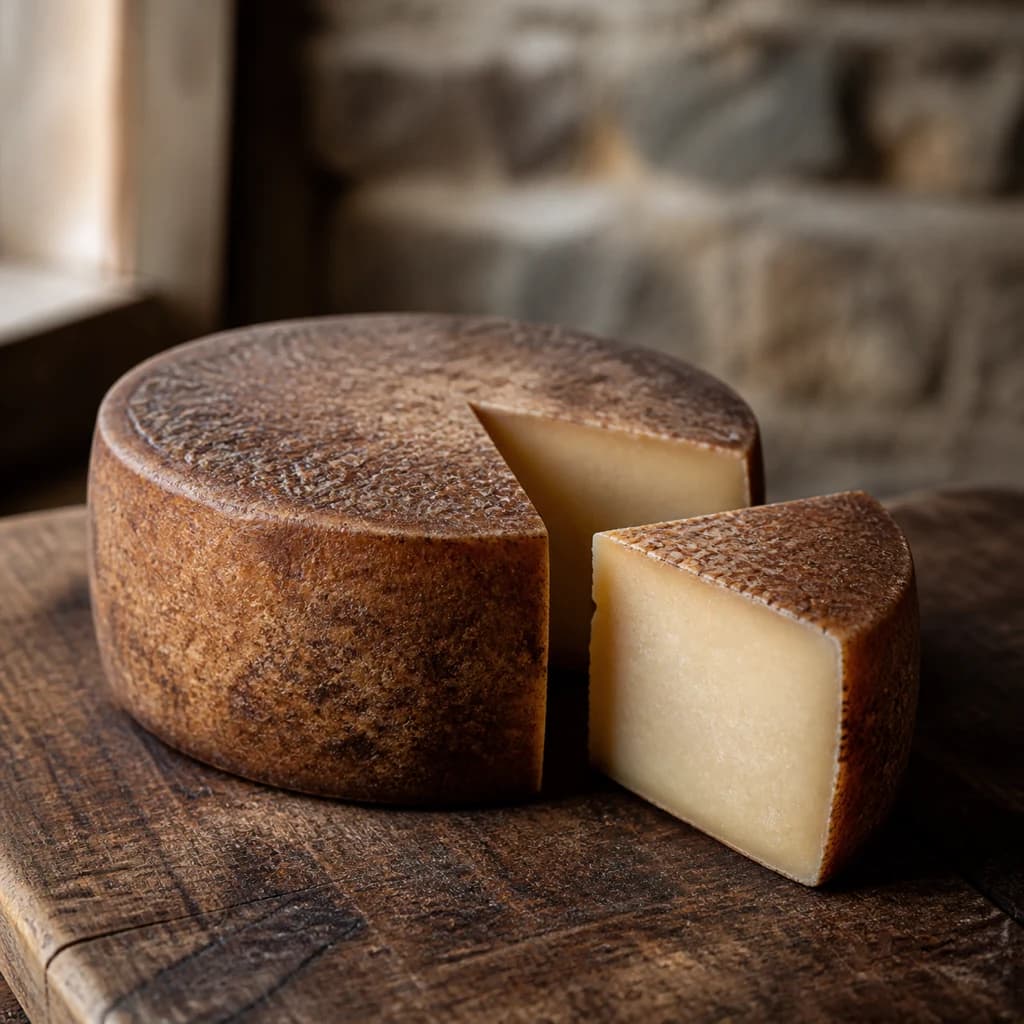
Natural form
A whole Idiazabal wheel shows its dark, lightly smoked rind and compact cylindrical shape.
Teaches readers the wheel's distinctive compact form, dark amber-brown smoked rind, and stamped surface markings that identify the cheese on sight.
Dairy & Eggs
Idiazabal Cheese
Basque raw sheep's-milk cheese, firm and nutty, often lightly smoked.
Idiazabal is a protected Basque and Navarrese cheese made from raw Latxa sheep's milk, firm and compact with a rich, nutty, buttery flavor. Traditionally some wheels are lightly smoked, adding a savory depth. It is sliced for the table with quince paste, grated, or melted into Basque dishes.
Idiazabal is a prestigious Spanish cheese from the Basque Country, crafted from raw sheep's milk sourced from the Latxa and Carranzana breeds native to the region's high meadows. Awarded Protected Designation of Origin status in 1987, it is produced in the provinces of Álava, Gipúzkoa, and Navarra using time-honored methods: traditional animal rennet coagulation, careful hand-stirring of the curd, and pressing in linen cloths to shape the wheel. The result is a firm, compact cheese with a natural rind that ranges from yellow-brown to deep amber, aged for a minimum of two months—though three to six months yields a more developed, balanced flavor. Wheels typically weigh 1–3 kg and are cylindrical in shape. Its interior ranges from pale ivory to golden yellow, with occasional small irregular holes that speak to its artisanal origins. The cheese's good melting properties make it a kitchen workhorse far beyond the cheese board: it melts smoothly without turning greasy or tough, responding well to moderate heat and rewarding thin shredding or slicing for even distribution in cooked dishes.
The flavor profile centers on a nutty, buttery base with a gentle tang and grassy undertones that reflect the mountain pastures where the ewes graze. This complexity makes it satisfying on its own yet versatile enough to integrate into both simple and elaborate preparations. Whether served natural to showcase its pure sheep's-milk sweetness or in its smoked incarnation, Idiazabal brings character to every application. The smoked variety, known as Idiazabal ahumado, is traditionally smoked over hawthorn or oak wood—a subtle process that adds delicate smoke without overwhelming the cheese's inherent qualities. When purchasing smoked Idiazabal, be cautious of aggressively smoky versions, which indicate industrial shortcuts rather than the gentle traditional method. A properly smoked wheel carries smoke as a whisper, not a shout.
- Measured in
- g
- Storage
- Fridge
Allergens
Types & varieties
Unsmoked; displays pure sheep's-milk sweetness and tang without distraction
Smoked over hawthorn or oak; adds delicate smoky dimension to the nutty base
Why Idiazabal Melts So Well
Unlike many firm sheep's-milk cheeses that turn rubbery or release oil when heated, Idiazabal maintains a smooth, creamy melt. This behavior stems from its balanced fat content and moisture level, achieved through careful hand-processing of the curd and traditional pressing methods. The cheese contains enough natural fat to lubricate the proteins during melting while the firm structure holds everything together without collapsing. This makes it exceptional for gratins, fondue, and any dish where you want cheese to flow rather than seize.
- Shred or slice thinly for the most even melting in cooked dishes
- Add to hot preparations in the last few minutes of cooking to avoid over-processing
- The smoked variety can lose its delicate character if melted at high heat—use moderate temperature and add near the end
What the PDO Guarantees
The Protected Designation of Origin isn't merely a marketing label—it imposes specific production requirements that shape the cheese's character. Ewes must be from traditional Basque breeds, milk must come from registered farms within the designated region, and production must follow the prescribed method including animal rennet, hand-stirring, and cloth-pressing. When you see the PDO seal, you're getting a cheese made with centuries of regional knowledge, not a generic sheep's-milk approximation. This matters most when you taste the difference: authentic Idiazabal has a coherence of flavor that mass-produced alternatives struggle to replicate.
- Look for the PDO seal on the rind or label when purchasing
- Artisan wheels sold by weight at specialty grocers often represent the best quality-to-price ratio
- Import stores and Spanish markets are your best sources for authentically produced wheels
Common uses
Tips & pitfalls
- Bring Idiazabal to room temperature 30–60 minutes before serving to unlock its full aroma and flavor—the cold suppresses volatile compounds that contribute to its character
- Use moderate heat when melting this cheese; high temperatures cause the proteins to tighten and the fat to separate, resulting in a tough, greasy texture
- Store in the vegetable crisper drawer of your refrigerator where humidity stays stable—avoid airtight containers that trap moisture and accelerate spoilage
- For the smoked variety, add near the end of cooking or use raw to preserve its delicate smoke; long exposure to heat mutes the nuanced character
- Select wheels with a slight sheen on the cut face and a supple feel when pressed lightly—dry, crumbly pieces signal over-aging past its prime
- When substituting Idiazabal in recipes calling for melting, shred or slice thinly to ensure even distribution and consistent texture throughout the dish
- The natural (unsmoked) variety works best in applications where you want clean sheep's-milk flavor; save the ahumado for presentations where its smokiness can shine without competition
Nutrition
Energy
1628 kJ · per 100 g
Where the calories come from
Protein
25.6g
51% DV
Carbs
1.6g
1% DV
Fat
31.1g
40% DV
Fiber
0g
0% DV
Sugars
1.6g
of which
Sodium
800mg
35% DV
Source · USDA FoodData Central · approx. Cheese, fontina
View on FDC →In the shops
Matched grocery products
No matched grocery products for Idiazabal Cheese yet.
Good to know
- Origin
- Basque Country, Spain (Álava, Gipúzkoa, and Navarra provinces)
- Milk
- Raw sheep's milk from Latxa and Carranzana ewes
- PDO
- Yes, since 1987 (EU Protected Designation of Origin)
- Texture
- Firm and compact with a slight oiliness; occasional small irregular holes
- Aging
- Minimum 2 months; optimal flavor develops at 3–6 months
- Weight
- Wheels of 1–3 kg, cylindrical shape
- Flavor
- Nutty and buttery with gentle tang and grassy notes; smoked variety adds subtle wood-smoke depth
- Rind
- Natural, yellow-brown; sold either unsmoked or lightly smoked over hawthorn wood
- Storage
- Refrigerate wrapped in wax paper and plastic; consume within 2–3 weeks
Substitutes
- Manchego — Spanish sheep's-milk cheese with similar texture and nutty flavor; slightly firmer but excellent for boards and melting applications
- Roncal — Navarre sheep's-milk cheese from a neighboring region; closely related in style, mild and firm—works directly in most Idiazabal recipes
- Pripicón de Grañón — Historic La Rioja sheep's-milk cheese; similar flavor profile and traditional smoking method when you need an authentic smoked substitute
- Pecorino Romano — Italian sheep's-milk cheese; noticeably saltier and sharper in flavor; reduce additional salt when substituting and use more sparingly for grating
- Mahón — Spanish cow's-milk cheese from Menorca; softer texture but good melting properties; milder flavor makes it a gentler alternative
Pairs with
Related

Whole Milk
Rich, full-fat milk for drinking, coffee, sauces, and baking
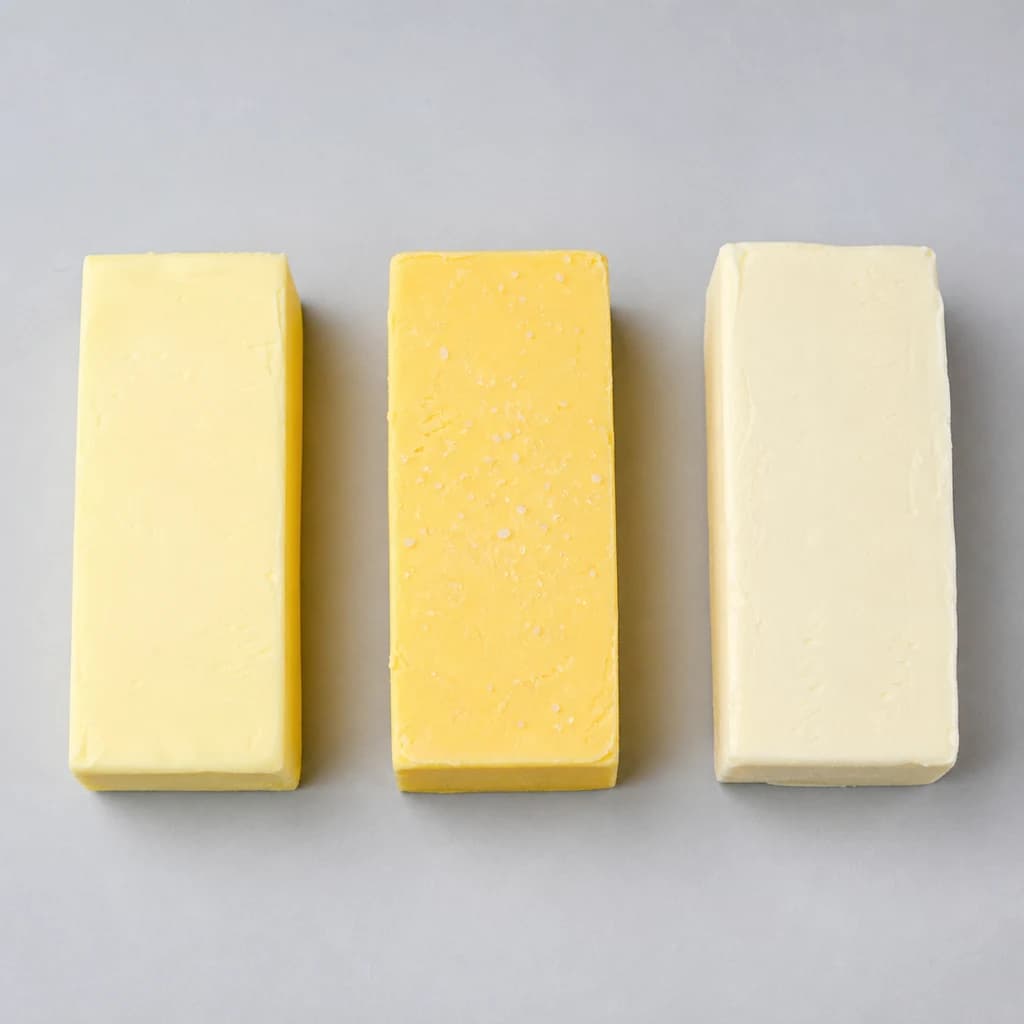
Butter
Golden fat for searing, baking, and finishing a sauce
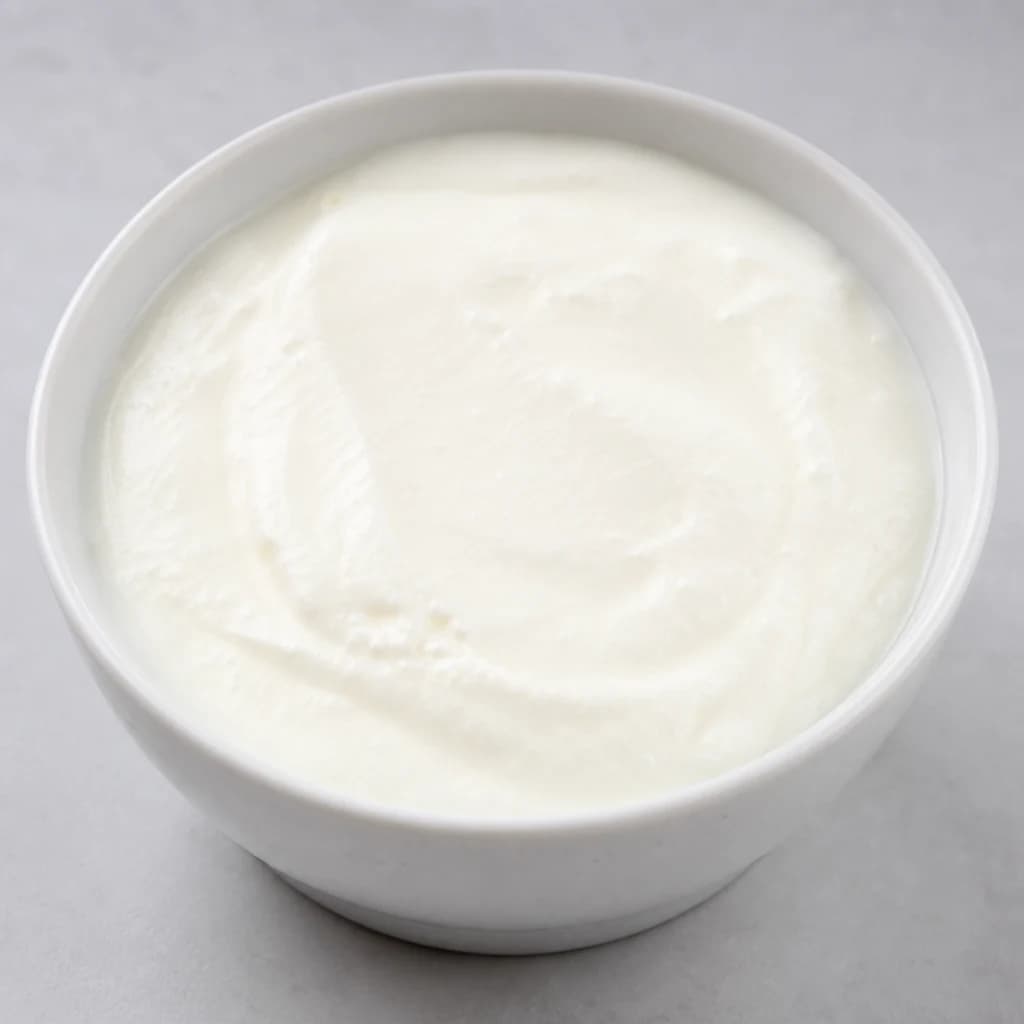
Yogurt
Tangy, creamy culture for breakfast, sauces, and marinades
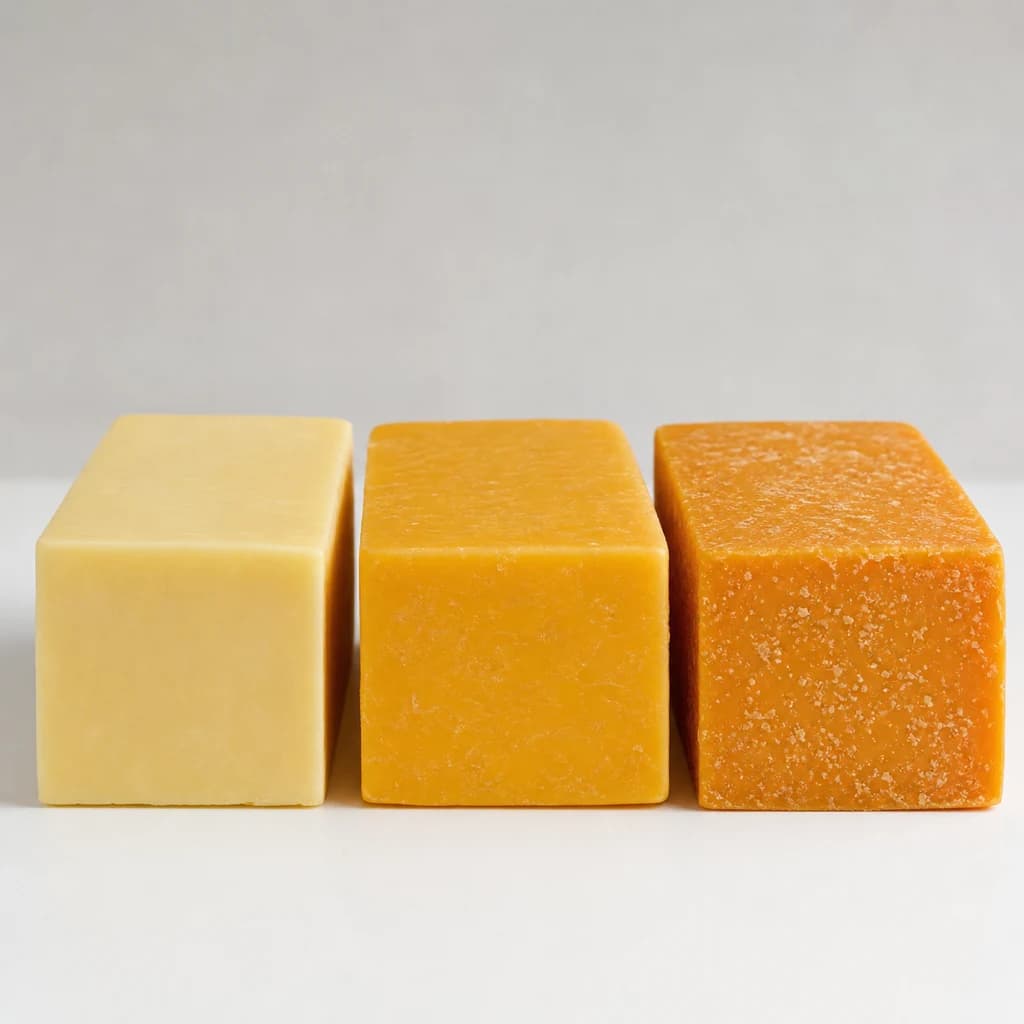
Cheddar Cheese
Sharp, melty cheese for sandwiches, gratins, and grating
Skim Milk
Fat-free milk for lighter drinking, coffee, and cooking
Heavy Cream
Rich cream that whips, enriches sauces, and sets ganache

Sour Cream
Tangy, thick cream for dolloping, baking, and dips
Mozzarella
Soft, milky cheese that melts into stretchy pizza pulls